MOB

> 10 years ago
Reply
Register to post, see what you've read, and subscribe to topics.
EC31
EC31
NSW
490 posts
NSW, 490 posts
12 Aug 2015 11:31am
Hi all,

My first post to the forum, but I have been lurking for a little while.

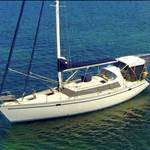
My partner and I have been restoring an East Coast 31 for a couple of years and have now reached the stage of doing some coastal cruising. We plan to head north at Christmas and spend some time in Lake Macquarie and Port Stephens.

Our concern is about how to recover from a man overboard situation when there is only 2 of us on board. We both have Type 1 PFD's with harnesses and I will install some jackstays in the next few weeks. Our East Coast has a stern ladder, but it does not reach below the water level, mainly due to the stern angle.

Any feedback or tips gratefully accepted.

Noel

rumblefish
rumblefish
TAS
824 posts
TAS, 824 posts
12 Aug 2015 12:09pm
here is one good way,


You can also buy/make a more comfy harness/sling or hook the halyard straight to your harness point you already have on, but remember you might not alway have that on!!
cisco
cisco
QLD
12365 posts
QLD, 12365 posts
12 Aug 2015 12:29pm

In a MOB situation with a yacht the first thing you would normally do is STOP THE YACHT. "Heaving to" does this very quickly. If you are sailing up wind, haul the tiller to windward and lash it there (ie steer the yacht sharply to leeward and lock the helm. DO NOT TOUCH THE SHEETS.

With most fin keel yachts this action will put the yacht into a "hove to" situation effectively stopping the yacht in it's tracks from where it will slowly creep to windward.
This gives you the opportunity to heave your life buoy with line attached to the boat towards the MOB. How you proceed from there depends on the circumstances.

If you are sailing down wind, round up to windward, douse any excess sail such as spinnaker, trim sheets, lash the helm and go into "hove to" mode.

That is my take on it but I am sure there are others here who could give better advice. The main thing though is STOP THE YACHT.
rumblefish
rumblefish
TAS
824 posts
TAS, 824 posts
12 Aug 2015 12:41pm
Yeah well said Cisco. The only issue about Heaving to is that the boat will still be heading away from the MOB and when you re single handing you can end up too far from the MOB to get a life bouy to them.

I was on the Aus Para Sail Squad for a bit back in WA and we used to practice sailing the right distance away from the MOB so that you stopped the boat head to wind back at the MOB.

southace
southace
SA
4803 posts
SA, 4803 posts
12 Aug 2015 12:33pm
A few years ago while working in the Whitsundays a Maday came though from a very scared women screaming her husband was missing as she had had been down below cooking breakfast she stated her last contact with him was around 30 mins. This was unfolding upon a bareboat charter yacht.

We diverted our course to the search area. The weather was favourable with .05 knots of wind and blue sky's! Around 10 minutes later the woman replied on the radio "found him" and all was well! All very relived!

moral of the story.......I personally don't fall into the water reasons are ......1st My Mobile will get wet, 2nd the water can be cold , 3rd there's "Sharks out there" along with many other reasons!

obviously a safety harness will/should prevent this, I also would ask my crew what they would do if I the skipper was to fall over whilst under full sail. In the whitsundays the correct awnser should be firstly to release the tender in tow.
Toph
Toph
WA
1886 posts
WA, 1886 posts
12 Aug 2015 11:37am
southace said..
I also would ask my crew what they would do if I the skipper was to fall over whilst under full sail.


I had to go forward one day just after leaving the marina with two other people. The conditions were ok, but not the best. I left at the helm somebody I had faith in and gave what I thought would've been the best course of action if I went in. The 3rd person (not the one on the helm) said something along the lines of "eff that, if you go in, I'm jumping in after you"...

I promptly turned around and headed back in...............

EC31
EC31
NSW
490 posts
NSW, 490 posts
12 Aug 2015 6:14pm
Thanks for all the info.

Watching the video above, my partner was concerned that she would not be able to winch me out of the water single handed. We are both around retirement age and not nearly as fit as we would like to think we are.

I guess it would be possible to rig up a 2:1 system, but in the heat of the moment, that may be a bit cumbersome. Also, our main halyards are terminated at the mast and don't currently lead back to the cockpit, so perhaps that is something I need to investigate as well.

When it gets a bit warmer, I think we will do some practice drills on the mooring as per the video. If anyone has come up with a different system to single handed retrieve someone from the water, I would be very interested.
Meg1122
Meg1122
QLD
285 posts
QLD, 285 posts
12 Aug 2015 6:57pm
Maybe you could add a drop down section to your stern ladder? I've sailed on a yacht that had a 2:1 to haul the outboard off the tender onto the rail and set up one myself to haul a kayak up to a verandah, easy to use and set up, I guess you'd just need to work out the best place to mount it and weigh ratios. I've been overboard once mid race, I was pushed!!! Luckily it was a small yacht and easy enough to climb back up in to
SandS
SandS
VIC
5904 posts
VIC, 5904 posts
12 Aug 2015 7:36pm


my advice is to practice a MOB drill with all crew taking turns in steering the yacht. In most cases you will be sailing when the MOB happens, so the boat will end up too far from the MOB even if you try to stop the boat , so it is best to spot the person asap and the turn the boat around ...

so with more than 2POB ,, one points at the MOB constantly while the steerer turns the boat around the best way is to do a big figure eight maneuver .

and finally approach the MOB on the downwind side of him or her or a practice floaty MOB . then let sails flap while going into recovery mode ,

the recovery mode is a separate drill ,there s a few different methods...
HG02
HG02
VIC
5814 posts
VIC, 5814 posts
12 Aug 2015 7:54pm
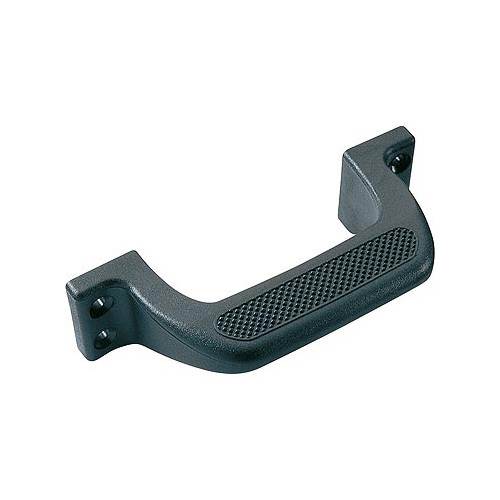
Ive yet to buy and fit a few steps on the rudder blade


something like these or something similar


SandS
SandS
VIC
5904 posts
VIC, 5904 posts
12 Aug 2015 8:11pm
EC31 said..
Thanks for all the info.

Watching the video above, my partner was concerned that she would not be able to winch me out of the water single handed. We are both around retirement age and not nearly as fit as we would like to think we are.

I guess it would be possible to rig up a 2:1 system, but in the heat of the moment, that may be a bit cumbersome. Also, our main halyards are terminated at the mast and don't currently lead back to the cockpit, so perhaps that is something I need to investigate as well.

When it gets a bit warmer, I think we will do some practice drills on the mooring as per the video. If anyone has come up with a different system to single handed retrieve someone from the water, I would be very interested.


another method is to use your storm jib under the person as a sling to get a helpless / unconscious MOB back in the boat using halyards
RiffRaff
RiffRaff
WA
265 posts
WA, 265 posts
12 Aug 2015 7:24pm
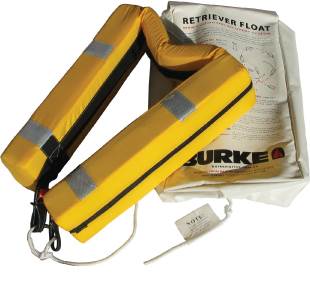
marinesafe.com.au/
these are actually designed for the job
Libran
Libran
92 posts
92 posts
12 Aug 2015 7:48pm
SandS said..


my advice is to practice a MOB drill with all crew taking turns in steering the yacht. In most cases you will be sailing when the MOB happens, so the boat will end up too far from the MOB even if you try to stop the boat , so it is best to spot the person asap and the turn the boat around ...

so with more than 2POB ,, one points at the MOB constantly while the steerer turns the boat around the best way is to do a big figure eight maneuver .

and finally approach the MOB on the downwind side of him or her or a practice floaty MOB . then let sails flap while going into recovery mode ,

the recovery mode is a separate drill ,there s a few different methods...


I was taught to position the boat upwind of the MOB so that the person was in the "slick" or protected from wave action by being in the shadow of the boat.
I guess there are advantages in both approaches.
cisco
cisco
QLD
12365 posts
QLD, 12365 posts
12 Aug 2015 11:48pm
RiffRaff said..
marinesafe.com.au/
these are actually designed for the job


That looks like the thing to have.
HG02
HG02
VIC
5814 posts
VIC, 5814 posts
13 Aug 2015 12:26am
cisco said..

RiffRaff said..
marinesafe.com.au/
these are actually designed for the job


That looks like the thing to have.


MorningBird
MorningBird
NSW
2711 posts
NSW, 2711 posts
13 Aug 2015 3:38am
Do a Competent Crew and/or Skipper course. You will get to practice a few different methods of returning to the MOB and of effecting the rescue. The advice above is good but this is one thing you need to have done and know you can do. You don't learn this one from books on their own.
Crusoe
Crusoe
QLD
1197 posts
QLD, 1197 posts
13 Aug 2015 8:33am
I will apologise now for the following rant, but it is something I feel strongly about

Think like a solo sailor.

DON'T FALL OVER. DON'T FALL OVER, DON'T FALL OVER

ALWAYS CLIP ON when leaving the cockpit and sometimes you should be clipped on when in the cockpit.

ALWAYS USE HAND HOLDS even when clipped on

IF THERE ARE NO HAND HOLDS, GET ON YOUR KNEES OR BUTT even when clipped on

DON'T HAVE YOUR JACK LINES ON THE OUTER EXTREMITIES OF THE DECK. At least run them inside your standing rigging. Closer to the centre of the boat the better so that if you fall you are still on the boat and not being dragged along beside it in (or under) the water.

ALL YOUR ATTACHMENT POINTS SHOULD BE THROUGH BOLTED WITH PLATES ON THE BACK. Recently read an article where a guy said the 5mm attachment point failed. 10mm is my minimum. I wouldn't put my life in the hands of a 5mm bolt. (Excuses like "It was like that when I brought the boat" just won't cut it when someone is lost overboard)

HAVE DOUBLE LANYARDS ON YOUR HARNESS AND USE THEM. Long lanyard to get you to you destination and short lanyard while doing your task.

Don't go to sea planning on someone else saving your butt when you do something stupid.


I read a story a fair while back (I can't remember the exact details but you'll get the picture) about a guy on a sail boat with 2 inexperienced crew about 100nm East of Brisbane who went forward while clipped on and fell over the side when the boat suddenly moved. He was being dragged under the water and had to cut his own lanyard to save himself from drowning. The inexperience crew couldn't even turn the boat around and a after calling on the radio for help, an experienced sailor was put on the boat to bring it back. This all took a while to put together. By this time, all hope of finding the guy in the water was lost because the crew had no idea where they were when the guy went in the water.

Two days later a plane with guys in it looking for the ocean buoys they drop to track ocean current and wave hight, saw the guy in the water and initiated his rescue. He lived to write the article I read.

DON'T FALL OVER. DON'T FALL OVER, DON'T FALL OVER

I use Auto-inflating Spinlock Harness's with crouch straps and Auto Activation AIS transmitter fitted inside them for myself and when I have crew on board (just in case someone (could be me) disobeys Rule No 1 - DON'T FALL OVER)

Ramona
Ramona
NSW
7756 posts
NSW, 7756 posts
13 Aug 2015 9:05am
The double lanyard is the important bit. There is no point having them long enough for you to even go over the side!
sirgallivant
sirgallivant
NSW
1531 posts
NSW, 1531 posts
13 Aug 2015 10:12am
Good on ya Crusoe!

Sailing mostly alone, I feel strong about this subject myself.

Whoever, l would like to add two important points:

Firstly; if you fit life lines or rather jack stays to your deck make sure your stays terminate well before your transom.
The line s h o u l d n o t r u n the f u l l l e n g t h o f t h e b o a t !
It should terminate 6-7 feet from the transom not to drag the person behind the boat but BESIDE it, in case one falls over board. It would be impossible to drag yourself aboard from behind even at 3kn boat speed.

Andrew Evans writes about a tragic example of this situation in his much revered book.
Besides, if you must fall off you should fall off on the lee side, if possible.


Secondly, if you look at the accident statistics on sailing vessels, most accidents happen on the front of the mast. Between the mast and the bow. This 'no man's land' as Foolish Muse calls it, often ignored by most. There is no hand-hold there. You can not grab a solid thing between the mast and the fore stay. Larger the boat, bigger the woid. A good 'granny bar' at the mast and low hand rails between mast and bow on both sides is a must. Beside the jack stay of course.
New boats should not be sold without them!

Most ignores this two points saying 'we sail in company and look after each other' but you are not, in the middle of the night, keeping watch, or when the others are just down below cooking, navigating, at the head or so.

Wearing a PFD on deck is good seamanship, not clipping on with a double tether when on deck alone is just plain stupid.

LMY
LMY
NSW
203 posts
LMY LMY
NSW, 203 posts
13 Aug 2015 9:25pm
I am happy to fess up, and admit that I have been stupid, and fallen off the boat at sea. Since then we have new rules. They are pretty simple and based on the assumption that the key is to stay in the boat!

1.0 life jackets on at all times at sea. Life jackets are fitted with a light.
2.0 PLB on at all times at sea
3.0 clip on if leaving the cockpit
4.0 clip on if alone in the cockpit

My fall came when I was tired and did not recognise that conditions at sea were different to the lake and I made a simple mistake that resulted in the fall. I believe that simple things like wearing a life jacket act as a constant reminder that there is a need for care and minimise the risk of stupid mistakes. The simple act of wearing the jacket increases awareness levels.

Also consider setting up the boat to minimise the need to leave the cockpit. All ropes lead to the cockpit, main falling into lazy jacks, jib on a furler, etc.

The transom of the East Coast does not lend itself to easy access from the water . I would have a really good look at some of the commercial retrieval systems to see what will work for you and your fitness levels.
Chris 249
Chris 249
NSW
3585 posts
NSW, 3585 posts
13 Aug 2015 10:09pm
sirgallivant said..

It should terminate 6-7 feet from the transom not to drag the person behind the boat but BESIDE it, in case one falls over board. It would be impossible to drag yourself aboard from behind even at 3kn boat speed.


Whether you can drag yourself on at that speed depends on the boat and the swimmer, and what they are wearing. It certainly is possible for some; I've tried it and I've been there when others have tried it.

I'd rather drag behind the boat than alongside it, because that way I could pull myself back to the boat and get back up via the stern. Being dragged alongside the boat midships would be pretty 'orrible and probably fatal if the boat was heeling away from you and you were going under the bilge.

sirgallivant
sirgallivant
NSW
1531 posts
NSW, 1531 posts
13 Aug 2015 10:44pm
Nothing is impossible, young and fit with experience has a better chance, but;
Increase the speed to 6kn add a rough sea state and the chances to drag yourself back aboard from behind the yacht decreases exponentially.
This are not my findings - l am a rank outsider, an amateur - but experts like Andrew Evans, Pete Goss, Ellen MacArthur and many others agree. I only paraphrased what they agree on.

We done some MOB experiments on calm waters with middle aged or older guys and at 5kn all struggled and needed help. None was able to pull himself back on board without help.
One of my skippers used to lose crew with frightening regularity and all of them needed help to get back aboard on an Adams 10.6 which is a yacht with relatively low sides and open transom.
I wonder what chance a person would have on a centre cockpit yacht with high freeboard.
Sure, to be dragged under the hull could be lethal in certain situations, l rather be dragged along than behind.
The recent loss of the wife of a South African sailor highlights the necessity of the constant disciplined use of harness or PDF with a tether and it's usage.
There should be no argument about that!
I also sincerely hope, this exchange of ideas never ever materialises, it remains a theoretical analysis of possibilities forever.

Chris 249
Chris 249
NSW
3585 posts
NSW, 3585 posts
13 Aug 2015 11:41pm
I'd assume that Goss and Dame Ellen are normally sailing very different boats in very different conditions to some of us, and therefore different factors apply. I've only sailed an ORMA 60 once and I agree you couldn't pull yourself back to one, but it seems that most of us here sail boats more like the East Coast and that is a very different kettle of fish.

When we did some MOB experiments in ocean swells with middle aged guys, we came to the conclusion that it was possible to pull yourself up if you were fit AND prepared for it. For example, one guy noted that you had much lower drag if you ducked underwater while pulling yourself forward along the recovery line, and just held yourself stationary on the line when you ducked up to breath. However, if you've not done any activity or sport that gives you an upper body workout and gets you used to being in the water, things would be very different than if you were an experienced big wave surfer, for example.

Sure, a typical middle aged guy who doesn't surf or swim a lot and tries to get back onboard once may struggle, but it could be a completely different story if they practised, even by getting back on board after taking a cooling dip when moored. Practised people can do amazing things even when they are older. It's a funny thing that we spend lots of dollars on gear but often ignore fitness and practice. Although the tragedy of Glynn Charles proved that fitness and skill don't always save you, a lot of the time they have to be a big bonus.

I


Chris 249
Chris 249
NSW
3585 posts
NSW, 3585 posts
13 Aug 2015 11:49pm
cisco said..

In a MOB situation with a yacht the first thing you would normally do is STOP THE YACHT. "Heaving to" does this very quickly. If you are sailing up wind, haul the tiller to windward and lash it there (ie steer the yacht sharply to leeward and lock the helm. DO NOT TOUCH THE SHEETS.

With most fin keel yachts this action will put the yacht into a "hove to" situation effectively stopping the yacht in it's tracks from where it will slowly creep to windward.
This gives you the opportunity to heave your life buoy with line attached to the boat towards the MOB. How you proceed from there depends on the circumstances.

If you are sailing down wind, round up to windward, douse any excess sail such as spinnaker, trim sheets, lash the helm and go into "hove to" mode.

That is my take on it but I am sure there are others here who could give better advice. The main thing though is STOP THE YACHT.


Stopping the yacht is great advice, but if you haul the tiller to windward that will put the boat into a crash gybe, downwind of the MOB - the accepted technique was to tack and then leave the boat lying ahull. This "crash stop" technique was created by US Sailing's safety committee after some pretty good research. I met the head of the committee, a former US naval officer, many years ago in Newport RI and the technique they evolved didn't include lashing the helm. But their technique did stress, as you say, stopping the boat ASAP.


Chris 249
Chris 249
NSW
3585 posts
NSW, 3585 posts
13 Aug 2015 11:53pm
Crusoe said..
I will apologise now for the following rant, but it is something I feel strongly about

Think like a solo sailor.

DON'T FALL OVER. DON'T FALL OVER, DON'T FALL OVER

ALWAYS CLIP ON when leaving the cockpit and sometimes you should be clipped on when in the cockpit.

ALWAYS USE HAND HOLDS even when clipped on

IF THERE ARE NO HAND HOLDS, GET ON YOUR KNEES OR BUTT even when clipped on

DON'T HAVE YOUR JACK LINES ON THE OUTER EXTREMITIES OF THE DECK. At least run them inside your standing rigging. Closer to the centre of the boat the better so that if you fall you are still on the boat and not being dragged along beside it in (or under) the water.

ALL YOUR ATTACHMENT POINTS SHOULD BE THROUGH BOLTED WITH PLATES ON THE BACK. Recently read an article where a guy said the 5mm attachment point failed. 10mm is my minimum. I wouldn't put my life in the hands of a 5mm bolt. (Excuses like "It was like that when I brought the boat" just won't cut it when someone is lost overboard)

HAVE DOUBLE LANYARDS ON YOUR HARNESS AND USE THEM. Long lanyard to get you to you destination and short lanyard while doing your task.

Don't go to sea planning on someone else saving your butt when you do something stupid.


I read a story a fair while back (I can't remember the exact details but you'll get the picture) about a guy on a sail boat with 2 inexperienced crew about 100nm East of Brisbane who went forward while clipped on and fell over the side when the boat suddenly moved. He was being dragged under the water and had to cut his own lanyard to save himself from drowning. The inexperience crew couldn't even turn the boat around and a after calling on the radio for help, an experienced sailor was put on the boat to bring it back. This all took a while to put together. By this time, all hope of finding the guy in the water was lost because the crew had no idea where they were when the guy went in the water.

Two days later a plane with guys in it looking for the ocean buoys they drop to track ocean current and wave hight, saw the guy in the water and initiated his rescue. He lived to write the article I read.

DON'T FALL OVER. DON'T FALL OVER, DON'T FALL OVER

I use Auto-inflating Spinlock Harness's with crouch straps and Auto Activation AIS transmitter fitted inside them for myself and when I have crew on board (just in case someone (could be me) disobeys Rule No 1 - DON'T FALL OVER)


Excellent post!
FreeRadical
FreeRadical
WA
855 posts
WA, 855 posts
13 Aug 2015 9:59pm
Does anybody know if Aus rescue aircraft (fixed wing and helicopter) have AIS capability? Those personal AIS transmitters look like a very good investment.
Chris 249
Chris 249
NSW
3585 posts
NSW, 3585 posts
14 Aug 2015 12:04am
Info on the Quick Stop technique. As far as I know it's been accepted as the best way for decades, partly because its development was thoroughly researched.


http://www.ussailing.org/resources/quick-stop-rescue/

Some more good info;

www.ussailing.org/wp-content/uploads/DARoot/Offshore/SAS%20Studies/safety%20tips.pdf
cisco
cisco
QLD
12365 posts
QLD, 12365 posts
14 Aug 2015 1:18am
Chris 249 said..

Stopping the yacht is great advice, but if you haul the tiller to windward that will put the boat into a crash gybe, downwind of the MOB - the accepted technique was to tack and then leave the boat lying ahull. This "crash stop" technique was created by US Sailing's safety committee after some pretty good research. I met the head of the committee, a former US naval officer, many years ago in Newport RI and the technique they evolved didn't include lashing the helm. But their technique did stress, as you say, stopping the boat ASAP.


If you are close hauled it will not be a "crash gybe". The first time it was done on my boat, it was by John Armstrong from the Gold Coast Marine Academy.

There were 8 of us on board who were all Master Vs and operating sailing charter vessels out of Cairns. We flew John up for the weekend for him to examine us all for our AYF Offshore Yachtmaster Certificates.

John was steering and he asked me "What if I just hauled the tiller to windward and held it there?"

I said "What???.....and gybed the boat?"

He said "Yes."

I said "Well, I'll wrap that winch handle around your head."

He laughed and said "Look, we are close hauled and the traveller is cleated off, so it is just the sail that will flick through the gybe. Because we know how these yachts behave, we know we won't break anything. Let's just give it a go?"

Grudgingly I said "OK."

Now the yacht was an alloy Peterson 42 IOR 2 tonner in cruising trim and displaced 12 tonnes. We had the right amount of sail up for the conditions and we are going along at about six and a half knots and it was my boat, so you could understand I was a tad anxious.

So at his bidding, we did not touch the sheets or anything else, he heaved the tiller over and held it there and we were all gob smacked and amazed.

The boat came around, the main just flicked through the gybe, the head sail backwinded and lay over the shrouds, the boat stopped dead in it's track, stood upright and gently and slowly crept to windward.

You can just lash the helm and the boat will look after itself and you can go and do whatever you have to do, such as make a cup of coffee or lunch, attend to an injury or even rescue a man overboard.

When you are ready to go again, release the helm, steer through the gybe again and get back on course.

Heaving to is an invaluable manoeuvre and everybody should practise it on their yacht to learn how it behaves when hove to. Give it a try next time you are out sailing. You won't break anything except your misconceptions.
MorningBird
MorningBird
NSW
2711 posts
NSW, 2711 posts
14 Aug 2015 2:02am
cisco said..

Chris 249 said..

Stopping the yacht is great advice, but if you haul the tiller to windward that will put the boat into a crash gybe, downwind of the MOB - the accepted technique was to tack and then leave the boat lying ahull. This "crash stop" technique was created by US Sailing's safety committee after some pretty good research. I met the head of the committee, a former US naval officer, many years ago in Newport RI and the technique they evolved didn't include lashing the helm. But their technique did stress, as you say, stopping the boat ASAP.


If you are close hauled it will not be a "crash gybe". The first time it was done on my boat, it was by John Armstrong from the Gold Coast Marine Academy.

There were 8 of us on board who were all Master Vs and operating sailing charter vessels out of Cairns. We flew John up for the weekend for him to examine us all for our AYF Offshore Yachtmaster Certificates.

John was steering and he asked me "What if I just hauled the tiller to windward and held it there?"

I said "What???.....and gybed the boat?"

He said "Yes."

I said "Well, I'll wrap that winch handle around your head."

He laughed and said "Look, we are close hauled and the traveller is cleated off, so it is just the sail that will flick through the gybe. Because we know how these yachts behave, we know we won't break anything. Let's just give it a go?"

Grudgingly I said "OK."

Now the yacht was an alloy Peterson 42 IOR 2 tonner in cruising trim and displaced 12 tonnes. We had the right amount of sail up for the conditions and we are going along at about six and a half knots and it was my boat, so you could understand I was a tad anxious.

So at his bidding, we did not touch the sheets or anything else, he heaved the tiller over and held it there and we were all gob smacked and amazed.

The boat came around, the main just flicked through the gybe, the head sail backwinded and lay over the shrouds, the boat stopped dead in it's track, stood upright and gently and slowly crept to windward.

You can just lash the helm and the boat will look after itself and you can go and do whatever you have to do, such as make a cup of coffee or lunch, attend to an injury or even rescue a man overboard.

When you are ready to go again, release the helm, steer through the gybe again and get back on course.

Heaving to is an invaluable manoeuvre and everybody should practise it on their yacht to learn how it behaves when hove to. Give it a try next time you are out sailing. You won't break anything except your misconceptions.


It was gybing out of the heave to that broke my boom last year. We didn't have the boom fully centred but probably as much as many boats close hauled would have it. The boom crashed across about 18" and away went the main sheet block on the end of the boom.
In this situation there is no need to gybe, just tack through leaving the headsail sheet where it is and pull the tiller to leeward once through the tack. A lot less load on the boat and you are heaved to.
Ramona
Ramona
NSW
7756 posts
NSW, 7756 posts
14 Aug 2015 9:46am
FreeRadical said..
Does anybody know if Aus rescue aircraft (fixed wing and helicopter) have AIS capability? Those personal AIS transmitters look like a very good investment.


Why would they. Are you thinking about Epirbs?
Crusoe
Crusoe
QLD
1197 posts
QLD, 1197 posts
14 Aug 2015 11:50am
AIS Transmitter (lift jacket size) have about a 4Nmile transmit capability and are seen by any body with an AIS receiver on their boat. It certainly helps if your VHF antenna is mounted at the top of your mast.

My set up is like this: I have the track function set up on my Chart Plotter and if some one were lost overboard then I would return along the same track until I found the person. The AIS Transmitter would be a big assistance as, theoretically, they would have had to drift 4nm from the original track for me not to see them on my chart plotter. This means if I came back on watch after 2 hours, saw they are missing, then I would have a fair chance of finding them. Which, if they didn't have an AIS transmitter, would be virtually impossible.

If it was 2 hours since they went for a swim, then it would take at least 4 hours to get back to the spot they fell over and then allowing for a bit of current and a lot of luck, maybe locate them. Wouldn't be a good thing to have them in the water off the NSW coast with that current.
Please Register, or first...
Topics Subscribe Reply