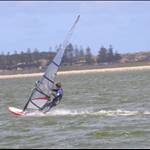
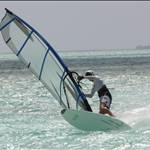
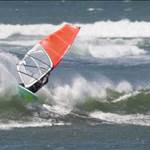
different fin sizes using the same board

> 10 years ago
Reply
Register to post, see what you've read, and subscribe to topics.
undertacker
undertacker
NSW
8 posts
NSW, 8 posts
13 Dec 2006 1:38pm
Hi,

can somebody explain why you have to use different fin sizes in
different wind strengths on the same board !?!?

My understanding is that a sail has pull with a certain force to get you planning, means less wind=>less pull force therefor increase sail size to get you going.
High wind=>smaller sail size to create the same pull force as above.

Why using different fin sizes, while the sail pull force is the same ?

the unknowing
bubs
bubs
SA
924 posts
SA, 924 posts
13 Dec 2006 1:41pm
I'm not exactly sure, but i think that using a bigger fin to create more lift and earlier planning, rather than increasing sail size is better because you have more control of your rig and board with a smaller sail than you do with a larger one. Increasing fin size helps you have more lift and earlier planning meaning you can use a smaller sail, therefore having more controll which makes everything much easier.

I think that is correct from what i have learnt off this site. Please correct me if i am wrong.

bubs
big-gazza
big-gazza
WA
101 posts
WA, 101 posts
13 Dec 2006 12:47pm
I think this is a good question - had to think about it for a while. Undertacker your theory would be relevant where the windforce was steady, uniform, exact - say in a wind tunnel. As you know the wind is a dynamic thing, it swirls, gusts, increases/decreases. When we change up or down in sail size we are really covering a certain wind strength zone between A windstrength and B windstrength. With higher windstrength zones come higher speeds generated - have too small a fin and the tendency will be to spin out - too large and at speed the lift generated will make the board rail up and become uncontrollable. I suppose what we are trying to do is match both sail size and fin size to the windstrength zone giving a degree of comfort and manageability.
Revhead
Revhead
ACT
372 posts
ACT, 372 posts
13 Dec 2006 5:25pm
yeah i was spinning out at least twice on each run last week,

It was a small fin and i was just overpowered. Sounds like i needed a slightly bigger fin and slightly smaller sail?
nebbian
nebbian
WA
6277 posts
WA, 6277 posts
13 Dec 2006 4:42pm
Hi Revhead,

Try moving your harness lines back a bit. If they are forward of the balance point, then you have to pull hard with your back hand, which means that your back foot has to balance this force and push hard against the fin.
Moving the harness lines back a bit really helps.

Undertacker:
There's planing, and planing. In strong winds you tend to go faster, so you use a smaller fin for the same amount of lift, at least that's how I understand it... I know from experience that too big a fin in strong wind means the board almost lifts bodily out of the water and it's a royal b*tch to try to control, scary too!
decrepit
decrepit
WA
12884 posts
WA, 12884 posts
13 Dec 2006 8:48pm
A windsurfers power comes from the relative speed between wind and water, sail in wind, fin in water.
Lift of sail has to be balanced by lift of fin.
Normally we only think windspeed, because that's our enviroment, but it doesn't give the whole story.
If you can think of extracting energy from the difference in speeds of the 2 mediums, then it becomes more obvious that fin and sail should change size together.

Anybody know the relationship between speed of water flow over the fin and fin lift??
Is it logrithmic or linear???
easty
easty
TAS
2213 posts
TAS, 2213 posts
13 Dec 2006 11:25pm
Anybody know the relationship between speed of water flow over the fin and fin lift??
Is it logrithmic or linear???

Not really, but for the average sailor, (me), if it's blowin it's socks off, I generally fit a smaller fin as my sail size decreases. seems to work.
nebbian
nebbian
WA
6277 posts
WA, 6277 posts
13 Dec 2006 9:37pm
quote:

If you can think of extracting energy from the difference in speeds of the 2 mediums, then it becomes more obvious that fin and sail should change size together.


Niiiice... I can understand that, makes a lot of sense!!

quote:

Anybody know the relationship between speed of water flow over the fin and fin lift??
Is it logrithmic or linear???


Proportional to speed squared. So a small increase in speed means a large increase in lift. Unfortunately drag increases at the same rate...
decrepit
decrepit
WA
12884 posts
WA, 12884 posts
13 Dec 2006 9:48pm
Thanks Nebs, that's what I suspected, that's why very early planning boards have such huge fins, and why high wind spped boards have little blades.
mathew
mathew
QLD
2172 posts
QLD, 2172 posts
14 Dec 2006 10:09am
One a related note, it is often useful to change your fin size before you change your sail size. eg: in 17 knots you might sail with a 6.0m + a 32cm fin. If the wind picks up to 20 knots, you could/should probably go to a smaller fin, say 30cm but stay with the 6.0m.

As others have said, fin lift is proportional to speed. Modern sails can have about 10-15 knots of wind range, but most fins have a smaller range. Changing fin size helps to control the board as the wind strength changes, or even due water-currents or sea-state.

The best part is that they are significantly cheaper than having multiple rigs. ie: for each sail, you would use 2-3 fins.
bubs
bubs
SA
924 posts
SA, 924 posts
14 Dec 2006 10:58am
Personally i think fin are very expensive for what they are. I've got three fins and three boards that i use. Then four different sails. I'm prity much set up for any wind condition at that. I think its very simple smaller boards have smaller fins, so when it gets windier you either get a smaller board or a smaller sail.

Because i'm so light and not very strong i use prity much the same rig every time i go sailing. I can get away with a 100L wave board with a 5.0 in 15+ knots.

Our sail sizes are prity spred out aswell as our boards. 5.0, 5.8, 6.5, 7.0 in sails. In boards 100L, 120L and a 150L. My brother dad and i get away in any wind conditions with our gear. If i was to purchase at least three fins for each board, i would be starting to spend a lot of money.

I think bigger winds just mean smaller boards which always have smaller fins anyway. Thats how i have always worked. To have numerous fins seems pointless to me unless you have weed fins or anything like that.

bubs
Combs
Combs
WA
152 posts
WA, 152 posts
15 Dec 2006 10:41am
I have been toying with the idea of getting a smaller board for the strong days of late and then re-read an article on fins on a UK Boards mag from last year.

Now I might be tending on getting a smaller fin for my board. My small board should be able to handle the stronger conditions, but it just lifts up on the fin and becomes unmanageable. The sail size of 5.25m is the smallest recommended for the 105ltr board, but the fin that comes with the board is 32cm and is a compromise across the sail range of the board.

The mag ready reckoner suggests 26cm, although I think that may be a little on the small size.
RAL INN
RAL INN
SA
2898 posts
SA, 2898 posts
15 Dec 2006 2:52pm
Don't forget that correct sail tuning solves a lot of fin problems.
DAM71
DAM71
QLD
498 posts
QLD, 498 posts
15 Dec 2006 6:51pm
The general theory of smaller fin as wind strength increases is true to a limit. There is a finite size of fin that any board can handle.
You will find that too small a fin will cause you to spin out no matter what the conditions and too large a fin - lets justs say nebbian is right on the money "SCARY".

Fins are actually very important but usually neglected - you have to consider stiffness, chord length, thickness of the foil, rake - and then whether or not there are any minute nicks. The above thngs are important for slalom / speed fins making sure you go fast, don't spin out, easy to gybe and handles the chop. Not so sure about wave fins though.


The following is an extract from bluefinz windsurfing in singapore - pretty much nails it.

Matching the right fin to the board and conditions can make a huge difference to sailing performance. What keeps your board flying over the water? It is two wings, one in the air (your rig) and one in the water (your fin). Sailors will often happily spend a lot of money on a rig and neglect that little thing under the tail of their boards. The right fin can transform a board, making it easier to plane, smoother to gybe, less prone to tail walking etc. Selecting the correct fin however, seems to remain a black art to most sailors.

In order to keep the principles simple, the assumption here is that the boards in question are course, course/slalom or freeride boards with a pointer style fin attached. How do you go about selecting the right fin?

The single most important factor in determining fin size is the tail width of the board. A standard measure used by board shapers is the “one foot off”. Literally this is the width of the board measured twelve inches from the tail. Why is this so important?

Your fin generates lift. Without going into the physics of it, the fin’s movement through the water produces lift in the same way the sail does through air. For any lever, the maximum torque is produced at 50% of the length of the lever. Lets say we have a fin that is 50cm long. According to simple physics, the maximum torque will be at 25cm. Now lets slap this fin on a board whose one foot off is 40cm. The distance from the middle of the board to the rail will be 20cm. Therefore the fin will be generating a force which lifts outside of the rail of the board’s tail. Unless the sailor is exceptionally strong or heavy, the fin will now be difficult to control. This is why boards like the Starboard Formula have so much tail width, the rail to rail distance at the rear allows for leverage against very large fins and makes it possible to ride fins as big as 70cm or more.

The converse would also be true. If too small a fin is used, it will not generate sufficient lift and the board will feel dead in the water. Thus a simple rule of thumb is to use a fin equivalent to the one foot off measure, if you are using just one fin.

How does this affect sailing performance? To get on the plane, your two wings (sail and fin) must generate enough force to lift your bodyweight and the weight of the board and rig off the water. If you go too big in the hopes of planing earlier, you will be faced with a board that snakes through the water. One easy indication of a fin that is oversized is if the front of your shins start to hurt. This means you are now physically resisting the lift of the fin and you should downsize.

Too small a fin will give the opposite effects. Insufficient lift from the wing in the water will make the board slow to plane, “sticky”, it will not power out of gybes cleanly and may become very prone to spinouts.


This hopefully gives an idea on how the fin works with the board. As others have stated earlier the faster the fin moves through the water the more lift it generates - thus you can move down a size. There is so much more on how the fin can influence board performance. I always go for custom fins the stockies that come with the board are OK but don't allow you to really tune the hell out of the board.

As for price custom fins are not a very cheap start at $200+ for select and go up to $400+ for deboichet. Painful but worth it - a good fin truly unlocks what your board can do.
oldie
oldie
VIC
356 posts
VIC, 356 posts
16 Dec 2006 7:29am
What does a Deboichet do? Apparently the flexiness allows one to pump speed from the fin as well as the sail. Not needed for the average sailor, surely. Would it be best to buy a larger range of cheaper fins?
DAM71
DAM71
QLD
498 posts
QLD, 498 posts
16 Dec 2006 11:28am
My understanding regarding stiffness is that a very stiff fin reacts like a higher percent carbon mast reacts to flex very quickly, thus i think they can get on the plane earlier. It does not handle chop very well and makes the board uncomfortable, also can be prone to spin out.

Regarding the likes of deboichet it's like buying a porsche or a WRX both very good performance cars one just costs a lot more. I believe the deboichet's can make coffee also

Regarding a quiver of cheap fins - you will get the greater range and some improved handling by having the different sizes - but the good custom fins should give a greater performance when compared to the cheapies performance. How much? Unsure, but it does exist - I've noticed changes from the stock fins to customs on my slalom gear. ultimately it is a price thing and a personal sailing preference, just because the local fast guy uses one type of fin does not necessarily mean that it will work for the type of sailor you are.
Experiment, experiment and experiment.
bubs
bubs
SA
924 posts
SA, 924 posts
16 Dec 2006 2:22pm
How do you tell the difference between good and bad wave fins though? My wave fin is very small for the board size and is a naish production fin. Would i notice any difference between custom fins? Does shape of the fin make more differnce than the size?

cheers
bubs
decrepit
decrepit
WA
12884 posts
WA, 12884 posts
16 Dec 2006 9:44pm
Wave fins, are a very mixed bunch, and you really need to choose according to your own riding style.
Some are very flexi, great for doing sliding type tricks, but not good for getting upwind.
A smaller fin makes the board more maneuvarable, so some wave riders use the smallest fin they can get away with.
I don't think that formula that relates tail width to fin size is all that aplicable to wave riding, wave footstraps are a lot further inboard, so rider weight doesn't have as much leverage over fin lift.

A lot of wave fins have the trailing edge at the base cut back, to help stop air getting sucked back from the tail. Most of them are fully foiled thru this section, but there's a few around where the trailing edge at the base is a square cut off several mms thick, I'd stay well clear of these, as the cut out instead of stopping spin out probably causes it.
Please Register, or first...
Topics Subscribe Reply