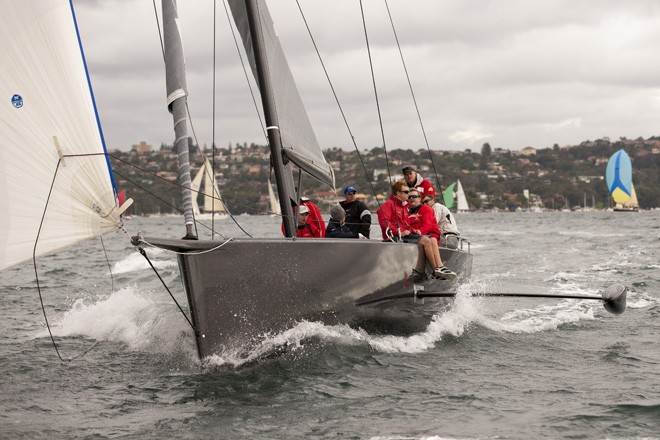
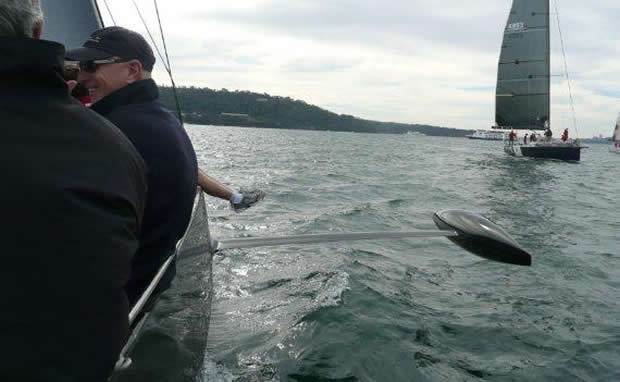
Ive spent much time sitting on the rail looking at keels and often thaught that I could just slide down and stand there. I would love to give this a go
decrepit said... I thought the idea was to keep the keel vertical????? surely it's more efficient that way.
The idea is to maximise the advantage of the weight bulb on the end of the keel. They wouldn't normally sail heeled right over on their ear like in video, though and they wouldn't normally cant the keel until it clears the water surface. That clip is done for an ad, not for maximum performance.
decrepit said... I thought the idea was to keep the keel vertical????? surely it's more efficient that way.
The idea is to maximise the advantage of the weight bulb on the end of the keel. They wouldn't normally sail heeled right over on their ear like in video, though and they wouldn't normally cant the keel until it clears the water surface. That clip is done for an ad, not for maximum performance.
A couple of boats have been released where the canting keel is designed to fly just above the water line to reduce drag. Makes for interesting racing in thight situations. Ill also add that its not 100% sucesfull yet as under spinikar is Sydney Harbour the bulb fell off
I thought the idea was to keep the keel vertical????? surely it's more efficient that way.
Keel and rudder verticle in water is best for control. 5 tonne of balast acting as a leaver out the side best for speed. Lots of these types of boats have a foward dagger board that they lower so they can have the best of both worlds.
I thought the idea was to keep the keel vertical????? surely it's more efficient that way.
the more upright the sail the more efficient itll become - less spill of wind, more efficient forward pull, and greater surface area to wind as well. i think around a 5 degree angle to leeward is the target but depends on the sail and boat.
I thought the idea was to keep the keel vertical????? surely it's more efficient that way.
the more upright the sail the more efficient itll become - less spill of wind, more efficient forward pull, and greater surface area to wind as well. i think around a 5 degree angle to leeward is the target but depends on the sail and boat.
Yea, around 5* is typical/optimum for displacement yacht hulls (if there's such a thing now ). Small boats are meant to be kept pretty much bolt upright (ie mast vertical)

I thought the idea was to keep the keel vertical????? surely it's more efficient that way.
Keel and rudder verticle in water is best for control. 5 tonne of balast acting as a leaver out the side best for speed. Lots of these types of boats have a foward dagger board that they lower so they can have the best of both worlds.