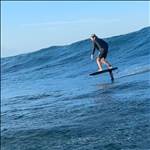
Gidday SUPER SUP-ERS - getting some bigger waves being winter here. Would be keen to know of any techniques that will assist me from being smashed as I struggle to get out the back on beach breaks.
Can you use your paddle to get under the waves. E.g. point the blade end in the direction of the ocean floor and dive off the board as you bail?
Would be interested in hearing different techniques from a few of the more experienced.
Cheers
FOZ
Paddle out prone with the paddle wedged under your chest out in front of you. When a wave comes hold on tight to the board and paddle shaft. I do this in white wash thats too big to paddle over and it works ok. Big there is a limit you just need to test it out to see what that limit is :)
Ive always thought about a couple of handles on the board and roll like the long boarders , never tried it though.I think you just have tot ake a few beatings pick your time and paddle like crazy and hope for the best.
As DirectX says paddling out prone is one way although you may find yourself racing backwards on the crest of the white water . Another way is to adopt a surf stance and paddle at the wave to get some momentum, as the breaking wave hits you push through the board with your front foot and as you get over the white wash get your paddle back into the water quickly to give yourself some balance. Sometimes you just have to bail .
I agree with the advice re paddling out lying down. The only variation I use is to tuck the paddle down the side with the handle a bit in front of my right armpit. As a wave approaches I can sit up and raise the nose and just as the wave hits spring forward. This is basically what they do when they race clubbie boards (minus the paddle of course). As I pop forward I use my right hand to hold both the paddle shaft and the rail to stop it all getting washed away.
Just something you may want to have a crack at next time and works well if there is a short distance between breaking waves.
Cheers
HV
HerbertVoigt said... The only variation I use is to tuck the paddle down the side with the handle a bit in front of my right armpit. As a wave approaches I can sit up and raise the nose and just as the wave hits spring forward. This is basically what they do when they race clubbie boards (minus the paddle of course). As I pop forward I use my right hand to hold both the paddle shaft and the rail to stop it all getting washed away.
Cheers
HV
This would be great to see in really solid waves
My advice - paddle hard dive deep (paddle handle first) and go around where possible.
Reading the ocean is a must. wait inside until there is a break in the sets. Paddle to the whitewater not the shoulder if someone is up and riding the wave. Be aware of people behind you.
HerbertVoigt said... The only variation I use is to tuck the paddle down the side with the handle a bit in front of my right armpit. As a wave approaches I can sit up and raise the nose and just as the wave hits spring forward. This is basically what they do when they race clubbie boards (minus the paddle of course). As I pop forward I use my right hand to hold both the paddle shaft and the rail to stop it all getting washed away.
Cheers
HV
This would be great to see in really solid waves
My advice - paddle hard dive deep (paddle handle first) and go around where possible.
Reading the ocean is a must. wait inside until there is a break in the sets. Paddle to the whitewater not the shoulder if someone is up and riding the wave. Be aware of people behind you.
... and when you do eventually surface, don't be surprised if Hilly is laughing at your tombstoning board
Leg ropes obviously will take a fair bit of weight but what about the actually leggie plug I've often worried about that part letting go.
I haven't tried to Sup surf yet but want to eventually but honestly waves will be small and hopefully this wont be a issue for me.
jbshack said... Leg ropes obviously will take a fair bit of weight but what about the actually leggie plug I've often worried about that part letting go.
I haven't tried to Sup surf yet but want to eventually but honestly waves will be small and hopefully this wont be a issue for me.
1. Paddle wide around the break if possible.
2. Wait for a lull between sets, then go hard.
3. Use a rip if there are any nearby.
4. Get really, really strong and paddle through the whitwater using a surfer stance and transferring weight from front foot to back foot.
5. Surf only points.
6. Bail out, get back on, paddle like hell, bail out, get back on, paddle like hell, bail out, get back on, paddle like hell, bail out, get etc etc etc etc
7. Give up and go home!!!!!
jbshack said... Leg ropes obviously will take a fair bit of weight but what about the actually leggie plug I've often worried about that part letting go.
I haven't tried to Sup surf yet but want to eventually but honestly waves will be small and hopefully this wont be a issue for me.
HerbertVoigt said... The only variation I use is to tuck the paddle down the side with the handle a bit in front of my right armpit. As a wave approaches I can sit up and raise the nose and just as the wave hits spring forward. This is basically what they do when they race clubbie boards (minus the paddle of course). As I pop forward I use my right hand to hold both the paddle shaft and the rail to stop it all getting washed away.
Cheers
HV
This would be great to see in really solid waves
My advice - paddle hard dive deep (paddle handle first) and go around where possible.
Reading the ocean is a must. wait inside until there is a break in the sets. Paddle to the whitewater not the shoulder if someone is up and riding the wave. Be aware of people behind you.
... and when you do eventually surface, don't be surprised if Hilly is laughing at your tombstoning board
HA! There has been plenty of that going on the last few months
HerbertVoigt said... The only variation I use is to tuck the paddle down the side with the handle a bit in front of my right armpit. As a wave approaches I can sit up and raise the nose and just as the wave hits spring forward. This is basically what they do when they race clubbie boards (minus the paddle of course). As I pop forward I use my right hand to hold both the paddle shaft and the rail to stop it all getting washed away.
Cheers
HV
This would be great to see in really solid waves
My advice - paddle hard dive deep (paddle handle first) and go around where possible.
Reading the ocean is a must. wait inside until there is a break in the sets. Paddle to the whitewater not the shoulder if someone is up and riding the wave. Be aware of people behind you.
... and when you do eventually surface, don't be surprised if Hilly is laughing at your tombstoning board
HA! There has been plenty of that going on the last few months
This is a great topic. I to, have been caught by walls of whitewater & my only option has been to bail, dive deep, hang onto paddle (blade end) & rely on the strength of the leg rope.
Have had a terrifying hold down where my board got dragged with me behind it, engulfed in whitewater & I made 3 attempts to surface, not knowing which way was up. On 3rd attempt my head hit the bottom & I realised where I was. At that point I was twice out of breath & seriously thought that was it. Scared the sh$t out of me, still does.
What I learnt from that, was that if the wave is really solid - ditch the paddle. Using 1 arm to swim & the other to pull up the legrope to the surface. Paddle will pop up & won't be too far away.
Obviously paddling around & into rip is first preference, but if you come off in the impact zone on first wave of the set, what techniques do you use?
Might try the 'Kai duckdive', but I feel I might eat the nose of my board on anything above 3ft. Even contemplated using my wakeboard PFD vest on the bigger days.
cheers
ditch the paddle. NO
but if you come off in the impact zone on first wave of the set, what techniques do you use? Dive really deep handle first, been caught by some very large waves you just have to relax and go with it. Panic is your enemy. Nostrils inflate and legs are stretched. Fighting it wastes air and snaps leashes.
Even contemplated using my wakeboard PFD vest on the bigger days. I will be doing this next solid bombie day. I have one I used to tow in with. Do not use the large canoe style ones
Here's my take.
1. Always be aware of where other surfers are and factor that in when paddling out.
2. If you practice enough you can jump white water up to chest high. Keep front foot about 30+cm infront of your normal paddling position and stand in 'surf stance'. Unweight the board upwards (more pressure on back foot) as you are about to hit the whitewater and throw weight forward after climbing whitewater. Crouch low for stability and use the paddle for a brace until turbulence has passed.
3. If surfers are behind you and the whitewater is too big to jump, flick the board over the whitewater by throwing your weight back and using your leg power (in surf stance) to shoot the board over the whitewater.
4. NEVER let go of your paddle, you can use it to help you get to the surface plus you are rooted without it once you get your board back.
5. With very large whitewhiter, sprint towards it then dive off your board as deep as the water depth will allow holding your paddle in ONE hand on the shaft near the top. Go with the flow and don't fight it, relax and you will use less breath.
6. If a large unbroken wave is about to pitch over you (ie you can't get over it) the above technique works well except you are diving INTO the face.
7. IMO you never ever kneel. If you have to kneel the board must be too small for you. You will get smashed kneeling and its looks horrendous I reckon.
8. Prone paddling is a good option when you have to quickly get over something after you have fallen off but is difficult over whitewater. Even using the clubbie technique mentioned earlier you can get over much bigger stuff standing.
9. Use rips channels wherever possible.
10. Avoid crowed spots particularly beach breaks with no obvious channels.
The only reason to kneel is that you can get paddling much sooner than trying to get to your feet and getting balanced, especially if you are tired after a couple of beatings.
Even then, being on your knees is only useful if you can get out the back/over the unbroken wave before the next wave hits you, or the next wave is so small that you can get over it on your knees or sitting or whatever.
You might also knee paddle if you can make good distance towards the next wave before you dive under/over. It's a balancing act, waste energy paddling out and getting dragged all the way back, or push hard to get that little bit further out before the next wave hits.
Generally being on your knees is bad because you take the white water on your torso and get washed backwards. If you are standing then only your feet and lower legs get washed so there is very much less drag. It is always easier to go over a wave on your feet. If you are not comfortable with surf stance simply standing with your legs parallel 6-12" further back makes a big difference.
If I have been knocked off by a wave and the next wall of white water is rushing down I will either; stay in the water and duck dive under letting the board stream out on the leg rope; or even turn around and prone back towards the beach and to the side so I can be in a better position to get out in the next lull.
With diving, going under is pretty easy and not such a drama as long as the leggie doesn't snap. Diving over and/or kicking the board over can be good but you risk getting clobbered by the board. Make sure you kick the board a bit sideways so you don't get pinged by it.
I have tried a variation of the longboard rollover method where you tuck the nose of the board under one arm as you duck dive. The idea is that the nose comes under with you and the white water bangs harmlessly on the tail. It works on small waves but I have had no success on big waves.
Never ever ever ever try to hold onto the leg rope or rail saver. You will just damage your hand and fingers doing that.
I have heard of people putting nice soft handles on their boards so they can tow the board down and under the wave when they duck dive similar to the longboard duck dive. It sounds a bit scary to me.
Plan B is to have a short board or a boogie board in the car for those days when the SUP is too hard.
jbshack said... Leg ropes obviously will take a fair bit of weight but what about the actually leggie plug I've often worried about that part letting go.
I haven't tried to Sup surf yet but want to eventually but honestly waves will be small and hopefully this wont be a issue for me.
Better not tell your mates in the SB forum!
YEA
I'm only doing it cause the great Lacey said i had too
jbshack said... Leg ropes obviously will take a fair bit of weight but what about the actually leggie plug I've often worried about that part letting go.
I haven't tried to Sup surf yet but want to eventually but honestly waves will be small and hopefully this wont be a issue for me.
Better not tell your mates in the SB forum!
YEA
I'm only doing it cause the great Lacey said i had too
Gorgo said... The only reason to kneel is that you can get paddling much sooner than trying to get to your feet and getting balanced, especially if you are tired after a couple of beatings.
If you learn to pop up like when you ride a short board there is no need to kneel EVER.
Gorgo said... The only reason to kneel is that you can get paddling much sooner than trying to get to your feet and getting balanced, especially if you are tired after a couple of beatings.
If you learn to pop up like when you ride a short board there is no need to kneel EVER.
+1 hate kneeling paddle too long and very slow. Prone or standing are better options.
Gorgo said... The only reason to kneel is that you can get paddling much sooner than trying to get to your feet and getting balanced, especially if you are tired after a couple of beatings.
If you learn to pop up like when you ride a short board there is no need to kneel EVER.
It's not a matter of learning. It's technically easy to pop straight to your feet. But, after enough poundings, you can be too tired to jump straight to your feet and get stable and get moving before the white water knocks you off again. I'm pretty fit and that happens to me sometimes. You need to get that 30 second breather to get your strength back so you can get to your feet.
If you have the strength and skill to pop your feet and paddle out over chest high white water then you don't need to ask these questions.
+1 hate kneeling paddle too long and very slow. Prone or standing are better options.
++2 Spend some time on the beach watching the rips , they are you ticket out. Time you get out in the lull and hit it hard. Start on your feet and when you knocked down it's all about getting back on your board fast . Use a short leggie for fast recovery get on your guts and paddle like hell , even if it's just 2 strokes before the next one hits you. Set the paddle out front under water to stop the drag back , get back up lay on your paddle and go. If you can touch the bottom run or crawl on the sand to make ground under the wave.
The only thing you have in your advantage over a short board is the Sup paddling speed , use it to crack the line up. No matter how much your arms hurt 40 secs of pain can avoid a 15 min hiding.
Get to your feet when you can and just paddle (don't rest) even if you think you are out far enough keep going , it's easier to paddle back into the line up than to get picked off by a freak set which puts you back in the hell zone.
No leg ropes here and the 5 min mark is when things get entertaining. You dont get to see them popping waves as I described but it gives you an idea of the sort of conditions when it used with the other alternative to grab the straps roll.
Hilly how do you look in a pair of red DTs
Cheers
Herby