Installing a wood heater

> 10 years ago
Reply
Register to post, see what you've read, and subscribe to topics.
Greenroom
Greenroom
WA
7608 posts
WA, 7608 posts
22 May 2013 7:35pm
I have a radiant wood heater and want to know how close I can have it to the wall.
The manufactures instructions say 400mm but may be closer to the wall if the wall is not combustible (ie brick or plastered brick) or if the wall is protected by an additional shield.
Instead of getting the standard plaster on brick, we got gyprock stuck onto the bricks. Dry wall. No wood or studs just gyprock glued directly onto the internal brick walls.
My question is... Is this classed as combustible? And how close can I put my heater to the wall?
Thanks
thePup
thePup
13831 posts
13831 posts
22 May 2013 7:44pm
CSR brand gyprock has a cardboard outer layer (possible ignition source if too close to heat)- gyprock sheeting itself is rated to withstand fire but only for so long before it powderises (there are some that can be purchased with foil outer layer instead of cardboard and these are fire preventative type sheets)... keep it as far away from any wall as you can even brick ... it will discolour your brick mortar and bricks if it's too close - consider putting in a stainless steel backboard or tiles to keep the heat off your walls too
sameh
sameh
WA
310 posts
WA, 310 posts
22 May 2013 7:46pm
www.gyprock.com.au/products/plasterboard-fyrchek

We used this stuff in a commercial build. Still would leave at least 100mm between it and the oven. Depends how easy it is to remove the existing gyprock sheet and replace with fyrechek. Thicker than normal gyprock 16mm so will sit proud of the rest of the wall.
Sailhack
Sailhack
VIC
5000 posts
VIC, 5000 posts
22 May 2013 10:12pm
I wouldn't go with fyrecheck either - villa board or 9mm fc sheet would be more preferable - as a non-combustible material, and by the RBS. Additionally - fire retardent paint might get you over the line.
busterwa
busterwa
3782 posts
3782 posts
22 May 2013 8:51pm
I have a hearth with a large old Tasmanian open fireplace. The surrounding walls are plaster and the fascia is flame retardant gyp-rocka (same as sameh pointed out). There is insurance issues if the installation does not comply with specs.. You would have to post the exact fireplace model and id have to look it up. There is fireplaces available with shielding on side and back for specific requirements.

Another main concern is the flu. Depending on the fireplace the flu that runs thru the roof may require double insulation.(check your rook insulation isnt old and combustible) ( 2 chimneys with fire retardant between) . My inner flue is 8 inches and out is 10 The fireplace is uninstalled because its in the centre of the house runs thru the main beams overhead requires a lobster back bend. Its more feasible for us to spend the money on reverse cycle !


There is advantages of having a second insulation flu the major one being the ceiling strapping dont drop or you wont get ceiling cracks if you stoke it up . Another advantage would be less condensation accumulation during early morning.
T 11
T 11
TAS
811 posts
TAS, 811 posts
23 May 2013 12:29am
Sailhack said..

I wouldn't go with fyrecheck either - villa board or 9mm fc sheet would be more preferable - as a non-combustible material, and by the RBS. Additionally - fire retardent paint might get you over the line.

My mate had 9mm fc sheet 300 mm packed out with 50 x 25 hardwood battens open at top and bottom to let the air vent upwards behind his woodheater and burning pepermint gum (burns really hot) the battens behind the sheet caught fire and caused a fairly hard to put out fire behind the sheet.
Be carefull with well meaning advice, just do it to the Aust. building code, they write that stuff for a reason.
Greenroom
Greenroom
WA
7608 posts
WA, 7608 posts
22 May 2013 10:37pm
Thanks for the comments and help.
Here are some photos that might help.
The place where it's to go.


The plate on the back of the heater.


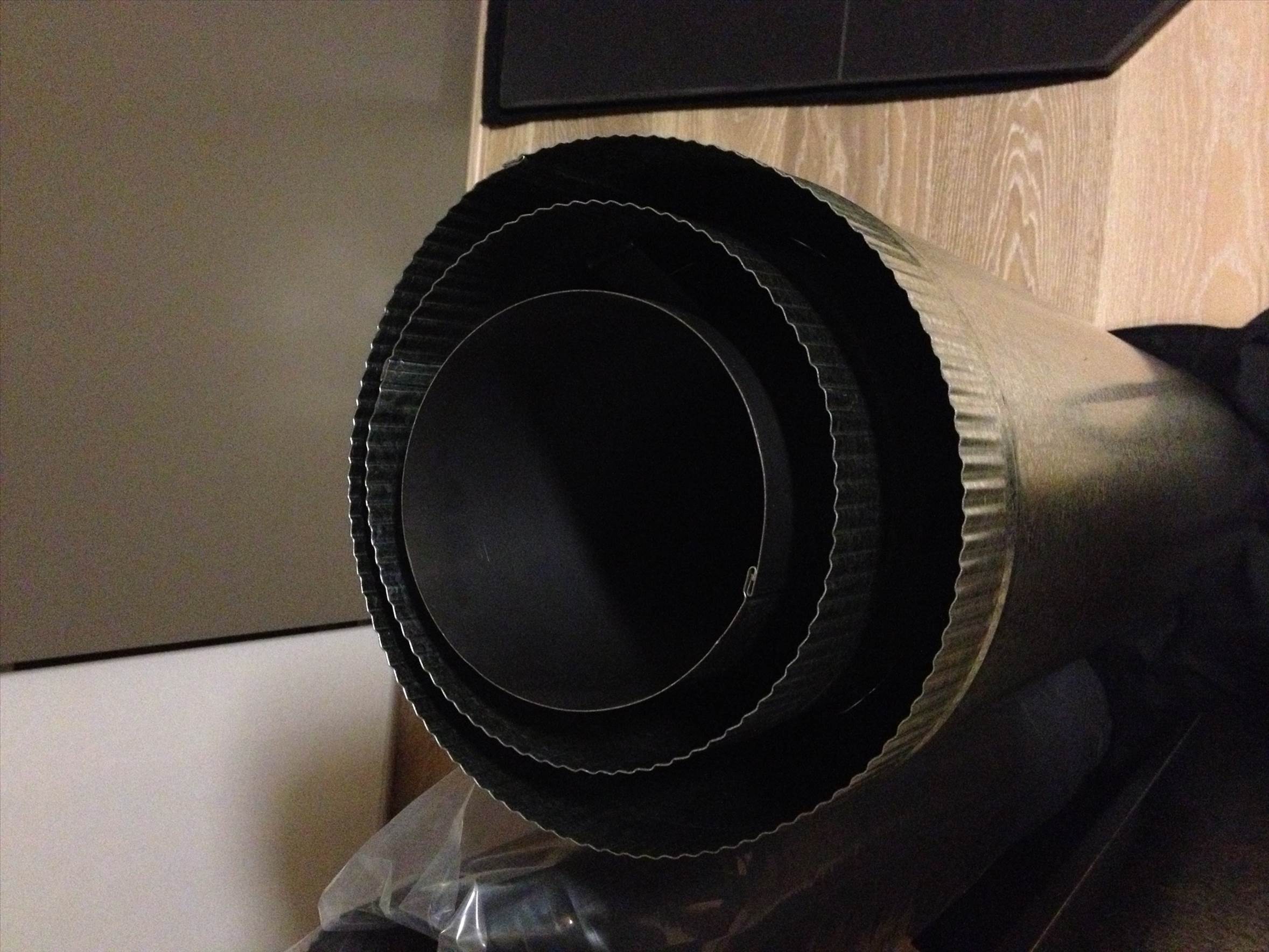
The flue


The instructions say 400mm from combustible walls. I want to go closer
Chris6791
Chris6791
WA
3271 posts
WA, 3271 posts
22 May 2013 10:43pm
Are they talking 400mm from the backing plate or from the actual cabinet?
Greenroom
Greenroom
WA
7608 posts
WA, 7608 posts
22 May 2013 10:45pm
400mm from the backing plate.
landyacht
landyacht
WA
5921 posts
WA, 5921 posts
22 May 2013 10:46pm
we had a heater that had a MESH screen set 50mm out from the casting around the sides and back the back of the mesh was 200mm from the gyprock wall. all OK the temp difference after the mesh was significant,and allowed air to circulate.
more significantly was whre the double flue went through the gyprock cieling. and within 200mm of a roof timber. we were lucky never to set that alight. When i rebuilt the roof space to take the flue I moved the timbers away to 350mm all round and would put a much bigger cut out in the gyprock
Chook2
Chook2
WA
1249 posts
WA, 1249 posts
22 May 2013 11:33pm
My Kent tile fire at the farm was set only 250mm away from the gyprock wall and after the first winter the paint was buggered and the cardboard coating had dissolved/ powdered.

We refitted a fibro sheet and tiled behind it.

We also had to enlarge the hole in the stainless ceiling shroud to get some airflow through, to keep the roof timbers from smouldering as they were only 200mm away from the double flue pipe. I replaced them with steel later on, for piece of mind.

Mallee roots burn pretty hot.

Also make absolutely sure that you have wiped off all your finger prints on your exposed flue with metho, before you light it for the first time, as their pattern will bake onto it. Much more noticeable with a stainless steel flue.

My prints are still there for all to see and it was installed 29 years ago.
Paradox
Paradox
QLD
1326 posts
QLD, 1326 posts
23 May 2013 2:59pm
The instructions say 400mm+ to anything combustible. Stick with it, but approach the problem logically. Chance of fire is low, but chance of crappy looking burnt wall is high.

I would suggest that even if gyprock is not considered combustible you will have issues with it closer than 400mm. If it was me I would cut out a square of the gyprock, say min 500 around the outline of the stove, and tile it (or maybe stainless steel over FC sheeting). Do that and you can probably put the stove within 100mm of the wall no problems - possibly hard up against it with that spacer it has. provided, again nothing combustible within 400mm.

teatrea
teatrea
QLD
4177 posts
QLD, 4177 posts
23 May 2013 7:56pm
Have a look at rockett mass heaters , way more efficient than conventional wood heaters.
Chris6791
Chris6791
WA
3271 posts
WA, 3271 posts
23 May 2013 6:29pm
Just remember to install the flue beyond the ceiling . I went to a house fire a few years ago where the flue dumped straight into the roof cavity. Homeswest had just done a major refit of the house and the dude that installed the wood heater and flue forgot to do the job properly. First night the new tenants moved in they lit the fire and the house promptly burnt to the ground. $100k of tax dollars up in smoke.
FormulaNova
FormulaNova
WA
15105 posts
WA, 15105 posts
23 May 2013 7:40pm
My dad installed some stone faced material around a combustion heater years ago. It was about 100mm from the heater to the wall, and behind the material were bricks.

One night, the 'masonite' backing of the stone caught fire. I guess it dried out after a while and ignited, even though it was behind about 6mm of stone/brick. These were the days before smoke detectors, so luckily someone woke up from the smoke.

If I were doing it, I would be paranoid about it.

Mark _australia
Mark _australia
WA
23687 posts
WA, 23687 posts
23 May 2013 8:13pm
I have had a similar wood heater about 300mm out from a stud wall, and got it as hot as any fire ever gets - whitegum roaring, flue was dull red about halfway to the ceiling.
The wall was fine.
Stick to the 400mm recommended and be done with it.

Greenroom
Greenroom
WA
7608 posts
WA, 7608 posts
23 May 2013 10:18pm
Done. Thanks everyone for your help. 400mm it is

Greenroom
Greenroom
WA
7608 posts
WA, 7608 posts
23 May 2013 10:18pm
^^^Although I installed it vertically^^^
Mark _australia
Mark _australia
WA
23687 posts
WA, 23687 posts
23 May 2013 10:30pm
You sure that's 400 Owen?

Greenroom
Greenroom
WA
7608 posts
WA, 7608 posts
24 May 2013 12:32am
Mark _australia said...
You sure that's 400 Owen?


Yeah looks close in the photo. But it is 400 from the wall to back plate.
Paradox
Paradox
QLD
1326 posts
QLD, 1326 posts
24 May 2013 9:10am
Yeah, no sorry - we are going to have to see a shot with a measuring tape up against that gap....Otherwise I'm writing to someone...
Sailhack
Sailhack
VIC
5000 posts
VIC, 5000 posts
24 May 2013 10:35am
T 11 said..


Sailhack said..

I wouldn't go with fyrecheck either - villa board or 9mm fc sheet would be more preferable - as a non-combustible material, and by the RBS. Additionally - fire retardent paint might get you over the line.


My mate had 9mm fc sheet 300 mm packed out with 50 x 25 hardwood battens open at top and bottom to let the air vent upwards behind his woodheater and burning pepermint gum (burns really hot) the battens behind the sheet caught fire and caused a fairly hard to put out fire behind the sheet.
Be carefull with well meaning advice, just do it to the Aust. building code, they write that stuff for a reason.


The horse has bolted now... But you're right - go with the instructions so as not to void your insurance. THe BCA & regs generally don't state specifics, but refer to the individual installation instructions.


Btw - something's not right with your mate's heater if it did that though?! Was it an enclosed wall-heater, or when you say it was "open at top & bottom" - do you mean that the battens were exposed? 9mm fc sheet shouldn't allow enough heat transference to ignite even a softwood, let alone hardwood - especially if the battens are sealed from external air source. It would basically need a flame-thrower on it for several minutes (hours?) to heat the fc sheet through.
Please Register, or first...
Topics Subscribe Reply