Dangers of getting to your moored boat.

25 days ago
Reply
Register to post, see what you've read, and subscribe to topics.
Yara
Yara
NSW
1325 posts
NSW, 1325 posts
28 Sep 2026 10:51am
Lane Cove Council is planning to limit shore dinghy storage areas and I pointed out to them the risks of doing so. (Last year I rescued an older gentleman who had slipped on his boarding ladder and fell onto his dinghy, which turned over and sank.)

Sadly, I see recently a poor chap was not so lucky: www.facebook.com/anne.howell.923/posts/pfbid0TEA4V2PQZGUu3G2no8uBxnybZRjnsbazMLcTMDkBwejPs1idApPVdt1KQGtpMHckl?comment_id=1574465790566276

Was he one of us?
Trek
Trek
NSW
1236 posts
NSW, 1236 posts
29 Sep 2026 6:38pm
That was nearly me. One of the plastic steps on my boarding ladder broke and after my foot went through that step it also went through the next one down. Luckily I was holding onto stanchions with both hands at the time.
PacificStar
PacificStar
NSW
81 posts
NSW, 81 posts
29 Sep 2026 8:46pm
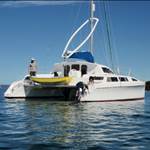
we actually rescused an older chap who had fallen out of his dinghy at newport late one winters afternoon. he was fully dressed ie heavy and it was getting dim, and once we had motored past there was no-one else around. fortunately we saw him and dragged him onboard our cat (easy up the back steps). i honestly dont think we would have survived if we had missed him.

apparently his dinghy was caught athwart the mooring line of a boat while he was rowing and capsized. he then made the cardinal sin of trying to swim but was too old too cold and too heavy

anyway, a happy ending - but small rigid fiberglass dinghys can tip incredibly easily sometimes. RIBs on the otherhand are super safe, but hard to row and store. i've had many of both but these days it's a RIB with an outboard.

cheers,
Jolene
Jolene
WA
1625 posts
WA, 1625 posts
29 Sep 2026 8:16pm
There is a book out there" Suddenly Overboard"
it contains short stories of near death and deadly experiences of sailors , some occur at the mooring .
Planter
Planter
NSW
194 posts
NSW, 194 posts
30 Sep 2026 5:38am
Starting with the premise - ALWAYS WEAR A LIFEJACKET !!!

Small fibreglass dinghy is positively dangerous,and can tip/capsize in an instant. Are then awash,and difficult to bail out . But,light/easy to store !?

Had one,but quickly got a 10ft Tinny - awkward/heavier,but should not tip or sink,and can be bailed out. Also,can get back in over the stern if fit/light enough ?Rowable in as breeze,and will get there with 18lb mini watersnake el. outboard.

RIB ideal with a motor,but difficult to row + will blow away from you ! Not recommended to leave on the shore tied to a tree = temptation to puncture ? So have to dismantle,or tow home .


Jethrow
Jethrow
NSW
1285 posts
NSW, 1285 posts
30 Sep 2026 7:33am
Yes I heard a story a while back about someone getting into their dinghy and it capsizing. It definitely made me think about that, and so I installed a fold down telescopic ladder on the deck with a line that hangs over the side tied to the bottom rung. If I fall in, I know I can reach the rope and pull the ladder down to get back onboard.
Chris 249
Chris 249
NSW
3617 posts
NSW, 3617 posts
30 Sep 2026 9:45pm
Planter said..
Starting with the premise - ALWAYS WEAR A LIFEJACKET !!!

Small fibreglass dinghy is positively dangerous,and can tip/capsize in an instant. Are then awash,and difficult to bail out . But,light/easy to store !?

Had one,but quickly got a 10ft Tinny - awkward/heavier,but should not tip or sink,and can be bailed out. Also,can get back in over the stern if fit/light enough ?Rowable in as breeze,and will get there with 18lb mini watersnake el. outboard.

RIB ideal with a motor,but difficult to row + will blow away from you ! Not recommended to leave on the shore tied to a tree = temptation to puncture ? So have to dismantle,or tow home .


NO.

Why always wear a lifejacket? So you can’t swim as quickly? Because you want to make it harder to get onboard your own boat, or another boat in the mooring field? Because those of us who bodysurf in big waves for ages or spend 60 minutes diving to clean our hulls will suddenly forget how to swim if we get dunked, which is something we do regularly when sailing dinghies, cats or boards?

How often do you end up in the water? As someone who windsurfs and sails dinghies, I often end up clambering back on board and having a PFD can be a PITA. The buckles can catch, they can slow you down so you may not be able to catch a drifting boat, and since we can quite easily swim the distance from our boats to the shore and back again a bunch of times, the chance that drowning will suddenly become an issue is basically non-existent.

If small fibreglass dinghies are positively dangerous then how come some of us have owned them for years and not capsized or filled them? I live aboard for four years and for most of that time I had little fibreglass dinghies with no problems. And it’s easy to get aboard a 7ft or so ‘glass dinghy - some of us do so after swimming.

The big thing about much of this is that most people never get into a situation where they have to practice skills like getting back aboard their own boat (or a nearby boat), don’t work on their balance, and don’t work out how they can get their heavy clothes off if they are like the guy Pacific Star luckily saved, and can’t swim well like the guy I saved.

Yes, the chap who sadly died in Quakers Hat Bay was a surfer - but he also seems to have hit his head, and we don’t know if he was used to boats. If you are unconscious in a PFD you are basically dead anyway. Most PFDs won’t float your head properly, and even the ones that do don’t stop the normal tendency for an unconscious person to turn face to wind and drown from splash. If you want to prevent drowning after being knocked unconscious then wear a full-face helmet at all times, and wear a high-end PFD with the splashguard deployed.





Planter
Planter
NSW
194 posts
NSW, 194 posts
1 Oct 2026 6:41am
OK - but it is the Law - Ask Malcolm Turnbull !

Also,for the rest of us who are either infirm/elderly or not agile,it is a better option than sinking !

Or subscribe to the master plan,and get a Marina berth ?
Trek
Trek
NSW
1236 posts
NSW, 1236 posts
1 Oct 2026 12:14pm
Im with Chris249 on this one. Years back we hit a bar and the boat lay nearly flat amid decent waves. The first thing everyone did was throw off lifej ackets so we could work without getting tanged up. If I was going to jump in I would wear it.
MorningBird
MorningBird
NSW
2717 posts
NSW, 2717 posts
2 Oct 2026 11:48am
I can swim, except maybe in a bar situation or at night in bad weather. I only wear a pfd crossing a bar and when on watch at night.
Wearing one in a tender is a PITA and there is almost no situation where I couldn't swim to the boat or to shore.
Governments making laws for only the lowest common denominator, like forcing everybody to wear a pfd in a tender, is just dumbing down the population.
cammd
cammd
QLD
4623 posts
QLD, 4623 posts
2 Oct 2026 3:27pm
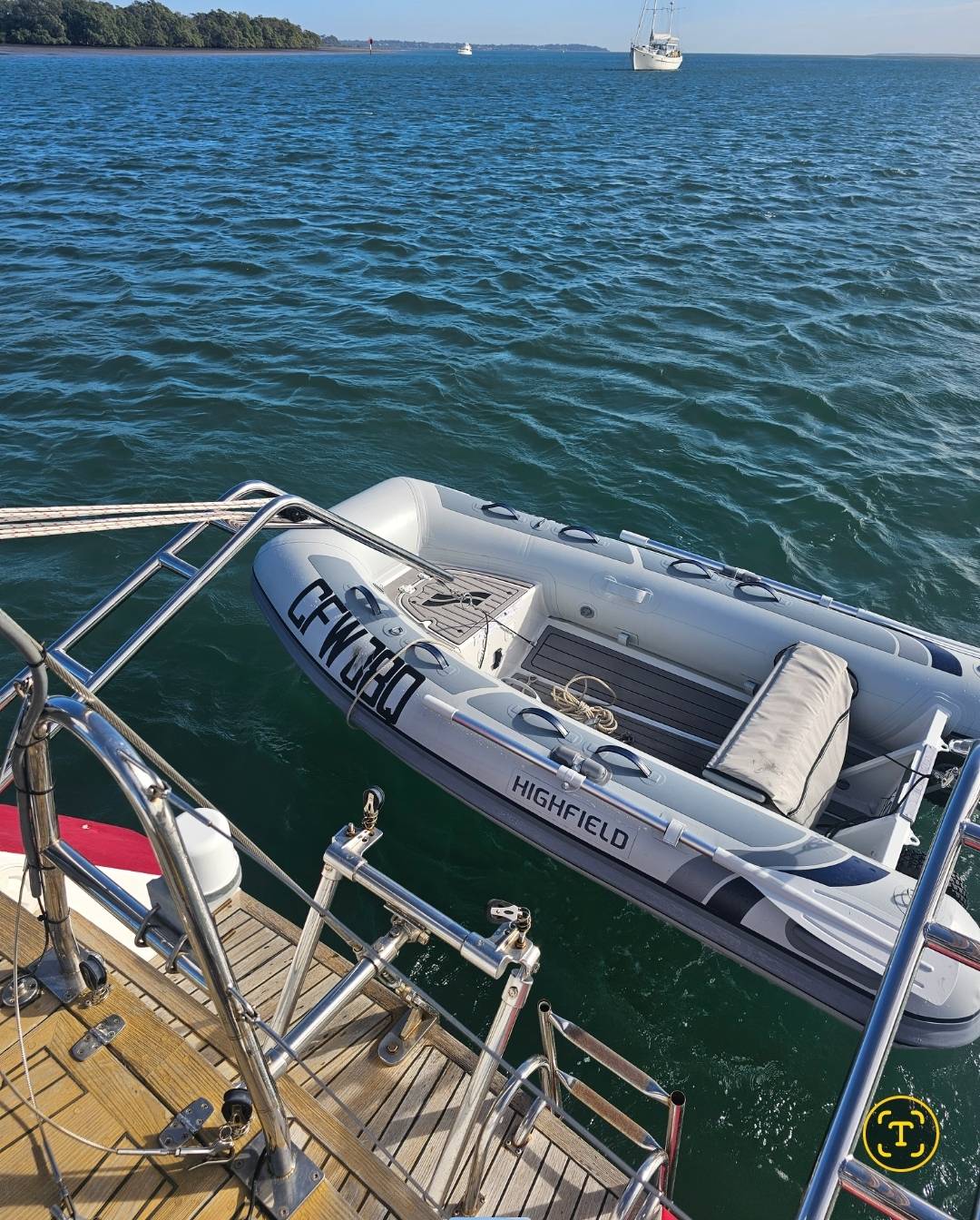
I installed these davits last year, they make tying up and getting in and out of the dinghy very easy. Basically have a handrail to hold onto when stepping across.


Toph
Toph
WA
1914 posts
WA, 1914 posts
2 Oct 2026 6:45pm
MorningBird said..
I can swim, except maybe in a bar situation or at night in bad weather. I only wear a pfd crossing a bar and when on watch at night.
Wearing one in a tender is a PITA and there is almost no situation where I couldn't swim to the boat or to shore.
Governments making laws for only the lowest common denominator, like forcing everybody to wear a pfd in a tender, is just dumbing down the population.


I agree with this.


Crossing a bar (very rare experience here in WA), at night and anytime the question gets asked due weather.


I personally have a few other variables such as Im suspect of a guests ability to swim but that those variables are few and far between. I rarely mandate it in the dingy, law or not.
Yara
Yara
NSW
1325 posts
NSW, 1325 posts
3 Oct 2026 7:52am
If you are an older person,climbing back into the dinghy can be impossible. Anyway most are not stable enough. In the case of the gentlemen I rescued, the horseshoe life ring I gave him made a huge difference. A modern slim inflatable life jacket can provide the time to wait for rescue, provided we are talking about typical mooring areas like Sydney and surrounds. I am not keen on the auto inflating ones though, read too many stories of them inflating at the wrong time and making a situation worse.
Kankama
Kankama
NSW
853 posts
NSW, 853 posts
3 Oct 2026 10:03am
The thing that irks me about my inflatable lifejacket is that rowing is a pain. It catches on the oars readily. It also makes clambering into a dinghy harder.A dinghy style pfd is probably the best idea, I sail my Laser in one with no issues and can clamber pretty well in it.

Still, if I hit my head then nothing will help.


Jormungandr
Jormungandr
NSW
34 posts
NSW, 34 posts
3 Oct 2026 11:55am
Stay fit. Stay healthy.
Toph
Toph
WA
1914 posts
WA, 1914 posts
3 Oct 2026 1:02pm
Yes kinda like eat less calories then you spend..

Sometimes, just sometimes, its out of ones hands. So do you just give up something you love?
Planter
Planter
NSW
194 posts
NSW, 194 posts
4 Oct 2026 6:33am
Kankama said..
The thing that irks me about my inflatable lifejacket is that rowing is a pain. It catches on the oars readily. It also makes clambering into a dinghy harder.A dinghy style pfd is probably the best idea, I sail my Laser in one with no issues and can clamber pretty well in it.

Still, if I hit my head then nothing will help.


+ 1 for Hobie Kayak PFD = easy rowing - buckles/zip,and open at the back ,with few loose bits to catch on- had them for years,and fits like snug vest,

Ramona
Ramona
NSW
7772 posts
NSW, 7772 posts
4 Oct 2026 9:20am
You have to have a plan. Most accidents and fatalities occur climbing from the dinghy to the yacht. Because I always sail solo I wear an inflatable vest while traveling out to my boat because of the NSW regulations. I'm in an estuary with sometimes very strong current. Too strong for me to swim against wearing an un inflated vest. My tender has a fold down ss ladder on the stern that I can climb fairly easily wearing all my diving clobber. If I fell and missed grabbing the dinghy as I passed I would slowly swim across current to the nearest bank. Depending on which way the current is flowing it might be a long walk home along the bank but it beats being dead. I think about it regularly. Winter time might be a problem and I am extra cautious.
shaggybaxter
shaggybaxter
QLD
2703 posts
QLD, 2703 posts
4 Oct 2026 8:54am
I remember ages ago reading something about men having a higher 'centre of gravity', being more body mass in shoulders/chest/arms.
So that was always a convenient go-to when I'd do some clumsy,ungraceful movement across the boat, and one of the girls would float through the same movement.
Then recently I discovered that whjilst women do have a lower CoG, the difference is only 1-2% (without factoring height).
Curses.
That means it's me.
Bugger.

Quixotic
Quixotic
ACT
262 posts
ACT, 262 posts
4 Oct 2026 11:19am
For those not as young as they used to be in this thread... (from: vestibular.org/article/coping-support/living-with-a-vestibular-disorder/age-related-dizziness-and-imbalance/balance-aging/ )

"The inner ear is a complex structure of fluid filled tubes and chambers. Specialized nerve endings inside these structures sense the position and movement of the head and detect the direction of gravity. Signals sent from the nerves of the vestibular system are critically important to the brain’s ability to control balance in standing and walking. They also control movements of the eyes that make it possible to see clearly while moving.

"Anatomical studies have shown that the number of nerve cells in the vestibular system decreases after about age 55. Blood flow to the inner ear also decreases with age. When the vestibular system is damaged, an individual may experience dizziness and balance problems. However, the gradual loss of vestibular nerve endings with aging can result in balance problems without any associated dizziness. This type of slow loss of vestibular function may be first noticed as difficulty walking or standing, especially in the dark while on soft or uneven surfaces (such as thick carpet or a forest path).

"A decline in balance from inner ear function may be caused by a number of conditions including normal aging, benign paroxysmal positional vertigo (BPPV), infection, Meniere’s disease, or diminished blood flow to specialized nerve cells. Additionally, certain medications such as some antibiotics for severe infections and chemotherapy may damage the inner ear, resulting in temporary or permanent hearing loss, impaired balance, and trouble seeing clearly while in motion. Feelings of dizziness, vertigo, imbalance, and disequilibrium may indicate that the inner ear is not functioning correctly."

In my totally amateur (ie unqualified) opinion, this is also complicated by a marginal loss of both strength and reaction times that decrease agility in older age.

You can offset these up to a point by doing things that require balance and leg/core strength. In my completely unqualified opinion, that includes sailing, especially if it is done regularly in a decent swell.

So sufficient caution and practice getting dinghy to boat and getting on board, supplemented by plenty of offshore miles!

None of this constitutes advice which anyone else should follow. Make you own decisions and balance (sic) your own risks! 😀
Chris 249
Chris 249
NSW
3617 posts
NSW, 3617 posts
4 Oct 2026 7:30pm
Quixotic said..
For those not as young as they used to be in this thread... (from: vestibular.org/article/coping-support/living-with-a-vestibular-disorder/age-related-dizziness-and-imbalance/balance-aging/ )

"The inner ear is a complex structure of fluid filled tubes and chambers. Specialized nerve endings inside these structures sense the position and movement of the head and detect the direction of gravity. Signals sent from the nerves of the vestibular system are critically important to the brain’s ability to control balance in standing and walking. They also control movements of the eyes that make it possible to see clearly while moving.

"Anatomical studies have shown that the number of nerve cells in the vestibular system decreases after about age 55. Blood flow to the inner ear also decreases with age. When the vestibular system is damaged, an individual may experience dizziness and balance problems. However, the gradual loss of vestibular nerve endings with aging can result in balance problems without any associated dizziness. This type of slow loss of vestibular function may be first noticed as difficulty walking or standing, especially in the dark while on soft or uneven surfaces (such as thick carpet or a forest path).

"A decline in balance from inner ear function may be caused by a number of conditions including normal aging, benign paroxysmal positional vertigo (BPPV), infection, Meniere’s disease, or diminished blood flow to specialized nerve cells. Additionally, certain medications such as some antibiotics for severe infections and chemotherapy may damage the inner ear, resulting in temporary or permanent hearing loss, impaired balance, and trouble seeing clearly while in motion. Feelings of dizziness, vertigo, imbalance, and disequilibrium may indicate that the inner ear is not functioning correctly."

In my totally amateur (ie unqualified) opinion, this is also complicated by a marginal loss of both strength and reaction times that decrease agility in older age.

You can offset these up to a point by doing things that require balance and leg/core strength. In my completely unqualified opinion, that includes sailing, especially if it is done regularly in a decent swell.

So sufficient caution and practice getting dinghy to boat and getting on board, supplemented by plenty of offshore miles!

None of this constitutes advice which anyone else should follow. Make you own decisions and balance (sic) your own risks! 😀


Excellent post.

My wife is a neuroscientist who does a lot of work on balance, using forceplates and other tech. One of her students once did a study and pulled in her mother's friends from her yoga class, who basically blew up the age/balance correlation because their balance was excellent despite their age. So yes, balance, like strength, is very much something you can work on and improve even as you age.

It's interesting to look at masters sports records to see what happens when you age. In cycling, the world hour record for the over 90s is 60% of the speed of the open record held by a pro world champ. Sure, resistance increases by the square so going faster becomes hard, but the fact that someone in their 90s can hold 35 kmh for a full hour, with the drag of going around corners, shows what can happen if one works on one's fitness. Most 20 year olds would probably die doing that. A good 60+ racing cyclist will drop a 35 year old cafe racer with ease, let alone a normal person - and as for a 35 year old hanging onto some of the older and smaller women masters up a hill, forget it.

On top of that, working on your physical fitness has innumerable other advantages for health, whereas worrying about safety gear doesn't.


JonE
JonE
VIC
669 posts
VIC, 669 posts
4 Oct 2026 8:59pm
"One of her students once did a study and pulled in her mother's friends from her yoga class, who basically blew up the age/balance correlation because their balance was excellent despite their age"

Sorry but thats such a crap assertion.

It's like saying "we did a study on how good people were at ball sports by age group and we selected some unco teenagers and a masters footy team and found that older people were better".

I know you're triggered by lifejackets but saying that going to yoga is more likely to prevent you drowning than taking reasonable safety precautions is trolling, surely?

Besides, I've been to a few yoga classes and some of the older (usually female) participants have incredible balance - no doubt, but any of them that are any good have been doing it for years.
Kankama
Kankama
NSW
853 posts
NSW, 853 posts
5 Oct 2026 8:48am
I am pretty sure an assertion is a statement without data whereas the data is provided. Regular exercise provides balance benefits to old people. Pretty rudimentary science.

Saying someone is triggered is a way of dismissing a viewpoint we may not like. I think it is important to be able to refute ideas properly.

Lifejackets are great, but they are not the constant go to in safety. I think Ramona is right on the button when he uses his experience to analyse risk and then work out what is the best approach. Sometimes this means putting on a lifejacket, but not always.
JonE
JonE
VIC
669 posts
VIC, 669 posts
5 Oct 2026 10:29am
I asked ChatGPT to arbitrate. It said I was right but being a troll


JonE has the stronger objection to the evidence and the safety comparison, but overstates what the original poster actually said. Kankama is right about exercise, but doesn’t answer the methodological criticism.
There are three separate questions here.
1. Does the yoga anecdote establish what is claimed?
It supports the modest observation that some older people have excellent balance. It does not, by itself, establish that yoga caused their balance, quantify improvement, or overturn the general relationship between age and balance.
Recruiting an older group from a yoga class potentially mixes age with training, underlying health and selection: people with good balance may be more likely to attend and continue yoga. JonE’s analogy identifies that problem reasonably well.
However, we haven’t seen the study. That recruitment could be perfectly appropriate for some research questions. The questionable part is presenting the anecdote as having “blown up” the age–balance correlation.
2. Can older people improve balance through training?
Yes. The underlying proposition is supported by much better evidence than this anecdote. Randomised trials of yoga show balance benefits compared with inactive controls; a large Cochrane review found exercise programmes reduced the rate of falls among older people by about 23%. Neither finding establishes a comparable reduction in falling overboard or drowning.
So Kankama is right about the general proposition, but a true conclusion does not make every argument offered for it sound.
JonE’s observation that the good participants have practised for years doesn’t refute trainability. It is compatible with training helping, although it still doesn’t prove causation.
The masters cycling examples have the same limitation: even accepting the figures, exceptional athletes demonstrate what is possible, rather than what is typical or achievable for everyone.
3. Does that support the argument about lifejackets?
No comparative evidence has been supplied. Better balance could plausibly reduce some ways of entering the water; a lifejacket addresses the consequences once someone is in it. These are complementary precautions.
There is direct evidence relevant to lifejackets: one matched observational study found wearing a PFD was associated with approximately half the risk of drowning death, although the authors acknowledged possible bias from excluded records.
The original closing sentence compares the benefits of working on fitness with “worrying about” safety gear. That wording sidesteps the useful comparison: taking fitness measures versus actually using appropriate equipment.
But JonE’s claim that the poster said yoga was more likely to prevent drowning than reasonable precautions goes beyond the supplied wording. The insinuation is understandable; the explicit comparative claim isn’t there. “Triggered” and “trolling” add no evidence.
Finally, Kankama’s definition of assertion is wrong: an assertion is a statement put forward as true, whether supported or unsupported. And an unspecified second-hand account of a study is not the same as supplying its data.
My ruling: JonE’s substantive criticism largely stands. It would be stronger with less personal language and a more precise distinction between “older people can retain excellent balance” and “this anecdote proves training causes it or justifies dispensing with safety equipment.”

julesmoto
julesmoto
NSW
1613 posts
NSW, 1613 posts
6 Oct 2026 9:09am
I've got a plb in my inflatable life jacket and I could probably wear it without a life jacket although I generally don't. I figure it's $400 well spent especially considering all the other exorbitant costs of owning a yacht and my advancing age. It's the ultimate plan b.

When I bought my yacht I didn't pay any attention to whether there was a swim platform or not and 99% of what I looked at did not have one. I came across an extremely rare ns38 which had a proper swim platform 18 inches long as a permanent extension to the hull and bought that particular boat for reasons completely unrelated to the swim platform. I now don't think I could do without one. It makes getting things on and off the boat from hey dinghy so easy including yourself and passengers. Obviously it has major advantages getting back on the boat if you are in the water and I would hate to be getting back on board without it. If you have the option then get a boat with one. My Clubman 8 trailer sailer also has an open transom. It may end up saving your life and also extending the age at which you are still capable to get on your yacht and sail. Not that I'm at the latter stage quite yet thankfully.
Chris 249
Chris 249
NSW
3617 posts
NSW, 3617 posts
6 Oct 2026 9:27pm
JonE said..
"One of her students once did a study and pulled in her mother's friends from her yoga class, who basically blew up the age/balance correlation because their balance was excellent despite their age"

Sorry but thats such a crap assertion.

It's like saying "we did a study on how good people were at ball sports by age group and we selected some unco teenagers and a masters footy team and found that older people were better".

I know you're triggered by lifejackets but saying that
Besides, I've been to a few yoga classes and some of the older (usually female) participants have incredible balance - no doubt, but any of them that are any good have been doing it for years.


I never said anything like "going to yoga is more likely to prevent you drowning than taking reasonable safety precautions” and is completely wrong to pretend I did.

I did NOT say that the yoga students blew up the entire theory (or fact) of balance deteriorating with age. They blew up the correlation in that ONE study I was referring to. You actually proved the point I was making when you said some of the older participants at your yoga class had incredible balance. That shows that older people can have outstanding balance if they work at it, which was the whole point!

We don’t have to just accept having poor balance as we age, if we work at it. We don’t have to accept growing very weak with age, just as the cyclist examples prove. An older person who trains hard can maintain their physical condition so well that they are actually better in some ways than a typical untrained younger person. That is very relevant when it comes to things like falling off boats and dealing with the aftermath.

Stories based on truth often work better in discussions than throwing stats around, which is why I used them. If you want numbers then there is example is at sportcoaching.com.au where it’s noted that a typical competitive 65+ year old cyclist generates more FTP power than a typical 18-25 year old who does recreational cycling. Yes, the definitions can vary but when the discussion mentioned the effect of ageing, it is perfectly reasonable to point out that a 66 year old who has trained and practiced can be better at things - including such relevant and critical things as pulling themselves from the water onto a boat or swimming to shore - than they were when they were much younger.

The Chat GPT stuff shows the limitations of LLMs with silly statements like "exceptional athletes demonstrate what is possible, rather than what is typical or achievable for everyone.” No reasonable person would have thought that mentioning a world record holder was implying that their feats were typical or achievable for everyone, so to point that out is ridiculous.


Please Register, or first...
Topics Subscribe Reply