Hi Saltiest,
Keel bolts will attach to keels in a few different ways. Sometimes they wind in (with various attachment systems) and sometimes they are set in permanently. It is not how far the bolts go in lead for a deeper or a heavier keel, but more the gauge/number of bolts used at higher loads. Normally bolts will be set in 100mm-200mm.
See example here
sailboatdata.com/sailboat/ss-34 (the 39 didn't show it)
And specs for the 39 here
sailboatdata.com/sailboat/ss-39From the site there was a number of different set ups that came out. Assuming that the framing/structure has been strengthened to take the extra loads if it has survived all this time.
Sometimes there is a "dead wood' section that is sandwiched between the hull and the lead too. This is normally made from a solid piece of timber (Oregon usually) and is glassed over. A tap test will show this from the outside will show where the lead starts and looking at the sump depth compared to the top of the lead from the outside will show if there is a deadwood sump section. If this is the case, there will be very long bolts from the inside of the hull/sump, through the dead wood and the standard 100mm-200mm into the lead.
If it is a deeper keel set up there invariably will be a bigger rig set up to balance it/justify the change. Assuming they were looking for better race speed/rating at the time???
I'd make super sure of the set up. A small amount of lead (100kg-300kg) removed or depth taken off makes a huge difference on the feel/balance/righting moment of a boat.
I know it is a compromise whilst cruising, but if it sails well that is the main thing. If it ain't broke don't fix it.
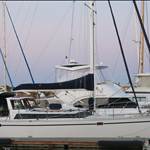
Great boat by the way mate, good all rounder.
Best of luck!
Adam