Rig replacement; How often? Swage vs. Norseman?

> 10 years ago
Reply
Register to post, see what you've read, and subscribe to topics.
sirgallivant
sirgallivant
NSW
1531 posts
NSW, 1531 posts
16 Aug 2015 10:54am
I am in a devious mood, l thought l start this thread.
Cruising yacht, non racing. Seldom above 40kn.

TKNick
TKNick
NSW
123 posts
NSW, 123 posts
16 Aug 2015 12:07pm
Norseman or Stalok will be a higher material cost initially but you save as it is an easy DIY. Not sure about Norseman but Stalok fittings can be reused with just the wedge/cone needing replacment. I replaced my forestay last year and used Stalok. Easy to use. I like the way Stalok has a caulking compound to keep the salt out. Stalok fittings can be opened and inspected as well. I intend to re-rig completely with Stalock. Got mine online through the chandlers at Coffs Harbour. They were very helpful and i highly reccomend them.
HG02
HG02
VIC
5814 posts
VIC, 5814 posts
16 Aug 2015 1:35pm


This is what on my old boat and I'm about to do the rigging . I think there (swagelok) norswman fittings The forestay will be completely new probably ronstan as I've an old furlex 100 S im about to renovate to fit .
I've felt the swagelok are not as stronger fitting as the Ronstan and as this boats going to be outside a lot thought Id better fit ronstan mainly the main mast as this stage.
Ill do just the minimum for the mizzen this year. As the boats going on the hard next winter
HG02
HG02
VIC
5814 posts
VIC, 5814 posts
16 Aug 2015 1:44pm


sirgallivant
sirgallivant
NSW
1531 posts
NSW, 1531 posts
16 Aug 2015 1:45pm
Thanks TKNick but l got the technical bits and l know what it is all about to fit, replace.
What l am after is y o u r experiences, failures, usage of the two different type of solution.
The Norseman, Sta-lok, Hynd are similar but same against the swaged type. And this is the peccant part l am tying to fathom.
Did anyone used poured or spleter sockets?

What do you mean by Ronstan? The swage type?
How old is your rig HG?

HG02
HG02
VIC
5814 posts
VIC, 5814 posts
16 Aug 2015 2:00pm
sirgallivant said..
Thanks TKNick but l got the technical bits and l know what it is all about to fit replace.
What l am after is y o u r experiences, failures, usage of the two different type of solution.
The Norseman, Sta-lok, Hynd are similar but same against the swage type. And this is the peccant part l am tying to fathom.

What do you mean by Ronstan? The swage type?


swage type I think there stronger than the stay lok type Ive no proof of this but what Ive heard

My rig would be 37 years old Id say
Is that tell me something
sirgallivant
sirgallivant
NSW
1531 posts
NSW, 1531 posts
17 Aug 2015 9:06am
Yeah.......about insurance companies!

sirgallivant
sirgallivant
NSW
1531 posts
NSW, 1531 posts
17 Aug 2015 3:25pm
Is rigging a dirty subject?


HG02
HG02
VIC
5814 posts
VIC, 5814 posts
17 Aug 2015 4:54pm
sirgallivant said..
Is rigging a dirty subject?


Ill be polish all my stainless
Yara
Yara
NSW
1322 posts
NSW, 1322 posts
17 Aug 2015 8:54pm
Insurance companies have the standard 10 year life requirement. It has nothing to do with engineering as there are many factors which make each boat unique. From what I have heard, one of the most common failures is crevice corrosion, which by its very nature, you cannot see. I like the concept of the Norseman type, not only from the point that you can pot the internals with sealant to exclude moisture, but also that it is possible to carry out an inspection.
The other mode of failure is fatigue, something that is also invisible. However, at least some clues of imminant failure are provided if one or two of the strands fail. Unfortunately there is also the possibility that the strands internally fail, and you wont see them. Perhaps our rigger members can comment as to how often that happens.

The fatigue part depends on where the boat has been moored (how much movement), and how hard it has been sailed.
If you are going offshore I would be inclined to observe the ten year rule, and close inspection. If only pottering cautiously in sheltered waters, maybe the old rigging could be OK. You could do the classic quality control check and replace some items, and see if there is was any possible failure about to happen. The fore and backstays would be the first ones to check.

HG02
HG02
VIC
5814 posts
VIC, 5814 posts
17 Aug 2015 9:48pm
As I said Ill replace all the main mast rigging this year and maybe some of the mizzen I need new shrouds on the mizzen .
rumblefish
rumblefish
TAS
824 posts
TAS, 824 posts
18 Aug 2015 8:44am
Interesting topic.

I have done a fair bit of rigging and used the swage-loc (called swageless) style a few times as well as roll swaged (what has been termed 'Ronstan' style above)

What I like about the swageless style
- re-usable fittings
- can replace a stay without leaving the boat and anywhere in the world
- easier to inspect the internals of the fitting

What i don't like
- There seems to be a bit that can go wrong, I would suggest buying one extra just in case
- It is very hard to get an exact length. I had to do an eye to eye forestay recently, would of been difficult with these
- Can be a bit of a bugger to do with a furler as you don't have alot of extra length of wire outside the furler base tube to make up the fitting
- There are far more fittings types, pin sizes etc. available with swage style, sometimes with old rigs this can be important

As stated above the usual failure point of swaged fittings is right at the top of the swage but you can help this by putting some product around where the wire goes into the fitting. I will be putting a little clear silicone on mine which I am currently replacing.

Also you can re-use alot of fittings with swage style, usually get two wire replacements per turnbuckle body.

I do prefer swage style as they are a more exact science to make.

As for costs, you can do a wire at a time with either method and either take each stay to your rigger to make or make yourself with swageless, or take your mast down and take all in to your rigger or make yourself in one go. With the extra cost of swageless it should be cheaper this way to swage, where it gets more expensive is if you pay a rigger to assist dropping the mast.
I replaced the rigging on a Bene 40 recently, was about $5k including my time (not including crane hire), would of been about the same if he had done it himself with swageless or probably about $6k if we had done swageless and I had done all the swageless fittings and each wire takes about 4 times longer with swageless than to swage.
That said we couldn't of used swageless on the top of his cap shrouds as they went inside the mast to join to the masthead and the extra bulk of the swageless fitting wouldn't of fitted.

hope all that helps!!!!
dralyagmas
dralyagmas
SA
380 posts
SA, 380 posts
18 Aug 2015 9:07am
I just replaced my rig as it was due according to the insurance company.

I specifically asked the rigger about swage versus swagless and he told me that he would use norsemen eye/sta lok for emergencies

Obviously then he used swages for my rig

Very happy with the thoroughness, service and professionalism of Joe Walsh Rigging!
sirgallivant
sirgallivant
NSW
1531 posts
NSW, 1531 posts
18 Aug 2015 9:43am
Thanks Rumblefish it gave me your opinion which l was after. Good luck with the re-rigging!

I read a lot of the available literature and talked to rigger a plenty on the east coast. I am fairly read up on the subject.
What l lack is knowledge of people's personal experiences. Rig failures partial or full, it's age, type, size, possible causes etc.
I witnessed a few rig failures from a distance while racing (on other peoples boats) and one came down on the top of us last November. Well it was not really the rig that failed but the mast broke which can be attributed to fault or failure in the rigging or it's lack of inspection and or maintenance. Most of those rigs came down in moderate winds, 15-20kn, and they were only few years old.

The rigging l have is 15 years old, twin spreader, mast head rig, furler, and cutter stay and running back stays and adjustable back stay. The fittings are swage-type pressed ones. I climb the mast regularly twice, trice a year to check for visible signs of failure.

It has been looked at by two different riggers, could not find anything wrong. The mast is solid, no swings or movement of any sort.
They, both, advised after the official blurb about age and replacement, not to worry, sail it, after all l am not racing it.

The insurance co. gave me - straight away after purchase few years ago - a rigging exception.
(the animals!) That means if the rig fails while any sails are raised, neither rig or sails are covered.
If no sails, it is covered.

The riggers are shy to give a rigging report saying it is ok - which is understandable - but even if they would do so the insurance would not swollow it because the age.

Any comments?

frant
frant
VIC
1230 posts
VIC, 1230 posts
18 Aug 2015 10:22am
sirgallivant said..
Thanks Rumblefish it gave me your opinion which l was after. Good luck with the re-rigging!

I read a lot of the available literature and talked to rigger a plenty on the east coast. I am fairly read up on the subject.
What l lack is knowledge of people's personal experiences. Rig failures partial or full, it's age, type, size, possible causes etc.
I witnessed a few rig failures from a distance while racing (on other peoples boats) and one came down on the top of us last November. Well it was not really the rig that failed but the mast broke which can be attributed to fault or failure in the rigging or it's lack of inspection and or maintenance. Most of those rigs came down in moderate winds, 15-20kn, and they were only few years old.

The rigging l have is 15 years old, twin spreader, mast head rig, furler, and cutter stay and running back stays and adjustable back stay. I climb the mast regularly twice price a year to check for visible signs of failure.
It has been looked at by two different riggers, could not find anything wrong. The mast is solid, no swings or movement of any sort.
They, both, advised after the official blurb about age and replacement, not to worry, sail it, after all l am not racing it.

The insurance co. gave me - straight away after purchase few years ago - a rigging exception.
(the animals!) That means if the rig fails while any sails are raised, neither rig or sails are covered.
If no sails, it is covered.

The riggers are shy to give a rigging report saying it is ok - which is understandable - but even if they would do so the insurance would not swollow it because the age.

Any comments?


IMHO you have two options.

1/ If you require insurance for rig and sails then you will be most cost effective to have a rigger replace all rigging and turnbuckles with new. You can save costs by pulling the mast and stripping it down and assisting with refit. Could also buy new sails at same time. You will outlay funds for new rig and sails but be covered by insurance in event of failure.

2/ If you are happy that your existing rig and sails are sound and see no point in spending now to replace them continue as you are (particularly with inspections) and self insure your rig. If you lose the rig you will be up for cost of rigging plus sails (plus a mast). Only additional cost will effectively be a blank mast section cf having that covered by insurance as per option 1.

The whole key is regular inspection and maintenance including replacement of worn/damaged components. Failures do not occur in a vacume and it is usually possible to detect corrosion damage by visual inspection prior to ultimate failure.

Probably what I would be more concerned with in your age boat would be the integrity of chain plates as these are often prime candidates for crevice corrosion failure and completely hidden from view.

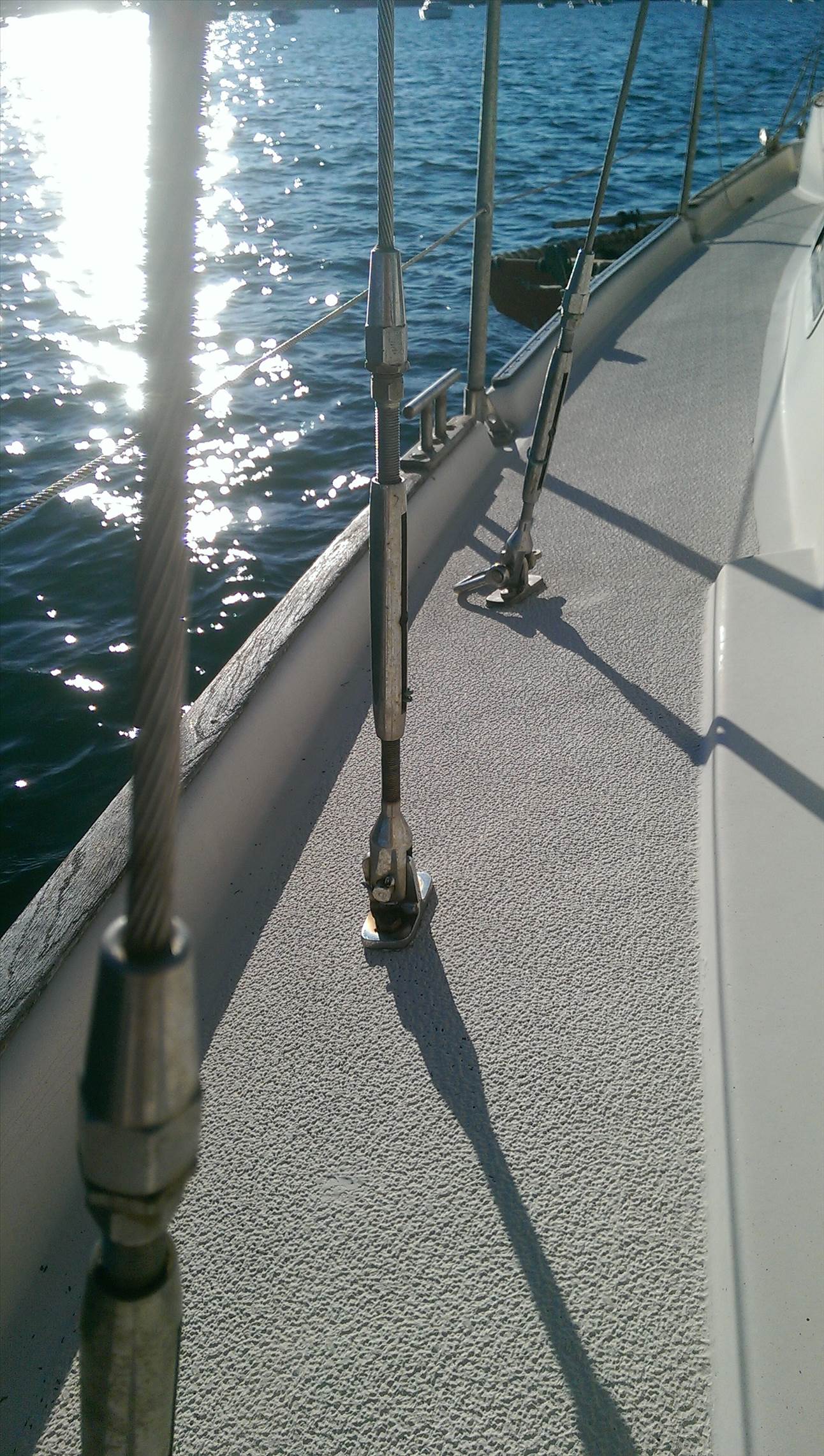
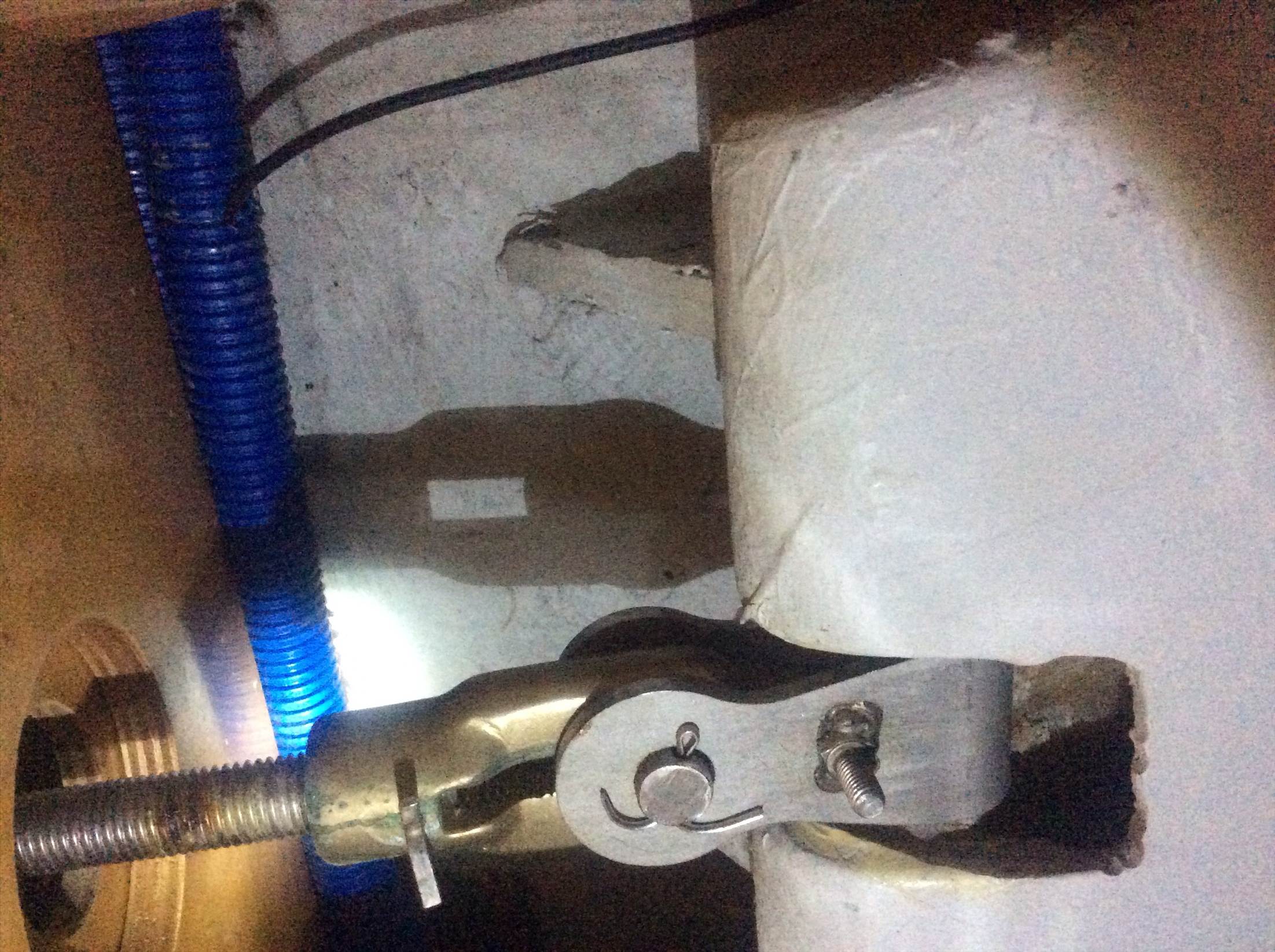
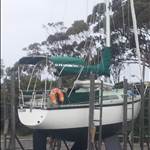
HGO2 chainplates as pictured should come out and be replaced IMO
HG02
HG02
VIC
5814 posts
VIC, 5814 posts
18 Aug 2015 10:42am
There will be removed and inspected clean and crack tested
Bolts and nuts will be replaced with
Imperial bolts
As metric tend to be all thread which to me is a weak link
cisco
cisco
QLD
12365 posts
QLD, 12365 posts
18 Aug 2015 9:51pm
frant said..

Probably what I would be more concerned with in your age boat would be the integrity of chain plates as these are often prime candidates for crevice corrosion failure and completely hidden from view.

HGO2 chainplates as pictured should come out and be replaced IMO


Funny you should mention chain plates right now as removing, checking and replacing if necessary of chain plates is my current maintenance job on Second Wind.

Your chain plates are the foundation of your rig and therefore No. 1 priority with rig maintenance. Pics coming in a day or two.
frant
frant
VIC
1230 posts
VIC, 1230 posts
18 Aug 2015 11:14pm
cisco said..
frant said..

Probably what I would be more concerned with in your age boat would be the integrity of chain plates as these are often prime candidates for crevice corrosion failure and completely hidden from view.

HGO2 chainplates as pictured should come out and be replaced IMO


Funny you should mention chain plates right now as removing, checking and replacing if necessary of chain plates is my current maintenance job on Second Wind.

Your chain plates are the foundation of your rig and therefore No. 1 priority with rig maintenance. Pics coming in a day or two.


Chain plates on modern boats are tied to the internal grid frame and able to be inspected regularly. Rod rigging is made from nitrile steel and not susceptible to crevice corrosion. Can be inspected by NDT ie X-ray or dye penetrant crack testing. Most rod rigging and PBO rigging is proof tested also.
Grade 316 SS is susceptible to crevice corrosion, particularly highly stressed components. This occurs where moisture can travel down a crevice between the SS surfaces. The anaerobic conditions (lack of oxygen) lead to a breakdown of the passive film and corrosion results.
Can try to dig out some photographs from my files of the snapped carrot effect this can have on a chain plate.

Edit. I normally have a brass wire brush in my toolkit and will polish off the visible rust stain on the tierod. This has appeared since my last detailed inspection.
HG02
HG02
VIC
5814 posts
VIC, 5814 posts
19 Aug 2015 2:11am


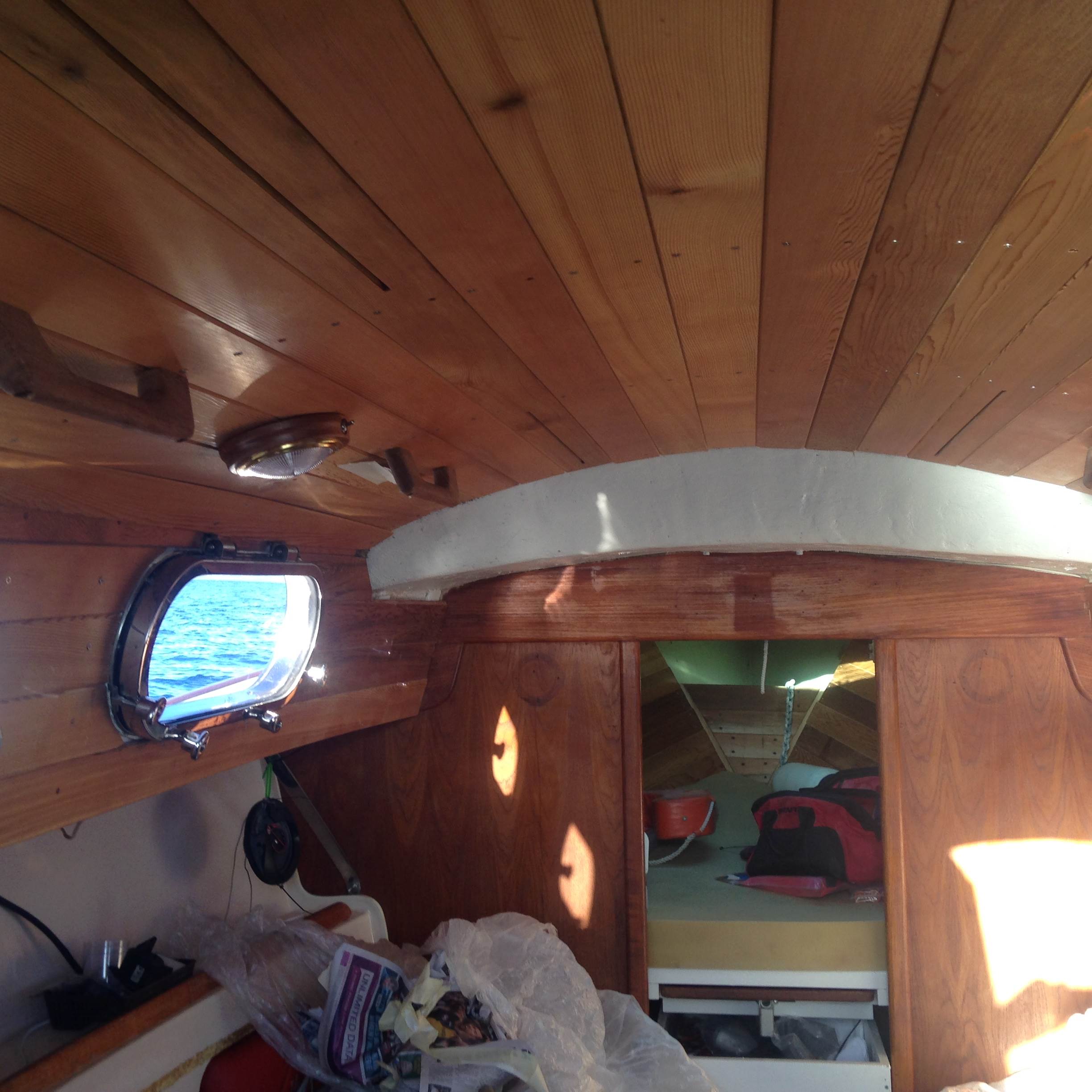
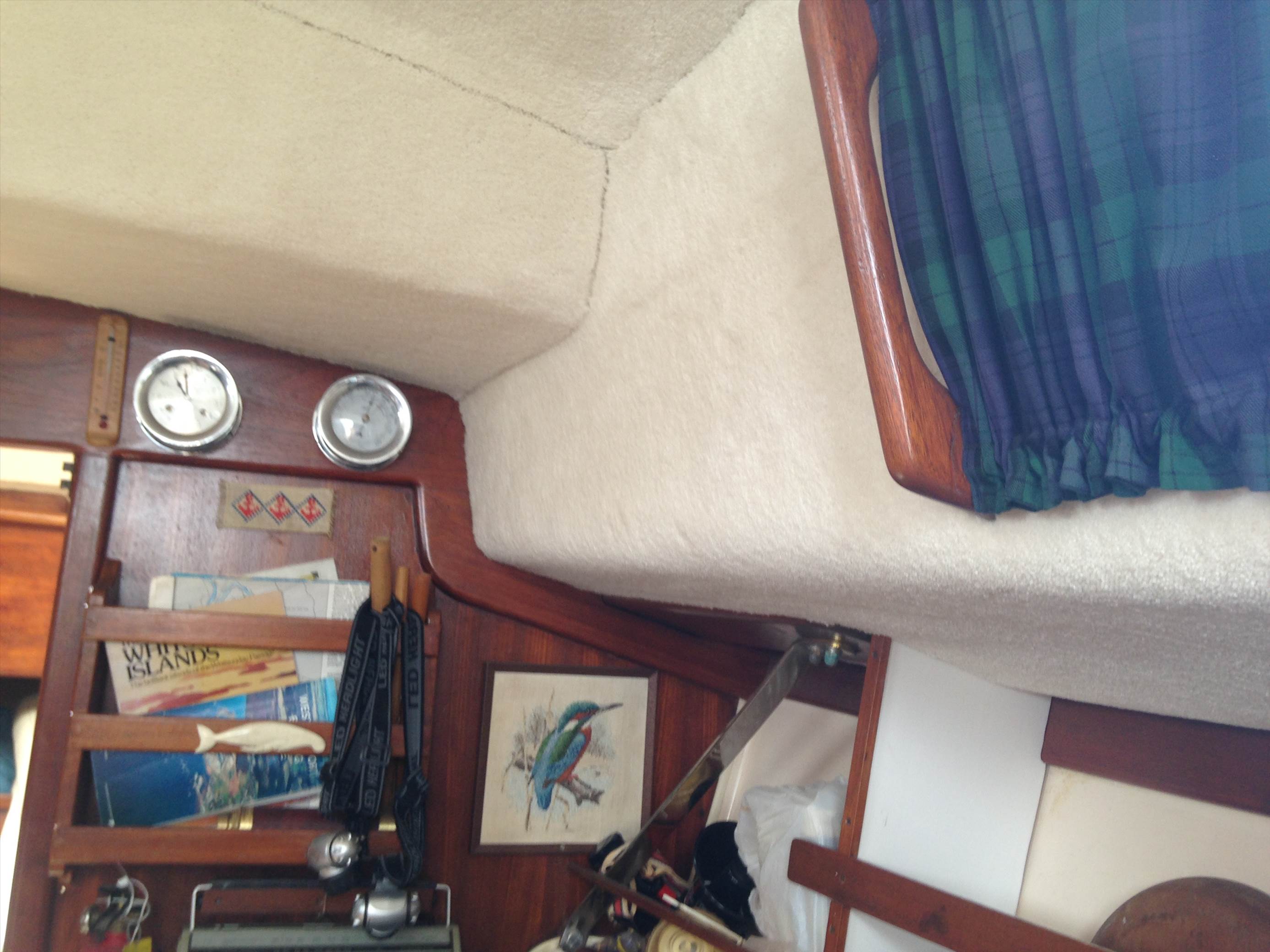
Where the speaker is hanging is one of the chain plates . Good thing about the walkers is every chain plate can be inspected easily for both mizzen and main mast


sirgallivant
sirgallivant
NSW
1531 posts
NSW, 1531 posts
19 Aug 2015 9:22pm
Could you please deliberate on your last sentence?

Please Register, or first...
Topics Subscribe Reply