Shore power systems

> 10 years ago
Reply
Register to post, see what you've read, and subscribe to topics.
Pekeri
Pekeri
VIC
81 posts
VIC, 81 posts
15 Jul 2015 10:43pm
As time marches on I find I am spending less time at anchor and staying more and more in serviced marinas with shore power available. Therefore, my new project is the installation of a shore power system on my boat.

My needs for shore power are:
1. Charger to charge my batteries when in a marina. For the past 8 years I have had only solar charging no engine charging. During a recent cruise, overcast for days, and being on the boat for days the batteries were OK but only just.

2. 2 x 240v Power outlets. In winter I am feeling the cold a bit more and would like to run a small ceramic heater on board. Also run an electric cattle/coffee maker when in a marina.

Advice on the components needed and the design of a shore power system would be greatly appreciated.

I have found the following so far, but in the states.

www.ezacdc.com/boat-wiring-products/marine-electrical-shore-power/

http://boatwiringstore.com/boat-wiring/ac

Does anyone know of similar items or local suppliers. I prefer to see the components before I buy.

Thank you all.
andy59
andy59
QLD
1156 posts
QLD, 1156 posts
16 Jul 2015 12:02pm
I know this is a bit basic but I just use an extension lead and ELCB power board to run a CTEK 300 charger and a portable aircon. From memory the charger costs around $300. The local marine eltrician turned his nose up at my ctek charger but its doing a good job.
Pekeri
Pekeri
VIC
81 posts
VIC, 81 posts
16 Jul 2015 3:29pm
Hi Andy, I do that now, I just want to use the excuse to tidy things up and have an excuse to go to the boat when conditions for a day sail are not the best.
I enjoy working/tinkering on the boat Also I want do a neat and professional job.

That's what I am looking for Cisco a list of items necessary and where to source them. A detailed schematic of the complete system would be great.

Thank you
Toph
Toph
WA
1886 posts
WA, 1886 posts
16 Jul 2015 2:12pm
I wouldn't worry too much about a schematics. You're talking 240v outlets and AC power. You need a qualified electrician.

But for what my opinion is worth, have the electrician put an outlet where you plan to put the battery charger so you can plug/unplug as required, as opposed to it being hard wired.
FreeRadical
FreeRadical
WA
855 posts
WA, 855 posts
16 Jul 2015 2:33pm
As said by Andy, Cisco and Toph. We have a Ctek M300 charger which works really well, 2 x 240v outlets for use in the cabin and one next to the battery charger. Main switching panel has a 240v polarity tester. Our hot water tank will also heat from 240v which is nice.

Check out some of the 4wd and caravan forums for more info. Pretty common setup for caravans etc
Pekeri
Pekeri
VIC
81 posts
VIC, 81 posts
16 Jul 2015 5:34pm
Thanks fellas, I get a real kick out of planning and gathering info on what I am about to do. I will get the sparkies to help.
A plug in charger looks like the way to go.

I went to Whitworths and had a look at the chargers, but they have very little else, They also recommended off the road shops etc.

More pointed question. Do I need to consider a Galvanic Isolator.

Cheers.
Ramona
Ramona
NSW
7756 posts
NSW, 7756 posts
16 Jul 2015 6:57pm
Caravan shop for your bits. Instal an exterior plug that caravans use to hook up their vans to site power. Instal it out of the weather though and in a place where the cable is out of the way. On the inside you really only need a multi plug board to plug your items into. Do instal an earth leakage switch or use 3 pin sockets with individual earth leakage. Old style battery charger from a garage sale, ALDI ceramic heater with the auto switch off for when it falls over.
Galvanic isolater not needed. 240 volts is safer for your boat than 12 volts from solar panels.
Pekeri
Pekeri
VIC
81 posts
VIC, 81 posts
16 Jul 2015 7:31pm
Excellent Ramona,

that is just what I was looking for, good and pointed info. Thank you.
Charriot
Charriot
QLD
880 posts
QLD, 880 posts
16 Jul 2015 8:19pm
Just my two cents .
Not to create permanent installation is good advice.
You must you heavy duty extencion cord. best 20 A rating
otherwise there would be voltage drop, when you plug heater and other stuff.
That voltage drop times current is the heat trough the plugs and lead itself.

andy59
andy59
QLD
1156 posts
QLD, 1156 posts
16 Jul 2015 8:21pm
cisco said...

If you are going to take power from a marina via extension cord, get one of these for checking polarity. It could save your life and they are really cheap insurance.

http://www.ebay.com.au/itm/MAINS-VOLTAGE-TESTER-ELECTRICIANS-POLARITY-CHECK-EARTH-AC-240-VOLT-3-PIN-783103-/161400001647


I never even thought about polarity! I not real good when it comes to electrics. I thought the ELCB would give me all the protection I need.
Are you saying that the extension cord or an appliance might have the wires connected to the wrong terminals?
LMY
LMY
NSW
203 posts
LMY LMY
NSW, 203 posts
16 Jul 2015 8:36pm
The best advise so far is to get a licensed electrician involved. Doing it yourself ain't legal or smart with 240 volts.

As for the charger,I would suggest a "smart" charger, rather than the basic units. The investment in batteries can be large so if this is the case use a decent charger that charges the batteries, monitors and includes a standby mode once the batteries are charged. I suspect that looking after the batteries will be cheaper in the long run.

Try aquavolt.com.au for boat electrical bits.


fishmonkey
fishmonkey
NSW
494 posts
NSW, 494 posts
16 Jul 2015 9:54pm
andy59 said..

cisco said...

If you are going to take power from a marina via extension cord, get one of these for checking polarity. It could save your life and they are really cheap insurance.

http://www.ebay.com.au/itm/MAINS-VOLTAGE-TESTER-ELECTRICIANS-POLARITY-CHECK-EARTH-AC-240-VOLT-3-PIN-783103-/161400001647


I never even thought about polarity! I not real good when it comes to electrics. I thought the ELCB would give me all the protection I need.
Are you saying that the extension cord or an appliance might have the wires connected to the wrong terminals?


a lot of people assume that the live and neutral wires are interchangeable in an AC system. there's a good explanation of why that's not true here:

www.phillylicensedelectrician.com/polarity-matters-in-ac-wiring/

Pekeri
Pekeri
VIC
81 posts
VIC, 81 posts
16 Jul 2015 10:11pm
Thanks again, this is why I participate in this forum. The knowledge and skills transfer in such a short time can't be bought.
Cheers
cisco
cisco
QLD
12365 posts
QLD, 12365 posts
16 Jul 2015 10:50pm
andy59 said..

Are you saying that the extension cord or an appliance might have the wires connected to the wrong terminals?


All very possible. The first place to plug the polarity checker in is the outlet on the marina. Sometimes they get it wrong. Then check at the end of the extension cord. It is particularly important for metal hulled yachts.

Edit:- An earth leakage detector switch will only sense a leak between active or neutral and earth.

If your body completes the circuit between active and neutral, it won't save you. You will most likely die.
Ramona
Ramona
NSW
7756 posts
NSW, 7756 posts
17 Jul 2015 9:34am
Actually the wharf or marina connection will have an earth leakage safety switch installed but if your vessel if in survey also has to have one. The easiest way is to buy the off the shelf power points with individual earth leakage installed and use them for items in the cabin you actually touch, electric kettle etc. The polarity issue is unlikely to be an issue now that we have "electronic" light bulbs, they don't usually work if the wiring is incorrect. I would be inclined to stick with a fairly portable setup utilizing off the shelf extension cords of the appropriate standard. For more than twenty years we used to power the light in the light boat with an extension cord fitted with net floats about 50 feet out from the fishing vessel purse seining at night. We also used to sink a mercury vapor light bulb down twenty feet or so as well. I have also accidentally dropped a mini grinder in the oggin while running. It stopped instantly and worked fine the next day.

As far as battery charging goes I think Pekeri is going to be onboard when that occurs so a $5 garage sale charger will be fine.
Pekeri
Pekeri
VIC
81 posts
VIC, 81 posts
17 Jul 2015 10:50am
Yes, I will be on board when when connected to shore power.
But I will check out the better automatic chargers. I would like to easily read the battery state and charge. No humm... or fan noise is also a priority.


samsturdy
samsturdy
NSW
1659 posts
NSW, 1659 posts
17 Jul 2015 10:59am


On the local marina a couple of years back I was told not to let the extension cord run along the ground as contact with
a puddle would short the marina power. Do they make extension cords that are insulated from this problem.?.
crustysailor
crustysailor
VIC
871 posts
VIC, 871 posts
17 Jul 2015 11:42am
We used to service some equipment in a blood pathology lab, and would switch it off at the device and the GPO switch, but leaving it plugged in to the wall.

The outlet had been wired reverse, and whilst the device powered off and appeared off, active and neutral had been swapped.
Servicing the machine resulted in a bit of a boot depending on what you did, fortunately your hand reacted away, so just a tingle.

The maintenance sparky was called in and given a boot of another kind.

The plug tester above is a good idea, although the ebay link was for an overseas version.
A 240V illuminating circuit tester pen is a great thing to have in your kit as well.
cisco
cisco
QLD
12365 posts
QLD, 12365 posts
17 Jul 2015 12:14pm
crustysailor said..


The plug tester above is a good idea, although the ebay link was for an overseas version.
A 240V illuminating circuit tester pen is a great thing to have in your kit as well.


I just used that for illustration. You can get them at most electrical stores for about $15.
fishmonkey
fishmonkey
NSW
494 posts
NSW, 494 posts
17 Jul 2015 2:12pm
cisco said..

crustysailor said..


The plug tester above is a good idea, although the ebay link was for an overseas version.
A 240V illuminating circuit tester pen is a great thing to have in your kit as well.


I just used that for illustration. You can get them at most electrical stores for about $15.


i have one of these:

www.jaycar.com.au/power-point-and-leakage-tester/p/QP2000
Charriot
Charriot
QLD
880 posts
QLD, 880 posts
17 Jul 2015 5:50pm
RCD only trips if there is a leakage between active and ground, to protect people.

Why you need polarity check,if you not rewiring your boat but getting proper extension cord.

Active - Neutral must not be swapped at the power point, but ANY electrical equipment with symbol
double installation, do not care where is active or neutral connected.
Ramona
Ramona
NSW
7756 posts
NSW, 7756 posts
17 Jul 2015 6:13pm
samsturdy said..


On the local marina a couple of years back I was told not to let the extension cord run along the ground as contact with
a puddle would short the marina power. Do they make extension cords that are insulated from this problem.?.


I think any extension cords that meets Australian standards can operate for long periods underwater, see above. What the marina operators might be referring to is the plugs and plug fittings fitted with an earth leakage. These have to be bone dry, just the faintest moisture will trip them.
Pekeri
Pekeri
VIC
81 posts
VIC, 81 posts
17 Jul 2015 7:03pm
I think I now know what to do.

I will use the KISS principle.

- Weatherproof 240v 15amp inlet plug.
- Cabling to minimise/eliminate voltage drop
- Cut off switch
- Protected (fuse/breaker) 2 x outlet.
- Marine approved dock cable.

At the club all 240v devices/equipment etc.. has to be certified and stamped by the marina management and I will get this done.

Hopefully this will be acceptable at any marina where I might berth for the night.

Anyone seeing Pekeri (Mainly Port Phillip and Western Port) will be welcomed for a brewed/espresso coffee.

Cheers
Guitz
Guitz
VIC
617 posts
VIC, 617 posts
17 Jul 2015 7:27pm
Pekeri said..
I think I now know what to do.

I will use the KISS principle.

- Weatherproof 240v 15amp inlet plug.
- Cabling to minimise/eliminate voltage drop
- Cut off switch
- Protected (fuse/breaker) 2 x outlet.
- Marine approved dock cable.

At the club all 240v devices/equipment etc.. has to be certified and stamped by the marina management and I will get this done.

Hopefully this will be acceptable at any marina where I might berth for the night.

Anyone seeing Pekeri (Mainly Port Phillip and Western Port) will be welcomed for a brewed/espresso coffee.

Cheers


Let me know when you are heading down Blairgowrie way, also get in touch If you need a lift for fuel or provisions etc
FreeRadical
FreeRadical
WA
855 posts
WA, 855 posts
17 Jul 2015 6:34pm
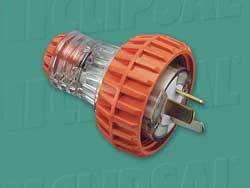
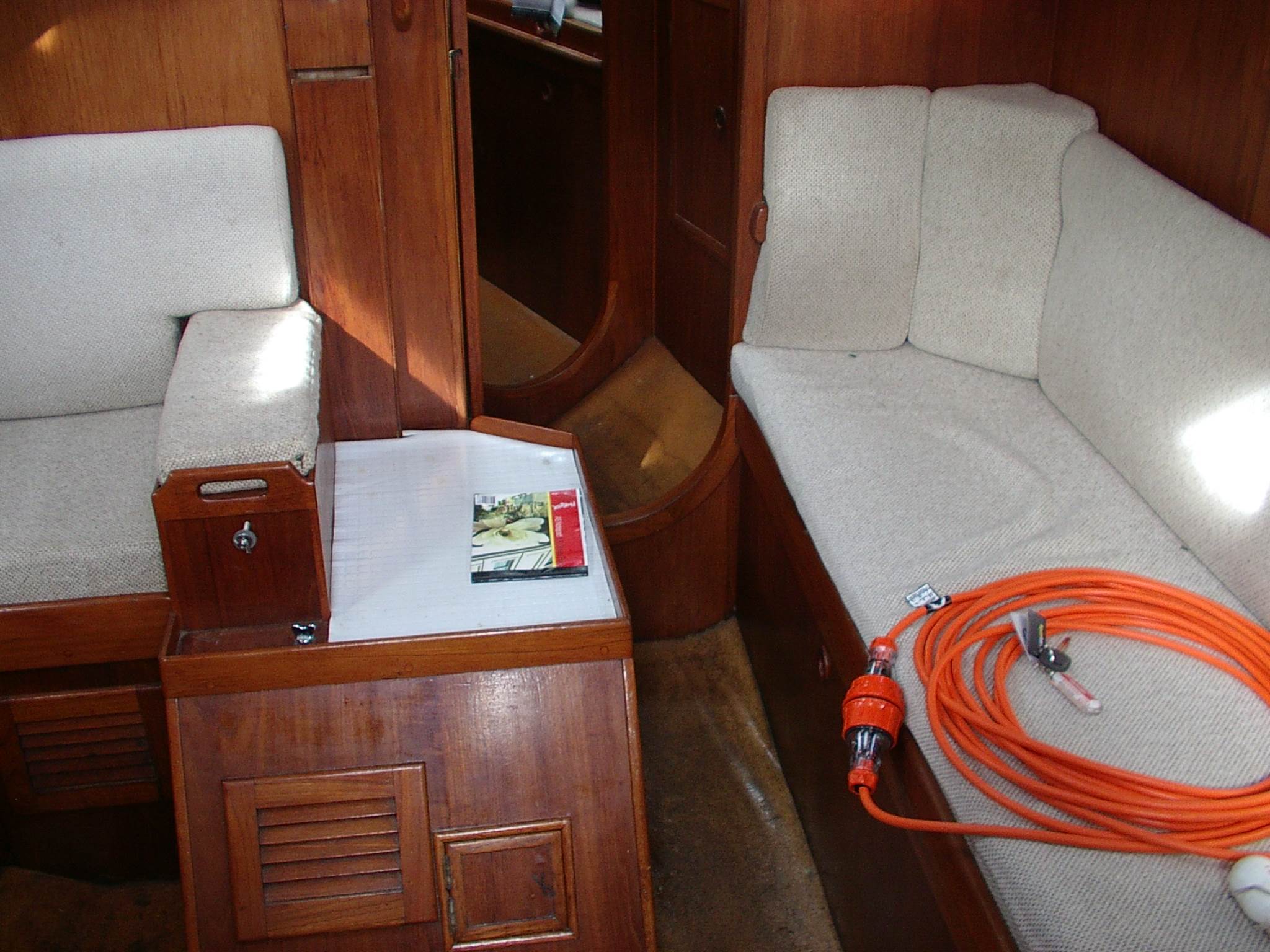
In WA, DoT marinas (and likely all private marinas) require heavy duty shore power cable with IP56 plugs. The cable needs to be tagged, which is done by a licenced electrician.

this is an example of IP56 type plug (screw in, weatherproof) and is required at both ends of the shore cable so the boat receptacle needs to be screw in suitable.

At DoT marinas in WA, I've only been asked to view insurance and gas certificates, as well as tagged lead. Nothing on onboard 240v. Though I suspect an insurance claim might require proof of certified work onboard.


Jolene
Jolene
WA
1624 posts
WA, 1624 posts
17 Jul 2015 6:56pm
FreeRadical said..
In WA, DoT marinas (and likely all private marinas) require heavy duty shore power cable with IP56 plugs. The cable needs to be tagged, which is done by a licenced electrician.

this is an IP56 type plug.


Like this one


FreeRadical
FreeRadical
WA
855 posts
WA, 855 posts
17 Jul 2015 7:03pm
Jolene said..


FreeRadical said..
In WA, DoT marinas (and likely all private marinas) require heavy duty shore power cable with IP56 plugs. The cable needs to be tagged, which is done by a licenced electrician.

this is an IP56 type plug.


Like this one


Precisely, even has the tag within 1m of supply end, A+ for you good man.
Agent nods
Agent nods
622 posts
622 posts
17 Jul 2015 7:13pm
<div>
I am not the expert...but if you spend time in a marina.


Once you connect your underwater metal to the shore power ground you have "bonded" with every other boat on the marina who have the same connection. Now electrolysis currents are free to flow anywhere in the marina and it only takes one boat with a 12 volt DC leakage to eat up every boat within a wide radius even though the offender has zero electrolysis evidence.

<div>

<div>Your own protection needs to be a Galvanic Isolator, in the ground connection of the shore power lead.

while you might have marine power cord....don't let it stray into the water, the inducted current can add to the woes all about
FreeRadical
FreeRadical
WA
855 posts
WA, 855 posts
17 Jul 2015 8:07pm
It's an interesting point nods. I've been trying to work this all out as our boat lives in a marina on shore power. From what I've read, DC leakage can readily happen and eat away your saildrive etc. Thus a galvanic isolator or even better apparently, an isolation transformer gives protection against electrolysis.

Ive had a few conversations about this which has mostly been met with shrugs, I haven't heard of it being an issue an issue at our marina, but then some don't know if they have protection or not.

isolation transformers cost about 2 x galvanic isolator. Are they worth it? A Vectron isolator costs about $300. A transformer starts about $750.


SandS
SandS
VIC
5904 posts
VIC, 5904 posts
17 Jul 2015 10:46pm

I have heard people say that being close to Aluminum boats in Marina.s can be a bit dodgy. Any one have knowledge on that situation ?

I have seen some Alu boats hanging anodes of some description over the side ,dangling in the water . Not sure on the reasoning ,is it just to get the anode well away from the alu hull ?
Agent nods
Agent nods
622 posts
622 posts
17 Jul 2015 9:03pm
from the Club Marine website:

If steel and aluminium boats are berthed side by side, the two dissimilar metals will create current. Similarly, a boat with faulty electrical wiring can 'leak' current and cause serious grief to surrounding vessels. Each vessel can act like the plates in a battery. The damage maybe to a boat 5 or six away.
This 'daisy chain' effect also applies to marina shorepower, compounded by the fact that many boats use household-quality extension leads.


The marina where I had a live aboard...brought in a expert to test....the results where not good ….the whole marina power system need to be replaced, and dozens of boats needed rewiring.
Please Register, or first...
Topics Subscribe Reply