EastCoastSail said..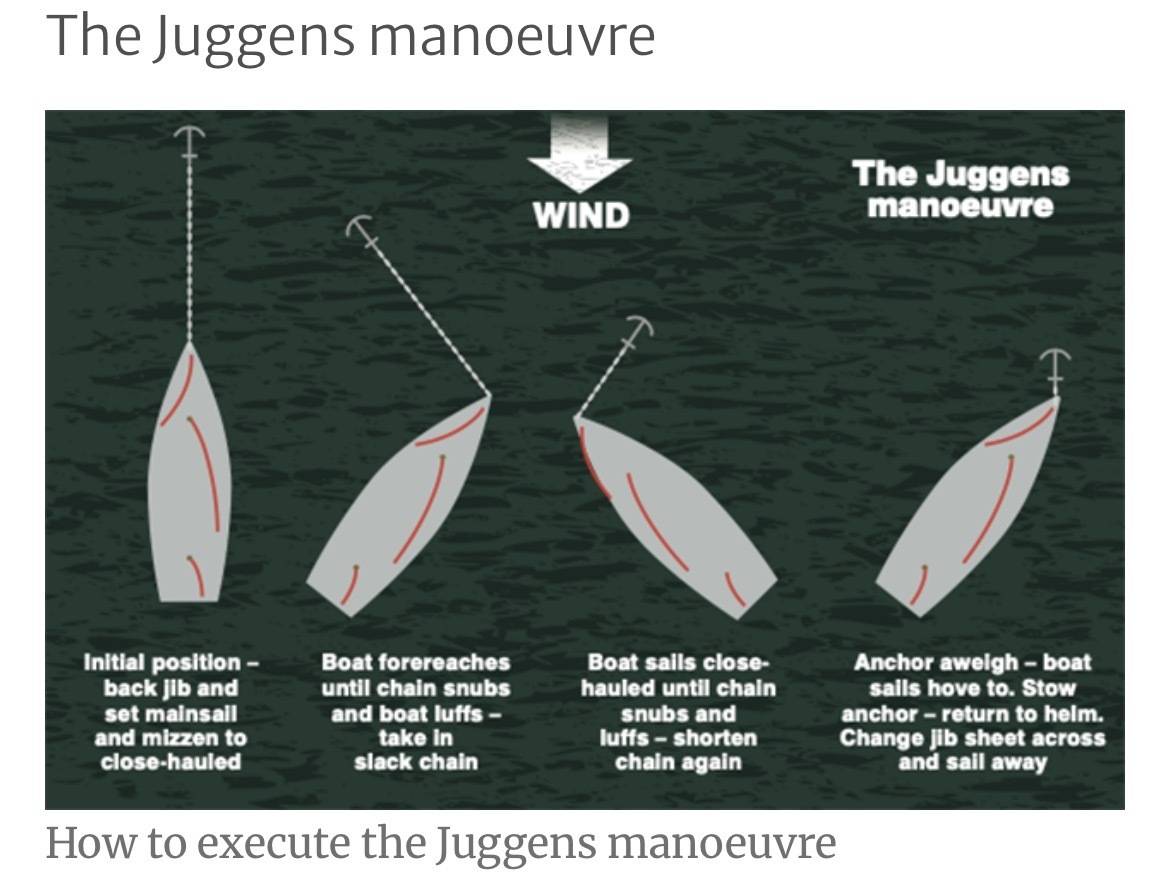
I think the diagram and story is excellent. I think if you have a good understanding of how your boat heaves too it might be a really good method.
I’m going to give it a shot , but practice a few times first without the lee shore.
It appeals more than my current single handed method when caught anchored against a Lee shore. Put the engine in forward at low rpm with the auto pilot bearing on to the anchors position. Then running forward and lifting the anchor with the windlass in pounding chop, hoping you synchronise the anchor breaking with the boat coming overhead, and having enough rpm to maintain the heading . Always an anxious task.
Still think it is going to be heavily dependent on how much rode you have out at the precise times you tack and how well the anchor is dug in and the particular floor that it is dug into as well as the chop and wind conditions which determine how much the bow is bouncing up and down.
I think the diagram and the explanation is overly simplistic and certainly not something you would want to try on a lee shore for the first time or in an unfamiliar spot at any time. It's good practice to tack up onto your anchor to release it however.
Certainly heaving to is something to be practiced in any and all conditions as every boat is different but unless you are very close to shore it's sometimes hard to know how much the boat is still moving and in what direction.
Each to their own I guess and I used to sail into my marina pen halfway down an arm back in the day but with me on the helm and (often) main plus someone on the foredeck to back the jib at an appropriate time. Illegal now but anything that improves your boat handling skills can't be a waste.
Would never suggest this as a maneuver to be used for the first time without extensive practice as appears to be the case in the story. The story makes it out to be so simple that the yacht practically does it by itself. Pretty negligent implications I think. Maybe it was dead calm water and eight knots of breeze but this should have been noted and have come with a warning.