Trim school

> 10 years ago
Reply
Register to post, see what you've read, and subscribe to topics.
LMY
LMY
NSW
203 posts
LMY LMY
NSW, 203 posts
1 Aug 2015 9:25pm
lets try and improve all our sailing skills.

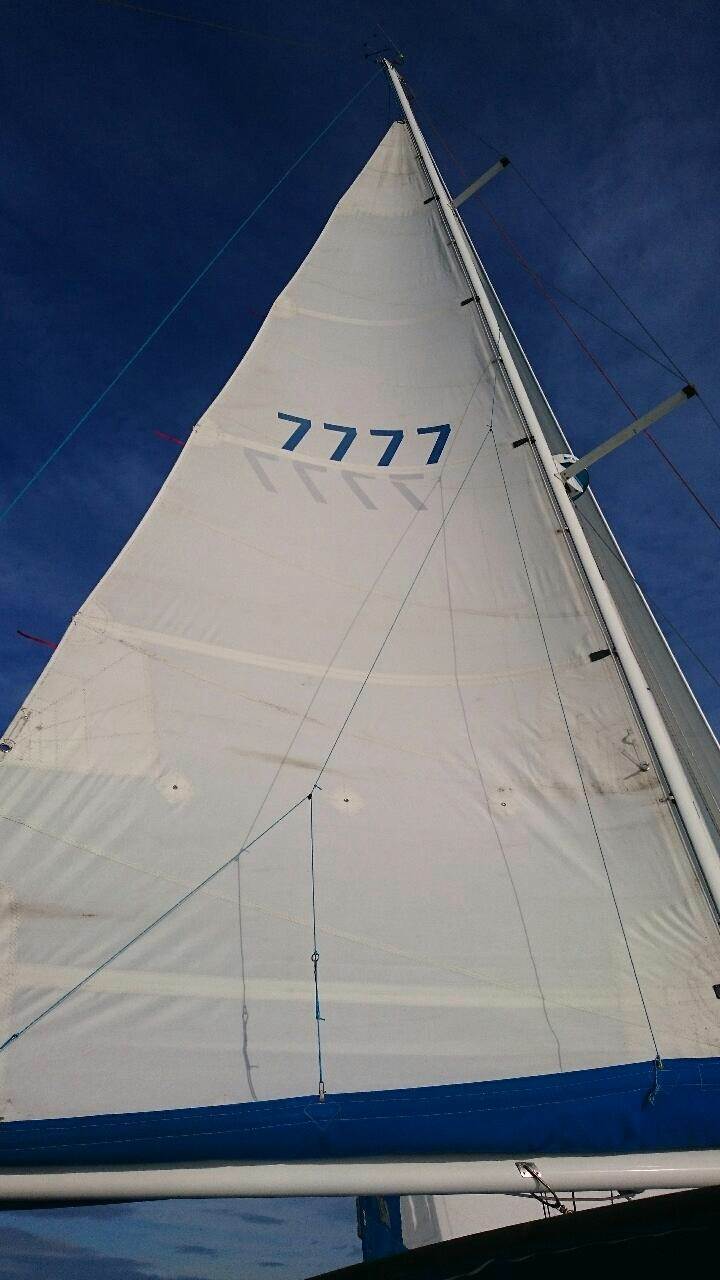
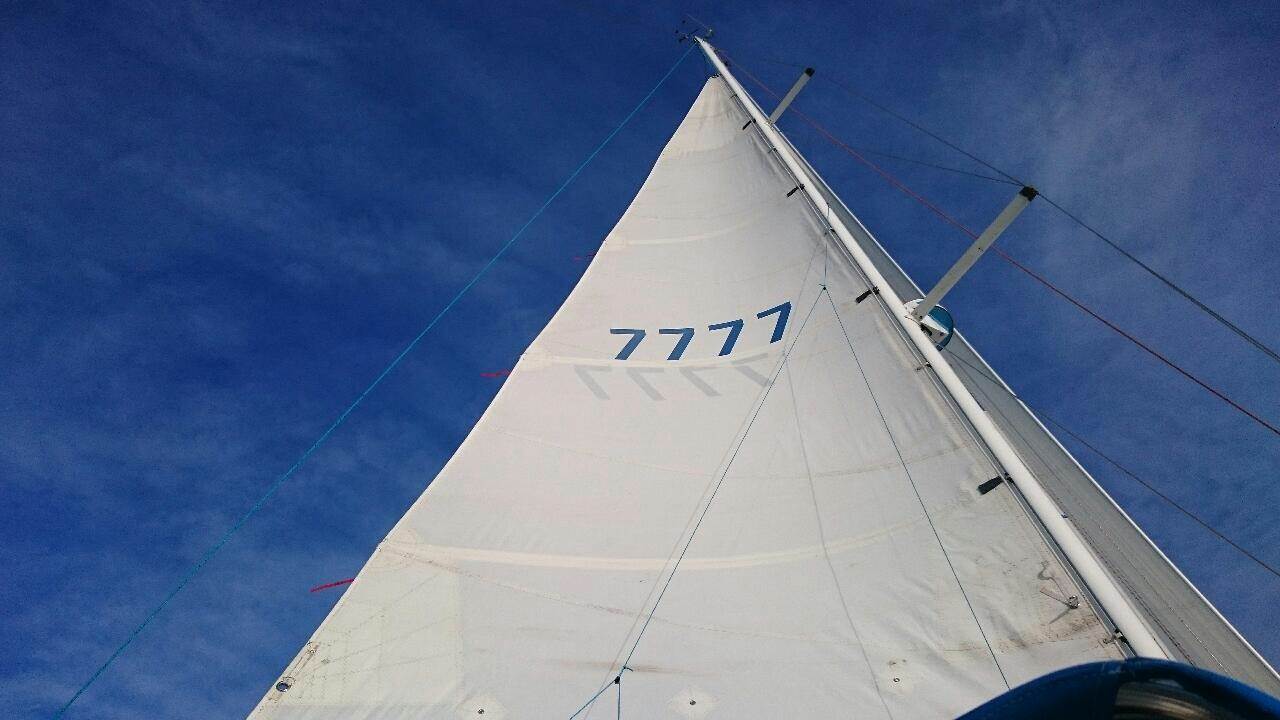
The attached photo is my main, with one reef in.

The wind was around 10 to 12 knots when the photo was taken, and on the beam. Boat speed in the high 6's. We were out for a relaxing sail, certainly not racing.

The wind was gusty, up to 20 knot gusts, so I had the halyard tension high to flatten the sail and keep things under control in the gusts. There are small vertical creases in the sail, so possibly to much tension?

Note that there is a tell tail at the top battery, behind the sail, so I could ease the main sheet a bit.

So, please provide your opinions, or if you want to learn from others post pictures of your sails and others may be able to help.

If you think that you have the art of trimming perfected, then post your pictures, and why you have set as is and we can all learn.

webkit-fake-url://eebcd808-56f1-4c6d-90fe-043812f54aa7/imagejpeg
LMY
LMY
NSW
203 posts
LMY LMY
NSW, 203 posts
1 Aug 2015 9:31pm


Third attempt
Pekeri
Pekeri
VIC
81 posts
VIC, 81 posts
1 Aug 2015 9:58pm
I will have a go.

From the photo very little can seen. There are many variables.

I assume the sail is bolted at the boom - not loose foot, different mechanics apply.

So, bolted foot, on a tight reach, 15-20kys.

1. Sail appears to be a little blown(stretched.)

2. If the top tell tales curls behind the sail means too much drop off at the top, to fix tighten up on the vang while watching the top of the sail for the tell tale to appear.

3. Traveller appears OK by the flow of the 2nd tell tale.

4. Common misunderstanding is that vertical creaes are not good sail setting. In fact it's best to tighten the halyard to induce a vertical crease. This will blow back when the rest of the sail is trimmed and sailing correctly.

So 2 point here for what is visible:
Vang on to reduce drop off at the top.
Generally halyards are not tight enough. I usually tighten up the luff, and then pull a little bit more.

Good topic. Photo of the whole sail and view of the deck will give more info.


cisco
cisco
QLD
12365 posts
QLD, 12365 posts
1 Aug 2015 9:59pm

The leech is a bit scalloped. Do you think it could have done with a bit more leech tension??
Pekeri
Pekeri
VIC
81 posts
VIC, 81 posts
1 Aug 2015 10:02pm
Hard to say from the image, I would check the leech line. Loosen it set the main for a beat then tension the leach line until leech curl is firts enduced then released so that it is eliminated.
CanAussie14
CanAussie14
48 posts
48 posts
1 Aug 2015 8:05pm
Don't have anything to contribute to the OP but I am looking forward to reading this thread - great idea for a topic.
andy59
andy59
QLD
1156 posts
QLD, 1156 posts
1 Aug 2015 11:18pm
CanAussie14 said...
Don't have anything to contribute to the OP but I am looking forward to reading this thread - great idea for a topic.


+1
shoodbegood
shoodbegood
VIC
873 posts
VIC, 873 posts
1 Aug 2015 11:29pm
I reckon you're slightly over sheeted, I'd ease the main sheet a bit, all the leach telltales are flowing to leeward, just till the luff flutters, and trim in again slightly
Get the crew on the rail to practice calling the lulls and gusts
The leech line only needs to be tight enough to stop the leech fluttering, otherwise it will curl and only create drag
Good topic !
Pekeri
Pekeri
VIC
81 posts
VIC, 81 posts
1 Aug 2015 11:52pm
On the first read I missed the point of 1 reef in.

This changes dynamics to almost a loose foot main.

Shouldbegood's suggestion is good to adjust the main sheet, do the easiest first.
My original post for the vang referred to the comment by LMY that the top tell tale was flowing back behind the sail.

When reefed it's hard to comment without seeing how the reef is applied.
1. How is the reefed foot outhaul in place?
2. How is the tack in place.
3. how much belly is along the boom?

My suggestion is that we can advance this discussion in two ways.

Theory of sail setting and trim. UK Sailmakers International is an excellent resource for this, plenty of quizzes to test your knowledge for varying circumstances.
or post actual conditions as above with photos, for comment and analysis.

For now possibly a Q & A format will kick us along nicely.


Ramona
Ramona
NSW
7756 posts
NSW, 7756 posts
2 Aug 2015 9:25am
I reckon the trim is not too bad. I'm just jealous of the racing numbers!
HG02
HG02
VIC
5814 posts
VIC, 5814 posts
2 Aug 2015 9:50am
andy59 said..

CanAussie14 said...
Don't have anything to contribute to the OP but I am looking forward to reading this thread - great idea for a topic.


+1


+1
LMY
LMY
NSW
203 posts
LMY LMY
NSW, 203 posts
2 Aug 2015 9:53am


All,

thanks for the feedback.

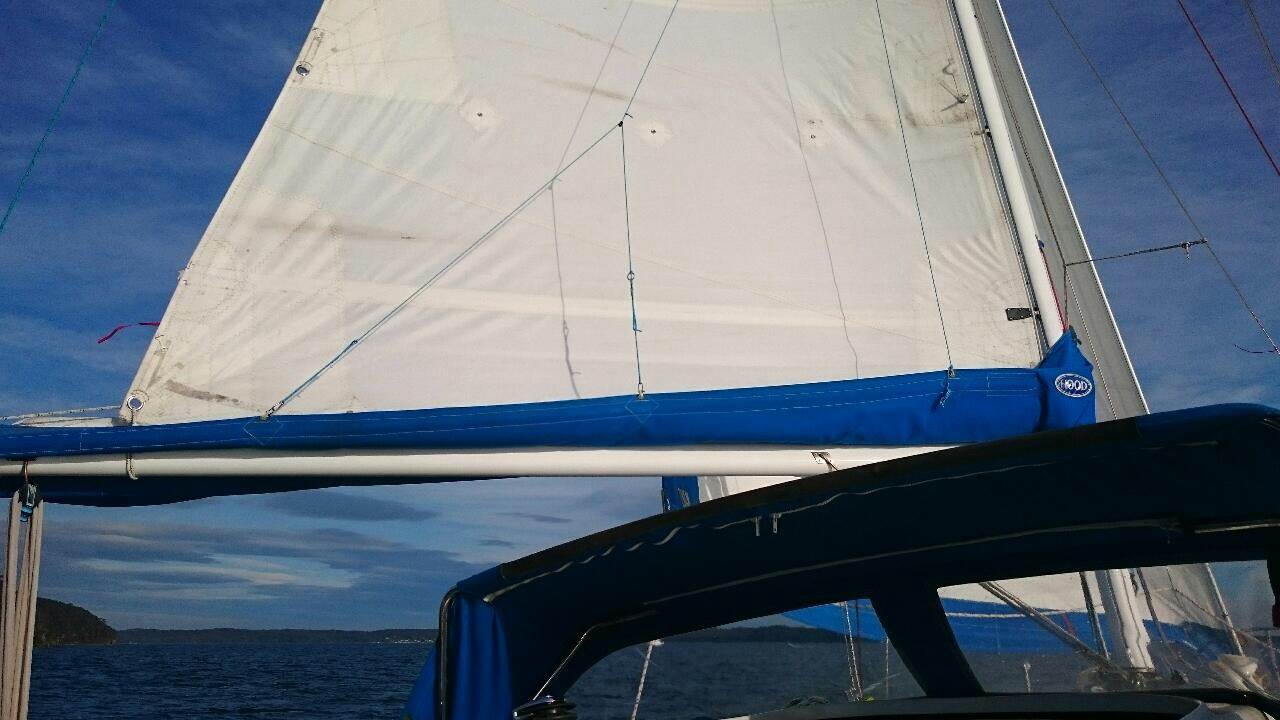
Photos above show the foot, and the reefing arrangement. Single line reef, nice and easy, works for me.

A couple of comments / questions.

I will look at leach tension next sail.

re the vang. with the gusty conditions I actually wanted the head of the sail to twist downwind a bit, to depower. I would have thought that the tell tail backed behind (downwind) of the sail would indicate that the head of the sail is to tight, so ease the vang further. Pekeri, any further thoughts?

re putting the crew on the rail. I could try, but suspect that she would tell me where to shove the rail! For me a relaxing sail is autopilot on, and play with sail trim. For her it is sit, relax and think about life.

re the racing numbers. Came with the boat, out of registration, but I like them too.

sirgallivant
sirgallivant
NSW
1531 posts
NSW, 1531 posts
2 Aug 2015 10:38am
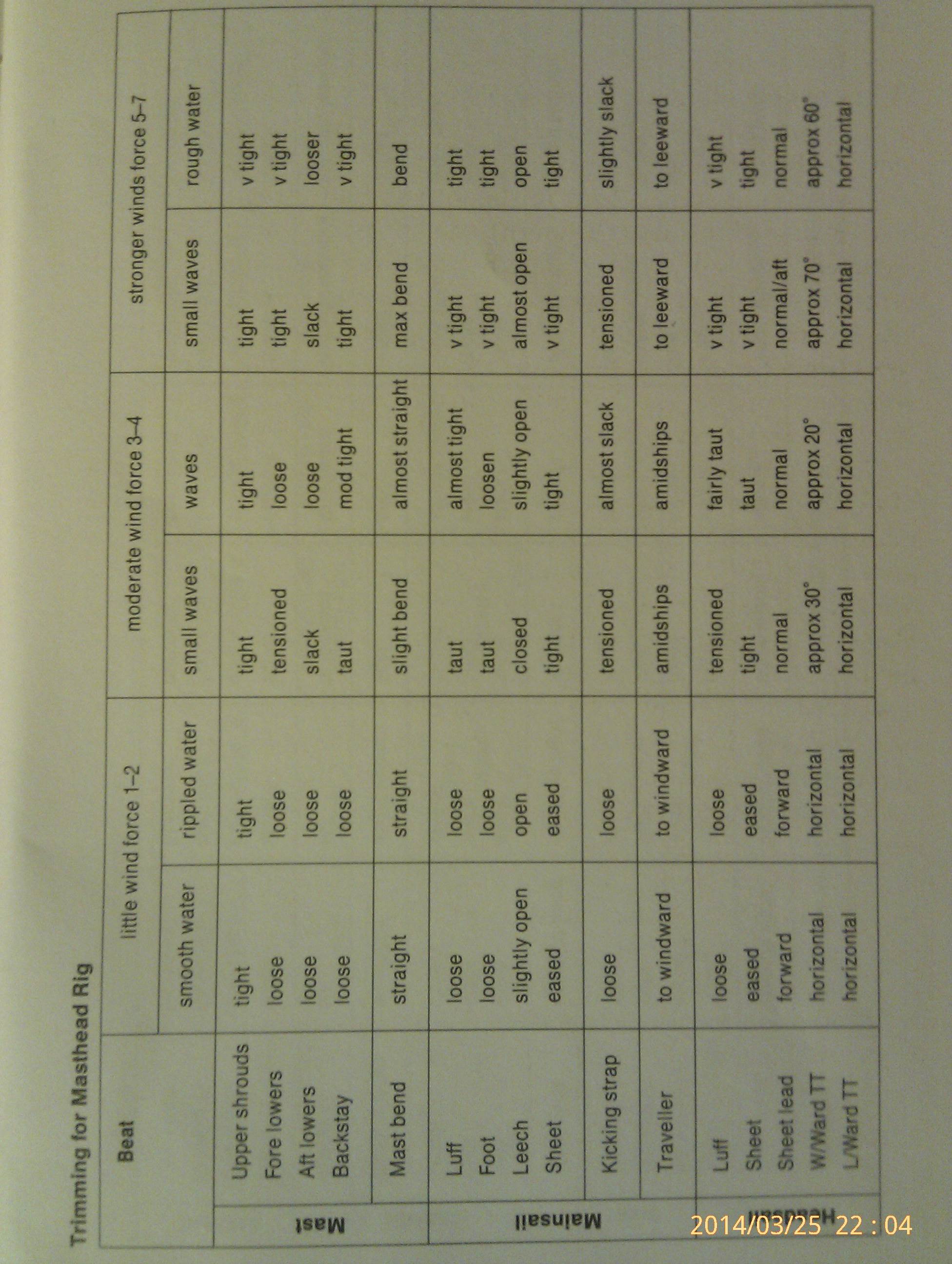
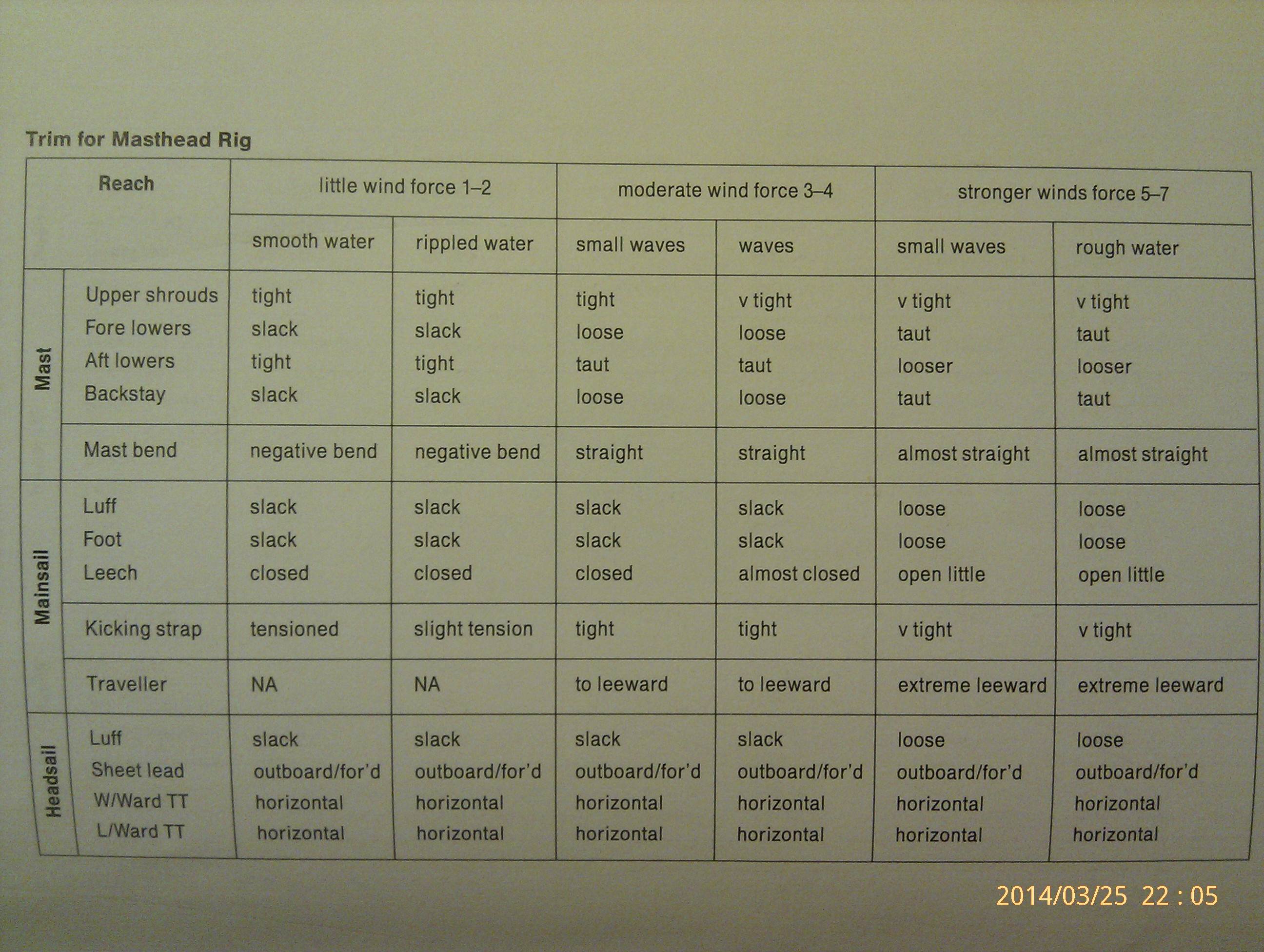
I appears to be a mast head rig, so here it is:


(l am unable to turn this pic! the right way, l gave up)


Pekeri
Pekeri
VIC
81 posts
VIC, 81 posts
2 Aug 2015 7:23pm
Better view of he sail now. The top seems to be fairly full, and the drop off will depower the sail a little.

Sticking to one thing at a time is probably the best way forward here, so I will concentrate on the vang. (remember there are many variables. hopefully we will cover these one at a time.)

The Vang is a very important system for achieving good sail trim. Cant quite see the purchase of your vang but is should be somewhere around 16:1 or more.

Therefore the loads are very high and in order to use the vang correctly it must be worked together with the main sheet. Ie. to tighten the vang pull in the main sheet hard and immediately set the vang. While pulling in on the main check the flow across the sail this then dictates how tight to set the vang (generally tighter than you think). Then release the main sheet to set the main at just the point of luffing. If you have tell tales about 1 to 2 feet from the luff the ideal set is to have these flutter upwards slightly. Very hard to do properly and in some cases impossible to maintain while sailing. but an excellent indication that the main is working well.

Position of tell tales, mast bend, sail fullness, roach, relationship of Main and jib can be discussed as this thread progresses.

LMY
LMY
NSW
203 posts
LMY LMY
NSW, 203 posts
2 Aug 2015 10:50pm
I am going to need to go for a sail, and play with the vang, 4:1 purchase by the way.

I will take a photo and re post. Work calls so this might take a while.

In in the mean time, anyone else want to post a photo for discussion? Sailing a reach in gusty conditions is for me challenging and I sometimes struggle to get the boat to "sit in the groove". I now have a idea to try sometimg different, so why not give posting a photo a try.


rumblefish
rumblefish
TAS
824 posts
TAS, 824 posts
3 Aug 2015 9:45am
Can I recommend taking a photo from under the boom looking up?

More like this


As for what i can tell in the pics, I don't think the vang is too tight but the top battern tension may be a little too tight as the rest of the batterns and the leech looks ok.
madmission
madmission
VIC
234 posts
VIC, 234 posts
3 Aug 2015 10:46am
For some interesting views on sail physics have a look at these series of articles
www.ftp.tognews.com/Publications/Arvel%20Gentry%20Articles/
frant
frant
VIC
1230 posts
VIC, 1230 posts
3 Aug 2015 11:27am
rumblefish said..
Can I recommend taking a photo from under the boom looking up?

More like this


As for what i can tell in the pics, I don't think the vang is too tight but the top battern tension may be a little too tight as the rest of the batterns and the leech looks ok.


North 3DL sails have a "camera" point indicated on the foot and an app that will analyse sailshape.
WRT of the original poster you probably have to take a few steps back and look at the fundamentals of your boat, sailplan and sailing leg.
The Cav 37 is an older style (heavy) boat with a masthead rig with large headsails supported on a solid mast.
Upwind the boat will be headsail driven, trim the headsail with car position set fore and aft to achieve an even break in all telltales, then trim main to suit with upper ribbons flowing with constant adjustment. When the wind exceeds the range of an unfurled headsail you have a catch 22 as reducing the area by furling will balloon out the sail increasing drag, pointing ability and dropping boatspeed.
Reaching unless in very light conditions, probably better to furl the headsail to 100% overlap (preventing a massive twist in sail and the aft part of the foot from being grossly oversheeted. Then use full main and try to get a mainsail driven sailplan. Will be easier to trim the main without the distorted airflow created by the oversheeted/twisted overlapping headsail.
Downwind pole out the full size overlapping headsail. Area equals speed.
Pekeri
Pekeri
VIC
81 posts
VIC, 81 posts
3 Aug 2015 11:50am
I support all of the above comments with the following qualifiers.

Read all the theory and listen to all comments but at the end of the day experience and understanding of what is happening will only come by practice.

My advice is simple, concentrate on your boat and your sails to get the best of results. Then when you go for a learning/training sail concentrate on one thing at a time. Make one change and note the results. Continue making changes to the one item and again take note.

If you change too many variable you will not know which caused the change. Still a pleasant sail but not really a learning experience.

Once you better understand the effect of each change move on to something else.

As you gain experience you will be able to combine adjustments to get optimum results. Just like walking, one step at a time.


Ramona
Ramona
NSW
7756 posts
NSW, 7756 posts
3 Aug 2015 7:11pm
LMY said..
I am going to need to go for a sail, and play with the vang, 4:1 purchase by the way.

I will take a photo and re post. Work calls so this might take a while.

In in the mean time, anyone else want to post a photo for discussion? Sailing a reach in gusty conditions is for me challenging and I sometimes struggle to get the boat to "sit in the groove". I now have a idea to try sometimg different, so why not give posting a photo a try.


Reaching in gusty winds I would be more inclined to twist off the main. You will have more than ample power and traveling at hull speed. No point in keeping a tight leech , it's only going to heel the boat more and make the steering difficult.
frant
frant
VIC
1230 posts
VIC, 1230 posts
3 Aug 2015 8:15pm
Ramona said..
LMY said..
I am going to need to go for a sail, and play with the vang, 4:1 purchase by the way.

I will take a photo and re post. Work calls so this might take a while.

In in the mean time, anyone else want to post a photo for discussion? Sailing a reach in gusty conditions is for me challenging and I sometimes struggle to get the boat to "sit in the groove". I now have a idea to try sometimg different, so why not give posting a photo a try.


Reaching in gusty winds I would be more inclined to twist off the main. You will have more than ample power and traveling at hull speed. No point in keeping a tight leech , it's only going to heel the boat more and make the steering difficult.


Reaching is the most critical point for twist. The gradient twist in the wind is amplified by the tendency for the headsail to amplify any gradient twist. Remember also that in winter (cold air with lighter wind) a large wind shear can occur. This will necessitate adjusting trim, mainly twist, on either tack.
In winter the wind shear profile, both in direction and speed tends to be amplified.
Try and visualise the air as consisting of a series of particles that flow over the sails. Wind shear means that the higher the particle the greater it's speed. ( direction can also change with shear). Due to the forward motion of the boat the lower particles will appear to be approaching at closer to ahead than the higher particles ( remember vectors at school). The effect of this is that the lower sections of the sail will have to be sheeted in for correct telltale flow. The upper sections have to be sheeted further out. Twist. As Ramona said twist required on a reach.

DrRog
DrRog
NSW
608 posts
NSW, 608 posts
3 Aug 2015 9:10pm
[EDIT: I remember someone suggested one topic at a time so feel free to ignore until the current topic is well-cooked. Not an urgent issue.]

I have a basic question: where to position my tell tales. Would you agree with the following?

This source [www.jasperandbailey.com/tech/news.html ] states as follows:

headsail

- starboard side of the sail, about one foot aft from the luff, at 1/4,1/2 and 3/4 height increments. port side six inches below each one on the starboard side.
- none at the leech apparently


mainsail,
- one telltale right on the leech at each batten pocket or at 1/4, 1/2 and 3/4.
-You should also install telltale sets in the middle of the mainsail (halfway between the luff and leech) at 1/2 and 3/4 heights.


This source [ http://cdn2.hubspot.net/hub/209338/news/95_11_Tellingtales/Tellingtales.html], which seems much more detailed, states:

Main:
"In the mainsail telltales are only needed in the leech."
- 2-4 tell tales. If three at 1/4, 1/2, and 3/4 points

Jib/Genoa:
- 2-4 in the leech also at 1/4, 1/2, and 3/4 points
- 1 set nearer the head of the sail (not stated exactly where)
- 2 sets of 'steering tell tales' 1-2.5 metres from the tack, at a distance from the luff of 7 to 15% of the width of the sail at that point.

Regarding the 2 sets of steering telltales, he states, "One set should be installed a bit higher and closer to the luff than the other. The telltales further away from the luff are more forgiving and you should steer according to them in rough seas and in heavy winds. The telltales closer to the luff are more sensitive and you should use them in smooth seas and lighter conditions." Also useful in case one is obscured or stuck.


So the first source differs by having two additional pairs in the middle of the main and another half way up the luff of the foresail and none on the leach of the headsail.

I'm a newbie to sail trim so it probably doesn't matter much, but if I'm going to put them on they may as well be in the right places.

Any expert opinions?

frant
frant
VIC
1230 posts
VIC, 1230 posts
3 Aug 2015 9:38pm
DrRog said..
[EDIT: I remember someone suggested one topic at a time so feel free to ignore until the current topic is well-cooked. Not an urgent issue.]

I have a basic question: where to position my tell tales. Would you agree with the following?

This source [www.jasperandbailey.com/tech/news.html ] states as follows:

headsail

- starboard side of the sail, about one foot aft from the luff, at 1/4,1/2 and 3/4 height increments. port side six inches below each one on the starboard side.
- none at the leech apparently


mainsail,
- one telltale right on the leech at each batten pocket or at 1/4, 1/2 and 3/4.
-You should also install telltale sets in the middle of the mainsail (halfway between the luff and leech) at 1/2 and 3/4 heights.


This source [ http://cdn2.hubspot.net/hub/209338/news/95_11_Tellingtales/Tellingtales.html], which seems much more detailed, states:

Main:
"In the mainsail telltales are only needed in the leech."
- 2-4 tell tales. If three at 1/4, 1/2, and 3/4 points

Jib/Genoa:
- 2-4 in the leech also at 1/4, 1/2, and 3/4 points
- 1 set nearer the head of the sail (not stated exactly where)
- 2 sets of 'steering tell tales' 1-2.5 metres from the tack, at a distance from the luff of 7 to 15% of the width of the sail at that point.

Regarding the 2 sets of steering telltales, he states, "One set should be installed a bit higher and closer to the luff than the other. The telltales further away from the luff are more forgiving and you should steer according to them in rough seas and in heavy winds. The telltales closer to the luff are more sensitive and you should use them in smooth seas and lighter conditions." Also useful in case one is obscured or stuck.


So the first source differs by having two additional pairs in the middle of the main and another half way up the luff of the foresail and none on the leach of the headsail.

I'm a newbie to sail trim so it probably doesn't matter much, but if I'm going to put them on they may as well be in the right places.

Any expert opinions?


Rogg use the KISS principle. Imagine the air as a series of particles and you want to watch their progress across the sails. On the headsail use 3 telltales spaced vertically as above but exactly opposite from each other, many sails will have a telltale window at the appropriate location. On the headsail we are looking at the wind (particle) as it first hits the sail. Even streaming of a pair of telltales W&L shows that flow is attached and the sail is in or out correctly. Moving vertically between telltales will show if trim is correctly adjusted for twist, set by moving cars forward to decrease twist or aft to increase twist. Adjust the car position so that all telltales break evenly. Ie correct twist for the gradient change in wind speed.
On the mainsail we are looking at the particle exhausting from the sail on the basis that if the entry (headsail) is correct and exhaust is correct then it's pretty right in between. Again mainsail in or out to get lower leech ribbons flying and twist adjustment for upper ribbon. You have to work very hard to get the upper ribbons flowing. Constant adjustment to main sheet and traveller. Expect top ribbon to fly approx 50% of time. All other time you will be looking at wether the ribbon sucks around to leeward. ( not enough twist) or lifts to windward (under sheeted)
SandS
SandS
VIC
5904 posts
VIC, 5904 posts
3 Aug 2015 9:38pm

i,m no expert .. but for what its worth my head-sail doesn't have them on on the leach . so much like the first set up.....

its a new main , so as built . ............but old heady ....so not sure on that . but thinking about it now , ive never seen them on the leach of a head-sail


Pekeri
Pekeri
VIC
81 posts
VIC, 81 posts
3 Aug 2015 10:29pm
I am beginning to see that this is going to get confusing to those that want to learn, so again, one thing at a time.

- Headsail no leach telltales.

- Mainsail leech telltales..

Position of telltales, as per DrRog's post above is a good start. But correct position is dependent on the cut and fullness of the sails.

The luff telltales on a head sail.
Flat - around 12" to 18" back from the luff.
Medium - a little further back say 4" to 6"
Full - further back again another 4" to 6"

Not gospel, as the position of the "point of effort" on the sail should be taken into consideration as well.

The luff telltales on a main follow similar rules but the mast profile needs to be considered also.

If possible talk to the sailmaker to start with they are generally pretty good for the basics. 10 minutes on the boat could save months of discussions.

More to follow....... middle tell tales & leech tell tales.....


Ramona
Ramona
NSW
7756 posts
NSW, 7756 posts
4 Aug 2015 9:42am
Leech telltales on a main but also telltales mid draft, just the lower section so that you get an idea what is happening reaching.

Remember that tell tales are only worth having when the sail is set correctly, especially luff tension. Tell tails streaming is not always the best either, there will be occasions when the windward side stays vertical on a headsail upwind!
Pekeri
Pekeri
VIC
81 posts
VIC, 81 posts
4 Aug 2015 12:18pm
Excellent Ramona, short and to the point. I did mention earlier ( ...the ideal set is to have these flutter upwards slightly. ) I must learnt to keep my posts short or risk losing the point in my waffle.

Staying with the head sail.

1. Set the position of the jib car/block on the track.
Assuming light to moderate conditions.

While at anchor, mooring in the marina raise or unfurl the headsail.
Tighten the halyard so that a small crease forms along the luff.
pull in the jib sheets until head sail stops fluttering.
Check the angle of the jib sheet at the clew. Try to bisect the angle of the clew of the sail.
Then standing on the deck press with a foot on the inside of the jib sheet so that the angle is increase ie sheet point more vertical.
Do this slowly and feel the reaction of the boat.
Then remove your foot and grab the sheet with your hand and slowly raise the sheet to decrease the angle ie sheet is more horizontal.
Again feel for the reaction of the boat. The boat will tell you which angle is best for this static position.

Set the car/block at this position. and mark the position abit of tape is good at this stage.

You now have a known point for the car/block.

Pekeri
Pekeri
VIC
81 posts
VIC, 81 posts
4 Aug 2015 1:05pm
Keeping in mind this is sail setting 101. Nothing fancy and trying to maintain the KISS principle. (Repeat, repeat repeat until it's second nature)

We now have the jib lead/car block set at a know position.

2. Basic trim of the jib.
Assuming tell tales in place as per previous posts (easier if they are but not critical as yet.)

Go for a sail and raise/unfurl the jib so that the small crease along the luff is formed.
Point the boat in a tight reach.
Now tighten the jib sheets and look up at the top third of the jib leech.
Tighten the sheet until that part of the jib stops fluttering.
Now change your attention to the lower luff tell tale or front of jib
Slowly continue to tighten the sheet until the tell tale flow or in the absence of a tell tale until the vertical luff crease disappears.
Now If there is a tell tale tighten up a little bit more until the tell tale flutters up but the luff still holds its shape - no back winding.

You now have the optimum position and set for that point of sail and conditions.

Pekeri
Pekeri
VIC
81 posts
VIC, 81 posts
4 Aug 2015 1:13pm
Wrong Wrong Wrong above!!!

After the tell tales flow.

..gently release the sheet a fraction (I said tighten earlier) to free the iib until the tell tale flutters up but the luff still holds its shape - no back winding.

NOW you have the optimum position and set for that point of sail and conditions.

Again apologies.
scaramouche
scaramouche
VIC
190 posts
VIC, 190 posts
6 Aug 2015 11:41pm
LMY said..
lets try and improve all our sailing skills.

The attached photo is my main, with one reef in.

The wind was around 10 to 12 knots when the photo was taken, and on the beam. Boat speed in the high 6's. We were out for a relaxing sail, certainly not racing.

The wind was gusty, up to 20 knot gusts, so I had the halyard tension high to flatten the sail and keep things under control in the gusts. There are small vertical creases in the sail, so possibly to much tension?

Note that there is a tell tail at the top battery, behind the sail, so I could ease the main sheet a bit.

So, please provide your opinions, or if you want to learn from others post pictures of your sails and others may be able to help.

If you think that you have the art of trimming perfected, then post your pictures, and why you have set as is and we can all learn.

webkit-fake-url://eebcd808-56f1-4c6d-90fe-043812f54aa7/imagejpeg


Great idea!
excellent responses
for novices,like myself,the RYA "Sail Trim" handbook ,by rob Gibson is v useful
good balance of theory,with clear diagrams
my tuppence worth
Please Register, or first...
Topics Subscribe Reply