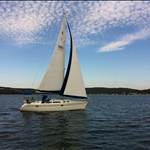
Yeah I've anchored at Double Island Point and found it best if you keep as close to the point as possible (once in the protected area) and get as close to the beach as you can. The further into the bay you go the worse the swell/roll becomes because it wraps around the point and expands to encumber all. I also use a rocker reduce (miss named rocker stopper) to reduce boat roll. Not much of an anchorage in any sort of swell.
The Bar.
- Look at your forecast swell for the day and take heed. Below 2m should be ok. Anything that hints at 3 meter don't go near it (well I wouldn't).
- Your charts and GPS will indicate a line to follow on the first lead in (coming from the south). For me this line is now too close for shifting sands and I keep another 100m to the N/E of it. Keep your eyes peeled and you can easily see white water and shallows and for f$#k sake don't cut the corner (as marked on your GPS/Chart). If you see some power boat scooting around, look and learn.
- There is normally plenty of water but the conditions on the bar seem best when the tide is flowing in (as usual). I would plan my crossing for 3/4 - 7/8 high tide. The swell can stand up something horrible with the tide against it.
I have been across in mill pond conditions and also surfed waves (ye ha). This by no way means that I know what I am doing.
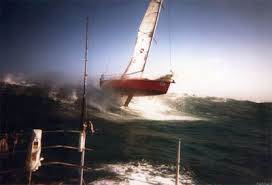
Here is a picky of some racing guys heading into the swell and probably wondered later if they made the correct decision.