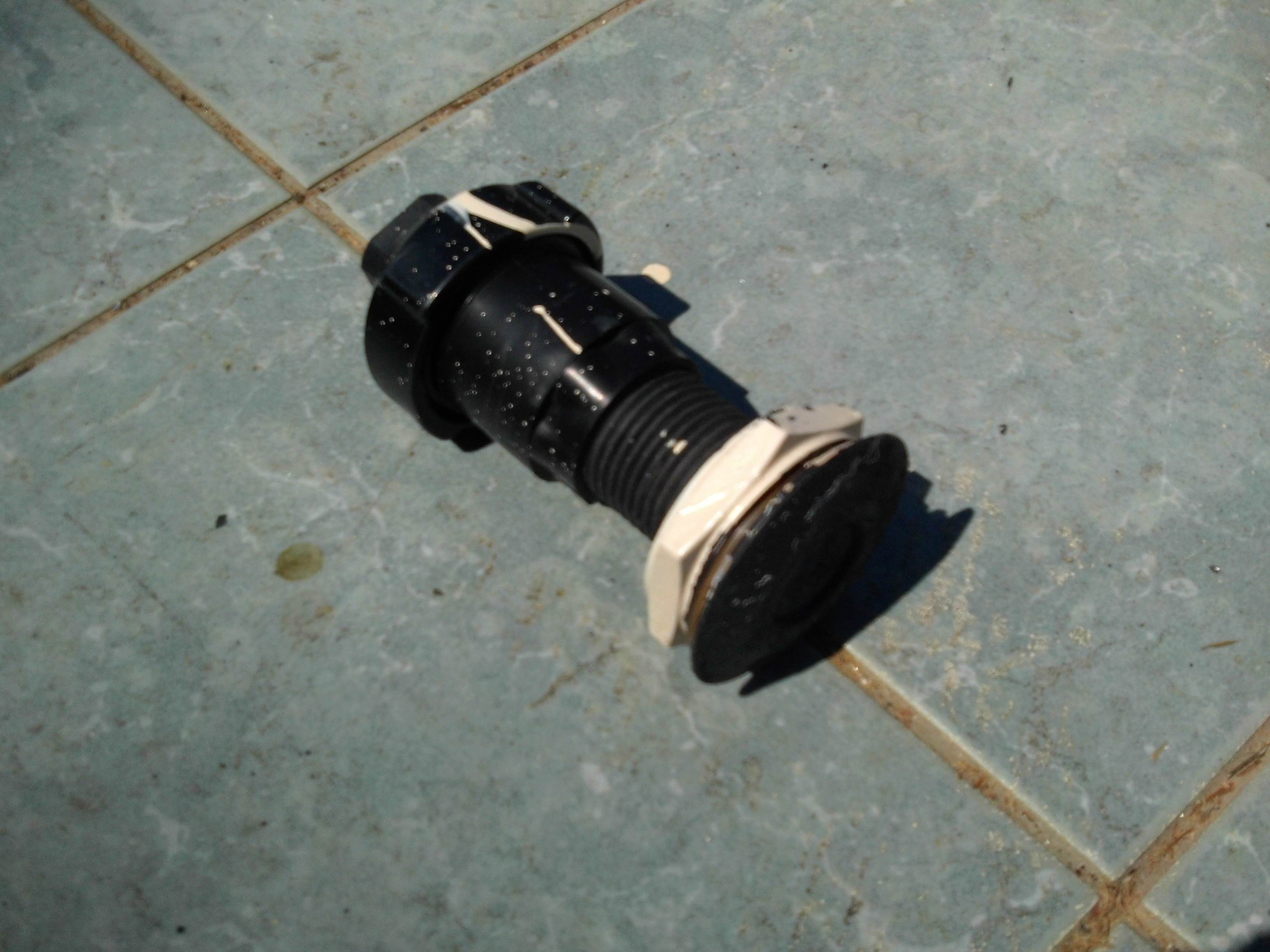
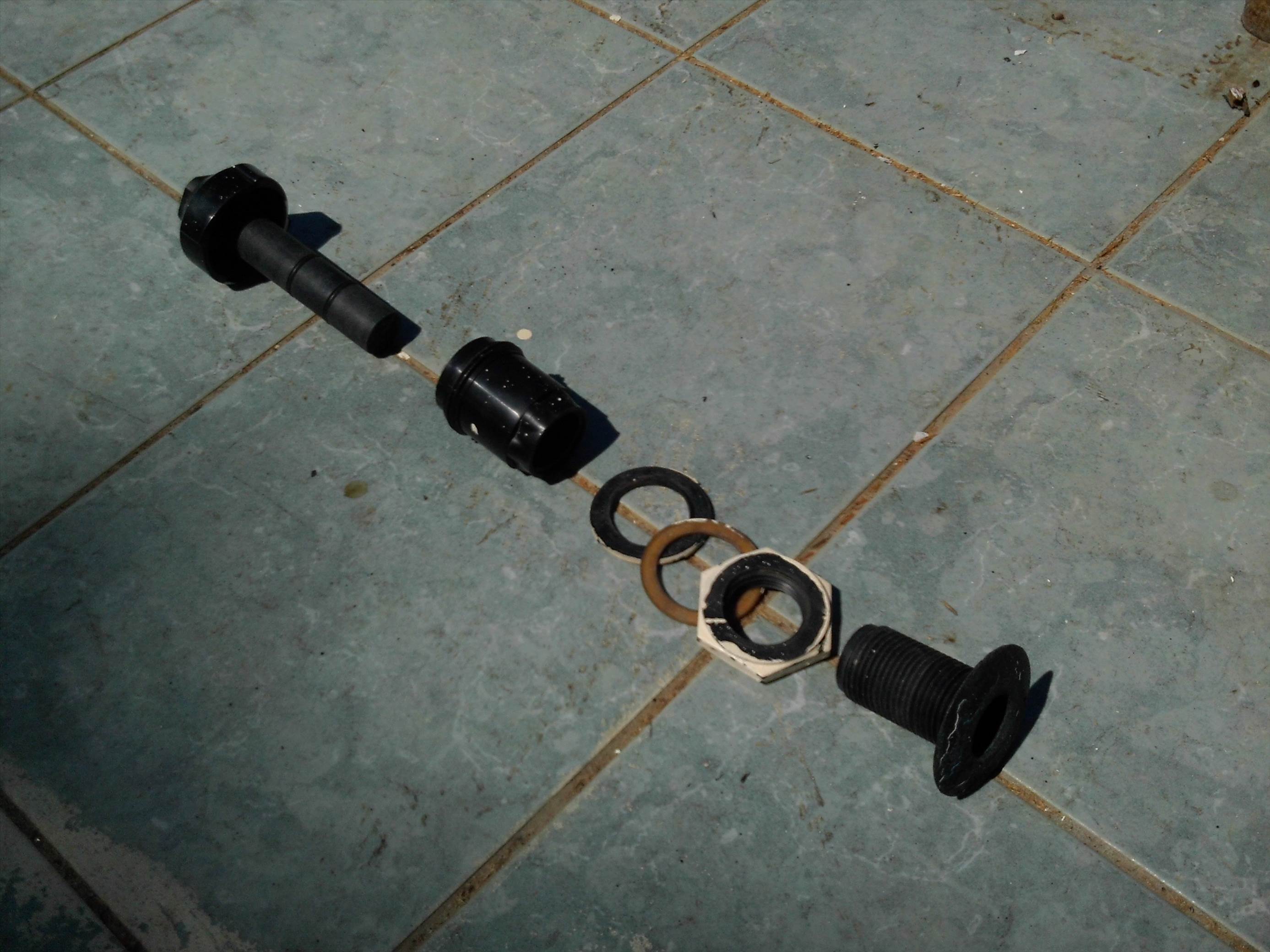
VDO Sumlog Thru Hull and Blank.

9 years ago
Reply
Register to post, see what you've read, and subscribe to topics.
cisco
cisco
QLD
12365 posts
QLD, 12365 posts
28 Oct 2016 12:42am


A while ago somebody was after one of these. Don't remember who. I took this one out of my boat today and I will be having the hole glassed in.

If anybody wants it (free), just PM me with name and address and I will send it.

I am going to let the GPS tell me how much fun I am having.


madmission
madmission
VIC
234 posts
VIC, 234 posts
28 Oct 2016 6:45am
Hi Cisco
It was I who you kindly sent your old unit to and requires the plug .
I have the same through hull fitting but no plug and it has always concerned me , it would be great to get such a plug and more than happy to reimburse you for your effort if you have a paypal it would be so easy
cisco
cisco
QLD
12365 posts
QLD, 12365 posts
28 Oct 2016 10:17am

On it's way mate.
HG02
HG02
VIC
5814 posts
VIC, 5814 posts
28 Oct 2016 5:38pm
Im about to fill mine in to Cisco .
Get enough speed input from Navronics and one less thing to go wrong
dism
dism
NSW
660 posts
NSW, 660 posts
4 Nov 2016 8:13pm
Likewise. What method using to patch hole?
cisco
cisco
QLD
12365 posts
QLD, 12365 posts
4 Nov 2016 9:47pm

Feather the edges inside and out and fill with glass mat and resin. That is what my glass guy tells me.
lydia
lydia
1944 posts
1944 posts
5 Nov 2016 4:34am
Bit worried about this trend to rely only on SOG and ignore BWS when the comparison between the two is one of the best navigational planning tools.
Trek
Trek
NSW
1216 posts
NSW, 1216 posts
5 Nov 2016 8:03am
lydia said..
Bit worried about this trend to rely only on SOG and ignore BWS when the comparison between the two is one of the best navigational planning tools.


Im not going to rely on satellite completely either. Lydia, whats BWS?
Ramona
Ramona
NSW
7757 posts
NSW, 7757 posts
5 Nov 2016 8:05am
lydia said..
Bit worried about this trend to rely only on SOG and ignore BWS when the comparison between the two is one of the best navigational planning tools.


They are handy for detecting current or for racing and adjusting sail trim etc. The downside is l keeping the paddle wheels clean. I reckon it's two years since I even took the cover off mine. Commonsense and knowing how fast your boat really travels through the water in the conditions is probably enough for most people when using GPS.
lydia
lydia
1944 posts
1944 posts
5 Nov 2016 6:24am
BWS (or same systems use BSD) but boat water speed or speed through the water as opposed to speed over ground.

Difference on the east coast can be over 70 miles day if you are using this properly.

I don't use put the log in every time I sail but on a long passage I always put it in
Crusoe
Crusoe
QLD
1197 posts
QLD, 1197 posts
6 Nov 2016 7:18am
lydia said..
BWS (or same systems use BSD) but boat water speed or speed through the water as opposed to speed over ground.

Difference on the east coast can be over 70 miles day if you are using this properly.

I don't use put the log in every time I sail but on a long passage I always put it in


Couldn't agree more. I use mine when passage making and consider it very important. I pull it back out to keep it clean when I'm not using the boat. (the bung is not meant to roll around in the bottom of the hull gathering dust).

The log is also required by your wind instruments to determine "apparent wind"
HG02
HG02
VIC
5814 posts
VIC, 5814 posts
6 Nov 2016 9:33am
I had quote for a paddle wheel / temp so its going back in. I've in hull depth
PhoenixStar
PhoenixStar
QLD
477 posts
QLD, 477 posts
6 Nov 2016 4:26pm
The log is also required by your wind instruments to determine "apparent wind"

No,no,no a thousand times no. The true wind calc MUST be made from SOG.

You are at anchor, zero wind speed, 3 knot current by your paddle wheel. You vector add the paddle wheel speed to indicated wind speed to get true wind speed, answer 3 knots. False result. You vector add the speed over ground ( 0 ) to apparent wind speed and you get the correct answer - zero.

Sorry cisco, I'm just getting over the dreaded coughing disease and I have become a grumpy old man.
cisco
cisco
QLD
12365 posts
QLD, 12365 posts
6 Nov 2016 10:23pm
PhoenixStar said..
The log is also required by your wind instruments to determine "apparent wind"

No,no,no a thousand times no. The true wind calc MUST be made from SOG.

You are at anchor, zero wind speed, 3 knot current by your paddle wheel. You vector add the paddle wheel speed to indicated wind speed to get true wind speed, answer 3 knots. False result. You vector add the speed over ground ( 0 ) to apparent wind speed and you get the correct answer - zero.

Sorry cisco, I'm just getting over the dreaded coughing disease and I have become a grumpy old man.


I think that one is arguable Phoenix. Say you have 8 knots true wind that is giving you 4 knots through the water but you are pushing directly into a 4 knot current. How would that one work out??

Considering my hull is only about 12 mm thick where I pulled the transducer out I am thinking I will put a bronze skin fitting blank in instead of having it glassed in. I pulled the old fitting out because the VDO Sumlog was buggered and I refuse to buy anything VDO due to their policy of not selling spare parts.

Putting a bronze blank in gives me the option of fitting another brand of log in at a later date. Paddle wheels are a constant source of bother but I believe there are other transducers that sense water flow non mechanically. Does anyone know of those and whether they need to be constantly cleaned??
HG02
HG02
VIC
5814 posts
VIC, 5814 posts
7 Nov 2016 4:50am
Raymarines speed /Temp transducer is around the $150 saves me filling in the hole
Karsten
Karsten
NSW
331 posts
NSW, 331 posts
7 Nov 2016 10:59am
cisco said..

PhoenixStar said..
The log is also required by your wind instruments to determine "apparent wind"

No,no,no a thousand times no. The true wind calc MUST be made from SOG.

You are at anchor, zero wind speed, 3 knot current by your paddle wheel. You vector add the paddle wheel speed to indicated wind speed to get true wind speed, answer 3 knots. False result. You vector add the speed over ground ( 0 ) to apparent wind speed and you get the correct answer - zero.

Sorry cisco, I'm just getting over the dreaded coughing disease and I have become a grumpy old man.


I think that one is arguable Phoenix. Say you have 8 knots true wind that is giving you 4 knots through the water but you are pushing directly into a 4 knot current. How would that one work out??

Considering my hull is only about 12 mm thick where I pulled the transducer out I am thinking I will put a bronze skin fitting blank in instead of having it glassed in. I pulled the old fitting out because the VDO Sumlog was buggered and I refuse to buy anything VDO due to their policy of not selling spare parts.

Putting a bronze blank in gives me the option of fitting another brand of log in at a later date. Paddle wheels are a constant source of bother but I believe there are other transducers that sense water flow non mechanically. Does anyone know of those and whether they need to be constantly cleaned??


Does not sound right Cisco. I would have thought your masthead wind instrument would measure "apparent wind" directly. Your computerised instruments would have to calculate True Wind, and SOG would be needed.
QLDCruiser
QLDCruiser
QLD
160 posts
QLD, 160 posts
7 Nov 2016 10:10am
The masthead sensor measures Apparent wind. The Raymarine system calculates True wind, relative to the boat, based on Apparent Wind and speed through the water. There's no option (at least, in the ST60) for using SOG from a GPS instead - I seem to remember reading somewhere that this is due to the formal definition of the various NMEA parameters. I don't know what other manufacturers do.

I wouldn't be without a paddlewheel and the data it provides. I pull mine out and give it a coat of this stuff every couple of months:
www.whitworths.com.au/transducer-paint-92ml
Karsten
Karsten
NSW
331 posts
NSW, 331 posts
7 Nov 2016 11:49am
QLDCruiser said..
The masthead sensor measures Apparent wind. The Raymarine system calculates True wind, relative to the boat, based on Apparent Wind and speed through the water. There's no option (at least, in the ST60) for using SOG from a GPS instead - I seem to remember reading somewhere that this is due to the formal definition of the various NMEA parameters. I don't know what other manufacturers do.

I wouldn't be without a paddlewheel and the data it provides. I pull mine out and give it a coat of this stuff every couple of months:
www.whitworths.com.au/transducer-paint-92ml


Wow, that would be amazing if Raymarine can calculate True Wind without knowing SOG.
QLDCruiser
QLDCruiser
QLD
160 posts
QLD, 160 posts
7 Nov 2016 11:49am
It's all a matter of definitions. This version of True Wind, which has been around since pre GPS days, is "True" relative to the water surface, whether that is moving due to currents or not. It is calculated from Apparent speed and direction, with appropriate vector offset by speed through the water.

There's another parameter, which I believe is called "Ground wind", which as you might expect is relative to earth's surface. Calculating that would require SOG.

You could probably make a case for either option being the more useful under various circumstances. However, as currents rarely get over 2-3 knots, and wind is rarely of any relevance unless it's several times that, it's hairsplitting in my view.
QLDCruiser
QLDCruiser
QLD
160 posts
QLD, 160 posts
7 Nov 2016 11:57am
This argument has been done to death long ago. See here for example:
www.cruisersforum.com/forums/f121/differences-between-ground-apparent-and-true-wind-direction-73563.html

Especially post #4.
HG02
HG02
VIC
5814 posts
VIC, 5814 posts
7 Nov 2016 2:01pm
fills a hole anyway
I've a belly full of wind at the moment
I guess that's true wind and Sog
Karsten
Karsten
NSW
331 posts
NSW, 331 posts
7 Nov 2016 4:08pm
QLDCruiser said..
It's all a matter of definitions.


Good point, and readily explains the Raymarine 'effect'.

Although, as mentioned in the referenced thread, the consequence of the definition is this:
....If you are completely stationary at anchor in 100% dead calm, but a 5kt tidal current is present, your True Wind is now 5kt.

Which might surprise the intuition of your average old salt.
lydia
lydia
1944 posts
1944 posts
7 Nov 2016 2:42pm
That is just wrong
Try again.
PhoenixStar
PhoenixStar
QLD
477 posts
QLD, 477 posts
7 Nov 2016 5:50pm
QLDCruiser said..
It's all a matter of definitions. This version of True Wind, which has been around since pre GPS days, is "True" relative to the water surface, whether that is moving due to currents or not. It is calculated from Apparent speed and direction, with appropriate vector offset by speed through the water.

There's another parameter, which I believe is called "Ground wind", which as you might expect is relative to earth's surface. Calculating that would require SOG.

You could probably make a case for either option being the more useful under various circumstances. However, as currents rarely get over 2-3 knots, and wind is rarely of any relevance unless it's several times that, it's hairsplitting in my view.


True wind is something of a misnomer in that it is shown relevant to the boats heading, as is apparent wind and is never dependent on current. If you know SOG you don't need to know about the interaction between boat speed through the water and current.

True wind is found by vector addition of SOG to Apparent wind and is shown as speed and direction relevant to the boat. And current is only relevant in that it affects SOG. If you need to know the current then you need a paddle wheel and GPS to do another vector addition.

I don't know why this is so confusing. It's just the way it is.
HG02
HG02
VIC
5814 posts
VIC, 5814 posts
7 Nov 2016 7:53pm
Thanks Phoenix Star it just clicked
cisco
cisco
QLD
12365 posts
QLD, 12365 posts
7 Nov 2016 8:38pm

If we are using a wind instrument to achieve more efficient sailing, why would we be concerned with "True" wind speed and direction??

Surely if the boat is sailed to the best "Apparent" wind direction relative to the course we want, that is as good as it gets isn't it??
FreeRadical
FreeRadical
WA
855 posts
WA, 855 posts
7 Nov 2016 7:05pm
cisco said..

If we are using a wind instrument to achieve more efficient sailing, why would we be concerned with "True" wind speed and direction??

Surely if the boat is sailed to the best "Apparent" wind direction relative to the course we want, that is as good as it gets isn't it??


You will end up chasing the AWA with boat speed changes.


FreeRadical
FreeRadical
WA
855 posts
WA, 855 posts
7 Nov 2016 7:15pm
PhoenixStar said..

QLDCruiser said..
It's all a matter of definitions. This version of True Wind, which has been around since pre GPS days, is "True" relative to the water surface, whether that is moving due to currents or not. It is calculated from Apparent speed and direction, with appropriate vector offset by speed through the water.

There's another parameter, which I believe is called "Ground wind", which as you might expect is relative to earth's surface. Calculating that would require SOG.

You could probably make a case for either option being the more useful under various circumstances. However, as currents rarely get over 2-3 knots, and wind is rarely of any relevance unless it's several times that, it's hairsplitting in my view.


True wind is something of a misnomer in that it is shown relevant to the boats heading, as is apparent wind and is never dependent on current. If you know SOG you don't need to know about the interaction between boat speed through the water and current.

True wind is found by vector addition of SOG to Apparent wind and is shown as speed and direction relevant to the boat. And current is only relevant in that it affects SOG. If you need to know the current then you need a paddle wheel and GPS to do another vector addition.

I don't know why this is so confusing. It's just the way it is.


You say true wind is not dependent on current (correct), but then say true wind is calculated from SOG, which is dependent on current. Makes no sense.

true wind is calculated from apparent wind and boat speed.

ground wind is calculated from apparent wind and SOG.


www.sailingworld.com/what-are-my-electronics-telling-me-about-boatspeed-and-heading/?image=0
PhoenixStar
PhoenixStar
QLD
477 posts
QLD, 477 posts
7 Nov 2016 9:30pm
FreeRadical said..


PhoenixStar said..


QLDCruiser said..
It's all a matter of definitions. This version of True Wind, which has been around since pre GPS days, is "True" relative to the water surface, whether that is moving due to currents or not. It is calculated from Apparent speed and direction, with appropriate vector offset by speed through the water.

There's another parameter, which I believe is called "Ground wind", which as you might expect is relative to earth's surface. Calculating that would require SOG.

You could probably make a case for either option being the more useful under various circumstances. However, as currents rarely get over 2-3 knots, and wind is rarely of any relevance unless it's several times that, it's hairsplitting in my view.


True wind is something of a misnomer in that it is shown relevant to the boats heading, as is apparent wind and is never dependent on current. If you know SOG you don't need to know about the interaction between boat speed through the water and current.

True wind is found by vector addition of SOG to Apparent wind and is shown as speed and direction relevant to the boat. And current is only relevant in that it affects SOG. If you need to know the current then you need a paddle wheel and GPS to do another vector addition.

I don't know why this is so confusing. It's just the way it is.


You say true wind is not dependent on current (correct), but then say true wind is calculated from SOG, which is dependent on current. Makes no sense.

true wind is calculated from apparent wind and boat speed.

ground wind is calculated from apparent wind and SOG.


www.sailingworld.com/what-are-my-electronics-telling-me-about-boatspeed-and-heading/?image=0


Of course SOG is dependent on current but only SOG is used in the calc, ie after current has had its effect on boat speed.

To use a simple example, you are anchored in 3k current, no apparent wind, no true wind. If you use speed through the water (3k) with apparent wind (0) you would get a true wind of 3 knots, obviously false. If you use SOG (0) with apparent wind (0) you get the right answer, true wind 0. Ground wind needs input from the ships COG for its calc. and is not shown on a wind instrument hooked up to NMEA or a proprietary net.

True wind is mainly useful for planning the next leg, knowing how you will be placed for the mark and your best sail set or as an indication if you will be over canvassed coming off a run.

Stuart Quarrie "Race Navigation" published by Stanford Maritime Limited in 1982 is as good an authority as any.
Karsten
Karsten
NSW
331 posts
NSW, 331 posts
7 Nov 2016 11:11pm
Ok here's an attempt to clarify:


***************************
"Pre-GPS TRUE WIND" = wind speed/dir when you totally disregard current.
You can calculate this from Apparent Wind and Boat Water Speed (this is how pre-GPS instruments do it). May give 'strange' answers when the boat is in calm conditions but current is flowing.


****************************
"Post-GPS TRUE WIND" = also known as "GROUND WIND" = wind speed/dir when you factor in current.
You can calulate this from Apparent Wind and SOG. Never gives 'strange' answers. This is also the one used by weather forecasters.

Should add that, in conditions where wind speed is much higher than current speed (very often), the above two will be very good approximations of each other. So for most sailing conditions, the values will be very close.
FreeRadical
FreeRadical
WA
855 posts
WA, 855 posts
7 Nov 2016 10:08pm
PhoenixStar said..

FreeRadical said..


PhoenixStar said..


QLDCruiser said..
It's all a matter of definitions. This version of True Wind, which has been around since pre GPS days, is "True" relative to the water surface, whether that is moving due to currents or not. It is calculated from Apparent speed and direction, with appropriate vector offset by speed through the water.

There's another parameter, which I believe is called "Ground wind", which as you might expect is relative to earth's surface. Calculating that would require SOG.

You could probably make a case for either option being the more useful under various circumstances. However, as currents rarely get over 2-3 knots, and wind is rarely of any relevance unless it's several times that, it's hairsplitting in my view.


True wind is something of a misnomer in that it is shown relevant to the boats heading, as is apparent wind and is never dependent on current. If you know SOG you don't need to know about the interaction between boat speed through the water and current.

True wind is found by vector addition of SOG to Apparent wind and is shown as speed and direction relevant to the boat. And current is only relevant in that it affects SOG. If you need to know the current then you need a paddle wheel and GPS to do another vector addition.

I don't know why this is so confusing. It's just the way it is.


You say true wind is not dependent on current (correct), but then say true wind is calculated from SOG, which is dependent on current. Makes no sense.

true wind is calculated from apparent wind and boat speed.

ground wind is calculated from apparent wind and SOG.


www.sailingworld.com/what-are-my-electronics-telling-me-about-boatspeed-and-heading/?image=0


Of course SOG is dependent on current but only SOG is used in the calc, ie after current has had its effect on boat speed.

To use a simple example, you are anchored in 3k current, no apparent wind, no true wind. If you use speed through the water (3k) with apparent wind (0) you would get a true wind of 3 knots, obviously false. If you use SOG (0) with apparent wind (0) you get the right answer, true wind 0. Ground wind needs input from the ships COG for its calc. and is not shown on a wind instrument hooked up to NMEA or a proprietary net.

True wind is mainly useful for planning the next leg, knowing how you will be placed for the mark and your best sail set or as an indication if you will be over canvassed coming off a run.

Stuart Quarrie "Race Navigation" published by Stanford Maritime Limited in 1982 is as good an authority as any.


We'll have fun assessing your performance against polar plots using a SOG derived TWS!
Please Register, or first...
Topics Subscribe Reply