What sort of safety preparations

> 10 years ago
Reply
Register to post, see what you've read, and subscribe to topics.
spiggie
spiggie
VIC
79 posts
VIC, 79 posts
2 Aug 2015 5:01pm
Okay after Thursday incident , what sort of preparations do you do prior to heaving off
Do you make a passage plan including safe anchorages in case the weather turns ?
When navigating is it old style ? Log book ,plotting on chart ,keeping track of weather, fuel consumption.
When going out are you dictated to by a time frame where you have to arrive by a certain time ,ignore the weather I need back

What would happen if you had no power for navigation on your chart plotter and didn't plot on a chart .
Do you look at the weather prior to departure or understand it ? Do you care about it
How about carrying a spare radio ,logging in with coast stations.
How much provisions water,fuel ,spare batteries,food,?
What safety plan would I implement if I was sinking ,mast breakage ,holed or flipped over ?
Is your vessel seaworthy ,what sort of safety equipment , motor spares ,alternative bilge pumps ,enough chain for anchoring.
If you haven't a life raft what other sort life saving equipment ,have you thought about how you would be airlifted ?
When sailing at night do you understand ships navigation lights ? Navigation beacons
How about understanding who has right away ?
Sound signals in fog , do you carry AIS transponder.

Are you prepared to loose it all with a she'll be alright attitude it will never happen to me.
I am positive most sea breezers yachties comply above and beyond ,we need to help those that don't.
Safe cruising everyone it's a wonderfully life when cruising safely.

HG02
HG02
VIC
5814 posts
VIC, 5814 posts
2 Aug 2015 5:18pm
When I first joined sea breeze I was in the market for a boat I nearly bought one in Sydney but what you just put up was the main reason for not going ahead.
It needed some work but like any thing you need to spend the time prepping before you can trust any machine . So I didn't buy it .
I was just emailing Bubbles about it and saw this thread.


The forward chain plate needed repairing for one and I didn't have the time to spare from work to repair and sail it down here
Im still working towards raising a sail on the boat I bought
18 months later But I'm confident she will keep going and I know nearly every inch of her., But she still wont be going though the heads till next winter after sailing her around the bay for the next 6 to 8 months


And theres still a few things Ill do inside before the mast go back on
Plus my Ace is Charriot is coming with me if hes still down here to sail her to western port next winter


MorningBird
MorningBird
NSW
2711 posts
NSW, 2711 posts
2 Aug 2015 6:41pm
spiggie said..
Okay after Thursday incident , what sort of preparations do you do prior to heaving off
Do you make a passage plan including safe anchorages in case the weather turns ?
When navigating is it old style ? Log book ,plotting on chart ,keeping track of weather, fuel consumption.
When going out are you dictated to by a time frame where you have to arrive by a certain time ,ignore the weather I need back

What would happen if you had no power for navigation on your chart plotter and didn't plot on a chart .
Do you look at the weather prior to departure or understand it ? Do you care about it
How about carrying a spare radio ,logging in with coast stations.
How much provisions water,fuel ,spare batteries,food,?
What safety plan would I implement if I was sinking ,mast breakage ,holed or flipped over ?
Is your vessel seaworthy ,what sort of safety equipment , motor spares ,alternative bilge pumps ,enough chain for anchoring.
If you haven't a life raft what other sort life saving equipment ,have you thought about how you would be airlifted ?
When sailing at night do you understand ships navigation lights ? Navigation beacons
How about understanding who has right away ?
Sound signals in fog , do you carry AIS transponder.

Are you prepared to loose it all with a she'll be alright attitude it will never happen to me.
I am positive most sea breezers yachties comply above and beyond ,we need to help those that don't.
Safe cruising everyone it's a wonderfully life when cruising safely.


All of the above. How much depends on the trip.

FIRST OF ALL, ABOVE EVERYTHING ELSE, HAVE A BOAT DESIGNED FOR AND CAPABLE OF UNDERTAKING THE PASSAGE.

All the safety gear/gimmicks in the world aren't half as important as having the right boat in the right condition.

Buy an S&S34 and spend years getting it ready.
Yara
Yara
NSW
1322 posts
NSW, 1322 posts
2 Aug 2015 6:44pm
What type of boat was that one in Sydney HG? I totally agree that setting sail offshore on a boat you just bought is a common story of people getting into trouble. Road transport to your home port is the safe but expensive alternative. This is maybe why boats in remote places fetch lower prices.
nswsailor
nswsailor
NSW
1458 posts
NSW, 1458 posts
2 Aug 2015 8:58pm
Yara said..
I totally agree that setting sail offshore on a boat you just bought is a common story of people getting into trouble. Road transport to your home port is the safe but expensive alternative. This is maybe why boats in remote places fetch lower prices.


Exactly what I did with my yacht once I spent some time on board and realized that a little bit of work was required to make her sea worthy outside Pittwater.
frant
frant
VIC
1230 posts
VIC, 1230 posts
2 Aug 2015 9:30pm
Pretty simple. Cat 1 or Cat 2 if limited coastal. Most important is crew qualifications, again use Cat1 or 2 as guide.
Unfortunately that will probably knock 90% of the 3ksb's from here out.
Yara
Yara
NSW
1322 posts
NSW, 1322 posts
2 Aug 2015 9:59pm
frant said..
Pretty simple. Cat 1 or Cat 2 if limited coastal. Most important is crew qualifications, again use Cat1 or 2 as guide.
Unfortunately that will probably knock 90% of the 3ksb's from here out.


KSB- well known German pump manufacturer. 3 ksb's ????
cisco
cisco
QLD
12365 posts
QLD, 12365 posts
2 Aug 2015 10:14pm
MorningBird said..

FIRST OF ALL, ABOVE EVERYTHING ELSE, HAVE A BOAT DESIGNED FOR AND CAPABLE OF UNDERTAKING THE PASSAGE.


That really is where the rubber hits the road and non-adherence to that concept would account for a large percentage of rescue operations I am sure.

I am not only talking about yachts but yachts seem to get the most publicity.
Pekeri
Pekeri
VIC
81 posts
VIC, 81 posts
2 Aug 2015 10:35pm
Spiggie this can be can of worms.
But I will stick my chin out and wait for wack.
Actually the rise of positive posts is very heartening, but lets also try and keep things a bit light, informative and amusing.

… what sort of preparations do you do prior to heaving off?
Depends on the trip. Day Bay sail Overnighter Coastal sail Extended cruise All dictate a level of preparation. Boat should always be ready for an unexpected trip at short notice.

Do you make a passage plan?
Always.
I follow three rules in everything I undertake and in my planning.
1. Do not create a problem.
2. If a problem eventuates, make sure it can be contained and not blow up to affect others.
3. If it unavoidable that the problem affects others, minimise that effect and normalise as quickly as possible with least impact on others.

.. including safe anchorages in case the weather turns ?

Always, part and parcel of cruising is to study the area you expect to cruise and learn all you can. Calculate and note the time of arrival at all destinations

When navigating is it old style ?

A bit of everything that is available at the time. If its available use it.

Log book ,
Not religiously but notes at least every day. Habitually I save all routes and tracks, which I then overlay and study as part of my relaxation so that anything I do on the boat is automatic and second nature

plotting on chart ,
Now only new places, but as above I record every track (have done since 2003).

Keeping track of weather,
Always, no sailor should go anywhere without being aware of the weather. (In practice I find this is a bit lax with motor cruisers, there seems to be an assumption Motor cruisers can always make a run for port/sheltr/home, to me a danger to boating.)

fuel consumption.
Should always know how much fuel but more importantly the range you have with the fuel you have. Always carry more than what you need to reach a safe harbour with fuel supplu available. When going out are you dictated to by a time frame where you have to arrive by a certain time , Deadlines and sail cruising are oxy-morons, don’t go if you must reach a destination at a specific time.

ignore the weather I need back
Only at your own peril. Check the weather then check it again. What would happen if you had no power for navigation on your chart plotter and didn't plot on a chart . Again depends on the nature of the cruise. But generally anyone who sails out of the sight of land should be able to calculate direction and time of day, otherwise stay inshore.

Do you look at the weather prior to departure or understand it ?
Read the above

Do you care about it
If you don’t, you should not be on a boat.

How about carrying a spare radio ,
Again depends on nature of trip. Basically carry what you can afford and know how to use it properly. Unfortunately 7 out 10 I see are owners and not users of all kinds of gadgets. If you have it learn to use it and take it with you.

logging in with coast stations.
It,s a pet habit of mine. But unfortunately in Victoria login on is rarely done.

How much provisions water, fuel, spare batteries, food,?
Sufficient for the trip/cruise plus more. Water tanks should always be topped up. Always carry spare water in plastic bottles.
Should not leave without checking fuel is more than sufficient for the intended cruise or leg of the cruise.
Batteries, this is interesting, I have changed all my devices requiring batteries to units that use only AA batteries, and I carry a spare pack.

What safety plan would I implement if…
I was sinking, mast breakage, holed or flipped over ?
Depends how I got in that situation.
But again see my 3 rules above and in particularl
- stay calm
- count to 10
- act decidedly and deliberately
- Minimise peril to others

Is your vessel seaworthy ,
Should not be at sea if not seaworthy

what sort of safety equipment ,
All mandatory equipment plus learn how to use it with your eyes closed, and store it where it is easy to get to and deploy.

motor spares ,
I personally minimise my dependence on a motor, I sail and use the motor as a convenience. Twice I have had to return to my home port at night, under sail with an engine that was disabled.

Alternative bilge pumps ,
My bilge pumps are manual, plus I carry a variety of buckets and containers. Separate bailers for my dingy always lashed in the dingy.

enough chain for anchoring.
Anchoring is a topic on its own, but I read some where that if you can’t sleep while at anchor you should upgrade your anchoring system.

…. Life raft
For off shore. Coastal and bay I carry my dingy.

…. Other sort life saving equipment ,
The usual dictated by the authorities. Also refer to my 3 rules above. Club safety manual.

have you thought about how you would be airlifted ?
Yes. Have been airlifted during my Army days

When sailing at night do you understand ships navigation lights ?
Should not be out there if you don’t.

Navigation beacons
As above

How about understanding who has right away ?
Happy to participate in a show and tell.

Sound signals in fog ,
Curiosity killed the cat.

do you carry AIS transponder.
Off shore, one would be mad not to carry an AIS these days. (But there is a story here also)

Are you prepared to loose it all
Not really, but I am pragmatic.

with a she'll be alright attitude
You now should be in the ABC, (they are more outraged than you or me!)

it will never happen to me.
The longer it doesn’t to me the sooner it’s going to. (If I am out there long enough)
But, it has never happened only to those that have never done anything.

Long post but it was a long question.
I tried to avoid making standard statements because I believe the questiner was genuinely wanting information.
Cheers
andy59
andy59
QLD
1156 posts
QLD, 1156 posts
2 Aug 2015 10:39pm
Yara said..

frant said..
Pretty simple. Cat 1 or Cat 2 if limited coastal. Most important is crew qualifications, again use Cat1 or 2 as guide.
Unfortunately that will probably knock 90% of the 3ksb's from here out.


KSB- well known German pump manufacturer. 3 ksb's ????


google says:

PDB id: 3ksb LinksPDBeRCSBMMDBJenaLibOCAPDBWikiProteopediaCATHSCOPFSSPHSSPPDBSWSPQSProSATEDSWhatcheck Name: Isomerase/DNA
Title: Detailed structural insight into the DNA cleavage complex of topoisomerases (re-sealed form)
Structure: DNA topoisomerase 4 subunit a. Chain: a, b. Fragment: residues 1-488. Synonym: parc55, topoisomerase iv subunit a. Engineered: yes. DNA topoisomerase 4 subunit b. Chain: c, d. Fragment: residues 404-647. Synonym: pare30, topoisomerase iv subunit b.
Source: Streptococcus pneumoniae. Organism_taxid: 1313. Strain: 7785. Gene: parc. Expressed in: escherichia coli. Expression_system_taxid: 562. Gene: pare. Synthetic: yes. Synthetic: yes
Resolution: 3.50Å
R-factor: 0.186
R-free: 0.226
Authors: I.Laponogov,X.-S.Pan,D.A.Veselkov,K.E.Mcauley,L.M.Fisher, M.R.Sanderson
Key ref: I.Laponogov et al. (2010). Structural basis of gate-DNA breakage and resealing by type II topoisomerases. PLoS One, 5, e11338.
PubMed id: 20596531 Date: 21-Nov-09 Release date: 05-May-10

But I'm not sure that's what Frant meant

Meg1122
Meg1122
QLD
285 posts
QLD, 285 posts
3 Aug 2015 8:47pm
On one of the yachts I cruised on one of the most important things was to have it properly stowed so that hypothetically if it were turned upside down and shaken nothing would come loose, this meant you were prepared if the sea state suddenly changed, not having to struggle with stowing and tying things down if the weather built and safe from items being turned into projectiles in roughers.
We carried all safety gear, liferaft, flares, radar, EPIRB, radios, AIS, life jackets, harnesses etc. We had a really well equip grab bag ready to go with everything from V-sheets and signal smoke to vinegar and fish hooks for survival.
Plenty of food and water onboard, more then enough to cover the passage and then some.
We had back ups for the back ups for the back ups as far as navigation systems went running onboard three laptops with C-Map, Maxsea and Tsunami programs as well as hand held GPS and as the very minimum we had a basic mobile phone navigation app and a sextant.
We maintained 24hr watch when passage making.
We used Weatherfax and monitored the weather extremely carefully selecting a minimum of three days forecast comfortable winds window before setting sail.
We only once took crew onboard and the only requirement for them was to stay awake, keep watch and let one of us know if the yacht started tracking off course. The yacht was set up with intergrated Autohelm and would pretty well sail herself up to around 20kts, she was 42 feet and well equip with all lines run to the cockpit, including reefing, set up for single handing so sailing with two or more onboard was easy.
I think out of all of the above at the end of the day the most useful and regularly depended on safety features were making sure the crew were adequately rested and able to maintain a good watch, monitoring position (good to always know where you're at :)) and carefully monitoring the forecast weather.
Pekeri
Pekeri
VIC
81 posts
VIC, 81 posts
3 Aug 2015 10:57pm
Meg a great example of experience being gained by doing and living the experience rather than trying to "learn" experience.

Over time I find I need to be constantly reminded where I have put things in my boat. So every couple of months I do a complete check and restore of every item on board, store, tool gear etc.. and I find that more and more I take stuff home or bin it. I need to know without thinking what and were I have on board.
HG02
HG02
VIC
5814 posts
VIC, 5814 posts
4 Aug 2015 12:58am
Meg1122 said..
On one of the yachts I cruised on one of the most important things was to have it properly stowed so that hypothetically if it were turned upside down and shaken nothing would come loose, this meant you were prepared if the sea state suddenly changed, not having to struggle with stowing and tying things down if the weather built and safe from items being turned into projectiles in roughers.
We carried all safety gear, liferaft, flares, radar, EPIRB, radios, AIS, life jackets, harnesses etc. We had a really well equip grab bag ready to go with everything from V-sheets and signal smoke to vinegar and fish hooks for survival.
Plenty of food and water onboard, more then enough to cover the passage and then some.
We had back ups for the back ups for the back ups as far as navigation systems went running onboard three laptops with C-Map, Maxsea and Tsunami programs as well as hand held GPS and as the very minimum we had a basic mobile phone navigation app and a sextant.
We maintained 24hr watch when passage making.
We used Weatherfax and monitored the weather extremely carefully selecting a minimum of three days forecast comfortable winds window before setting sail.
We only once took crew onboard and the only requirement for them was to stay awake, keep watch and let one of us know if the yacht started tracking off course. The yacht was set up with intergrated Autohelm and would pretty well sail herself up to around 20kts, she was 42 feet and well equip with all lines run to the cockpit, including reefing, set up for single handing so sailing with two or more onboard was easy.
I think out of all of the above at the end of the day the most useful and regularly depended on safety features were making sure the crew were adequately rested and able to maintain a good watch, monitoring position (good to always know where you're at :)) and carefully monitoring the forecast weather.


Thanks for the excellent info Meg I knew you cream them all
oldtelefart
oldtelefart
148 posts
148 posts
4 Aug 2015 2:58pm
Yara:

3ksb = 3-knot ****box.
knight
knight
NSW
60 posts
NSW, 60 posts
6 Aug 2015 9:34am
I'm currently preparing for my delivery voyage (Sans Souci -> Nelson Bay), so I'll share what I'm currently doing now.

1. Identify outstanding OMRs (Outstanding Maintenance Requirements)
Also known as carried forward unserviceable or engineering maintenance requests. Basically identify what is currently unserviceable or awaiting maintenance. Conduct risk assessment - What must be fixed before departure = fix it.

2. Conduct check of safety systems: Are the life jackets, flares and EPIRB in date? Does the bilge pump, backup and radio work.

3. Prepare a feasibility study: How far do we want to go, how long do we have, what is the required speed of advance? Is this possible?

If yes continue:

4. Update charts: If this hasn't been done fortnightly make sure it is done now! Really though you should be doing this when Australian Hydro puts out their fortnightly notice to mariners

5. Prepare passage plan: Put tracks on chart (yes paper), record the courses into the passage plan, estimate wheel over dates and times. If travelling at night estimate times for raising and dipping of lights. Add the normal weather - the monthly wind roses are available on the BOM website. Your passage plan should also include emergency anchorages including where they are, what direction they are protected from and so on.

6. Get short range weather reports from 3 days prior to departure, keep studing these in the days to come.

7. Get weather on day of departure

8. Go sailing.

While sailing
- maintain a good lookout by both sight and by hearing as well as all other methods appropriate to the prevailing circumstances and conditions - remember we are not top of the pile, there are alot of things we are required to give way to.
- Have life jackets readily available. Personnel on the upper deck wear life jackets at all times from sunset to sunrise.
- Display lights IAW rules of the road
- Display shapes IAW rules of the Road - remember if we have sails up AND are using the motor at the same time we are required to display shapes by day
- Conduct accurate navigation - record position regularly, you should be able to conduct several fixes between where you are and running aground. Record hourly position in the ships log (maintain accurate ship log :p)

I'm sure there are things I've forgotten to note, but that's the general plan I'm working to.
Yara
Yara
NSW
1322 posts
NSW, 1322 posts
6 Aug 2015 10:07am
The weather forecast is going to have a big impact on your passage plan, so it has to be interactive on a daily basis. Seabreeze is your friend for that. Be prepared to wait for good weather and sit it out in ports along the way. Broken Bay being an obvious first stop. AIS would be good, as there is a lot of ship movements in the Sydney area. If you are within 4g range of the shore, you might be able to use web based AIS programs, but that is pretty hit and miss.

Having a good strong, skilled crew would be highly recommended.
FreeRadical
FreeRadical
WA
855 posts
WA, 855 posts
6 Aug 2015 9:11am
Apart from all the usual safety gear and boat prep for our delivery trip from Airlie to Perth, there were a couple of really useful items:

1. Satphone. Used daily to receive txt weathers and send updated planned route changes. We had no HF.
2. Spot tracker. Knew exactly where the boat was every 30mins. It can also be used to send a couple of user preset email messages such as "underway" and "at anchor", "need assistance" etc.
3. Land Person. Had a copy of detailed route plan, emergency procedures steps (contacts etc), sent daily weather txts, followed progress on spot tracker.
BlueMoon
BlueMoon
866 posts
866 posts
6 Aug 2015 9:36am
Good one Knight, should be "mission accomplished" with military precision if your plan is followed.
Can I just add for your trip....I'd look for a 3 or 4 day weather window.
Sail during the day only.
San Souci>The Basin Pittwater.
The Basin>Lake Macquarie (arrive at high tide) pull up a courtesy mooring on the ocean side of the bridge for the night.
LM>Port Stephans.
Have someone competent onboard, so either of you are able to turn around if someone goes overboard.
Wear inflatable PFDs at all times.
Clip on with a harness at least if the other person is asleep or incapacitated.
Prepare sandwiches/food for the day, before getting onto the ocean.
Take preventative sea-sick tablets that you have trialled beforehand, incase of any side-effects.
Carry enough fuel for the entire journey, fuel is a PITA to obtain in Pittwater, & LM. There shouldnt be any need to get off the boat.
The Top Hat will look after you, its crew is the weak link, but be easy on the boat, don't overstress anything, (no accidental gybes etc), because its a new boat to you.
Enjoy & let us know how you go with photos please.
cheers
BlueMoon
BlueMoon
866 posts
866 posts
6 Aug 2015 9:39am
Oh & make sure you log on with VMR, I have found the volunteers extremely helpful & friendly along that part of the coast.
twodogs1969
twodogs1969
NSW
1000 posts
NSW, 1000 posts
6 Aug 2015 11:54am
It's Sans-Souci to Nelson bay hardly New Zealand
If the forcast is looking crap don't go
if it turns to crap you are very close to a safe port.
If not confident or experianced enough don't travel at night.
Not rocket science and no need for a huge production.
Crusoe
Crusoe
QLD
1197 posts
QLD, 1197 posts
6 Aug 2015 12:00pm
Mathew Flinders never had this crap and he did alright.

I reckon a lot of it is up to the person on the helm and if he's getting plenty of sleep and grub. It certainly helps if the person can sail :) but it seems you have to be a lot more than just a sailor to keep a boat in the same condition it left port in.

Presently sitting in Vanuatu and there are boats of all shapes and sized from Big $$$ to budget conscious. It ain't the type boat (with in reason) or how much gear you got on board. It's you!! The decisions make by the skipper can make or break a voyage (or a boat).

Bit ironic but the words from Kenny Rogers "The Gambler" come to mind. "You've got to know when to hold it, know when to fold it, know when to walk away, no when to run"

My thoughts anyway and I sure as usual I'll be wrong again :)
pumpnjump
pumpnjump
WA
265 posts
WA, 265 posts
6 Aug 2015 10:44am
Totally agree, I am confident in my sailing and problem solving skills in an emergency. Having taken delivery of my yacht in February and sailing her back from Adelaide to Geraldton across the Bight, my preparation was an exhaustive inspection of all equipment, it doesn't all need to be new and shiny but it needs to work. I down loaded a Category 1 safety check list and equipped as close as I could to that, plenty of food and lots of packet high energy snack food for bad weather. I upgraded my radio to AIS so I could call ships, its unbelievable how chatty and helpful (updated weather info) they are at sea, they will answer their call sign but not general calls, hence AIS, auto inflate and manual inflate lifejackets, I only wear and instruct crew to wear auto inflate when I assess the situation to be too rough to easily and quickly retrieve a mob, good music, and books, although I don't seem to find the time to read books when at sea!! Movies on my iPad, so nice to lie back occasionally and watch a movie, and at least 3 separate forms of navigation, but experience is the key, there are a hundred other things that are just done without thinking and not being aware of until you get someone else to analyse what you have done to complete your trip. Most importantly get out there and enjoy the ride, there's nothing like it.
Chris 249
Chris 249
NSW
3586 posts
NSW, 3586 posts
6 Aug 2015 5:43pm
frant said..
Pretty simple. Cat 1 or Cat 2 if limited coastal. Most important is crew qualifications, again use Cat1 or 2 as guide.
Unfortunately that will probably knock 90% of the 3ksb's from here out.


Cat 2 can easily be overkill for a passage that fits into Cat 3 or 4, like a coastal overnight or day sail. Yes, in an ideal world every boat may have Cat 1, but whether that is actual the ideal place to spend money for most people is another issue. Just about everyone has limited funds. Looking at the overall risks in life, there are other areas it's probably worth spending the time and money on, like your car and health. I've never done the stats, but it could well be that the typical sailor is more at risk driving down to their boat rather than sailing it, more at risk of a heart attack due to lack of exercise or stress than of drowning.

I don't know of a single major accident during Cat 3 racing, for instance, that would have been solved if the boat had Cat 2 equipment on board. But I do know of guys who drove unsafe vehicles every day so they could afford a new life raft.

By the way, it's pretty damn harsh to call someone else's boat a "SB". Your boat is doubtless a "**ter" by the standards of some people but you no doubt love it and would not like it being insulted, so why insult the boats that others own?
HG02
HG02
VIC
5814 posts
VIC, 5814 posts
6 Aug 2015 6:05pm
Yara said..
What type of boat was that one in Sydney HG? I totally agree that setting sail offshore on a boat you just bought is a common story of people getting into trouble. Road transport to your home port is the safe but expensive alternative. This is maybe why boats in remote places fetch lower prices.


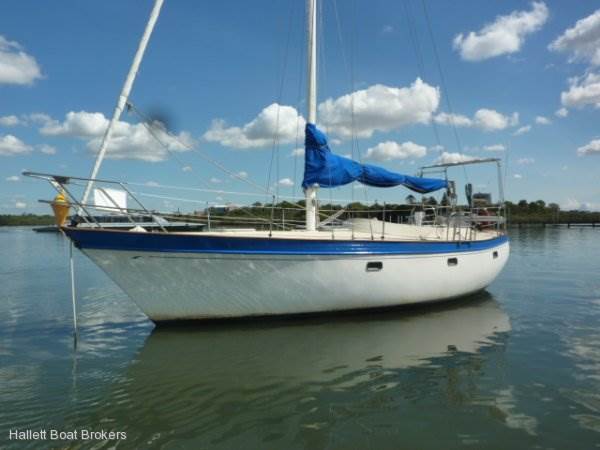
Nantucket 33 Yara Would have had lots of room, but I like my H28 She be a little heavy first up but Ill refine her as I go.
example would be the storage draw under the front bunk Ill design a lighter version later . Ive yet to make a secure lid for it and will also divide it up inside. Also over the next 12 months Id like to have every thing secured down so it she ever does a 360 I wont have every thing all over the place flying around inside the boat. Ill run life lines and ropes back to the cockpit eventually .

House batteries will change over time to lithium to lighten the load and faster charging.
Shes just roughed out at the moment . There's still heaps to finish off.
Hoping my mast will be dropped off this weekend and my anchor winch will be here on friday so no rest for the wicked here
The colder weather slows things down cant paint and cant really epoxy.
Ill spend a few hours on the boat measure stuff so I can make it at home and just fit it when I'm down on the boat for now
Libran
Libran
92 posts
92 posts
6 Aug 2015 5:26pm
Don't forget the fun and romance. Not worth doing without it.
MorningBird
MorningBird
NSW
2711 posts
NSW, 2711 posts
6 Aug 2015 11:51pm
And remember with VMR, the person you are talking to may never have been on a boat let alone have any experience that is valuable to you. They will be there to help and will do so willingly, but they are not there to give you advice. In the case of an emergency they are required to hand over to the Police, they do not do search and rescue.

When I was volunteering at the Terrey Hills radio of the 70 or so volunteers about 5 were boaties and not all of the 5 were experienced. The vast vast majority were doing VMR instead of Meals on Wheels. Keen but they are not experienced yachties.

Please Register, or first...
Topics Subscribe Reply