Hi Dex
I'm personally thinking
injectors, I think I'll pull them and have a look although I've never done it myself.
With injectors the basic problems boil down to fuel delivery timing, injector opening/operating pressure and spray pattern
Fuel delivery timing is controlled buy the pump. The pump can fail after many many hours of use. Usually many more hours than the engines on a sailboat run. I would consider this as a last option fault.
Injector opening/operating pressure is factory set for the application of the injector. Again this is a fault after very long operation times ( a million kilometers in truck terms).
Spray pattern can be influenced by contaminants as well as wear. The fuel is atomized and distributed into the combustion chamber or as in the case on your engine, the per-combustion chamber where it is ignited.
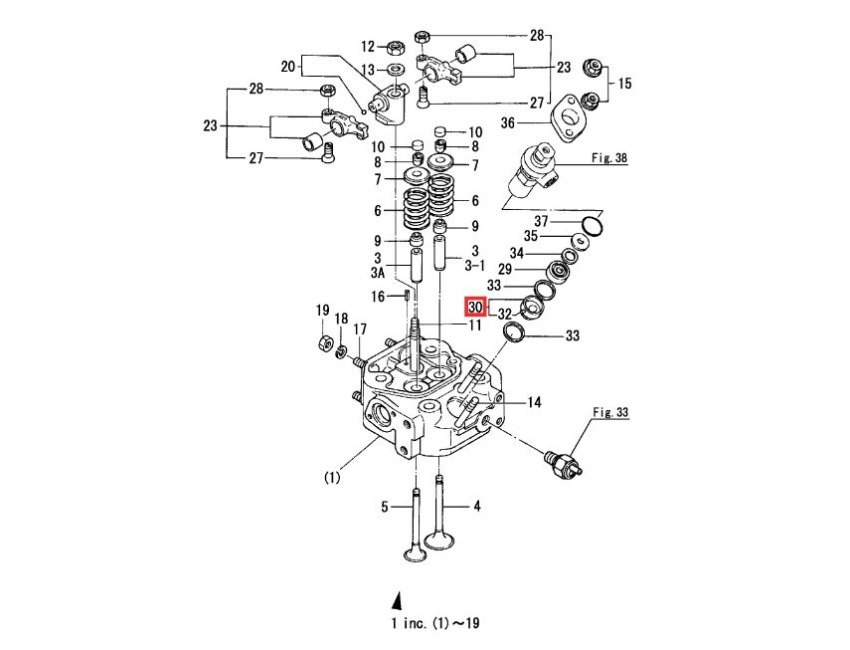
Spray pattern can be checked on site by removing the injector (sometimes easier said than done) pointing the injector tip at a piece of white copy paper about 200 mm away and turning over the engine.
You only need a couple of revolutions to give you a pattern.
A symmetrical pattern is good.
A pattern that is only on one side is bad.
And a really bad pattern ids pretty obvious.
Throttle need to be half open and you don't want the engine to start so you will need to disconnect the other two fuel supply pipes.
It will end a up a bit messy and smelly.
You need to clamp the paper so it doesn't get blown away.
After that explanation I would add that
I think you have a leak in your fuel line. It is tiny. (perished rubber, loose rusted hose clamp?)
Best way to check is to pressurize the system with air so the leak is outwards and go over the lot with a paintbrush and soapy water. We used to use a bicycle tyre pump.
Of course , i could be completely wrong.
gary