Sail shape

> 10 years ago
Reply
Register to post, see what you've read, and subscribe to topics.
eightfootplus
eightfootplus
NSW
298 posts
NSW, 298 posts
12 May 2006 12:49pm
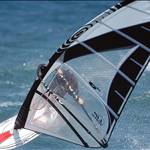
Hey I was watching at Kurnell last weekend and couldnt help noticing that a lot of guys were using largish sails and that the top third was just flapping around with no sail shape at all.

I had a good view from the shore and could see that as guys were fully sheeted in and on the plane and the top third of the sail was just flapped around.

I havnt sailboarded in a long time and can remember my pryde 5.5 4WD cambered sails were similar but no where near as pronounced.

What is the general feeling about this? Sure the top third layed off when a gust hit but it didnt really seem that it was doing much in the first place.
grumplestiltskin
grumplestiltskin
WA
2331 posts
WA, 2331 posts
12 May 2006 11:55am

I'm probably going to be shown up here as a complete dork, but it was my understanding that the forward motion from the sail was generated by the wind "sliding" off it, rather than what was caught in the sail. This has something to do with why you can go faster than the wind.

with that in mind, even though the top of the sail is twisting around, the wind is still running off the sail and therefore pushing you forwards.

Thats probably to simplistic a description, but I'm pretty sure its something like that.
mineral1
mineral1
WA
4564 posts
WA, 4564 posts
12 May 2006 1:30pm
Grumps is on the money, its the area where the wind "exhaust" out of the sail.
Setting it tight causes the air to turbulent (sort of) and not flow across and out of the sail on the windward side. Good smooth air flow across the low pressure on this side, as to apposed to air flow across the outside of the sail and thus the drive.
Sport sailors may give a better explanation, but roughly that’s how it works.


Mineral
Crash Landing
Crash Landing
NSW
1173 posts
NSW, 1173 posts
12 May 2006 3:58pm
I think you'll find that the sail drives you forward due to a pressure difference between the leeward and windward side of the sail. Basically the pressure is greater on the windward side with a space/gap of air behind the sail - so you actually get "sucked" along by the wind not blown along by it.

If you have a tight leached sail the wind can't flow off smoothly - so you aren't as efficient nor as quick - and it feels bad! A tight leached sail feels more powerful because the pressure gradient/difference is greater. It would be better to have a sail that is slightly twisting than have a huge sail overly downhauled due to friction (and weight) of a big sail slowing you down. However the looser the leach the better gust response you get and therefore better handling.

I could, however, be wrong!
nebbian
nebbian
WA
6277 posts
WA, 6277 posts
12 May 2006 6:48pm
It's a weird thing, watching just how much a windsurfing sail twists when there's a good wind blowing. Other sails (like the ones that 18 footers use) don't seem to twist nearly as much.

One thing to note is that the area of the sail near the boom normally has a lot more curvature than the battens near the top of the sail. It's also worth noting that a flat airfoil produces a lot less lift than a curved one. Also, changing the angle of attack of an airfoil (angle to the wind) changes how much lift is produced. So if you want absolute max power from a certain size of sail, you would want the same curvature all the way up the sail, and no twist at all. (8 cams, anyone?)

Flat airfoils (like the top batten) can't be sheeted in as much as curved ones (like the one near the boom) before they stall, so if you've got a flat top batten and a curved bottom batten, then for max efficiency I guess you have to sheet out the top batten a bit, which is where the twist comes in.

I've got an 80's era Bombora speed 6.2 sail that has almost no sail twist, and in a good wind is very prone to wanting to luff up into the wind. This is known as "the centre of effort moving backwards". It really has a strong twisting moment when the wind's blowing, and can be difficult to push back when it's determined to luff up!
My early 00's RX1 has a lot more sail twist, and doesn't want to luff up nearly as much. I haven't rigged the Bombora sail for a while, so don't know which one gives more push.

I think the answer is control -- with sail twist the center of effort doesn't move backwards as much in high wind. The sail also has a much wider sweet spot with regard to how much you're sheeting in, because there will always be at least one part of the sail that's at the right angle of attack. It also turns itself from a sail with a large area into a sail with small area in higher winds, meaning that you don't have to come in and re-rig every time the wind changes a few knots.

Fluid dynamics is a strange beast, many times the explanation the makes the most sense is completely wrong, and can be proven so with the right experiment... so muck around with your downhaul and see what happens
Gestalt
Gestalt
QLD
14965 posts
QLD, 14965 posts
12 May 2006 10:43pm
i really struggle with these concepts, and it shows when i rig my sails some times... i found this on windance.

Twist: Twist refers to the sail's "twisting" action around the mast to leeward. Modern windsurfing sails have much more twist than older sails. Sailmakers have found that making the sail looser in the head allowing more twist, makes the sail easier to control, and also reduces the amount of turbulence in the head, which reduces drag, and makes the sail go faster. Too much twist can make it difficult to get going in the first place. One solution is the Ezzy Power-on head, which constantly adjusts the twist.

other manufacturers use low and high clew eyelets to allow a looser leech for the strong winds and a tighter leech for the lower winds respectively.

i think another advantage with head twist is that the centre of effort stays down low in the sail where the sailor can control it easier....

generally,
only slalom and race sails are rigged with really loose leaches because they are more about reduced drag and higher speed.
wave sails have less looseness in the head because they need a little more power.

ever thought of making your own sail....http://www.sailrepair.co.uk/makingsail.htm
mikey100
mikey100
QLD
1109 posts
QLD, 1109 posts
13 May 2006 4:42am
My 2cents worth- 30 years ago I was sailing Moths, 18ft skiffs, keelboats and windsurfer one designs, had a best friend who was a sailmaker.I was sailing in a world Moth Championship and asked this same question because large roached (leech area outside sail triangle) sails were developing. The answer I was given was... The windspeed increases the greater the height above the weter surface (eg 1m= 15kts, 2m= 18kts, 3m=21kts etc) so salils are designed so that bottom is full & powerful for the lower speed wind, middle is flatter and slightly twisted-off to accomodate the different 'apparent wind' angle caused by the greater windspeed caused by the greater height above sea level, and the top is flattest and more twisted for the same reason.This should cause a gradual change in the angle the airfoil and in the 'chord'(depth) of the airfoil. A sailboards mast has lots of 2 dimentional bend and the sail has to be designed so that it will also depower itself automatically when a gust hits (twist off) and power up after the gust(twist back) by using this bend. The loose leach is therefore a design feature to give the 'non-flapping'part of the sail an optomim shape- 90% of the sail working, 10% no drive bus assisting shape. I have noticed that NASH sails have less roach area and nore ccrve cut into the top of their slalom sails, while NORTH sails seem to have large roaches, less luff-curve in the tops of theirs. NASH sails therefore appear to have lots less 'flapping' sailarea to achieve their designers required shape. Lay sails of different brands( but same app area) over top of each other and see how differently some luff curves are cut.
Longwinded explaination, but a complex question. Then again, I could be speakin through my ass. Any sailmakers want to give their explination!
mineral1
mineral1
WA
4564 posts
WA, 4564 posts
13 May 2006 10:43am
Mikey100, go to the top of the class, Zackery right. (Wish I had said it like that.)
As the old sayings go---------------- Dont take your books, you wont be there that long.


Mineral
MikeyS
MikeyS
VIC
1509 posts
VIC, 1509 posts
15 May 2006 3:11pm
The original design came from nature. Take a look at the twist at the wingtips of an eagle, especially when its soaring in gusty conditions. Awesome sight. The tips just twist off for a beautifully controlled flight.
nebbian
nebbian
WA
6277 posts
WA, 6277 posts
15 May 2006 1:58pm
Careful Mikey,

They're different beasts. Wingtips twisted down is called "washout", and is a common technique to improve controllability at the edge of stall. I came across this when designing model airplanes, full size planes and hang gliders do this too. The more washout, the less efficient but the more stable a plane is.

The reasoning is this: When an airfoil stalls, you suddenly get a big loss of lift. If this happens at a wingtip then the plane will drop a wing and suddenly you're looking at a spin, which is difficult to get out of, and always results in a dramatic loss of height.

If you point the airfoil at the tips down a bit, then it's not as efficient, but then the root of the wing stalls instead of the tip, resulting in a tiny loss of altitude and a lot more stability. Ultra efficient gliders have almost no washout, hang gliders have loads of washout.

Although you do raise an interesting point: why not model a windsurfer's sail on a birds wing? Eagles wings have separated primary feathers for a very good reason: you get lots of tiny little vortices off the end instead of a honking big one. The bigger the tip vortex, the more drag... so to get that extra 0.5 knots in your GPS you might want to stick big 'feathers' on the top of your sail. Would look kinda kooky though
Harrow
Harrow
NSW
4521 posts
NSW, 4521 posts
16 May 2006 7:05am
eightfootplus,

That was a very gusty day, and I guess a lot of guys had a lot of downhaul which increases the amount of loose leach and lets the sail twists of easier in a gust. If the wind had been lighter and/or steadier, then you would probably have seen a lot of sails rigged with less downhaul and therefore a lot less loose leach and twist.

It is this ability to adjust downhaul and therefore adjust loose leach and twist that means a modern sail has a much larger useful wind range.

(Did I get that right?)

Regards,
Harrow.
Harrow
Harrow
NSW
4521 posts
NSW, 4521 posts
16 May 2006 7:10am
BTW, I just took up windsurfing again after a 10 year break (marriage, kids, etc.) and I started rigging my new sails so that they looked like my 1980's sails would have. The result was a 'dead' feeling sail that was heavy and lacked forward drive.

Even in a light wind, it appears these new sails need loose leach at least down to the second top batten to work properly, and in very strong gusty conditions, can be set to have loose leach right down to the clew.

I must say I was initially terrified at the prospect of using a winch on the end of a 6:1 pulley system for my downhaul. My old sails would have been pulled to bits if I did that with them. Of course the occassional exploding sail (usually a NP V8) adds to the excitement and atmosphere on the shore while rigging up.

Regards,
Harrow.
Jethrow
Jethrow
NSW
1282 posts
NSW, 1282 posts
16 May 2006 8:34am
Hi Guys

Just remember that all these loose leech sails are also much larger that previous tight leech sails. The twisted head is a more efficient treatment of drag and the power is contained down low but other boats like skiffs and racing dinghies can't use mega twisted sails because they are restricted in sail area. If the sail area was restricted to the old race board size of 7SqM then you would see twisted sails disappear overnight.
MikeyS
MikeyS
VIC
1509 posts
VIC, 1509 posts
16 May 2006 9:36am
Fair point nebbian, but isn't the principle then same, or at least the opposite side of the same coin? My understanding was that for hang gliders, soaring birds or even windsurfing sails, generating lift towards the tip of the foil can lead to instability. Or put another way, limiting lift at the tip can lead to better stability. So the concept of "dumping" lift at the tip, either during a stall or a gust, by having washout in the case of a wing, or loose leech in the case of a sail, leads to better controllability. The (centre of effort???) thus moves closer to the base of the foil.
I also thought that the more current head designs with the really twisty head section and head batten was to reduce tip vortices like the bird's wing. Plus they're a little easier to clean- just hose off after a sail, rather that plucking and preening!
Gestalt
Gestalt
QLD
14965 posts
QLD, 14965 posts
16 May 2006 10:01am
i'm on board with jethrow,

anything above 7.0m and you need loads of downhaul. otherwise when the gust hits your arms will be ripped off. modern sails are also a lot more rigid, so they need the flex in the head to soften things up.

the downside with big sails is that there is less lift because of a flatter draft due to downhaul. so you either go bigger for the wind (more lift) or pump like crazy to get on the plane.

the upside is they can sail on all points of sail through the lulls better.

i have used big sails with min downhaul and they suck.. they are slow, to powerfull and not manouverable. once you set med downhaul and pump onto the plane they are a joy to use. very fast, and very light in your hands.

i think this is why some people don't like big sails. they just don't rig them with enough downhaul so they feel heavy, slow, and a handfull.
Damo
Damo
WA
641 posts
WA, 641 posts
17 May 2006 10:03am
this might be a little of topic but i was reading through this thread and unlike alot of the other threads this one made me think a little and i thought that i would add my 2 cents

mikey100 said
The answer I was given was... The windspeed increases the greater the height above the weter surface (eg 1m= 15kts, 2m= 18kts, 3m=21kts etc) so salils are designed so that bottom is full & powerful for the lower speed wind, middle is flatter and slightly twisted-off to accomodate the different 'apparent wind' angle caused by the greater windspeed caused by the greater height above sea level, and the top is flattest and more twisted for the same reason.

i know this is a common idea that the wind gets stronger the higher you go but i have been told and have read (Frank Bethwaite high performance sailing) that it is a myth and only true in less than 5 knots. in 6 knots or more the wind changes from laminar to turbulent flow and one of the primary characteristics of turbulent flow is that flow speed near the surface is almost as fast as higher up so eg if the wind at the surface is 10 knots then it will be about 15 knots at 300 meters and nearer 20 knots at 1000 meters. over the height of any rigg this sort of change of speed with height is negligible. since the wind speed at all heights above about 1 meter is almost the same, the direction of the apparent wind will be about the same.
if anyone has an experience or ideas on this i am all ears.


as for the guys out at Kurnell how strong was the wind?? maybe the wind was just a bit stronger than what they usualy get so they crancked the downhauls on a bit more than usual. from my experience a sail with too much downhaul sails like **** but it is better than no sail at all
nebbian
nebbian
WA
6277 posts
WA, 6277 posts
17 May 2006 1:28pm
Hi Mikey,

The main trouble with things like this is that the people who really know what they're doing with regard to design, know that laypeople don't understand words like angle of attack, chord, wind shear, stall angle, reynolds number and the like.

So they say things like "Sail twist reduces tip turbulence". (This could be just another way to say that it decreases the angle of attack to stop the tip stalling, possibly because of the flatter airfoil or higher windspeed at the tip.)

The trouble is that other people who have half a clue take those words as gospel, without understanding fully what it is that the designer was paraphrasing for the masses...

OK just for grits and shiggles, you posted:
quote:
generating lift towards the tip of the foil can lead to instability

Another way to stop lift being generated at the tip is to cut the tip off altogether and make your wings shorter! It also moves the 'center of effort' closer to the root of the wing/sail. This is clearly a bit of a silly solution, but it has the same effect (in terms of tip lift and COE) as washout. It even reduces drag! So why don't we just use a smaller sail rigged fuller if we want to move the COE down? Clearly, something else is going on.

It's a thorny issue, there are many explanations, like good shoes one size doesn't fit all, so find one that works for you and stick with it in your own head. And the name of the game is to experiment, experiment and experiment some more. It doesn't matter how technical your explanation is if it can't be transferred to the real world
nebbian
nebbian
WA
6277 posts
WA, 6277 posts
17 May 2006 1:32pm
quote:
i know this is a common idea that the wind gets stronger the higher you go but i have been told and have read (Frank Bethwaite high performance sailing) that it is a myth and only true in less than 5 knots. in 6 knots or more the wind changes from laminar to turbulent flow and one of the primary characteristics of turbulent flow is that flow speed near the surface is almost as fast as higher up so eg if the wind at the surface is 10 knots then it will be about 15 knots at 300 meters and nearer 20 knots at 1000 meters.


Interesting! Wow, it makes sense if you think about it.

After a bit of googling I found some more on the topic
http://www.bom.gov.au/weather/nsw/amfs/Wind%20Shear.shtml ...
Gestalt
Gestalt
QLD
14965 posts
QLD, 14965 posts
17 May 2006 9:05pm
this page has some interesting stuff. may explain the differences everyone has with closing the gap versus sheet angle versus downhaul tension versus outhaul versus mast versus twist versus drag versus handling etc etc etc.

can't say i understand it fully but it looks like fun reading..

www.onemetre.net/

ok, nice photo, had to post that link... here is the better stuff...
www.onemetre.net/Design/Twist/twist.htm
Damo
Damo
WA
641 posts
WA, 641 posts
18 May 2006 3:51pm
my head hurts!
nebbian who is Kenn Batt??? there were some interesting things in his aricle that didnt make much sense to me probable because it went straight over my head.
if i can figure out how to use my scaner i will scan a page out of this wicked book that i have that i think contradicts a fair bit of what kenn batt had to say in his article.
nebbian
nebbian
WA
6277 posts
WA, 6277 posts
19 May 2006 5:47am
quote:
nebbian who is Kenn Batt???

NFI, ex-sailor now employed by the BOM? Apparently he's the guy who briefs the Sydney-Hobart yacht crew. Not sure if that means he knows what he's talking about or is full of sh!te Some of the things he said made sense. They seemed to tally with what you said about wind shear as well, but go into more depth... ie turbulent air doesn't have any wind shear, but laminar air does (which makes sense I guess).


Has anyone had the situation happen where:
You're slogging along, wanting to get onto the plane, you feel a gust on your face, and you think "OK this is plenty strong enough to plane in", but can't get planing.
Then another gust comes which feels about the same strength on your face but just about rips the boom out of your hands?? Perhaps this is to do with higher wind further up the sail, or a change in direction further up the sail?

Maybe we could stick waterproof wind meters all the way up the mast to finally get a definitive answer
Jethrow
Jethrow
NSW
1282 posts
NSW, 1282 posts
19 May 2006 10:45am
Hi Guys

Kenny Batt definitly knows his ****. He was our met guy for AC95 and could tell you the time the first shift was going to come through and how long it would last and this was at breakfast, four hours before the race. I think you'll also find that wind shear, while a problem at the top of a maxi mast in not really an issue at 15' above the water.
NotWal
NotWal
QLD
7436 posts
QLD, 7436 posts
19 May 2006 11:17am
Sail development seems to be about 10% theory and 90% empirical. I think thats how those really floppy leaches came about - theory of twist, less power in the top etc then why not try a bit more to see what happens. Modern sails have less power than old ones size for size but they are more rangy and conrtolable.It seems the top of the sail is just a valve but over downhauled its just a flappy draggy flag.
Jethrow
Jethrow
NSW
1282 posts
NSW, 1282 posts
19 May 2006 1:37pm
Just to be a cynic, you can also charge more for that 2SqM of "flappy draggy flag thingy"
Damo
Damo
WA
641 posts
WA, 641 posts
19 May 2006 3:03pm
can anyone tell me what wind speeds you can expect to find wind shear develop in?? is there any rule to it or is it something that can happen on any given day in any given wind strength or is is something that is restricted to certain wind speed and certain tepmreture differences??? or something????
Please Register, or first...
Topics Subscribe Reply