Solar Farms

> 10 years ago
Reply
Register to post, see what you've read, and subscribe to topics.
FormulaNova
FormulaNova
WA
15101 posts
WA, 15101 posts
24 Apr 2013 9:22pm
Macroscien said...
FormulaNova said...

So, tell me again where the benefit to this idea is?

Unlike AC step down transformer that inadvertently is not 100% efficient and cause significant loses in HV to your home transmition I could imagine DC step down circuit with almost no loses at all.


'Almost no losses at all'. There is no such thing, just different levels of efficiency.

Okay, so lets assume that stepping down from say 240VDC is more efficient than AC. I am not sure it is, because these days with switch mode power supplies, it really doesn't care if its AC or DC. Sometimes galvanic isolation is a good thing for safety, so you can probably ignore un-isolated, buck power supplies.

Do you know that some electronics require split power supplies, with say +15v and -15v? With a ground connection that has to connect to something else at the same potential, how do you do that? You would have to use a transformer, so back to the question - why use DC at all?

Okay, now, what about the power distribution from the power station to your house. Is this going to be AC or DC? If it's DC, where are the power savings and where are the cost savings?

If you really are a fan of this idea, try it at home. Its hard enough mucking around with high current DC in a car, let alone trying to run your house on it.


Macroscien
Macroscien
QLD
6809 posts
QLD, 6809 posts
24 Apr 2013 11:37pm
There is no doubt that over long distance, global energy network based on HV DC is the only logical choice.
With HV DC you could wire every single country to one monster grid , trade and sell electricity at will , compensate for time zones and local energy fluctuations.
The same is almost impossible with existing AC mess.

Now from this 500,000 V we need to distribute energy to every single home in the most efficient and elegant manner.
I am looking for complete network, one simple logical organism.
Somehow doesn't seems right to switch back to AC unless there is absolutely no other way around.
Nobody I know tried to build complete network based on DC but that doesn't mean that can not be done.
Macroscien
Macroscien
QLD
6809 posts
QLD, 6809 posts
24 Apr 2013 11:50pm
d1 said...
Macroscien said...
FormulaNova said...

So, tell me again where the benefit to this idea is?

Unlike AC step down transformer that inadvertently is not 100% efficient and cause significant loses in HV to your home transmition I could imagine DC step down circuit with almost no loses at all.


Macro, we had this discussion already a few days ago in another thread. Your DC-to-DC down-conversion circuit (google "buck converter" - that's currently the most efficient one) will effectively convert the DC to AC, then back to DC. There is no efficiency advantage here...

Not exactly. Step down doesn't mean exactly the same as DC to DC which could be also step up.
Take the simplest example. Get you 1.5V battery and run trough single semiconductor junction. You drop immediately by fraction of 1 Volt.
Now compare this simple efficiency of primitive step down conversion with DC to AC to DC inverter.

If you beat me there I will show you the next more obvious circuit.

d1
d1
WA
304 posts
d1 d1
WA, 304 posts
24 Apr 2013 9:50pm
Macroscien said...
Nobody I know tried to build complete network based on DC but that doesn't mean that can not be done.


Maybe there are some good reasons nobody tried to do it Perhaps it would be best to steer this debate back towards solar power, no?


d1
d1
WA
304 posts
d1 d1
WA, 304 posts
24 Apr 2013 9:58pm
Macroscien said...
Take the simplest example. Get you 1.5V battery and run trough single semiconductor junction. You drop immediately by fraction of 1 Volt.
Now compare this simple efficiency of primitive step down conversion with DC to AC to DC inverter.
If you beat me there I will show you the next more obvious circuit.


Erm, it's a rather unfair "duel" What do you really think happens when you drop 0.7 V across a Si-based diode? I'll give you a hint - multiply that by the current and you have the heat that will be dissipated by this diode in watts. Dissipated heat = loss of efficiency.
Macroscien
Macroscien
QLD
6809 posts
QLD, 6809 posts
24 Apr 2013 11:59pm
d1 said...

Maybe there are some good reasons nobody tried to do it Perhaps it would be best to steer this debate back towards solar power, no?


Maybe you are right but I do try to save us a lot of money on solar panel installation.
At this moment for every dollar you spent on your solar panel you need to send another one for inverters,
Inverter that will eat your hard earned electricity and is most likely to fail long before your solar panel will.
I don't think current invereters will work longer then 5-10 years without failure. Your panel on another hand will last probably 20 year, loosing a bit of efficiency but still may work next 100.

I try to design complete system that is the most cost effective , efficient and logical for next thousand years to come.


Macroscien
Macroscien
QLD
6809 posts
QLD, 6809 posts
25 Apr 2013 12:08am
d1 said...
Macroscien said...
Take the simplest example. Get you 1.5V battery and run trough single semiconductor junction. You drop immediately by fraction of 1 Volt.
Now compare this simple efficiency of primitive step down conversion with DC to AC to DC inverter.
If you beat me there I will show you the next more obvious circuit.


Erm, it's a rather unfair "duel" What do you really think happens when you drop 0.7 V across a Si-based diode? I'll give you a hint - multiply that by the current and you have the heat that will be dissipated by this diode in watts. Dissipated heat = loss of efficiency.


I didn't look at this in detail so need to trust you on that.
Are you absolutely sure that this 0.7V will be lost totaly in heat and there is no hidden quantum tunelling cheating that save me a bit in comparison to ordinary resistor that do exactly the same ??
Even so look now at your DC to Ac then DC converter closely: how many discrete componets this poor currents must pass thought and I just can't beleive that your efficiency will be better on mine on step down 0.7V if you wish so for silicon.

But I have even better in my sleve step down concept 500,000V to 30v that will eat your DC to DC inverter.
barn
barn
WA
2960 posts
WA, 2960 posts
24 Apr 2013 10:30pm
I worked on the Greenough River Solar Farm out near Geraldton last year. Largest solar farm in the southern hemisphere.

We just stuck the PV cells in the ground and then all this money magically showed up on these big trucks.


That thing in the middle of the picture is very big and very important, there's 8 of them in Greenough. The Solar panels are the easy part. This thing will be pulled down in 25 years, and obsolete in 2014.
Macroscien
Macroscien
QLD
6809 posts
QLD, 6809 posts
25 Apr 2013 12:53am
barn said...
I worked on the Greenough River Solar Farm out near Geraldton last year. Largest solar farm in the southern hemisphere.

We just stuck the PV cells in the ground and then all this money magically showed up on these big trucks.


That thing in the middle of the picture is very big and very important, there's 8 of them in Greenough. The Solar panels are the easy part. This thing will be pulled down in 25 years, and obsolete in 2014.


That is exactly how solar farm should looks, not on the roof, at this scale
now should be system to participate in such project by owning a share.
For example buy and own 50 kw for $50k then and another 100 kw for $100k and so on
TurtleHunter
TurtleHunter
WA
1675 posts
WA, 1675 posts
25 Apr 2013 12:34am
rather than trying to distribute all this energy from a remote area why don't you use the energy right there when the panels are producing. Maybe something like hydrogen production
FormulaNova
FormulaNova
WA
15101 posts
WA, 15101 posts
25 Apr 2013 6:40am
Macroscien said...
d1 said...
Macroscien said...
Take the simplest example. Get you 1.5V battery and run trough single semiconductor junction. You drop immediately by fraction of 1 Volt.
Now compare this simple efficiency of primitive step down conversion with DC to AC to DC inverter.
If you beat me there I will show you the next more obvious circuit.


Erm, it's a rather unfair "duel" What do you really think happens when you drop 0.7 V across a Si-based diode? I'll give you a hint - multiply that by the current and you have the heat that will be dissipated by this diode in watts. Dissipated heat = loss of efficiency.


I didn't look at this in detail so need to trust you on that.
Are you absolutely sure that this 0.7V will be lost totaly in heat and there is no hidden quantum tunelling cheating that save me a bit in comparison to ordinary resistor that do exactly the same ??
Even so look now at your DC to Ac then DC converter closely: how many discrete componets this poor currents must pass thought and I just can't beleive that your efficiency will be better on mine on step down 0.7V if you wish so for silicon.

But I have even better in my sleve step down concept 500,000V to 30v that will eat your DC to DC inverter.


I sure hope you aren't going to use a linear regulator to drop your 500Kv down to 30v That's going to be one hell of a heatsink

Electronics is not magic. The principles are well known. People don't design electronic circuits to generate heat, its just a side-effect.

Your efficiency of your 'step-down circuit' is not hard to beat if you are radiating most of that energy off as heat.

Hey, if you just ran DC from your solar panels, how are you going to handle the fact that solar cells have outputs that vary a lot depending on the voltage developed? You need to draw the current from them at a particular voltage in order to be the most efficient. They are not just simple power sources.

Also, when this voltage goes all over the place because of fluctuations in sunlight, how are you going to provide a nice stable voltage to the 'DC grid'?
Macroscien
Macroscien
QLD
6809 posts
QLD, 6809 posts
25 Apr 2013 1:13pm
We could talk about technical improvements in % forever but in reality from now on the solar technology is mature enough to enter the proper investment market,

With shown above scale I doubt investment in solar farm could be worse then in forest plantation.
To calculate real return on investment we need to find out the real cost of such installation in Australia.
We have to know:
- what is the cost of the deserted land per 1 km2 in suitable location
- cost of additional structure and infarastructure : foundations for sceleton frames, mounting, labor to install 100 kw, fences,
-cost of connecting farm to the grid from their side
-shipping panel from Aussie port to remote location ( we know that shipping from China cost only $1000 per container load)

All we know is cost of solar panels and associated electronics inverters.

That will be at this moment:

100kw system x $1 per Watt = $100,000

output

100 kw x 5kwh per day x $0.06 price of kw x 365 day per year = $10,950

so assuming that there are no other cost but solar panel and electronics return is 11%

We could correct this down by knowing the real cost mentioned above.

We could correct this up by cranking the price from $0.06 to 20c or more ( by selling to locals at better price, using the energy on spot for secondary production ( aluminium smelting ? car battery charging, installing storage onsite and selling only at peak prices etc )

As we could see even at this scale it is not magic investment able to double the money in one year, on another hand still could be realistic and solid investment no worse that many other on Australian Stock Exchange.

www.greenoughsolarfarm.com.au/about-us

Macroscien
Macroscien
QLD
6809 posts
QLD, 6809 posts
25 Apr 2013 2:35pm
Version 2
Imagine that
Instead of pure Solar Farm in remote location investor decide for Hybrid construction.
Now Solar Farm will be located almost in the main city.
In this scenario the same 100 kw is installed as a active roof on industrial warehouse or shopping mall.
Required land:
I assume that we need at least 2 m2 on land to install 100W panel.

100,000 W / 100 * 2 = 2,000 m2 so we need at least 2,000 m2 for a building to install 100 kw system plus next similar size for parking for employee and customers.
In total 5,000 m2 parcel should be sufficient.


Costs:
1) Solar panels 100,000 W x $1 = $100,000
2) Reinforced concrete slab 15 cm for 4,000 m2 at $50 per m2 = $200,000
3) Roofing $20 x 2000 = $40,000
4) Side walls Tilted Slab 6 meters tall = $55,000

so total material cost for structure are close to ~ $500k to have 2,000 m2 warehouse. Double that and estimated total cost come to 1 milion.

Now we could lease or sell space in our Solar Warehouse or shops and sell electricity to tenants below at $0.4 per kw or better.

Income from power generation:
100 x 5 x 0.4 x 365 = $73,000

Income from lease:
2, 000m2 x $120 per meter p.a. = $240,000

Total income: $300,000 p.a

Return on investment :
300,000 / 1,000,000 = 30%
FormulaNova
FormulaNova
WA
15101 posts
WA, 15101 posts
25 Apr 2013 1:35pm
Do you realise your calculation above says $0.40 per Kw? Is that correct for selling to your customers? They are going to have to pay an access fee for the other power suppliers, so is there any advantage going with your power at all? What if it is cloudy?

Are your customers going to use power at your peak periods every day of the year? What if they are only using power weekdays?

Just to add more trouble to your idea, I doubt any authority would only allow you to deliver power at the times that you want for the price that you want. I think it would mess up their power calculations. You seem to want to take the best possible scenario for making money from power and leaving the uneconomic power generation to someone else.

Why not just go do it. You can make a fortune and laugh at us all.

Your calculations for real estate also seem too good to be true. Are there always tenants? Are there any ongoing costs for water and sewerage? Are the tenants happy with just a concrete shell?

Macroscien
Macroscien
QLD
6809 posts
QLD, 6809 posts
25 Apr 2013 4:39pm
FormulaNova said...
Do you realize your calculation above says $0.40 per Kw?

If I were: Westfield I could ask my tenants to pay percentage of their turnover.
Online eBay almost 9% on turnover.
Visa or AMEX 3-4 % Dinners even more.
So asking to pay for clean power is just fair deal.

Test pilot 1
Test pilot 1
WA
1430 posts
WA, 1430 posts
26 Apr 2013 12:41am
With an open clean energy market there would always be some one willing to sell them green energy at slightly cheaper price and bang you got zero return on your energy investment
Mr Milk
Mr Milk
NSW
3139 posts
NSW, 3139 posts
27 Apr 2013 9:05am
TurtleHunter said...
rather than trying to distribute all this energy from a remote area why don't you use the energy right there when the panels are producing. Maybe something like hydrogen production


This is exactly what puzzles me. We regularly hear stories about hydrogen powered cars being the future of motoring. I understand that hydrogen is the smallest of molecules and is hard to contain, but if you can put it into small tanks, you can put it into big ones. And bingo! you've got your variable power output smoothed away
Mr Milk
Mr Milk
NSW
3139 posts
NSW, 3139 posts
27 Apr 2013 9:10am
FormulaNova said...
Do you realise your calculation above says $0.40 per Kw? Is that correct for selling to your customers? They are going to have to pay an access fee for the other power suppliers, so is there any advantage going with your power at all? What if it is cloudy?

Are your customers going to use power at your peak periods every day of the year? What if they are only using power weekdays?

Just to add more trouble to your idea, I doubt any authority would only allow you to deliver power at the times that you want for the price that you want. I think it would mess up their power calculations. You seem to want to take the best possible scenario for making money from power and leaving the uneconomic power generation to someone else.

Why not just go do it. You can make a fortune and laugh at us all.

Your calculations for real estate also seem too good to be true. Are there always tenants? Are there any ongoing costs for water and sewerage? Are the tenants happy with just a concrete shell?


Solar powered grow room?
Macroscien
Macroscien
QLD
6809 posts
QLD, 6809 posts
27 Apr 2013 9:56am
At this stage output from Green Energy must be somehow assured to be economical.
As for example signing contract with desalination plant to purchase all energy.
In totally unregulated market for example traditional coal base plants could resort to ruin green energy suppliers by undercutting price at daylight to excerpt excessive at dark.
For example by establishing 1 cent daylight tarrife and 50 cents at evenings.
Already the 6 cents offered for solar doesn't seems to be fair if distributor is selling the same at 22 to 44c.

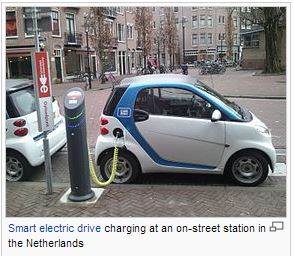
Things definitely could change when people could decide what to do with their energy and instead of selling to the grid will charge battery in their hybrid and electric vehicles then electricity price per unit compete directly against petrol prices.

Per 100 km - 6 liters x 1.5 $ cost of petrol = $9 to drive 100 km

For electric vehicle like:
- Nissan Leaf that use 21 kwh per 100 km
- GM EV1 - use only 11kwh /100 km


$9.00 / 21 kwh = $0.42 or 42 cents kWh per petrol equivalent for Nissan Leaf
9.00 / 11 kwh = $0 .81 or 82 cents for GM EV1

at the lowest rate driving 100 km at 6c could cost you only $1.20 Nissan or $0.66 66 cents !!!!) by GM EV1 which is actually less even that my economical Honda scooter

3 Liters x $1.5 = $4.5 to drive 100 km cost to ride 125 cm3 scooter


Now we could also calculate that to drive your future EV "for free" you need minimum 2kw to 4kw solar panel system on your roof for your daily trip 100 km.
Please Register, or first...
Topics Subscribe Reply