HGnq said...
Hi all,
Thank you to those who expressed concern on the forum for the pilot (and kitesurfer) in this incident.
All is OK with the pilot generally, cracked ribs, bruising, broken glider, and seriously lucky.
As most of you realise the incident was very unfortunate and many factors have conspired against those involved - both the Kitesurfer and the HG (Hang Glider) pilot.
I am writing this post on behalf of the local HG pilots in the Far North.
For the Record, as many of you have commented, HGs have been flying in the area and landing at 4 Mile Beach - Port Douglas (4 Mile) for over 30 years. For many reasons, 4 Mile is the safest landing zone in the area, and specifically during certain conditions (ESE to S winds), the Southern end of 4 Mile is the 'safest' landing area. HG have been landing in this spot before kite surfing was invented.
Yes, this has posed some difficulty both our sports at times, but both sports have generally been able to use this beautiful area harmoniously for many years and we hope to continue into the future through improved relations, an understand of each others sporting operations and safety needs.
To this end I post some details regarding HG operations and requirements at 4 Mile and some further insight into the incident, and how to avoid in future.
General comments re HG and landings:
• HGs land into the wind (always the preference), results in the slowest possible ground speed upon landing - safest.
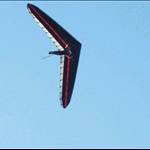
• All HGs are likely to be on 'final leg' LANDING if they appear to be below 20m (approximately) and pointing into the wind. (NB, they could be landing down-wind in an emergency if they don't have the height to turn into the wind). (NB: All HG landings are an 'emergency' in that we have no motor to keep flying, so we HAVE to LAND when 'gravity' takes over.
HG Landings at 4 Mile:
• HG and Kitesurfing have shared this set up/landing area since Kitesurfing moved into the area (approx. last 8 years).
• Landing on the beach at 4 Mile has been the safest landing area for HG. It allows 'Into the wind' landings, on a wide beach and when the tide is high, the Southern end ('the point') has the widest section of beach, and is more directly 'into the wind' especially when more Southerly.
HG Circuit at 4 Mile:
• HGs usually try to adopt a 3 phase landing approach, 'Down Wind' , ' Base' leg and 'Final' leg on approach to landing. (This is similar to most aviation landing circuits).
• The HG will usually pass over the water, above 20/30m or more to the seaside (East) of the Beach, on what is called a 'Down-wind leg' of the landing phase. This can indicate to Kitesurfers that a HG is in proximity and intending to land. The HG then turn towards the beach on the 'Base Leg' (cross-wind, loosing height) where upon the HG may perform some 'S' shaped turns to loose more height until they turn/or straighten onto the 'Final leg' or 'straight in' approach height, this is usually above the Tree height.
• Then the HG will fly straight 'into wind' on 'Final' to land.
• On 'Final' the HG pilot is COMMITTED TO LANDING STRAIGHT AHEAD – INTO WIND.
• The pilot may be a little towards the sea side of the beach (to avoid trees and turbulence) and then fly parallel over the beach in a southerly heading to finally land and come to a stop. (NB: the HG may travel some meters along and just above the ground - skimming in 'ground effect' until it stops. KEEP CLEAR of oncoming HG (standing still and crouch, the HG can usually avoid you).
• NB: The more Southerly the wind, the closer to the southern end of the beach the HG pilot is required to land to avoid turbulence off the trees.
• The HG pilot will normally land to the north of the Kite surfing set up area (in front of the park) when the wind is more ESE – SE (less turbulence from trees in this direction).
• Once landed, the HG pilot can then walk the glider into the wind and into the park area to pack up.
Incident Avoidance at 4 Mile:
• Situational awareness: Kitesurfers should be mindful that HGs may be landing at 4 Mile beach any day of the Week, usually after mid-day, whenever there is a E to SE to S wind. (We both use the same winds).
• Both Kitesurfers and HG pilots need to be extremely vigilant when HGs and Kitesurfers are in proximity of each other. If you can see each other – beware!
• Kitesurfers do look up, but be more vigilant for Hang Gliders. HG are always looking down, we know where you are, but cant always predict your direction.
• In close proximity both Kitesurfer and HG should take action to avoiding collision. NB: HG may not be able to take any further avoiding action if unsafe to do so; e.g. 'on Final' to landing.
• If HG is on 'Final Leg' (At 4 Mile - flying south, into the wind, and usually below tree height), Kitesurfers should move their Kites away from the HG, fly seaward, dump or lower Kite to ground/water level. (Avoid collision at all cost, it could be fatal). Remember: a Landing Hang Glider is in an 'emergency' landing – it has no motor and IS coming down, lets make it SAFE for all.
• All Kitesurfers should be extra vigilant for HGs when near the Shore.
Safety & Local collaboration:
Both the local Hang Gliding Club and Kitesurfing school/instructors are collaboratively discussing matters following this incident. There are planned meetings to establish clearer procedures, signage, and communications to enhance the safety of spectators and participants in our respective sports, and to enable our continued operations in this area.
If people have further comment regarding this matter, please keep it positive and thoughtful for all concerned so we can all continue the enjoyment of our respective sports and keep it safe. Also, get involved in your local club or association to progress healthy debate, fun and safety.
Safe Flying & Kitesurfing.
That's good information to help understand the difficulties posed with a HG landing, and I'm sure for the local kiters there it is probably not a problem, however there is bound to be newbies and other kiters that aren't familiar with this arrangement.
It seems common sense for a kiter give way to the HG however can anyone confirm that there has been an arrangement to lower your kite and how is this information passed on to newbies and visitors?
It is possible that a kiter would not spot a HG espicially if they were a newbie, and if I were a HG pilot I would not put my life in someone elses hands and would simply allow to land at least 50m clear of that spot especially if it was busy. Why take the risk?
I hope that this top location remains as it has been without any future incidents and both kiters and HGs continue to share without a problem.