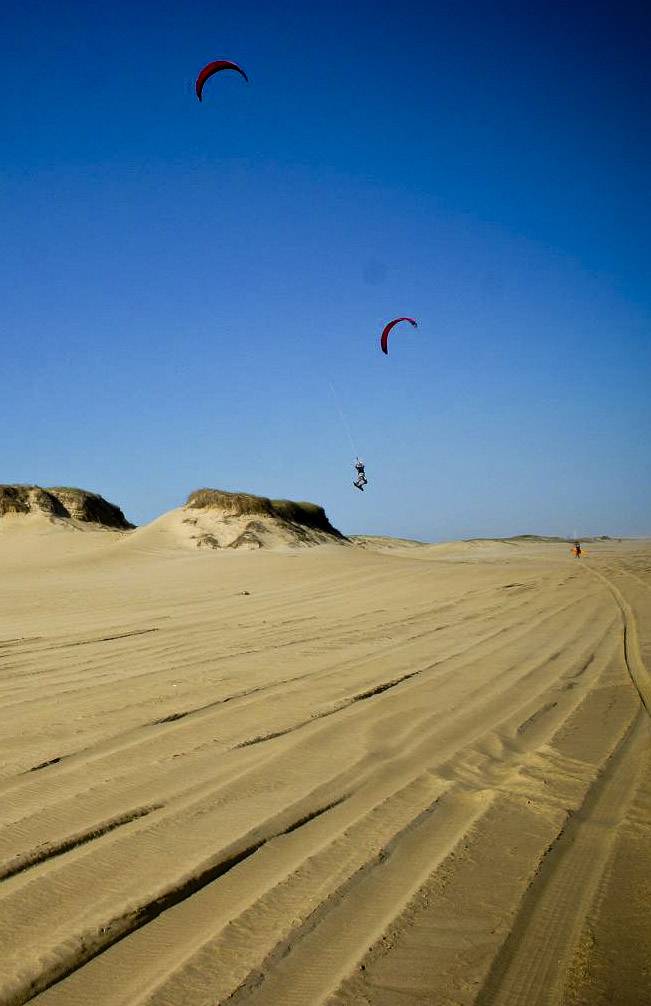
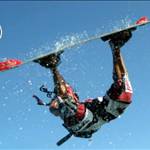
Mr float said...kiting on hard pack snow and ice must fall into this catorgary as well eh?
sandgroper said...
Its time WAKSA took a clear position on some of these antics. A shortlist of kiting activities that will get a member a 12 month suspension would be a good idea.
Heres a starter:
CODE OF SAFETY AND ETHICS
...<SNIP>...
Looks like AKSA already have a Code of Conduct & Ethics.....(reproduced below). It looks like its an amended Football Club Code but its still appropriate. The relevant paragraph being (toward the end):
Sport at all levels in Australia upholds the principles of:
...
Safety Encouraging healthy and safe procedures, preventing and reporting dangerous
behaviour, while demonstrating concern for others.
...
I was in fact hunting around for the AKSA quote following the 2003 fatality in Arlie Park QLD (2nd fatality in Australia). AKSA commented that the person killed was using a Power Kite on land, and that
Power Kites are designed for use on water only and
should never be used on land. I'm very disappointed that I cant find any reference to this fatal accident anywhere on the internet. We need a KiteWatch web site to log all the kite incidents and fatalities for perpetuity.
So Floaty, as far as land/snow/ice boarding is concerned, those kites are not the same "Power Kites" used for kite surfing, but are smaller and less powerful, particularly in terms of power to weight ratios. Its easy to forget that Kite Surfing is the big end of this genre of sport.
The fact that Kitesurfing is dangerous is not licence to commit acts of reckless disregard for safety, but quite the opposite. Safety must be paramount at all times
because kitesurfing is inherently dangerous.
Unfortunately, some people need that spelt out to them (and even then they dont get it).
 Australian Kite Surfing Association
Ethics in Sport - Code of Conduct
Code of Conduct
· Operate within the rules and spirit of your sport, promoting fair play over winning at any cost
· Encourage and support opportunities for people to learn appropriate behaviours and skills
· Support opportunities for participation in all aspects of the sport
· Treat each person as an individual
· Display control and courtesy to all involved with the sport
· Respect the rights and worth of every person regardless of their gender, ability, cultural
background or religion
· Respect the decisions of officials, coaches and administrators in the conduct of the sport
· Wherever practical, avoid unaccompanied and unobserved one-on-one activity (when in a
supervisory capacity or where a power imbalance will exist) with people under the age of 18
years
· Adopt appropriate and responsible behaviour in all interactions
· Adopt responsible behaviour in relation to alcohol and other drugs
· Act with integrity and objectivity, and accept responsibility for your decisions and actions
· Ensure your decisions and actions contribute to a safe environment
· Ensure your decisions and actions contribute to a harassment free environment
· Do not tolerate harmful or abusive behaviours
Athletes (Kitesurfer / Kiteboarder)
· Give your best at all times
· Participate for your own enjoyment and benefit
Coaches
· Place the safety and welfare of the student or experienced Kitesurfer / Kiteboarder being
coached above all else
· Help each person (student, Kitesurfer / Kiteboarder, official etc) reach their potential - respect
the talent, developmental stage and goals of each person and compliment and encourage with
positive and supportive feedback
· Any physical contact with a person should be appropriate to the situation and necessary for the
person’s skill development
· Be honest and do not allow your qualifications to be misrepresented
Officials
· Place the safety and welfare of the athletes above all else
· Be consistent and impartial when making decisions
· Address unsporting behaviour and promote respect for all people
Administrators
· Act honestly, in good faith and in the best interests of the sport as a whole
· Ensure that any information acquired or advantage gained from the position is not used
improperly
· Conduct your responsibilities with due care, competence and diligence
· Do not allow prejudice, conflict of interest or bias to affect your objectivity
Parents
· Encourage children to participate and have fun
· Focus on the child’s effort and performance rather than winning or losing
· Never ridicule or yell at a child for making a mistake or losing a competition
Spectators
· Respect the performances and efforts of all people
· Reject the use of violence in any form, whether it is by spectators, coaches, officials or athletes
Sport at all levels in Australia upholds the principles of:Fairness Operating within the spirit of the rules, never taking an unfair advantage, and making
informed and honourable decisions at all times.
Respect Recognising the contribution which people make to sport, treating them with dignity
and consideration, as well as caring for the property and equipment they use.
Responsibility Taking responsibility for one’s actions and being a positive role model at all times.
Safety Encouraging healthy and safe procedures, preventing and reporting dangerous
behaviour, while demonstrating concern for others.In Australia we are proud of our sporting ability and our reputation as a nation of good sports. Our
society expects high standards of behaviour from all people involved in sport and it is vital the integrity of
sport is maintained. The main responsibility for this lies with the decision makers at every level of sport
who should ensure that all policies, programs and services are based on the principles of fairness

 Where's Alex ?