RAL INN said...
this is a simple question.
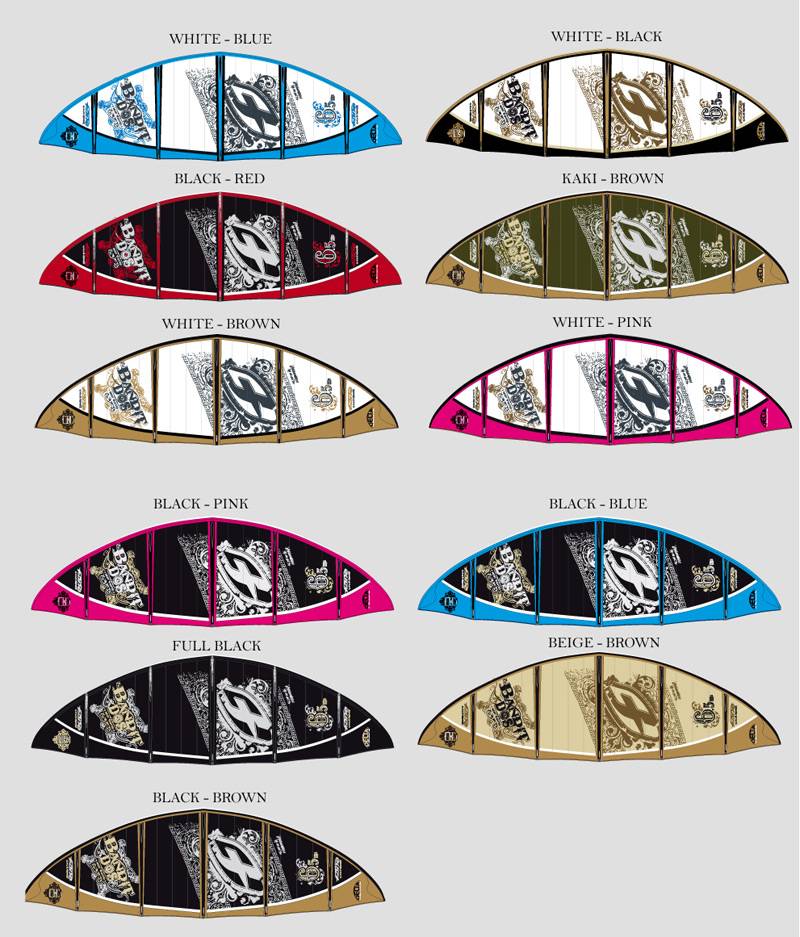
look at a Bandit from front on. it describes a C shape.
Sorry it does not, it is a wide span kite, like all bow derivatives, however the designers needed to name their 20% different kite design, and bingo, by the magic of naming and marketing its a deltaC!

RAL INN said...
Look at a Bandit in Plan view. It describes a single centre front point with LE sweeping back to rear points, and a very very straight TE.
Basically a triangle with two sides curved.
Triangles do not have complex curved sides Tony. The USAF Stealth Bomber has a delta wing design, the so called deltaC kites are bow derivative designs, but if you hold one at a certain angle, at sunset, it looks like an elephant.
There is no way any rational person can view the shape as delta, its all made up, just to be different. The TE is scalloped and concave curved, and overall, from tip to tip it is concave, but not a continuous curve like a bow, just different enough! :-)
However it works, there is always more than one way to skin a cat so they say!
RAL INN said...
pretty easy to see where the term Delta C comes from.
Yep, maketing101, and the rest it straight out of bias102
RAL INN said...
BOW kites have by bruno's definition a curving LE (convex) and a curving TE (concave)
look at that in plan view it looks like a Bow.
Correct delta kites look like bow derivatives.
RAL INN said...
The Bandit for one obtains a higher projected area simply because of the material missing on the tips; not due to any change in the "C" shape.
Its a wide span kite, pump up and fly a real 4 line C kite Tony and look at it from the front or rear, its nothing like the deltaC kites profile/shape is it?
The projected area is high on a delta C because it is a wide span kite, the swept back tips enhance the projected area.
Cya and
Goodwinds
McDeltaforceC