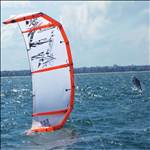
2013 Ozone Edge 13m

> 10 years ago
Reply
Register to post, see what you've read, and subscribe to topics.
nugs
nugs
NSW
79 posts
NSW, 79 posts
24 Aug 2012 12:53am
Damo said...

I am more than happy to be proven wrong on this Steve but there is nothing in your link that i can see that is even relevant let alone backs up your argument that i am talking "nonsense"

I'm not saying that 30knots in the tropics is moving SLOWER than 30 knots in the arctic. What i am saying is that the amount of power that your kite can generate in 30 knots in the tropics is less than the amount of power your kite will generate in 30 knots in the arctic.

I'm not pretending to know everything on the subject so if someone can find something more relevant than some over complicated intellectual ramblings on wikipedia I'm happy to be corrected as this is something that has interested me for awhile now and as Steve says there is so much misinformation out there.

Here is another wikipedia link that i found to be more relevant en.wikipedia.org/wiki/Density_altitude


Steve is right that 30 knots measured at 16C is the same speed (velocity) as 30 knots measured in a 30C climate as measured by wind meters. Damo is also correct that the air density will impact on what effect it will have on the kite power. I will try and explain in my own words without the need for complicated/scientific explanations...

Here is my 2.3 cents worth (includes GST & Carbon Tax)....

Like everything air has a weight (specific weight) which is directly related to the Air Density. Let's not get too technical but colder air is heavier than warmer air (this is a proven fact). And this air is moving at a certain speed (eg 30 knots) and pushing your kite. The weight of the air has an impact on the pull that you feel. For example Imagine a 100KG weight with four lines connected to your harness and then propelled at 30 knots. It will generate a certain amount of pull versus your body weight (power to weight ratio). Now imagine a 50KG weight with four lines connected to your harness and then propelled at 30 knots as well. While you are gaining momentum the pull that you feel from the 50KG weight will be much less than the 100KG weight despite the weights being moved at the same speed and assuming that you do not vent any of the power. The power to weight ratio is different. Despite the difference in power to weight ratio you will end up at the same speed anyway but it will take longer using the 50KG weight.

In the real world the impact of air density (weight of the air) on kite pull is nowhere near as much as my example above but it does have some impact on what you feel from the kite. To be more specific (assuming a standard atmospheric pressure) the specific weight of air at 15C is 12.01 while at 30C it would be 11.43. So using my example above, the difference between 15C and 30C in 30 knots winds would be like using a 100KG weight versus a 95KG weight. The difference is about 5% and this will directly affect the power to weight ratio. Likewise, in a 45C climate the difference would be approx 9% (from 15C) and would explain the difference in kite sizes.

Of course there are many other factors involved but I hope this helps.
benk
benk
QLD
398 posts
QLD, 398 posts
24 Aug 2012 8:21am
I always felt that the kitesurfing conditions in Tassie were heavier and that the kite surfers here are cooler!!
eppo
eppo
WA
9793 posts
WA, 9793 posts
24 Aug 2012 9:20am
Density simply = the mass of the air (specific weight in this case) / Volume.

So for the same volume of air, let's call it one, the greater mass of the colder air due to specific weight (for arguments sake, not exactly true), produces a greater density.

NSW, 4382 posts
24 Aug 2012 3:57pm
Damo said...

I am more than happy to be proven wrong on this Steve but there is nothing in your link that i can see that is even relevant let alone backs up your argument that i am talking "nonsense"

I'm not saying that 30knots in the tropics is moving SLOWER than 30 knots in the arctic. What i am saying is that the amount of power that your kite can generate in 30 knots in the tropics is less than the amount of power your kite will generate in 30 knots in the arctic.

I'm not pretending to know everything on the subject so if someone can find something more relevant than some over complicated intellectual ramblings on wikipedia I'm happy to be corrected as this is something that has interested me for awhile now and as Steve says there is so much misinformation out there.

Here is another wikipedia link that i found to be more relevant en.wikipedia.org/wiki/Density_altitude


Damo, and everyone else. I'm not a physics professor, so have an "amateur" understanding of the principle, so I'll try and explain in my words.

Velocity of air is not dependent on the density of the air, put another way the speed that air is travelling at is what is measured by wind speed measuring instruments and temperature and density don't affect the measurement of impellor/propellor type instruments, which are commonly used to measure the wind, even by the BOM and CSIRO. So 30 knots somewhere = 30 knots anywhere. ( my words and understanding, not absolute fact, but I believe pretty close to it )

Warnings about wind in winter are about winter storms and squalls and the fact that is some areas winter winds are stronger.

Cars don't run better in colder temperatures, they will actually run worse, unless the air/fuel mixture has been adjusted to compensate for the extra density of the colder air, but that has nothing at all to do with wind and measuring the velocity of wind.
The pressure change in a balloon that is cooled down also has nothing to do with the velocity of wind, and has to do with a natural property of gases and fluids (most fluids?) - they expand when heated (become less dense) and contract when cooled (become more dense).

Less dense air moving at 30 knots VELOCITY, has the same VELOCITY as 30 knots of more dense air.

As for the work or energy that can be exchanged by less dense 30 knot wind versus more dense 30 knot wind, my understanding is that the difference is minimal - almost undetectable - by a person flying a kite.

The most important factor that affects us as kite flyers is the VELOCITY of the wind, not the density or temperature.

Maybe someone with a better understanding of the principles can explain what difference, if any, temp of measured moving air has on the power it can deliver to a kite, that moves at quite low speeds?

Damo
Damo
WA
641 posts
WA, 641 posts
24 Aug 2012 2:10pm

As for the work or energy that can be exchanged by less dense 30 knot wind versus more dense 30 knot wind, my understanding is that the difference is minimal - almost undetectable - by a person flying a kite.


So now we both agree then that it is not "nonsense" and that this effect does exist. But you are saying that the effect is so minimal that it can not be noticed by a person flying a kite? and that is where we disagree.

It would be good if we could find an "expert" to answer this question for us.

p.s just so people don't think I'm getting my jocks in a knot over this
poor relative
poor relative
WA
9106 posts
WA, 9106 posts
24 Aug 2012 2:38pm
If i throw a 1kg lump of granite at someones face at 30kn would it hurt more than throwing a kg of feathers at someones face at the same speed?


Intheozone
Intheozone
WA
247 posts
WA, 247 posts
24 Aug 2012 5:12pm
Damo

I you are quite correct. Whilst the Velocity of the wind is the same at 30kts in the tropics is the same 30kts in the artic.

The difference is the density. This is why if you are in Port Douglas and the wind is blowing a respectable 23kts I am struggling to get going on a 12m, However in Perth 23kts and I am flying on My 9m.

In actual fact humidity makes the biggest difference than temprature to how much grunt the wind gives us. Dry cold air has the greatest density whilst hot humid air has the least. (ask any pilot who is doing takeoff distance required calculations)

Think of a little Mazda MX5 travelling at 60km/h and a truck traveling at 60km/h whilst they are both travelling the same speed the truck has significantly more power. (just think of the force required to stop each one.)

Does that make a little more sense?
Intheozone
Intheozone
WA
247 posts
WA, 247 posts
24 Aug 2012 5:42pm
Back on topic though, what is the edge like at the bottom end of its wind range.

When I flew Ozone kites (the original instinct 2006) they were great however progressively i felt the the bottom end was getting worse with each year they made them until 2011 I felt the new ozone kites across the range had very little bottom end. leading me to switch on to North Rebels.

I am now looking at the racing side and will probably get the Airush Varial Xrace
eppo
eppo
WA
9793 posts
WA, 9793 posts
24 Aug 2012 7:03pm
well the VX is damn fine if ya like zinging around on a fast kite. Figure the race version would be just as good. Surely the edge is worth considering though. The VX has for decent bottom end bit prefers a fair bit of wind over the wing.
rusty7
rusty7
QLD
504 posts
QLD, 504 posts
29 Aug 2012 2:39pm
I just picked up my new edge quiver .... usually ride a 13m and an 11m or 9m
and its normally me geting reamed on here for kiting in high winds on big kites , and i weigh 100kgs lol, nice to see someone else getting into the action for a change.....i can also concur with the previous posts kiting over powered is not for newbies or the inexperienced. i have a board specially setup for this purpose and 1 other comment unless you know how to use your edge to control your speed dont dont it.
This year Im on a 15m with an 11m and a 9m for the really big days.
As 3 new kites usually equals 3 weeks without wind ... its gonna be a little while before i can give them a whirl but as soon as i do ill do a comparasome v the 2012 models from a non race rider point of view.
Also looking foward to spotting the upper end for a 15m edge...[}:)] but i think ill just keep that to myself
Please Register, or first...
Topics Subscribe Reply