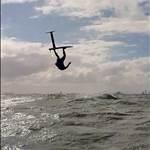
Support the channel via YouTube THANKS or buy me a coffee: https://www.buymeacoffee.com/foil My take/review on Amos Shapes KrUzer 5'4" 36L Midlength board for Wing Foiling as a sinker board and Low-ish wind days board. Comparing it to Armstrong FG 4'5" 34L board. Kruzer board dimensions: 5’4” x 19 1/2" x 2 7/8” (36L) FG 4'5" board dimensions: 4'5" x 20" x 2 3/4" (34L) ⭐⭐⭐ EXECUTIVE SUMMARY ⭐⭐⭐ This video is a comprehensive review and comparison of the Amos Shapes Kruzer 5'4" (36L) wing foil board against the Armstrong FG 4'5" (34L). The presenter, a long-time Armstrong user, sought a board with better light-wind takeoff performance and forgiveness. He concludes that the Kruzer, despite being longer, is surprisingly lighter, feels snappier, and is significantly more forgiving on touchdowns, making it a superior replacement that enhances success in marginal conditions without sacrificing performance. ⭐⭐⭐ DETAILED BREAKDOWN ⭐⭐⭐ The video begins with the presenter introducing his two wing foil boards: his long-favored Armstrong FG 4'5" (34L) and the new Amos Shapes Kruzer 5'4" (36L). His motivation for trying the larger board was to find a more reliable and forgiving option for starting in light or inconsistent wind conditions. He was initially concerned that the Kruzer's extra length and volume would make it feel less responsive and 'snappy' compared to his smaller board. He then dives into a detailed specification comparison, revealing surprising findings. The Kruzer is only 3mm thicker than the Armstrong (7.3cm vs 7.0cm) but is significantly lighter by almost 800 grams (2.85kg vs 3.63kg). On the water, his fears about performance were unfounded; he claims the Kruzer actually feels snappier and more responsive, which he attributes to its lower weight and rigidity. The board excels in its primary purpose of improving light wind success, making takeoffs in marginal 14-knot winds more consistent. A key advantage highlighted is the Kruzer's superior performance when recovering from touchdowns, which is particularly useful in the weedy conditions he often rides in. He explains that he frequently needs to perform small jumps to clear seaweed from the foil, and the Kruzer's shape allows it to touch down and bounce back onto foil with almost no loss of speed, boasting a near 100% restart success rate compared to about 80% on the Armstrong. He concludes that he is extremely happy with the purchase and has no desire to go back to his old board, recommending the Kruzer as an excellent, high-performance, low-volume board. ⭐⭐⭐ KEY TAKEAWAYS ⭐⭐⭐ 🎯 Despite being longer and slightly more voluminous (5'4", 36L), the Amos Kruzer is significantly lighter (by ~800g) than the shorter Armstrong FG board (4'5", 34L). 🎯 The Kruzer feels surprisingly 'snappier' and more responsive than the smaller Armstrong board, likely due to its lower weight and construction. 🎯 The board is exceptionally forgiving on touchdowns, skimming the water surface without losing speed, which dramatically increases the success rate of recovering flight, especially in weedy conditions. 🎯 For riders on low-volume 'sinker' boards, the Kruzer offers a higher chance of success for water starts in marginal wind conditions (e.g., 14 knots). 🎯 The presenter, a long-time Armstrong user, found the Amos Kruzer to be a definitive upgrade and has no desire to return to his previous board. ⭐⭐⭐ ACTIONABLE ADVICE ⭐⭐⭐ 💡 If you ride a low-volume board and struggle with light-wind takeoffs, consider a slightly longer but lightweight board like the Amos Kruzer for a higher success rate. 💡 For foiling in weedy waters, choose a board with an efficient bottom shape that recovers easily from touchdowns to minimize full restarts. 💡 Don't judge a board's responsiveness solely on its length; factors like weight, rigidity, and shape are equally, if not more, important. ⭐⭐⭐ COMMENTS INSIGHTS (The Real Gold) ⭐⭐⭐ ✅ WHAT PEOPLE LOVED: 👍 General praise for the video review ('good video',