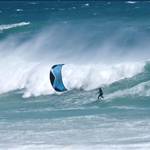
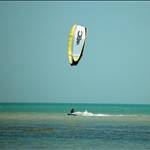
FACT: Kites need wind to fly.

> 10 years ago
Reply
Register to post, see what you've read, and subscribe to topics.
jan
jan
WA
1119 posts
jan jan
WA, 1119 posts
14 Jun 2005 12:21am
board supporting the rider works out until you jump... which lets face it, is what we are really interested in anyway :)

id still think that the weight of the rider that isn't supported by the board is still far greater than the weight of the kite.

i agree, lighter kite, less energy needed, more efficient kite... but i think your talking a fairly small difference in efficiency if your simply looking at the lift equation thrown out earlier

which is why i come back to

a) less kite weight makes a SMALL differences

or

b) the lift equation aint even close to the whole truth

i'm suggesting b) ... and taking the piss outta hellfish hype while im at it :P (after all proof is in the pudding and im more than happy to eat lots of pudding if its good pudding)
HungLong
HungLong
WA
859 posts
WA, 859 posts
14 Jun 2005 8:46am
Na, i'm taking the piss cause a kite cannot be compared to an aerofoil, wing, handglader, paraglider... The closest thing it could be compared to is a sail/spinniker...

regards browneee

ps, we're talking about bloody kites fellas... go get some wind will ya...
cliffor123
cliffor123
455 posts
455 posts
14 Jun 2005 9:18am
you would want to make sure you ar right before making a statement like that or else you would sound stupid.
when the lines are perpendicular to the wind direction it is an aerofoil.
cliffor123
cliffor123
455 posts
455 posts
14 Jun 2005 9:34am
reading all these posts by you want to be physisists and looking at these formulas that are way off is interesting, i would love to live in a place where these messed up rules apply.
we have this crazy version of the kinetic energy of moving air, which i suppose would be ok if it were right, but after that emu says **** like a kite half the weight will have half the momentum when it hits the water, i cant believe i passed my exams, i didnt realise that you could just take the momentum of the air behind the kite out of the equation. this is great news because it probably applys to other things like, if a truck gets a bumper bar that weighs 0kg, i could get hit by it at 100km/h and it wouldnt even hurt because we can ignore any factors we feel like.
why would you be talking about the kite and rider as one system when talking about the weight of light wind kites, that is retarded, i cant be bothered saying why.
greg
HungLong
HungLong
WA
859 posts
WA, 859 posts
14 Jun 2005 9:35am
a kite will never fly with the lines at 90 degrees to the relative airflow... About 85 degrees is possible then the kite would fall back into the window... The angles of attack a kite flys at are massive compared to a real aerofoil, about 4 degrees if i remember correctly is the optimum angle of attack...

Next time your out launching try this, get your launch buddy to stand in line with your self at 90 degrees to the relative airflow and try launch your kite. I bet you the kite will fall back into the window and settle at a position a few meters down wind of your launch buddy... Thus displaying a kite will not fly perpendicular to the relative airflow...

Look, I once heard an american airforce pilot say that you can get a brick to fly with enough thrust... is that an aerofoil ?

regards browneee
waveslave
waveslave
WA
4263 posts
WA, 4263 posts
14 Jun 2005 9:38am
Build two kites identical in size and design based on the Hellfish model.
Kite A is to be constructed from dacron/rip-stop,
Kite B is made of lighter, stiffer cuben fibre.

Test them together on the same day, same beach using the same board and rider in the same wind conditions.

I'm guessing BEST has already conducted this experiment and found Kite B to be more efficient.

But is the efficiency increase great enough to warrant a drop in kite size (say 2m min) for that given wind speed??
HungLong
HungLong
WA
859 posts
WA, 859 posts
14 Jun 2005 9:41am
quote:
Originally posted by cliffor123

I cant be bothered saying why.
greg


If you cant be bothered to explain, why comment at all ?

Hey I've studied aerodynamics for my EU air transport licence and I still find it confusing...

So if you've got something to add please do as I'm interested...

Once my brain warms up and I can dredge the info out of my head I'm in for discussion & theories...

regards browneee
HungLong
HungLong
WA
859 posts
WA, 859 posts
14 Jun 2005 9:43am
quote:
Originally posted by waveslave

Build two kites identical in size and design based on the Hellfish model.
Kite A is to be constructed from dacron/rip-stop,
Kite B is made of lighter, stiffer cuben fibre.

Test them together on the same day, same beach using the same board and rider in the same wind conditions.

I'm guessing BEST has already conducted this experiment and found Kite B to be more efficient.

But is the efficiency increase great enough to warrant a drop in kite size (say 2m min) for that given wind speed??


I'm going to have to say yes to this... As we've done it... And we are saying that...
cliffor123
cliffor123
455 posts
455 posts
14 Jun 2005 9:57am
theories? i suppose you could call the laws of physic that if you can disprove them and come up with better ones. if a kite weighed 0 it could be used to fly in any wind, as wind speed approaches 0, kite size approaches infinite. at the mment a kite of infinate size would have infinate mass, so wouldnt fly.
i didnt explain because i thought that was obvious.
greg
HungLong
HungLong
WA
859 posts
WA, 859 posts
14 Jun 2005 10:03am
we're not talking about disproving the laws of physic's, simply challenging the way everyone thinks kite's fly...
Emu
Emu
NSW
24 posts
Emu Emu
NSW, 24 posts
14 Jun 2005 10:20pm

quote:
Originally posted by HungLong
This brings me back to this point, what percentage of the riders body weight is being supported by the board skimming over the water surface ? as if the kite has more efficency would it not mean that a smaller kite would be required to do the same job as a traditional kite made out of traditional fabrics ?

regards browneee


If the kite is close to the water, the board is supporting near 100% of the rider's weight. Where the kite is just hauling you along the weight of the kite is going to make little difference. Its when you go to turn the kite or make it change direction or speed in some way that you get the benefit.

I'm predicting that people will be saying things like "This thing turns fast" or "It powers up real fast" but not "I can use a kite half the size of what I used to."
HungLong
HungLong
WA
859 posts
WA, 859 posts
14 Jun 2005 10:06pm
quote:
Originally posted by Emu

If the kite is close to the water, the board is supporting near 100% of the rider's weight. Where the kite is just hauling you along the weight of the kite is going to make little difference. Its when you go to turn the kite or make it change direction or speed in some way that you get the benefit.


Ok, comes back to this...

If the kite is close to the water's surface, you're obviously hooking along... Now as you said, almost all the riders weight is being support by the board skimming across the waters surface.

Therefore the kite would not have to do as much work to keep you on the plane as it would require to get you on the plane...

Now to get you on the plane it would require:

force
----- = Accelaration
Mass


Now to keep you on the plane it would require:

Mass x Velocity = Momentum

Ok now we're making this claim,

quote:
"up to 80% lighter than a traditional kite made from polyester rip-stop & dacron."


So being 80% lighter that would indicate it has less "mass" ?, therefore it would require less "force" to "accelarate" it than a traditional polyester rip-stop kite in the same wind conditions.

So putting the reduced "mass" back into the above formular and keeping the same "force" that would equate to better "accelaration" .

Further to this, having better "accelaration" and using the rider as the "mass" would that not indicate the kite would be able to maintain the "momentum" easyer...

my head hurts...

regards browneee
jan
jan
WA
1119 posts
jan jan
WA, 1119 posts
14 Jun 2005 10:52pm
mass must include the rider and the kite in your example brownee... for the kite to move (not pivot about the kiter) it has to act on the kiter

as emu said, when the kite turns the speed at which it can turn or the speed at which it could pivot about the kiter (move across the wind window) could be significantly altered by a lighter kite

this could make for very interesting situations where the kite can actually get into a position in the wind window where the force it can generate (and exert on the kiter) could be hugely altered improved... such a position which just plain couldn't be achieved with a "heavier" kite

id bet this is where and how the real "performance" gains are made

its not that the kite is lighter therefore faster/stronger or can generate more force, but that it is lighter, faster, more efficient and able to fly in such a way that the forces it can generate are "better"
HungLong
HungLong
WA
859 posts
WA, 859 posts
14 Jun 2005 11:06pm
quote:
Originally posted by jan

when the kite turns the speed at which it can turn or the speed at which it could pivot about the kiter (move across the wind window) could be significantly altered by a lighter kite


Yeah I agree,

force
----- = faster acceleration...
mass

quote:
its not that the kite is lighter therefore faster/stronger or can generate more force, but that it is lighter, faster, more efficient and able to fly in such a way that the forces it can generate are "better"


I think you just said the same thing twice, which again would equate to...

force
----- = faster acceleration, better performance ?
mass

regards browneee

ps, I also want to say this, I belive that everone has a right to an opinion, in my replies in this thread I'm not trying to convince you that I'm right as I'm not interested in that. I simply enjoy chatting about these ideas and seeing other points of view I find it helps increase my own knowledge and understanding on these theories...
jan
jan
WA
1119 posts
jan jan
WA, 1119 posts
14 Jun 2005 11:53pm
quote:
Originally posted by HungLong

quote:
Originally posted by jan

when the kite turns the speed at which it can turn or the speed at which it could pivot about the kiter (move across the wind window) could be significantly altered by a lighter kite


Yeah I agree,

force
----- = faster acceleration...
mass

quote:
its not that the kite is lighter therefore faster/stronger or can generate more force, but that it is lighter, faster, more efficient and able to fly in such a way that the forces it can generate are "better"


I think you just said the same thing twice, which again would equate to...

force
----- = faster acceleration, better performance ?
mass

regards browneee

ps, I also want to say this, I belive that everone has a right to an opinion, in my replies in this thread I'm not trying to convince you that I'm right as I'm not interested in that. I simply enjoy chatting about these ideas and seeing other points of view I find it helps increase my own knowledge and understanding on these theories...


no, not the same thing twice...

im suggesting there is a difference between the forces acting upon the kite as it "flies" (faster turning, faster across the window) and the force exerted by the kite on the rider (wind/sail effect "lifting" or "pulling" the rider)

a faster (read lighter?) kite can put itself into a place in the window such that the wind/sail effect is significantly stronger (ie the F is greatly higher, acting on the same kite+rider m)

the "weight" of the kite and F=ma acting on the rider would concern the m of rider+kite (the whole system)... a couple kilos has a small effect
jan
jan
WA
1119 posts
jan jan
WA, 1119 posts
14 Jun 2005 11:55pm
what might be more interesting, is that once you jump and are airborne, the kite *would* be acting more like an airfoil as you "glide" back down...

now *here* having a lighter more efficient airfoil could be far more (directly) apparent
NSW, 4382 posts
15 Jun 2005 8:06am
the "weight" of the kite and F=ma acting on the rider would concern the m of rider+kite (the whole system)... a couple kilos has a small effect


Just thought I would throw in another perspective.
The kite is sometimes supporting rider weight, but most of the time it is pulling against the the force exerted on it by the riders board edging skills/strength and a percentage of the riders weight, would you agree?
Then a lot of the "better" has to do with rider preference and skill from my perspective, as I don't know jack about all the physics compared to some of you guys.

What I have seen at the beach is that rider A who weighs 65kg is out on a kite size and having fun, that rider B who weighs 90Kg is afraid to launch.

Have fun!

Cya and

Goodwinds

Steve McCormack
(who will be in Vanuatu tonight)
HungLong
HungLong
WA
859 posts
WA, 859 posts
15 Jun 2005 7:33am
quote:
Originally posted by kitepower
quote:
Originally posted by jan

the "weight" of the kite and F=ma acting on the rider would concern the m of rider+kite (the whole system)... a couple kilos has a small effect


Just thought I would throw in another perspective.
The kite is sometimes supporting rider weight, but most of the time it is pulling against the the force exerted on it by the riders board edging skills/strength and a percentage of the riders weight, would you agree?
Then a lot of the "better" has to do with rider preference and skill from my perspective, as I don't know jack about all the physics compared to some of you guys.

What I have seen at the beach is that rider A who weighs 65kg is out on a kite size and having fun, that rider B who weighs 90Kg is afraid to launch.

Have fun!

Cya and

Goodwinds

Steve McCormack
(who will be in Vanuatu tonight)


Yeah well thats what you have to do, Physics has its place however practically you have to observe what happens out side of the controlled environment and what really happens out on the ocean/river and in the gusty winds...

regards browneee
jan
jan
WA
1119 posts
jan jan
WA, 1119 posts
17 Jun 2005 10:43am
quote:
Originally posted by NorthSide
Thank goodness none of you are kite designers otherwise we would be trying to launch rubbish bags!


About as glad that you aren't a kite designer... we'd still be stuck using broomsticks as control bars.

If you haven't anything useful to contribute apart from arrogant crap **** off.
anton
anton
202 posts
202 posts
17 Jun 2005 11:33am
quote:
Originally posted by NorthSide

MAN I LOVE BEING RIGHT!!!

P.S FACT! The Right Brothers tested there wing designs by flying them as kites first...


FACT: It was the Wright Brothers, (Orville and Wilbur).

Please show the respect our kiting forefathers deserve!
Pops
Pops
WA
54 posts
WA, 54 posts
17 Jun 2005 7:23pm
Wow - thanks for the physics lessons fellas - while you blokes have been debating - Ive been ripping it up in Cairns for six days using all that stuff you've been talking about - ah well thats kiting. JUST DO IT !
kindest regards
pops
Surgeon
Surgeon
NSW
134 posts
NSW, 134 posts
18 Jun 2005 11:41am
NorthSide said
quote:
Oh dear I am bathing in cleverness!!!
Thankyou, thankyou... LOUD APPLAUSE


He also said on the NASA Thread
quote:
Something interesting to note is that aspect ratio is a powerful indicator of the general performance of a wing. Wingtip vortices greatly deteriorate the performance of a wing, and by reducing the amount of wing tip area, making it skinny or pointed for instance, you reduce the amount of energy lost to this process, and increase the lift generated by the wing. This is why high performance gliders have very long, skinny wings; with no engine power, they must be as efficient as possible in every respect in order to stay aloft.
Most birds have wings with a wide aspect ratio, and with tapered or elliptical tips. This is particularly noticeable on soaring birds such as the Albatross and Eagles. In addition, the V-formation (echelon) often seen in flights of geese, ducks and other migratory birds can be considered to act as a single swept wing with a very high aspect ratio - the vortices shed by the lead bird are smoothly transferred to the next and so on. This confers a huge efficiency advantage to the flight as a whole - perhaps as much as a 100% improvement compared to a single bird in flight. Note that the usual common explanation of the V-formation - that following birds are "shielded" from air resistance by the bird in front - may be misleading. While birds do "take turns" at being the lead bird, it is probably to give those at the tips a rest - they are the ones that will experience the most drag when the vortices are finally shed.


Which was pretty unfair coz he neva once told all us dum schmucks that he had a job actually writing definitions on this web site www.answers.com/search?q=aspect-ratio - where his quote above appears word for word

I'm sure we all apologise for basking in your superiority - but we must The alternative thought that you are a plagiarist is a thought that we all couldn't bear

From the same site - Self Expression "Expression of one's own personality, feelings, or ideas, as through speech or art"

Have a clever day
NorthSide
NorthSide
WA
238 posts
WA, 238 posts
19 Jun 2005 9:23am
Guess it is a good time to stop the **** stirring.
Happy Kiting...
Regards
NS
Surgeon
Surgeon
NSW
134 posts
NSW, 134 posts
19 Jun 2005 1:50pm
I'm with you Later
Please Register, or first...
Topics Subscribe Reply