VIC
2777 posts
15knots white caps appear on the wave tops
25knots the sand starts lifting and blowing off the beach.
QLD
72 posts
Yeh! this one works every time.
Face the direction the wind is coming from.
Bend over until your face is directly looking at your ring. If your ring is twitching you know its 25 to 30 kns. No twitching. Simple. Its not worth kiting.
VIC
702 posts
1 - use Anemometers... turn on... face into wind... read the screen for couple of minutes to get an average... include 15% error margin
2 - if your kite is parked on the sand, and it keeps moving and requires anchoring, it's probably above 25 knts...
3 - if other kiters with 12s and 13s are stalling, and you can see them all working their kites hard, and all of them have congregated in the same most downwind spot, it means it's around 15/16 knots and less...
4 - after every session (after you felt the wind on your face and body), go home and check the actual recorded wind speed by your nearest weather beacon... after couple of years, you won't need any devices... you'll just know...

NSW
54 posts
Just look out for the bat signal.
No matter what the wind speed genuinely is, the second that first kite goes up, everyone else just races to that same spot and puts up the same size kite regardless.

WA
5378 posts
30knots - Most kiters stay at home, not many people at the beach, you start to see an odd thing that looks like a surfboard with a sail poking out of it.
NSW
181 posts
The sand moving...
I throw a bit of sand in the air (aka Matthew Lloyd style) and then I knew exactly which kite I was going to put up, depending on how far the sand sailed!
(note toss in air from chest height give or take) aka:
-No sail (under 2 foot)... go home
-Little sail (a few feet), my big kite
-Medium distance, my medium kite
-A few meters, my small kite
-Can’t see where the sand came down, board is buried in sand after 5mins… prob better go home and tie down the outdoor furniture.
(Note in rain (wet sand) you need to dig and find the dry stuff)
Until I realized my method was flawed. While ideal for say Woodies, with heavy chunky sand, it proved quite useless for say Gero with fine sand that was moving before it even hit 20 knots!!
So basically find a method you like for your location, test it against how your session was and then use it for future!

WA
1422 posts
Dusta,
It was a little tongue in cheek to some posts that have guy's posting their "epic" 35 Knot + sessions. That rating is for them...
I agree,
12-15 = whitecaps
18-20 = sand moving (especially Cervantes where it's really fine sand)
30+ = even polies are trying to find a handkerchief to rig

WA
2940 posts
sorry dood crook as a dog since saturday and don't have a sense of humour atm :P
NSW
147 posts
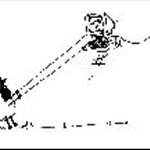
This scale was developed in 1805 by British Rear-Admiral Sir Francis Beaufort as a standard for estimating wind speed, not with instrumentation, but by using your own senses and observing the wind#65533;s effects on your surroundings. The scale is still used today by mariners and more recently kite fliers. Most kite manufacturers use the Beaufort Scale to list the suitable wind ranges for their products.
Bft. Force Knots Mph. Kph Meters/Sec. Classification Appearance on Land Appearance on Water For the Power Kite Flier
0 < 1 < 1.15 <1.83 < 0.51 Calm Calm, smoke rises vertically Sea surface smooth and mirror-like. Relax, hang out, inspect your kite, wait for wind#65533;
1 1 - 3 1.1 #65533; 3.5 2 -5.5 0.5 #65533; 1.5 Light Air Smoke drift indicates wind direction. Wind vanes are still. Scaly ripples, no foam crests. 7 meter kites might fly, but usually only veterans have these. Novices with smaller kites will have to wait for more.
2 4 - 6 4.6 #65533; 7 7.5 #65533; 11 2 #65533; 3 Light Breeze Wind Felt on face, leaves rustle, wind vanes begin to move. Small wavelets, crests glassy,no breaking. 5 meter and larger can come out of the bag. Beginners should be wary of gusts, if flying the big ones.
3 7 -10 8 #65533; 11.5 13 #65533; 18.5 3.5 - 5 Gentle Breeze Leaves and small twigs constantly moving, light flags moving. Large wavelets, crest begin to break, scattered whitecaps. Novices with smaller kites up to 3-4m can have safe fun. Veterans with bigger kites are feeling the pull and starting to smile.
4 11 - 16 12.5 #65533; 18.5 20 #65533; 29 5.5 - 8 Moderate Breeze Dust, leaves and loose paper lifted, small tree branches move. Small waves 1 -4 ft. becoming longer, numerous whitecaps. Mid-sized kites (2.5-3.5m) are waking up and starting to pull hard. Beginners can have a blast with even 1.5m kites.
5 17 - 21 19.5 - 24 31 #65533; 38.5 9 - 11 Fresh Breeze Small trees with leaves begin to sway. Moderate waves, 4-8 ft. taking longer from, many whitecaps, some spray. Big kites are all put away and mid-sized are in the hands of experts only. Novices without smaller kites should pack up.
6 22 - 27 25 - 31 40.5 #65533; 49.5 11.5 - 14 Strong Breeze Larger tree branches moving, whistling in wires. Larger waves, 8-13 ft., whitecaps common, more spray Experts with the right gear are either grinning or scared. Others have quit or been blown away.
7 28 - 33 32 - 37 51 #65533; 60.5 14.5 - 17 Near Gale Whole trees moving, resistance to walking against wind. Sea heaps up 13 #65533; 20 ft., white foam streaks off breakers. The craziest veterans are down to their smallest kites. Others have wisely packed up.
8 34 - 40 39 - 46 62 - 73 17.5 #65533; 20.5 Gale Whole trees in motion, resistance to walking against wind. Moderately high (13-20 ft) waves of greater length, edges of crests begin to break into spindrift, foam blown in streaks. Everybody is inside. No one wants to get hurt today.
utah homes

WA
752 posts
strange that no-one mentioned: ANEMOMETER !
WA
2119 posts
who gives a ****, just put up a 12m bow. shee'll be right???????
QLD
129 posts
Ask the local know it all, hardcore kite expert what he thinks then deduct 10 to 12 knots from that and you'll be pretty close.

WA
241 posts
How bout checking the graphs on seabreeze. Last time i checked they still record wind strength and even the direction. Ask someone with an iphone

NSW
451 posts
The easiest way: Get the 'Wind Meter' app on your iphone.

QLD
68 posts
I tend to use the way the water reacts to the wind, the problem with sand is that beach sand varies from super fine to shell grit in various locations, so it takes differing wind velocities to pick it up and move it!

WA
1501 posts
If you take off your pants and your nuts start kitelooping around your dick it's over 30 knots. Doesn't work in cold climates though.


 )
) When they start to get up and leave it`s perfect.
 When sand starts stinging as you are setting up then get the smallest kite you have.