When I was younger and in my prime I used to ....
be a hanglider test pilot - it 'were' great fun & stalling was ....
Reynolds Nos -- tick
Drag ratio -- tick
Induced drag -- tick (changes due to pilot actions)
Parasitic drag -- tick (fixed due to shape)
Speed many variables here....
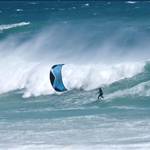
Without being able to mathematically prove it (test pilots give feed back!!) Bottom line flatter kite profile and higher aspect ratio more likely to stall with higher angle of attack. This means loss of lift, loss of control, and usually a drop till recovery or impact. The bonus of a kite is that it is anchored to U. U spend most of the time on a solid surface so when it stalls the direction the drag is acting is critical and dependant on the wind strength. Strong wind strong stall and big jump sum it up.
However the qu I want answered (

) once U have stalled and kite hits the water on a modern C kite do you still have to swim towards it to setup for re-launch aka old C kites (I hated having to do that)??
Ta



 For those who doubt my knowledge or experience.I have 12m Naish.