kiting with surfboard how too start

> 10 years ago
Reply
Register to post, see what you've read, and subscribe to topics.
suface2air
suface2air
QLD
701 posts
QLD, 701 posts
14 Dec 2009 9:32am
Just got surf board for the small wind days .how do you guys do deep water starts .What is the best way to get on the board . HELP PLEASE we have had no real wind in bay for over 4 weeks .
Robbo2099
Robbo2099
WA
753 posts
WA, 753 posts
14 Dec 2009 8:40am
Read the notes below first and it'll all make more sense...


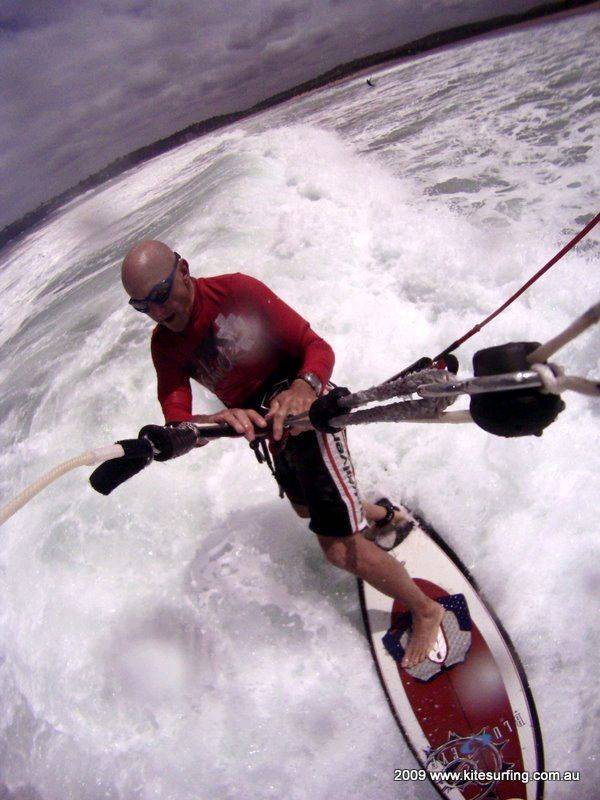
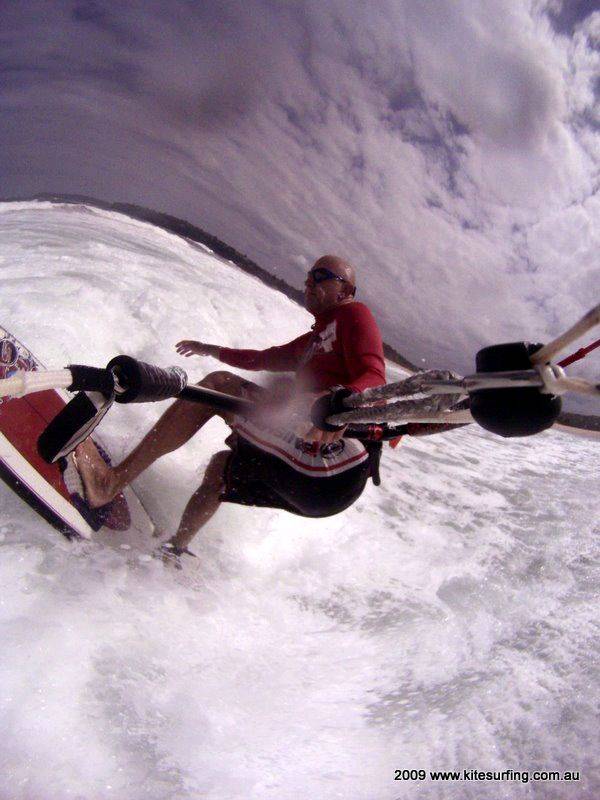
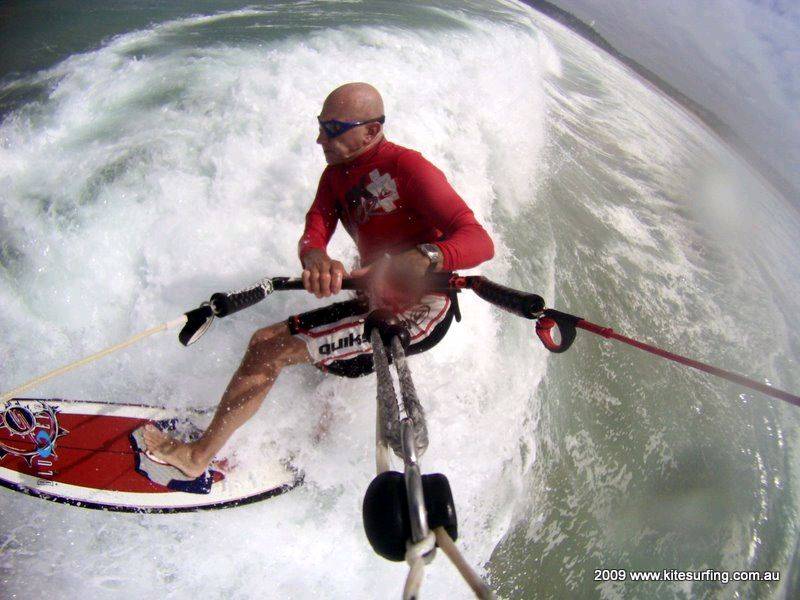
Basic idea here is to sit in the water near your board, resting your heels on the front of the rear deck pad (back foot) and then your front foot on the normal position with your heel against the board. Then pull the kite behind you, power it up and as the kite moves forward with power, allow it to lift you up and over the board. Begin riding straight downwind for a few meters until you are planing then begin to cut upwind as you gain more speed.


(Apologies for the extra 60sec on the front end -- thought I had removed this with an edit before posting...) Basic idea here is that you ride as you were riding a surfboard, letting the kite create your speed. Lean back against the power of the kite, pushing the edge of the board into the water. When you decide to turn around, start with the kite low, power it hard so it pivots to change direction rather than going over top. If you bring the kite too high in the window it will pull you off the board. As you round the turn, slide your harness around so the kite is now almost behind you (to the left in this case) and go into the turn at full power. As soon as you enter the turn, push the bar out to burn off power, make the turn and finish riding toe-side, powering up the kite as you exit the turn. Pay careful attention to the subtle changes in front foot position between toe side and heel side riding. Heel closer to the edge when riding heel side and slightly further away when riding toeside. Also, as you switch to toeside, you'll ride on your toes with your back foot, with your knee bent forward and pushing toward your front knee.


Robbo2099
Robbo2099
WA
753 posts
WA, 753 posts
14 Dec 2009 8:42am
Skip the first 50 sec or so of the 2nd vid. Sorry, the edit didn't take....
Sir V
Sir V
QLD
490 posts
QLD, 490 posts
14 Dec 2009 2:06pm
Hey Man, that's a crackin explanation. I also just got a surfboard and had my first go on the weekend. I was about to ask the same type of question because my board has straps but I want to start riding without them. This explanation kind'of helps.

Thanks Robbo, spot'ya on the water soon. About to try my HD, tell you later.

V
suface2air
suface2air
QLD
701 posts
QLD, 701 posts
14 Dec 2009 6:20pm
Hey robbo many thanks that has explaned so much . Just got to get out there and give it some . You make turning from heel to toe like fluid and looks soooo easy. I know it wont be . Once again many thanks .
milko
milko
NSW
604 posts
NSW, 604 posts
14 Dec 2009 7:56pm
Ahh the famous Slingshot whiSSTling.. nice leggy too
peanuticus
peanuticus
NSW
341 posts
NSW, 341 posts
15 Dec 2009 11:42pm
as with all boards, putting your toes in the rail to make the board tip into the water so you can put pressure on it helps whilst your messing with your kite. also, you'll never slide a surfboard across the water. to spin it round make sure you push it forwards or backwards and turn it so the fins don't grab in and stop it moving. I always grab the tail with my back hand and just push it round under my feet.
Fooosh
Fooosh
WA
563 posts
WA, 563 posts
15 Dec 2009 9:41pm
Had my first strapless session today!! It was ace! Thanks to Kent for waiting as I floundered around, etc etc!

My contribution from what I learnt today:
1. Now I know why people carry the surfboards fins forward into the sea.
2. Hold bar with front hand, kite at 2 or 10 o'clock (at back)
3. Position board with back hand under your feet
4. Take note of the 'put feet on rail comment' to position - but there is no shame in the board flipping over by a wave and you ending up sitting on the fins (leave budgie smugglers at home for your first few sessions in case)
5. Point board slightly downwind, place feet in midline and fly kite forward and up you go!

Kent's tip: Stomp on tail when going over peaks to keep your front foot in contact
IanR
IanR
NSW
1360 posts
NSW, 1360 posts
16 Dec 2009 2:02am
Hi Robbo
A couple of questions
Have You put a Back deckgrip under your front foot? So you can use the Wedge in the grip to push forward on the front. Help climb broken waves?
I don't think I saw you ride switch. If you choose to ride switch is it better to rotate your body before or after the turn. Or rotate after the turn on your strong toeside and rotate before on your weak toeside. ie as Natural footer should I switch after the turn when going from left to right and before when going right to left.
Do you recommend wearing a surfboard leash when riding Strapless?
tightlines
tightlines
WA
3510 posts
WA, 3510 posts
16 Dec 2009 12:24am
Fooosh said...

Had my first strapless session today!! It was ace! Thanks to Kent for waiting as I floundered around, etc etc!


Must admit after the first 20 minutes I was a bit worried we would ever make it back to Trigg , conditions were pretty tough for your first strapless downwinder session and it took us a while just to get to Floreat but waiting (scooting down wind then working my way back) was a pleasure as it was my first real go on my new Firewire.

By the time we had made it to Scarborough Fooosh was not only staying on his board for extended periods but dropping into a few waves (with a huge grin on his face) as well..... I think we have a new convert.

michel
michel
NSW
413 posts
NSW, 413 posts
16 Dec 2009 8:04am
when you are ready to do a standing start use your front foot to stabilize and position the board,kite up high then when ready dive kite(doesnt have to be fast unless light cond.) and throw your back foot on ,i see heaps of beginners trying to put their back foot on 1st and they cant control the board and end up on their arse, or do the skate start and throw both feet on at same time.
when going over a wave so you dont lose your board when you hit the whitewater bend your knees and weight even through both feet, and when going over the back of the wave slightly straighten you legs, even so the board may fall away from your feet dont fight it as you generally land back down on it (its all a timing thing),or you can bear away a little so you ride the white water along the top of the wave and the drop off the back of the wave is a bit more subtle
ezza
ezza
NSW
561 posts
NSW, 561 posts
16 Dec 2009 9:19am
hey robbo, what is your safety hooked to in the vid?
Robbo2099
Robbo2099
WA
753 posts
WA, 753 posts
16 Dec 2009 8:21am
IanR said...

Hi Robbo
A couple of questions
Have You put a Back deckgrip under your front foot? So you can use the Wedge in the grip to push forward on the front. Help climb broken waves?
I don't think I saw you ride switch. If you choose to ride switch is it better to rotate your body before or after the turn. Or rotate after the turn on your strong toeside and rotate before on your weak toeside. ie as Natural footer should I switch after the turn when going from left to right and before when going right to left.
Do you recommend wearing a surfboard leash when riding Strapless?


OK, let me address a few questions at once:

Yes, I've put a section of rear deck grip reversed on the FRONT foot position. This works wonders when you are trying to get over a broken wave. As the wave approaches, you can push you front foot against the heel pad, creating pressure against the board, making it less likely to get knocked out from under you -- it also serves as a good tactical marker so you can feel exactly where your foot should be when riding.

I personally don't ride switch very often but it's a good skill to have simply because you can go upwind better in light winds. There are a couple of ways to switch: Some people are good enough to just hop from regular to goofy and back again. I find that I just crash and burn about 80% of the time. Easiest way (lazy) is just stop, fall in the water and flip the board around. The most common method is to start riding directly downwind then move your back foot beside with your front foot, then change positions from there and keep going as you cut upwind again. It's tricky but with practice you will get it.

Re the question about a leash, there are varying opinions on that. You are generally safe with a leash on a surfboard. Unlike with a twintip which will load up the leash as the tip digs in when you crash, then slingshot back and take your head off, the edge design of a surfboard generally doesn't allow this to happen. It will sometimes "tombstone", making it difficult to unload the pressure on the leash but I've never had it come flying back at me. Reason I use a leash is that if you lose the board, once a wave gets it, it'll usually wash all the way to the beach whereas a TT will just get washed over.

Hope that's helpful.

Cheers,

Robbo

Robbo2099
Robbo2099
WA
753 posts
WA, 753 posts
16 Dec 2009 8:23am
ezza said...

hey robbo, what is your safety hooked to in the vid?


Just the standard Slingshot safety on a REV2. It attaches to the harness ring then the other side to the safety ring on one of the front lines at the depower strap. I usually run the safety line UNDER my harness to prevent it dangling and getting tangled up in things.
Robbo2099
Robbo2099
WA
753 posts
WA, 753 posts
16 Dec 2009 8:33am
michel said...

when you are ready to do a standing start use your front foot to stabilize and position the board,kite up high then when ready dive kite(doesnt have to be fast unless light cond.) and throw your back foot on ,i see heaps of beginners trying to put their back foot on 1st and they cant control the board and end up on their arse, or do the skate start and throw both feet on at same time.
when going over a wave so you dont lose your board when you hit the whitewater bend your knees and weight even through both feet, and when going over the back of the wave slightly straighten you legs, even so the board may fall away from your feet dont fight it as you generally land back down on it (its all a timing thing),or you can bear away a little so you ride the white water along the top of the wave and the drop off the back of the wave is a bit more subtle


Very good advice here.

Another very helpful hint in getting over large, broken waves when riding strapless is as the wave approaches you, slow down, then ride WITH the wave slightly back toward the beach (as noted above, bear away) as the wave passes under you, letting the whitewater float you at the energy dissipates. At this stage, you're essentially riding along the wave for a brief period, then, as the wave passes under you and you're floating over the whitewater, power the kite up again and pull yourself over the rest of the wave. The key is not to try and power over or through the wave--just take it gently and ollie over it, unweighting the board, shifting some of your weight onto the tail as you float gently over the surface without leaving the water. You can do this either heelside or toeside.

Here are a couple of examples:


Robbo2099
Robbo2099
WA
753 posts
WA, 753 posts
16 Dec 2009 8:35am
suface2air said...

Hey robbo many thanks that has explaned so much . Just got to get out there and give it some . You make turning from heel to toe like fluid and looks soooo easy. I know it wont be . Once again many thanks .


Hey mate, no worries. You will be surprised how easy it really is. Just practice, practice, practice. You'll pick it up in no time. Honestly.
ezza
ezza
NSW
561 posts
NSW, 561 posts
16 Dec 2009 2:01pm
Robbo2099 said...

ezza said...

hey robbo, what is your safety hooked to in the vid?


Just the standard Slingshot safety on a REV2. It attaches to the harness ring then the other side to the safety ring on one of the front lines at the depower strap. I usually run the safety line UNDER my harness to prevent it dangling and getting tangled up in things.


hmm that is a good idea! the slingshot safeties are a bit long. I stopped using mine (and started using the one off an Ozone) because a couple of times it somehow looped around my board's fins when water starting. Probably not an issue if you use a twintip with the smaller fins but annoying with a surfboard... sorry OT.
Please Register, or first...
Topics Subscribe Reply