Hey salty
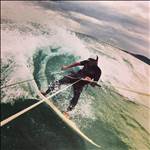
A really good piece of advice I got a while back, and like to pass on, is to try to never let both feet off your board (ie fall completely off) at any time, but always keep at least one in contact. This sounds like a no brainer/impossible when learning, but is a really useful strategy if attempted for a few sessions, and then consciously but less strictly applied from then on. For example, if I am gybing or duck tacking, and I mess up my timing or whatever, and sink into water, I concentrate on lift and kite pulling me into a start position, and always with one foot touching the deck of board so that I can get lift back up on top at any time. And if I have fallen, one part of my brain is concentrating on keeping board within reach and under foot the whole time. Same on a wave, if I big or fall, I try to roll with it and "recover" no matter what. You find yourself getting out of some funny situations in time.
Give it a try for 30 min next session, helps to slow everything down as well.
Ps. Exceptions are in barrelling waves and large airs, where you need to abort and get max distance away from sharp flying objects


PPS. And as for leashes, as posted above, only for point breaks and rocky shores, too dangerous otherwise. Try the approach above and in a few weeks it will be far less board chasing


 kernal said..