MrKyle44 said..
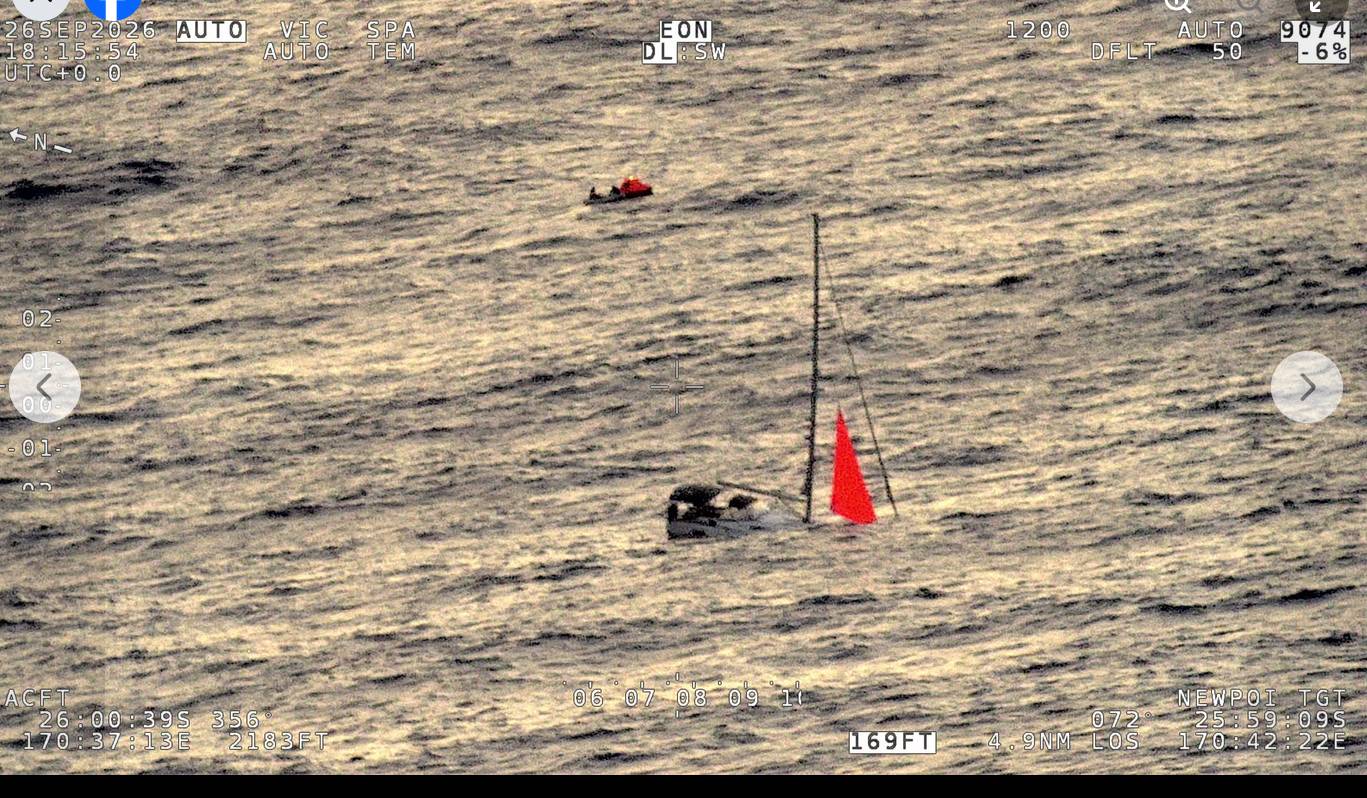
A leg torn out of the hull is a hole you cannot plug with a T-shirt, so the compartment it sits in has to hold. The compartments are the whole advantage over a monohull. One Tree Island, an Atlantic 46, flooded one hull to chest height after a sperm whale in 2020 and stayed up. Raindancer, a Peterson 44, went down in 15 minutes in 2023 when the shaft log burst.
Hi MrKyle44,
Nice boat!
I'm not quite sure why you see this as exclusive to multihulls. Monohulls can also have a watertight engine compartment. The last boat was like this, it only had two peno's into the engine bay, one was a sealed ducted air inlet that terminated at knee height in the cockpit wall and the other was a small watertight port for a fire extingusher that was accessible from the the rear cabin.
Edit: sorry, It did have of course the normal access hatches, one either side and the removable stairs , but these all had watertight seals.
The one thing that did give me pause was my house battery bank was also in the engine bay. Even though the batteries had their own well with an 8" dividing wall, the terminals were the lowest electrical connection on the entire boat, ie: lower than the cockpit floor. So a serious loss of water integrity would take out the house battery bank. All the important stuff like the main pos and neg bus bars were mounted chest high and the engine battery was in a separate area, so you could theoretically still have battery power with a flooded engine bay, but many times I would sit there trying to work out how I could fully waterproof the house battery bank.
The other mitigation factor was under the saloon and cabin berths were foam filled chambers with enough bouyancy to keep any water ingress in the engine bay from overflowing past the sumps. But I readily admit to never having brass ones big enough to test that concept out!
So whilst I'm a picklefork fan boy, I dont neccesarily agree this is a thing that a multi has over mono's.
Cheers!