Oyster loses keel in Hammo

2 months ago
Reply
Register to post, see what you've read, and subscribe to topics.
shaggybaxter
shaggybaxter
QLD
2703 posts
QLD, 2703 posts
27 Aug 2026 12:21am
Hi JM,
Unfortunately your comment on this thread made no sense because apparently it was plucked from a long thread on SA which I couldn't find
Tongue in cheek reference to a car event on the Gold Coast, some muppet wrapped a pristine HT Monaro around a tree (immovable object)

I'm still not sure whether this was the pivoting keel which seems to have been mentioned or a regular fixed bolted keel although it certainly looks to be the later. With that cord length depth and hull shape however I doubt that the impact was with an immovable object at high speed.
It's a swing keel. The hydraulics has a pressure bypass valve that lets the keel fold backwards to absorb the force of a big impact, ie: shipping containers and such like.
We also hit a whale at 11 odd knots on a delivery to Hammo one year. Same result except that one also caused a slow leak. The repair bill was an o-ring and a few sweaty weekends.

garymalmgren
garymalmgren
1441 posts
1441 posts
27 Aug 2026 7:04am
A couple of Dicks discussing the Oyster capsize.
I'm not in tune with them though.
Forward sonar????
Shoes??

EastCoastSail
EastCoastSail
386 posts
386 posts
27 Aug 2026 8:37am
Kraken Yachts is the competitor to Oyster Yachts
Kankama
Kankama
NSW
854 posts
NSW, 854 posts
27 Aug 2026 10:51am
Some short footage of the Oyster listing - so the crew did have time to drop the kite and get off - maybe not the main

www.facebook.com/7NEWSQld/videos/what-caused-a-luxury-yacht-to-capsize-and-result-in-needing-a-mass-rescue-missio/1376291147977411/
JonE
JonE
VIC
670 posts
VIC, 670 posts
27 Aug 2026 8:37pm
Oh Gary, your post deserves more upvotes for the first line. That guy has serious chutzpah doesn't he!
cammd
cammd
QLD
4629 posts
QLD, 4629 posts
28 Aug 2026 9:30am
JonE said..
Oh Gary, your post deserves more upvotes for the first line. That guy has serious chutzpah doesn't he!


He makes some good points, a 50 tonne, 7 million dollar boat.

What, are they trying to save weight or money by making it weak as p#$s
MikeJohns
MikeJohns
WA
1 posts
WA, 1 posts
28 Aug 2026 7:36am
cammd said..
I've seen some comments on social media stating its not a construction or design issue, the boat hit a rock!

Are people serious, the keel shouldn't fall off because you hit something, every boat suffers a grounding at some time.


Designed to class, in this case it's said to be DNV.
Whether plans were approved by DNV and the keel was supposed to have been engineered by a professional, or even whether they supervised construction is what the insurance companies investigator will be looking at if they are compenetent. Often there is minimal investigation, or forensic failure analysis unless the coroner is involved. But the payout amount might result in a proper investigation.

The design phase of the Oyster 825 (2011–2012) and its subsequent production run (2014–2017) directly overlapped with the introduction and enforcement of the ISO standards that started to mandate keel strength.
Under ISO 12215-9[/b], <!--qkimaf Bs0fKe_58/HugV6--><!--cqw1tb Bs0fKe_58/HugV6-->a sailboat's keel, its internal supporting structures, and the hull must be specifically engineered to withstand a longitudinal grounding at it's maximum operational speed <!--TgQPHd|||[[]]-->. ISO provide a formula derived from experimentation that is used to calculate this , with a factor of safety.

The ISO standard mandates that the keel attachment and hull laminate must be robust enough to survive the dynamic forces of hitting an underwater obstacle without catastrophic failure. That includes hitting anything, rocks reefs or even hard sand, the deceleration and energy dissipated has a similar energy profile.

The bulk of the collision energy is absorbed through hydrodynamics provided that the boat is free to rotate longitudinally. When it's free to trip on it's keel the loads are a lot lower than the worst case design loads.

A lot of earlier keels were attached bolted through laminate that was woefully deficient, designed to the earlier very popular ABS OSRY standards , the standard was amended before it was abandoned in favour of ISO, but there are still designers who mistakenly use it. There are also a lot of sailboats designed to dodgy standards. That makes grounding a bit of a lottery and means keel loss from grounding is an accepted phenomena, even by insurance companies.

Everytime a keel is engineered nowadays there is a requirement to show structurally that the keel can handle just such a collision without sinking or making the boat innoperable. That doesnt mean no damage, and any hard grounding on a modern design warrants a full inspection of the laminate and keel bolts.

I have lost my prior login on this forum, so now I cant post attachments.



JonE
JonE
VIC
670 posts
VIC, 670 posts
28 Aug 2026 9:53am
Mike,

Thanks for your excellent post. This line has explained something that ought to have been obvious to me but did not occur at all

The bulk of the collision energy is absorbed through hydrodynamics provided that the boat is free to rotate longitudinally.

Jon
cammd
cammd
QLD
4629 posts
QLD, 4629 posts
28 Aug 2026 10:51am
MikeJohns said..

cammd said..
I've seen some comments on social media stating its not a construction or design issue, the boat hit a rock!

Are people serious, the keel shouldn't fall off because you hit something, every boat suffers a grounding at some time.


Designed to class, in this case it's said to be DNV.
Whether plans were approved by DNV and the keel was supposed to have been engineered by a professional, or even whether they supervised construction is what the insurance companies investigator will be looking at if they are compenetent. Often there is minimal investigation, or forensic failure analysis unless the coroner is involved. But the payout amount might result in a proper investigation.

The design phase of the Oyster 825 (2011–2012) and its subsequent production run (2014–2017) directly overlapped with the introduction and enforcement of the ISO standards that started to mandate keel strength.
Under ISO 12215-9[/b], <!--qkimaf Bs0fKe_58/HugV6--><!--cqw1tb Bs0fKe_58/HugV6-->a sailboat's keel, its internal supporting structures, and the hull must be specifically engineered to withstand a longitudinal grounding at it's maximum operational speed <!--TgQPHd|||[[]]-->. ISO provide a formula derived from experimentation that is used to calculate this , with a factor of safety.

The ISO standard mandates that the keel attachment and hull laminate must be robust enough to survive the dynamic forces of hitting an underwater obstacle without catastrophic failure. That includes hitting anything, rocks reefs or even hard sand, the deceleration and energy dissipated has a similar energy profile.

The bulk of the collision energy is absorbed through hydrodynamics provided that the boat is free to rotate longitudinally. When it's free to trip on it's keel the loads are a lot lower than the worst case design loads.

A lot of earlier keels were attached bolted through laminate that was woefully deficient, designed to the earlier very popular ABS OSRY standards , the standard was amended before it was abandoned in favour of ISO, but there are still designers who mistakenly use it. There are also a lot of sailboats designed to dodgy standards. That makes grounding a bit of a lottery and means keel loss from grounding is an accepted phenomena, even by insurance companies.

Everytime a keel is engineered nowadays there is a requirement to show structurally that the keel can handle just such a collision without sinking or making the boat innoperable. That doesnt mean no damage, and any hard grounding on a modern design warrants a full inspection of the laminate and keel bolts.

I have lost my prior login on this forum, so now I cant post attachments.


Agree with Jon great post, but IS0 standards do not seem to working, otherwise keels wouldn't fall off. I dont agree with kraken that all bolted keels are not suitable for offshore, that is a sales pitch, however

I have heard of new production boats suffering seperation of the grid from the hull from wave action alone. That doesnt leave them operable.

We have all seen examples of damage incurred during haulouts when a boats weight is rested on the keel. An offshore cruiser should be able sit on her keel at haulout.

So whats going wrong with the standards to produce fragile boats, I have theory, it will upset chris249 again but the problem is the standards are written by manufacturers to suit their interests first and foremost, that is cheaper production whilst maintaining the marketing message.


cammd
cammd
QLD
4629 posts
QLD, 4629 posts
19 Oct 2026 7:05pm


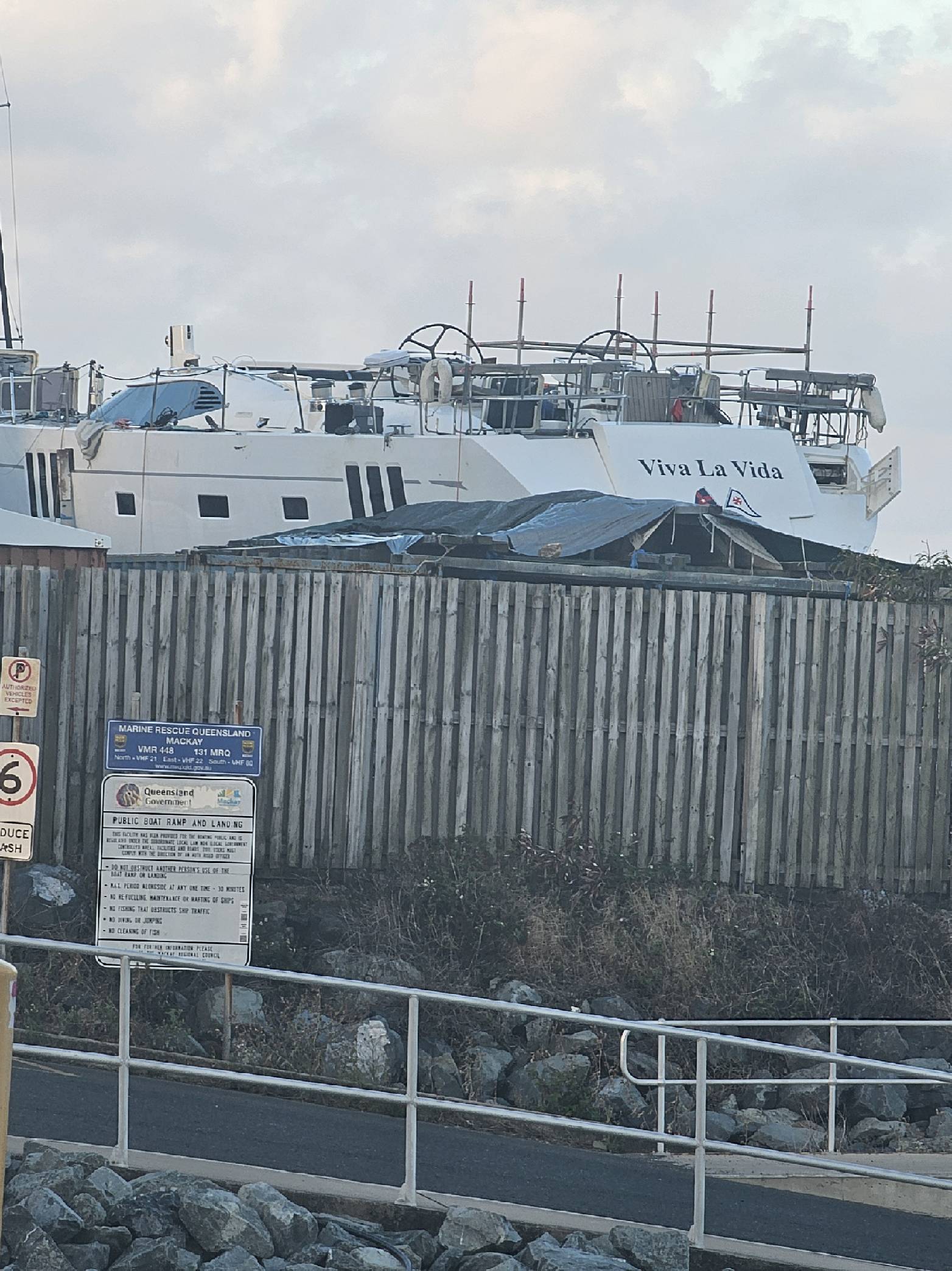
Pulled into Mackay today and spotted her on the hard as we were having a pizza for dinner.


julesmoto
julesmoto
NSW
1616 posts
NSW, 1616 posts
20 Oct 2026 3:51pm
cammd said..


Pulled into Mackay today and spotted her on the hard as we were having a pizza for dinner.


Thanks for the pic. Shame the relevant bit isn't visible
cammd
cammd
QLD
4629 posts
QLD, 4629 posts
20 Oct 2026 2:57pm
Probably still in the Whitsunday Passage
JonE
JonE
VIC
670 posts
VIC, 670 posts
21 Oct 2026 9:28am
First impression , it's a massive boat!
julesmoto
julesmoto
NSW
1616 posts
NSW, 1616 posts
21 Oct 2026 2:42pm
cammd said..
Probably still in the Whitsunday Passage


The stub
scruzin
scruzin
SA
574 posts
SA, 574 posts
21 Oct 2026 4:24pm
Kankama said..
Energy going somewhere is a good point - it is what car designers have to do. back in the bad old days, car makers didn;t want to know about adding safety features like crumple zones, safety cells, soft interior furnishings and air bags. In the end, the US government got around the industry's reluctance and the big car companies head in the sand mentality by stipulating that all government cars would have to have air bags. With such a big contract on offer, one of the big companies blinked and now we all have air bags.

Getting energy somewhere is pretty easy IF someone thinks about it. First, put a small crumple zone on the bottom and front of the keel, a crash box. Cats and tris have been doing something similar for decades. Newick even designed a crash box into his dagger cases. In my case the entire tip of the board is cut off and reglued back on. It broke off when I hit a rock at 7-8 knots - zero damage to the case. How much hassle to implement? Almost none. Weight, performance, build issues? None. Upside - I still have a boat, instead of a waterlogged cat with a case ripped through its bum. Tens of thousands maybe vs me in the shed with some cedar and glass.

A good fast cruiser could easily have a small foam/glass section at the front and bottom front of the keel - with a layup sufficient to slip it fine but with enough foam to cushion any 11.5 knot impact. All you need is to increase the time - doubling the time of stopping halves the force. It could be small and do a huge difference. As time of impact is directly proportional to distance - if the Oyster's keel deflected 1cm in the above example (lead deforming) and you put on a small 10cm crash edge, you would increase the distance by 10 times and reduce the force by something similar. At virtually no cost or hassle during the build. So the guys would still have a boat.

Also make that root long and add one extra tight but weaker than normal keel bolt at the front on the centreline. This one would take the initial load and break. Rock climbers have tight stitching that lets go on safety devices to reduce impact loads when falling. Its a oncer but it saves the boat.

I needed to make a new tip and glue it on my cat when I hit the rock at 7 knots or so. If my 500mm chord, 1.6m deep board, into a cedar and 600gm glass hull show absolutely no damage after hitting a rock when I was stupid, then a boat built like a brick dunny can also do it. You just have to do what I did when I built it. Think just a bit about what could happen and work a fix up.

Sparau - As for Leopards - no they are just dumb. To not dry out is awful in a cat and it causes issues when lifted. A yard near me doesn't lift some Lagoons because they put one on its kesl and it crunched and caused a court case. Considering it is really easy to build them properly, I can't understand it. Again there is no reason that an engineer couldn't do this - the builder just cant be bothered. As for Seawinds - you must have got bad one. Most sail pretty well and almost no Schionning has had a racey window designed in about 15 years - those days are gone thankfully.

I do shake my head at dumb design because, having built and designed boats, I know that you can make the boat better with a bit of forethought. It aint hard but it does require you to acknowledge the problem. The fact that any cruising keel falls off is a problem that can be fixed. It is just engineering and building, it aint hard.


Designing a bolt-on keel structure that can withstand a high-speed impact is extremely challenging. Because the impact point is 2m or more below the hull attachment point, the impact force is multiplied exponentially resulting in massive dynamic bending. I think it if it weren't such a hard problem, it would have been solved by now.

Of course, there is a solution, and it's an encapsulated keel that is structurally part of the hull. Or a multihull :-)
julesmoto
julesmoto
NSW
1616 posts
NSW, 1616 posts
26 Oct 2026 11:42am
scruzin said..


Kankama said..
Energy going somewhere is a good point - it is what car designers have to do. back in the bad old days, car makers didn;t want to know about adding safety features like crumple zones, safety cells, soft interior furnishings and air bags. In the end, the US government got around the industry's reluctance and the big car companies head in the sand mentality by stipulating that all government cars would have to have air bags. With such a big contract on offer, one of the big companies blinked and now we all have air bags.

Getting energy somewhere is pretty easy IF someone thinks about it. First, put a small crumple zone on the bottom and front of the keel, a crash box. Cats and tris have been doing something similar for decades. Newick even designed a crash box into his dagger cases. In my case the entire tip of the board is cut off and reglued back on. It broke off when I hit a rock at 7-8 knots - zero damage to the case. How much hassle to implement? Almost none. Weight, performance, build issues? None. Upside - I still have a boat, instead of a waterlogged cat with a case ripped through its bum. Tens of thousands maybe vs me in the shed with some cedar and glass.

A good fast cruiser could easily have a small foam/glass section at the front and bottom front of the keel - with a layup sufficient to slip it fine but with enough foam to cushion any 11.5 knot impact. All you need is to increase the time - doubling the time of stopping halves the force. It could be small and do a huge difference. As time of impact is directly proportional to distance - if the Oyster's keel deflected 1cm in the above example (lead deforming) and you put on a small 10cm crash edge, you would increase the distance by 10 times and reduce the force by something similar. At virtually no cost or hassle during the build. So the guys would still have a boat.

Also make that root long and add one extra tight but weaker than normal keel bolt at the front on the centreline. This one would take the initial load and break. Rock climbers have tight stitching that lets go on safety devices to reduce impact loads when falling. Its a oncer but it saves the boat.

I needed to make a new tip and glue it on my cat when I hit the rock at 7 knots or so. If my 500mm chord, 1.6m deep board, into a cedar and 600gm glass hull show absolutely no damage after hitting a rock when I was stupid, then a boat built like a brick dunny can also do it. You just have to do what I did when I built it. Think just a bit about what could happen and work a fix up.

Sparau - As for Leopards - no they are just dumb. To not dry out is awful in a cat and it causes issues when lifted. A yard near me doesn't lift some Lagoons because they put one on its kesl and it crunched and caused a court case. Considering it is really easy to build them properly, I can't understand it. Again there is no reason that an engineer couldn't do this - the builder just cant be bothered. As for Seawinds - you must have got bad one. Most sail pretty well and almost no Schionning has had a racey window designed in about 15 years - those days are gone thankfully.

I do shake my head at dumb design because, having built and designed boats, I know that you can make the boat better with a bit of forethought. It aint hard but it does require you to acknowledge the problem. The fact that any cruising keel falls off is a problem that can be fixed. It is just engineering and building, it aint hard.


Designing a bolt-on keel structure that can withstand a high-speed impact is extremely challenging. Because the impact point is 2m or more below the hull attachment point, the impact force is multiplied exponentially resulting in massive dynamic bending. I think it if it weren't such a hard problem, it would have been solved by now.

Of course, there is a solution, and it's an encapsulated keel that is structurally part of the hull. Or a multihull :-)


Apparently there was a racing Volvo 60 in around 2017 that hit a reef at full tilt-maybe 19 knots-and didn't lose it's extremely high expect ratio keel. Obviously it can be done. There is video and stills on the web. It happened at night-not that that is an excuse for the navigator. The keel continued to survive robustly on place the next morning by which time the rear of the boat and the rudders were toast.

Maybe they should cast a bit of flexible rigging wire into the keel and have it coiled up and secured to something strong inside the hull like an anchor rode is. That way the keel could still hang there holding the yacht upright although would probably still sink pretty rapidly from water ingress where the keel bolts were ripped out or the rear punched a big hole in the hull.
Wonder what the internal bracing was like on that Volvo 60 because it obviously can be done allbeit maybe at the cost intrusive structures in the center of the boat accommodation. Plenty of trailer sailers get by with accommodation intrusions such as floor to ceiling centre board cases however
scruzin
scruzin
SA
574 posts
SA, 574 posts
26 Oct 2026 11:52am
julesmoto said..

scruzin said..


Kankama said..
Energy going somewhere is a good point - it is what car designers have to do. back in the bad old days, car makers didn;t want to know about adding safety features like crumple zones, safety cells, soft interior furnishings and air bags. In the end, the US government got around the industry's reluctance and the big car companies head in the sand mentality by stipulating that all government cars would have to have air bags. With such a big contract on offer, one of the big companies blinked and now we all have air bags.

Getting energy somewhere is pretty easy IF someone thinks about it. First, put a small crumple zone on the bottom and front of the keel, a crash box. Cats and tris have been doing something similar for decades. Newick even designed a crash box into his dagger cases. In my case the entire tip of the board is cut off and reglued back on. It broke off when I hit a rock at 7-8 knots - zero damage to the case. How much hassle to implement? Almost none. Weight, performance, build issues? None. Upside - I still have a boat, instead of a waterlogged cat with a case ripped through its bum. Tens of thousands maybe vs me in the shed with some cedar and glass.

A good fast cruiser could easily have a small foam/glass section at the front and bottom front of the keel - with a layup sufficient to slip it fine but with enough foam to cushion any 11.5 knot impact. All you need is to increase the time - doubling the time of stopping halves the force. It could be small and do a huge difference. As time of impact is directly proportional to distance - if the Oyster's keel deflected 1cm in the above example (lead deforming) and you put on a small 10cm crash edge, you would increase the distance by 10 times and reduce the force by something similar. At virtually no cost or hassle during the build. So the guys would still have a boat.

Also make that root long and add one extra tight but weaker than normal keel bolt at the front on the centreline. This one would take the initial load and break. Rock climbers have tight stitching that lets go on safety devices to reduce impact loads when falling. Its a oncer but it saves the boat.

I needed to make a new tip and glue it on my cat when I hit the rock at 7 knots or so. If my 500mm chord, 1.6m deep board, into a cedar and 600gm glass hull show absolutely no damage after hitting a rock when I was stupid, then a boat built like a brick dunny can also do it. You just have to do what I did when I built it. Think just a bit about what could happen and work a fix up.

Sparau - As for Leopards - no they are just dumb. To not dry out is awful in a cat and it causes issues when lifted. A yard near me doesn't lift some Lagoons because they put one on its kesl and it crunched and caused a court case. Considering it is really easy to build them properly, I can't understand it. Again there is no reason that an engineer couldn't do this - the builder just cant be bothered. As for Seawinds - you must have got bad one. Most sail pretty well and almost no Schionning has had a racey window designed in about 15 years - those days are gone thankfully.

I do shake my head at dumb design because, having built and designed boats, I know that you can make the boat better with a bit of forethought. It aint hard but it does require you to acknowledge the problem. The fact that any cruising keel falls off is a problem that can be fixed. It is just engineering and building, it aint hard.


Designing a bolt-on keel structure that can withstand a high-speed impact is extremely challenging. Because the impact point is 2m or more below the hull attachment point, the impact force is multiplied exponentially resulting in massive dynamic bending. I think it if it weren't such a hard problem, it would have been solved by now.

Of course, there is a solution, and it's an encapsulated keel that is structurally part of the hull. Or a multihull :-)


Apparently there was a racing Volvo 60 in around 2017 that hit a reef at full tilt-maybe 19 knots-and didn't lose it's extremely high expect ratio keel. Obviously it can be done. There is video and stills on the web. It happened at night-not that that is an excuse for the navigator. The keel continued to survive robustly on place the next morning by which time the rear of the boat and the rudders were toast.

Maybe they should cast a bit of flexible rigging wire into the keel and have it coiled up and secured to something strong inside the hull like an anchor rode is. That way the keel could still hang there holding the yacht upright although would probably still sink pretty rapidly from water ingress where the keel bolts were ripped out or the rear punched a big hole in the hull.
Wonder what the internal bracing was like on that Volvo 60 because it obviously can be done allbeit maybe at the cost intrusive structures in the center of the boat accommodation. Plenty of trailer sailers get by with accommodation intrusions such as floor to ceiling centre board cases however


I think you're referring to the grounding of Team Vestas Wind during the 2014–15 Volvo Ocean Race:

media.sailing.org/sailing/wp-content/uploads/2025/05/22163030/m36616_team-vestas-wind-inquiry-report-released-on-9-march-2015.pdf

If so, yes, they had a very well engineered and fabricated keel. Among other things, the keel was a single solid steel forging rather than cast iron or hollow composite.

So it _is_ possible.


julesmoto
julesmoto
NSW
1616 posts
NSW, 1616 posts
27 Oct 2026 10:47am
scruzin said..


julesmoto said..


scruzin said..


Kankama said..
Energy going somewhere is a good point - it is what car designers have to do. back in the bad old days, car makers didn;t want to know about adding safety features like crumple zones, safety cells, soft interior furnishings and air bags. In the end, the US government got around the industry's reluctance and the big car companies head in the sand mentality by stipulating that all government cars would have to have air bags. With such a big contract on offer, one of the big companies blinked and now we all have air bags.

Getting energy somewhere is pretty easy IF someone thinks about it. First, put a small crumple zone on the bottom and front of the keel, a crash box. Cats and tris have been doing something similar for decades. Newick even designed a crash box into his dagger cases. In my case the entire tip of the board is cut off and reglued back on. It broke off when I hit a rock at 7-8 knots - zero damage to the case. How much hassle to implement? Almost none. Weight, performance, build issues? None. Upside - I still have a boat, instead of a waterlogged cat with a case ripped through its bum. Tens of thousands maybe vs me in the shed with some cedar and glass.

A good fast cruiser could easily have a small foam/glass section at the front and bottom front of the keel - with a layup sufficient to slip it fine but with enough foam to cushion any 11.5 knot impact. All you need is to increase the time - doubling the time of stopping halves the force. It could be small and do a huge difference. As time of impact is directly proportional to distance - if the Oyster's keel deflected 1cm in the above example (lead deforming) and you put on a small 10cm crash edge, you would increase the distance by 10 times and reduce the force by something similar. At virtually no cost or hassle during the build. So the guys would still have a boat.

Also make that root long and add one extra tight but weaker than normal keel bolt at the front on the centreline. This one would take the initial load and break. Rock climbers have tight stitching that lets go on safety devices to reduce impact loads when falling. Its a oncer but it saves the boat.

I needed to make a new tip and glue it on my cat when I hit the rock at 7 knots or so. If my 500mm chord, 1.6m deep board, into a cedar and 600gm glass hull show absolutely no damage after hitting a rock when I was stupid, then a boat built like a brick dunny can also do it. You just have to do what I did when I built it. Think just a bit about what could happen and work a fix up.

Sparau - As for Leopards - no they are just dumb. To not dry out is awful in a cat and it causes issues when lifted. A yard near me doesn't lift some Lagoons because they put one on its kesl and it crunched and caused a court case. Considering it is really easy to build them properly, I can't understand it. Again there is no reason that an engineer couldn't do this - the builder just cant be bothered. As for Seawinds - you must have got bad one. Most sail pretty well and almost no Schionning has had a racey window designed in about 15 years - those days are gone thankfully.

I do shake my head at dumb design because, having built and designed boats, I know that you can make the boat better with a bit of forethought. It aint hard but it does require you to acknowledge the problem. The fact that any cruising keel falls off is a problem that can be fixed. It is just engineering and building, it aint hard.


Designing a bolt-on keel structure that can withstand a high-speed impact is extremely challenging. Because the impact point is 2m or more below the hull attachment point, the impact force is multiplied exponentially resulting in massive dynamic bending. I think it if it weren't such a hard problem, it would have been solved by now.

Of course, there is a solution, and it's an encapsulated keel that is structurally part of the hull. Or a multihull :-)


Apparently there was a racing Volvo 60 in around 2017 that hit a reef at full tilt-maybe 19 knots-and didn't lose it's extremely high expect ratio keel. Obviously it can be done. There is video and stills on the web. It happened at night-not that that is an excuse for the navigator. The keel continued to survive robustly on place the next morning by which time the rear of the boat and the rudders were toast.

Maybe they should cast a bit of flexible rigging wire into the keel and have it coiled up and secured to something strong inside the hull like an anchor rode is. That way the keel could still hang there holding the yacht upright although would probably still sink pretty rapidly from water ingress where the keel bolts were ripped out or the rear punched a big hole in the hull.
Wonder what the internal bracing was like on that Volvo 60 because it obviously can be done allbeit maybe at the cost intrusive structures in the center of the boat accommodation. Plenty of trailer sailers get by with accommodation intrusions such as floor to ceiling centre board cases however


I think you're referring to the grounding of Team Vestas Wind during the 2014–15 Volvo Ocean Race:

media.sailing.org/sailing/wp-content/uploads/2025/05/22163030/m36616_team-vestas-wind-inquiry-report-released-on-9-march-2015.pdf

If so, yes, they had a very well engineered and fabricated keel. Among other things, the keel was a single solid steel forging rather than cast iron or hollow composite.

So it _is_ possible.


Thanks for the link. There are other stills on the web and a video of the moment of impact taken from the rear of the cockpit that night.


Chris 249
Chris 249
NSW
3620 posts
NSW, 3620 posts
30 Oct 2026 8:38pm
scruzin said..

Kankama said..
Energy going somewhere is a good point - it is what car designers have to do. back in the bad old days, car makers didn;t want to know about adding safety features like crumple zones, safety cells, soft interior furnishings and air bags. In the end, the US government got around the industry's reluctance and the big car companies head in the sand mentality by stipulating that all government cars would have to have air bags. With such a big contract on offer, one of the big companies blinked and now we all have air bags.

Getting energy somewhere is pretty easy IF someone thinks about it. First, put a small crumple zone on the bottom and front of the keel, a crash box. Cats and tris have been doing something similar for decades. Newick even designed a crash box into his dagger cases. In my case the entire tip of the board is cut off and reglued back on. It broke off when I hit a rock at 7-8 knots - zero damage to the case. How much hassle to implement? Almost none. Weight, performance, build issues? None. Upside - I still have a boat, instead of a waterlogged cat with a case ripped through its bum. Tens of thousands maybe vs me in the shed with some cedar and glass.

A good fast cruiser could easily have a small foam/glass section at the front and bottom front of the keel - with a layup sufficient to slip it fine but with enough foam to cushion any 11.5 knot impact. All you need is to increase the time - doubling the time of stopping halves the force. It could be small and do a huge difference. As time of impact is directly proportional to distance - if the Oyster's keel deflected 1cm in the above example (lead deforming) and you put on a small 10cm crash edge, you would increase the distance by 10 times and reduce the force by something similar. At virtually no cost or hassle during the build. So the guys would still have a boat.

Also make that root long and add one extra tight but weaker than normal keel bolt at the front on the centreline. This one would take the initial load and break. Rock climbers have tight stitching that lets go on safety devices to reduce impact loads when falling. Its a oncer but it saves the boat.

I needed to make a new tip and glue it on my cat when I hit the rock at 7 knots or so. If my 500mm chord, 1.6m deep board, into a cedar and 600gm glass hull show absolutely no damage after hitting a rock when I was stupid, then a boat built like a brick dunny can also do it. You just have to do what I did when I built it. Think just a bit about what could happen and work a fix up.

Sparau - As for Leopards - no they are just dumb. To not dry out is awful in a cat and it causes issues when lifted. A yard near me doesn't lift some Lagoons because they put one on its kesl and it crunched and caused a court case. Considering it is really easy to build them properly, I can't understand it. Again there is no reason that an engineer couldn't do this - the builder just cant be bothered. As for Seawinds - you must have got bad one. Most sail pretty well and almost no Schionning has had a racey window designed in about 15 years - those days are gone thankfully.

I do shake my head at dumb design because, having built and designed boats, I know that you can make the boat better with a bit of forethought. It aint hard but it does require you to acknowledge the problem. The fact that any cruising keel falls off is a problem that can be fixed. It is just engineering and building, it aint hard.


Designing a bolt-on keel structure that can withstand a high-speed impact is extremely challenging. Because the impact point is 2m or more below the hull attachment point, the impact force is multiplied exponentially resulting in massive dynamic bending. I think it if it weren't such a hard problem, it would have been solved by now.

Of course, there is a solution, and it's an encapsulated keel that is structurally part of the hull. Or a multihull :-)


There were thousands of bolt-on keels designed before about 1983. Many of them must have sustained significant impacts without falling off, or boats of that vintage would have lost lots of keels over the last four decades. Time and time again I’ve asked people to give instances of keel losses before about ’83 and time and time again people have been unable to.

Around 1983, root chords started to often become dramatically shorter, and builders seemed to take a different approach. That’s when they started failing, even without impacts.

So I ask again - can anyone give any example of a pre’82/83 keel, ie one with a long root chord compared to the draft, falling off? If there isn’t records of them dropping, why is there evidence that there is a problem with the basic concept?
JonE
JonE
VIC
670 posts
VIC, 670 posts
30 Oct 2026 10:52pm
Why is this even a debate?

Short root chord, high aspect ratio points higher and goes faster but is less
robust. No ****. Formula one cars are not volvos. You pays your money you takes your choice.

This oyster had a long chord encapsulated keel no? And hit an unmovable object hard at high speed. And was built well after 1983.


Quixotic
Quixotic
ACT
263 posts
ACT, 263 posts
31 Oct 2026 12:36am
JonE said..
<snip>
This oyster had a long chord encapsulated keel no? And hit an unmovable object hard at high speed. And was built well after 1983.


Was built well after 1983. Based on the photos at the top of the thread, had a keel stub and , lost the lower, ballasted part of the keel due to structural failure where it bolted onto the stub. So not strictly an encapsulated keel, as I understand it.

Not to be confused with hull failures resulting in keel loss where hulls have parted from internal reinforcing grids. And not an example of a long (deep), bulbed, short corded keel, either

But also doesn't change Chris249's observation that stories of boats built pre-1983 losing their keels (including bolted on keels) are hard to find, even though there are many such boats still sailing.


Chris 249
Chris 249
NSW
3620 posts
NSW, 3620 posts
31 Oct 2026 9:04am
JonE said..
Why is this even a debate?

Short root chord, high aspect ratio points higher and goes faster but is less
robust. No ****. Formula one cars are not volvos. You pays your money you takes your choice.

This oyster had a long chord encapsulated keel no? And hit an unmovable object hard at high speed. And was built well after 1983.


Because it shows that you can have bolt-on keels that don’t fall off and kill people.

I debate such keels partly because it’s not other people choosing them and paying their money - it’s other people choosing them and making the rest of us pay the money. Due to these keels falling off, the rest of us now have to have keel checks etc, probably pay higher premiums, etc. The deaths and losses have effects on people other than the owners and crews and their families.
Please Register, or first...
Topics Subscribe Reply