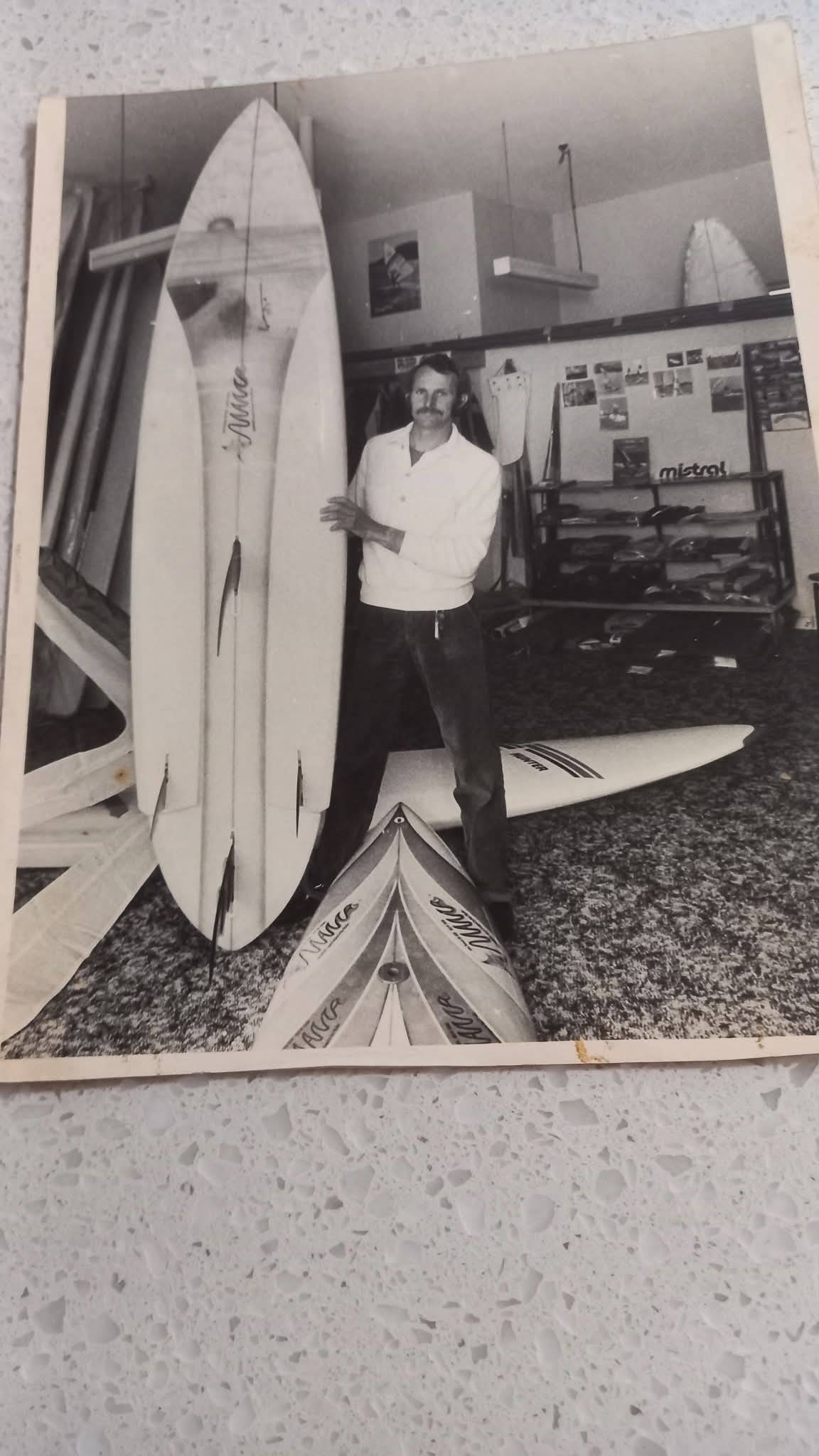
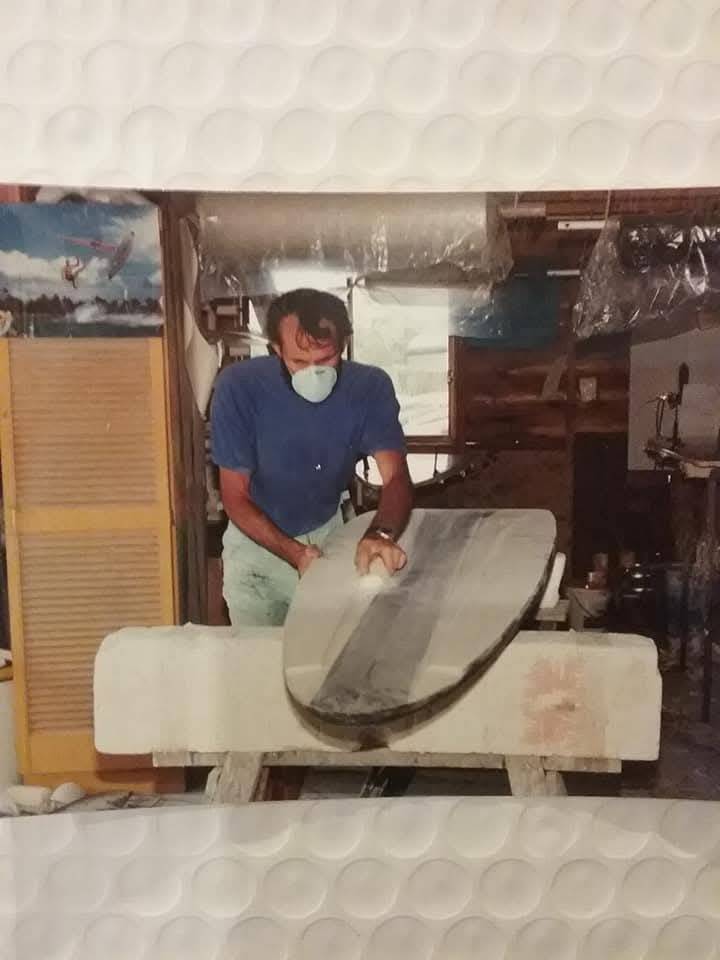
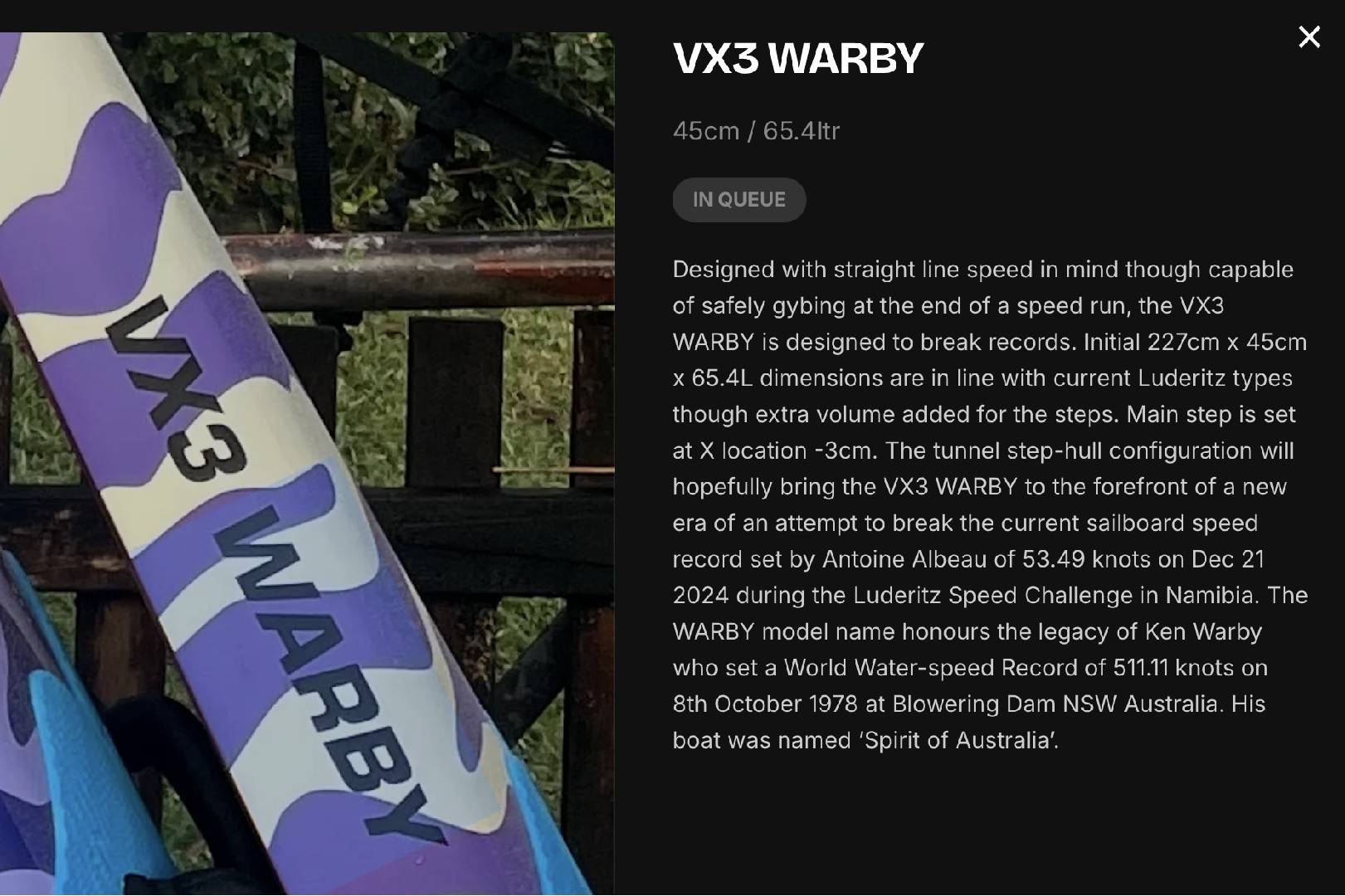
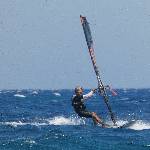
And now for something completely different... Bruce McKee boards

3 months ago
Reply
Register to post, see what you've read, and subscribe to topics.
windsurftom
windsurftom
NSW
410 posts
NSW, 410 posts
21 Jul 2026 7:40am
Imax1
Imax1
QLD
4993 posts
QLD, 4993 posts
21 Jul 2026 7:30pm
Interesting……..
Id love a go.
Gestalt
Gestalt
QLD
15064 posts
QLD, 15064 posts
21 Jul 2026 8:42pm
Imax1 said..
Interesting……..
Id love a go.


There are certainly lots of creative and excellent shapers in Australia

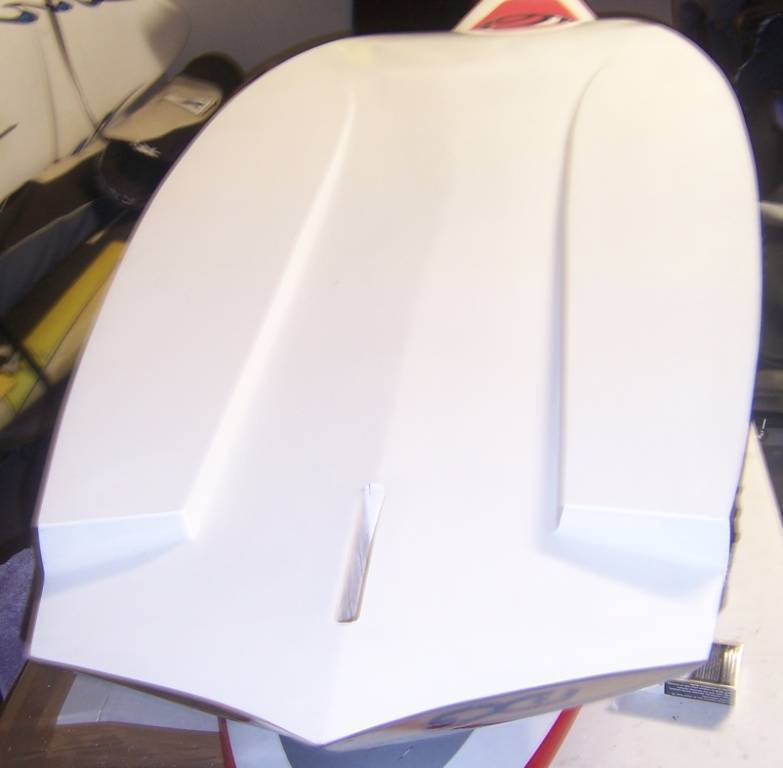
Peter Nitschke has experimented with channel step boards since the 80's. I've sailed a few of them and owned a couple for several years from formula down to speed. You may find them used in Qld . Slightly different to Bruce's

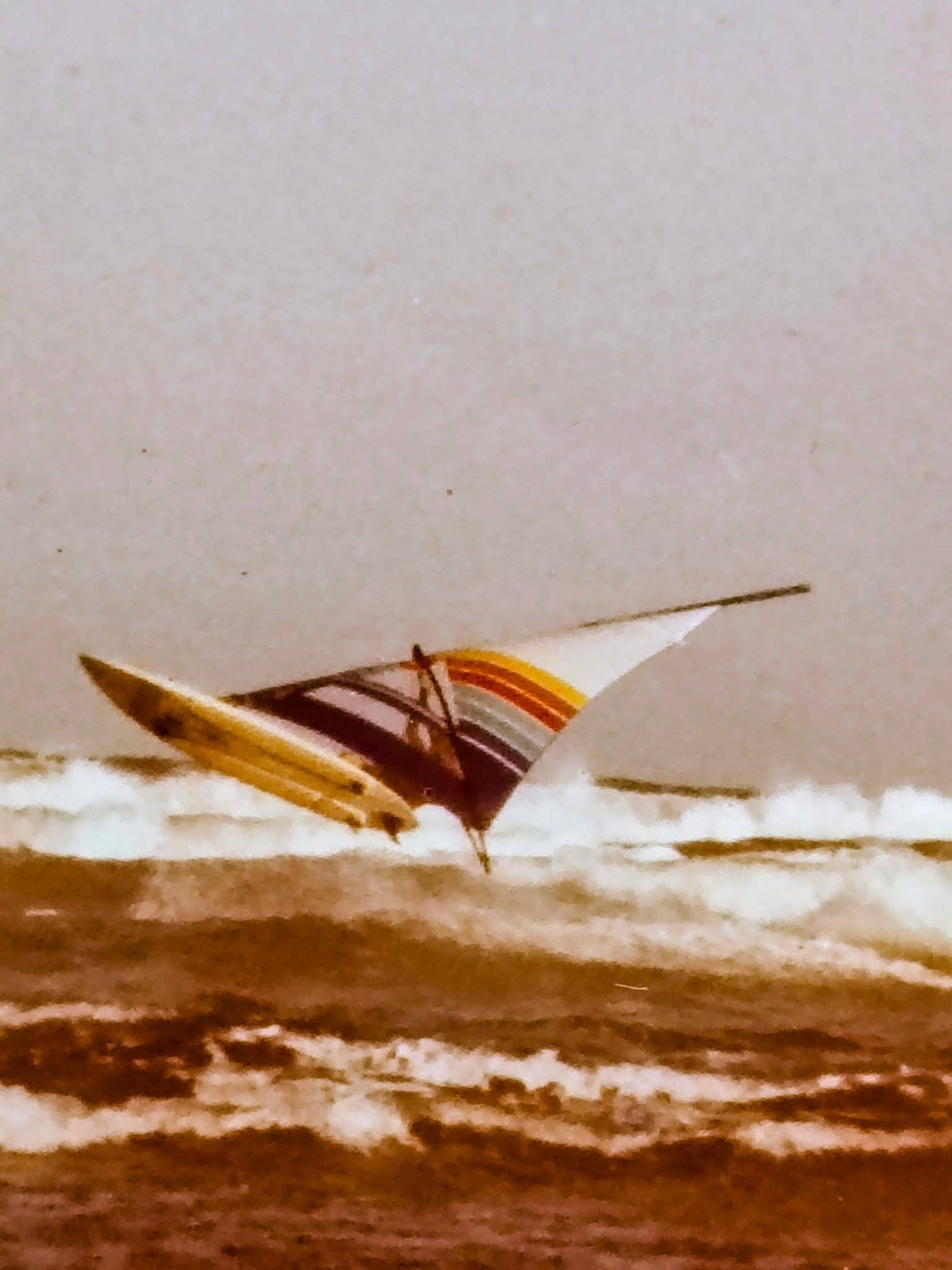
I tested the board in the 2nd last photo and owned the board in the last photo.. Peter also built me a super short slalom board around 220x70 with channel step that I asked him to do.


Gestalt
Gestalt
QLD
15064 posts
QLD, 15064 posts
23 Jul 2026 10:33am
Peter on his channel step board at caloundra bar. Old school…..😎 no epoxy, no laminates, no eps, hand shaped, weighed probably 5-6kg and hours of fun…


MobZ
MobZ
NSW
597 posts
NSW, 597 posts
23 Jul 2026 8:28pm
Super photo. Great to know this stuff was done before. I wonder why the design didn't keep going?
Gestalt
Gestalt
QLD
15064 posts
QLD, 15064 posts
24 Jul 2026 7:20am
As humans we tend to ostracise things that are different.
MobZ
MobZ
NSW
597 posts
NSW, 597 posts
25 Jul 2026 8:10am
Ostracism was created to stop people becoming tyrants? Maybe this board style has always been a tyrant.
John340
John340
QLD
3457 posts
QLD, 3457 posts
25 Jul 2026 12:52pm
Gestalt said..
As humans we tend to ostracise things that are different.


Or the innovation did not prove to be an advantage in competition
kato
kato
VIC
3542 posts
VIC, 3542 posts
25 Jul 2026 5:06pm
John340 said..

Gestalt said..
As humans we tend to ostracise things that are different.


Or the innovation did not prove to be an advantage in competition


Yep. And that was my experience with step hulls and they didn’t turn particularly well either. The one I have is fun to run for something different but it’s not faster or smoother than my current boards. Well done for having a crack at revisiting an old idea
OmarShamgar
OmarShamgar
NSW
115 posts
NSW, 115 posts
26 Jul 2026 12:40am
Ludwig Mies van der Rohe design philosophy... "Less is more".
MobZ
MobZ
NSW
597 posts
NSW, 597 posts
26 Jul 2026 12:45am
There should be info on the boards here.
I’d not made a website before but got a little possessed and popped this out.
jimswindsurfing.com/pages/mckee-project
MobZ
MobZ
NSW
597 posts
NSW, 597 posts
26 Jul 2026 7:42am
Click on boards at the bottom and info should come up.
If there are quirks in there other than Jim's head or other things I should put and you'd like to let me know please send a message.


Gestalt
Gestalt
QLD
15064 posts
QLD, 15064 posts
26 Jul 2026 9:09pm
Speaking specifically about peters boards.. Not everything is built for competition. Some things are an exploration of alternative ideas.. testing the limits..steps forward come from trialling new ideas.. but do not assume that elements of peters channel step board didn’t make their way into commercial boards.

for me personally i think the idea works well. Especially on wider bigger volume boards.. i wasn’t the biggest fan on smaller speed boards but others will disagree. i’ve not had any issues turning the boards i owned and found the accentuated v on them made them very smooth in chop..the step also has a similar effect as cutouts in that the reduced planning area effects lift so when fully lit the boards sits well in the water.

the 2 downsides for me were the boards are slower to plane and if the v is not done properly the fin can spinout. Bruces boards have s much longer area behind the step so probably are less prone to fin cavitation.
MobZ
MobZ
NSW
597 posts
NSW, 597 posts
27 Jul 2026 9:59pm
Other than my head with these aliens landing, no spinouts yet. I usually get heaps of spinout at Jimmys in nor easters. See how these boards go with it come summer. I've been sailing them in clean west wind so far, onshore wind. Nor easters are offshore, patchy.
jn1
jn1
SA
2881 posts
jn1 jn1
SA, 2881 posts
30 Jul 2026 8:33pm
I really enjoyed watching your video Tom. Good music. Budgie looks like a wicked spot. And good history lesson. I bet they truck up wind.
Flex2
Flex2
WA
378 posts
WA, 378 posts
23 Sep 2026 8:48am
Just got my hands on a couple of boards via Mobz at Jim's windsurfing. We're not getting much wind here in WA at present but this a video on first few runs on the Morph board. Will do further video once we get some wind and hopefully try the Warby.

sboardcrazy
sboardcrazy
NSW
8391 posts
NSW, 8391 posts
23 Sep 2026 4:54pm
Flex2 said..
Just got my hands on a couple of boards via Mobz at Jim's windsurfing. We're not getting much wind here in WA at present but this a video on first few runs on the Morph board. Will do further video once we get some wind and hopefully try the Warby.


Interesting test..Keen to see more.
Chris 249
Chris 249
NSW
3617 posts
NSW, 3617 posts
23 Sep 2026 7:29pm
The shape of most boards changed dramatically with wide style boards, which use the simple physical fact that a short and wide planing surface is far more efficient at planing speed.

The idea that the gap between the two “planing” surfaces won’t get in contact with the water seems to be very dubious in any chop.

These boards goes away from that. The style, incidentally, was tried about 1981.
jn1
jn1
SA
2881 posts
jn1 jn1
SA, 2881 posts
23 Sep 2026 7:34pm
Excellent video. Very interesting.
Tardy
Tardy
QLD
5380 posts
QLD, 5380 posts
24 Sep 2026 7:17am
looking forward to the next test vid .👍I can kinda see how it works from my sailing days ,where the catamaran hauls where generally faster as there was no big platform hitting the water .very interesting 👍
jn1
jn1
SA
2881 posts
jn1 jn1
SA, 2881 posts
24 Sep 2026 9:11am
Regarding fin cavitation in the video. To me, that would be expected for this design, if I understand it correctly. The back of the board is designed to be out of the water right ?
decrepit
decrepit
WA
12925 posts
WA, 12925 posts
24 Sep 2026 7:59am
I don't think in this vid they were going fast enough to get up on the super cavitating foil, but that turbulence looks more like ventilation to me, there's lots of air bubbles, below water level
powersloshin
powersloshin
NSW
1868 posts
NSW, 1868 posts
24 Sep 2026 6:03pm
I don't know the purpose of these boards, probably just to play around, but more than an evolution they seem a curiosity. They will never perform like a modern board
sick_em_rex
sick_em_rex
NSW
1603 posts
NSW, 1603 posts
24 Sep 2026 7:58pm
Not sure how you can say that without ever trying them. Maybe do some research on the idea before you give out your opinuion. And why do you think it is not a modern board? They were made literally this year using advanced construction processes. It wasn't some old board/s pulled out of moth balls. Bruce designed one of the biggest selling Australia funboards of the 80's, that being the Bombora Capricorn.I think he knows what he is doing. I actually think you owe the guy an apology with your comment. If people didn't experiment with different designs then we would all still be riding Windsurfers.
jn1
jn1
SA
2881 posts
jn1 jn1
SA, 2881 posts
24 Sep 2026 8:16pm
decrepit said..
I don't think in this vid they were going fast enough to get up on the super cavitating foil, but that turbulence looks more like ventilation to me, there's lots of air bubbles, below water level

I think I've described the wrong effect. When you get a knife, and slash it quickly through the top of the water - that effect. Like there is a pressure difference between the surface air and the water, and the air gets sucked along the trailing edge of the fin - I think ?. I'm not a Mechanical Engineer.
powersloshin
powersloshin
NSW
1868 posts
NSW, 1868 posts
25 Sep 2026 7:17am
one way to settle it would be to have a race. two good sailors to ride one of these boards and a traditional one, then swap boards and repeat. Maybe the guys in WA could organize that
mathew
mathew
QLD
2204 posts
QLD, 2204 posts
25 Sep 2026 12:00pm
jn1 said..
I think I've described the wrong effect. When you get a knife, and slash it quickly through the top of the water - that effect. Like there is a pressure difference between the surface air and the water, and the air gets sucked along the trailing edge of the fin - I think ?. I'm not a Mechanical Engineer.


Dragging air into a water cavity, is called super-ventilation.

The easiest example to understand, is the super-ventilating propeller design for speed boats -> it entrains atmospheric air into the flow, so as to stabilise the boundary/interface, typically resulting in lower drag for that surface interaction.


Under some circumstances, super-ventilation can lead to a super-cavitation mode of operation. It is an interesting area of research. In both cases there is a high-drag effect at low speed, which makes them unsuitable for power-limited craft such as windsurfing .... at least at this point in time -> maybe an unconventional board shape could allow using these modes of foil operation.


decrepit
decrepit
WA
12925 posts
WA, 12925 posts
25 Sep 2026 10:53am
powersloshin said..
I don't know the purpose of these boards, probably just to play around, but more than an evolution they seem a curiosity. They will never perform like a modern board


It takes angle of attack, out of the sailors hands and sets automatically, the angle between the end of the front hulls and the rear planning surface.
I assume they are meant basically as speed boards. I don't think they will gybe very well.

Ant seemed very keen to try them out, after his first session, in not ideal conditions.

My personal feeling, without riding one, is that they won't be faster in the hands of a top seed sailor, (like Chris Lockwood,) but a less experienced sailor could well go faster, as the complexities of getting optimum angle of attack is no longer there.

Chris 249
Chris 249
NSW
3617 posts
NSW, 3617 posts
26 Sep 2026 11:32am


sick_em_rex said..
Not sure how you can say that without ever trying them. Maybe do some research on the idea before you give out your opinuion. And why do you think it is not a modern board? They were made literally this year using advanced construction processes. It wasn't some old board/s pulled out of moth balls. Bruce designed one of the biggest selling Australia funboards of the 80's, that being the Bombora Capricorn.I think he knows what he is doing. I actually think you owe the guy an apology with your comment. If people didn't experiment with different designs then we would all still be riding Windsurfers.


If we do some research about the physics of planing hulls, then we see that they’ve been well and truly explained since before David Savitsky did his work. We then know that the physics of planing hulls show that a short, wide area of contact with the water is more efficient in terms of lift for drag, because drag drops by the square as width increases. We can see pretty easily that even if the board was only planing on the tiny patches at the back of each “sponson”, then in just about any chop the waves will be hitting the “tunnel” which will increase wetted surface friction.

If we do some research we also find out when guys like Jim Drake created the shift from skinny Capricorn-style narrow boards to the wide style boards that have dominated windsurfer design for the past few decades, it was because they had done the research and knew that for planing, a wide aspect ratio planing surface is generally far more efficient. So if we do our research on the idea, we can see very good reasons to say that it probably won’t work any better than when it was tried about 45 years ago,

Paducah
Paducah
2880 posts
2880 posts
26 Sep 2026 11:02am
Chris 249 said..
If we do some research about the physics of planing hulls, then we see that they’ve been well and truly explained since before David Savitsky did his work. We then know that the physics of planing hulls show that a short, wide area of contact with the water is more efficient in terms of lift for drag, because drag drops by the square as width increases. We can see pretty easily that even if the board was only planing on the tiny patches at the back of each “sponson”, then in just about any chop the waves will be hitting the “tunnel” which will increase wetted surface friction.

If we do some research we also find out when guys like Jim Drake created the shift from skinny Capricorn-style narrow boards to the wide style boards that have dominated windsurfer design for the past few decades, it was because they had done the research and knew that for planing, a wide aspect ratio planing surface is generally far more efficient. So if we do our research on the idea, we can see very good reasons to say that it probably won’t work any better than when it was tried about 45 years ago,


Lindsay Lord (1930s 1940s)
books.google.com/books/about/Naval_architecture_of_planing_hulls.html?id=f_wZAAAAIAAJ

His research suggested to a 2.5 to 1 length/width ratio similar to what we would eventually see in formula windsurfing boards

which led to Bob Simmons (1950s)
www.surfline.com/surf-news/bob-simmons/89860
Gestalt
Gestalt
QLD
15064 posts
QLD, 15064 posts
26 Sep 2026 3:31pm
Paducah said..


Chris 249 said..
If we do some research about the physics of planing hulls, then we see that they’ve been well and truly explained since before David Savitsky did his work. We then know that the physics of planing hulls show that a short, wide area of contact with the water is more efficient in terms of lift for drag, because drag drops by the square as width increases. We can see pretty easily that even if the board was only planing on the tiny patches at the back of each “sponson”, then in just about any chop the waves will be hitting the “tunnel” which will increase wetted surface friction.

If we do some research we also find out when guys like Jim Drake created the shift from skinny Capricorn-style narrow boards to the wide style boards that have dominated windsurfer design for the past few decades, it was because they had done the research and knew that for planing, a wide aspect ratio planing surface is generally far more efficient. So if we do our research on the idea, we can see very good reasons to say that it probably won’t work any better than when it was tried about 45 years ago,


Lindsay Lord (1930s 1940s)
books.google.com/books/about/Naval_architecture_of_planing_hulls.html?id=f_wZAAAAIAAJ

His research suggested to a 2.5 to 1 length/width ratio similar to what we would eventually see in formula windsurfing boards

which led to Bob Simmons (1950s)
www.surfline.com/surf-news/bob-simmons/89860


Lords book is a great read. There is also lots online from bob simmons research. If you are into this stuff this is ground zero. The shapers handbook is another excellent resource. Especially if your aim is to design boards based on functional choices as opposed to doing things cause they look good.
Please Register, or first...
Topics Subscribe Reply