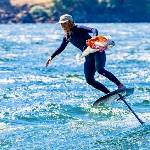
Parawing Light Wind Jibe

1 month ago
Reply
Register to post, see what you've read, and subscribe to topics.
Ingenuity
Ingenuity
45 posts
45 posts
29 Sep 2026 6:47am
Been struggling with light wing jibe wearing the Parawing. What is your go to light wind jibe? In strong wind, the basic jibe is fairly easy. In light wind it is anything but easy.

What should be the order of light wind progression?
Heineken
Handle Pass
Pulling on D-Line
Tack
Velocicraptor
Velocicraptor
910 posts
910 posts
29 Sep 2026 9:32am
My recent lightwind gybe unlock was doing a Heineken or downloop gybe with my back hand (instead of my front). The front hand starting overhand and ending underhand is the typical maneuver, but I was finding the sail would sometimes get stuck at the bottom of the turn where my wrist got twisted underhanded or if my handoff wasn’t fast enough. Maybe my wrist flexibility isn’t good? Then I started doing them with my back hand starting underhanded and ending overhanded and it’s super easy. It’s a little more awkward to start with the back hand but you skip the hand switch and it comes around cleaner for me.


I’m goofy. Going heel side (right foot forward) hold the bar underhanded in my left hand, swing it through the Heineken or downloop and end overhanded. Opposite for toeside.

Might make more sense if you try them on the beach.
kook123
kook123
160 posts
160 posts
29 Sep 2026 10:07am

ms568
ms568
3 posts
3 posts
30 Sep 2026 2:47pm
Its all about line tension. I ride my code 1725s, PT skin 7.3m and a +25L midlength. Im 110kg wet. I can get going in around 8-10 knots.

I struggled for many sessions trying to gybe big Bertha (7.3m) and even talked to 777 about it. The best method so far is to go crosswind and aim slightly upwind to increase line tension. Then bring the parawing down low horizontally into the power zone and swap your hands, use your backhand to swipe down on the outer brake or c - line as your front hand lifts the parawing up, this rotates the parawing on its axis, then let the board carve around under the parawing. Do not forget to pump continuously. If you lose line tension its over. If it stalls you can recover if you are carrying enough speed from pumping to reinflate the para as you bear crosswind on the new tack.
AnyBoard
AnyBoard
NSW
526 posts
NSW, 526 posts
30 Sep 2026 7:08pm
It depends on what people call light wind but on the very bottom end in 9 to 12 knots the only consistently successful method i have found is to gybe under the wing while its still flying to the edge of the window powered. Once you start flying inside the wing then you can pull on the top brake line while pushing the handle up and because you flew under and inside the wing the wing is now deep in the window when you spin it with the brake line. The method can be really graceful in the lightest of wind.

I sometimes still do the Heineken but so much can go wrong in super light wind and especially going from heels to toes. It feels cool when the wind is 12 to 15 but below that timing can be death and 5 minutes stuck in the water for me.
scheggia
scheggia
100 posts
100 posts
1 Oct 2026 1:19pm
Downloop for me is the most efficient way to jibe in light wind, but don’t discard tacking. At the end of the day, in light wind you just need to find a way to keep the apparent wind up. It could be a downloop, a handle pass, a tack, or whatever else someone comes up with—as long as you can keep that apparent wind going!

zebras
zebras
32 posts
32 posts
2 Oct 2026 2:59pm
I'll usually do a tack when riding switch in really light winds and pump the foil to consistently keep going right after the turn. If not riding switch the Heineken works fine for me for sizes up until 5.5.

I don't have enough hours on the 7.3 yet to comment on this one though.
robbo1111
robbo1111
NSW
658 posts
NSW, 658 posts
5 Oct 2026 7:19pm
Behind the back gybe is the easiest in my opinion, can be done in the lightest of wind
CH3MTR4IL5
CH3MTR4IL5
WA
1010 posts
WA, 1010 posts
6 Oct 2026 8:55pm
AnyBoard said..
It depends on what people call light wind but on the very bottom end in 9 to 12 knots the only consistently successful method i have found is to gybe under the wing while its still flying to the edge of the window powered. Once you start flying inside the wing then you can pull on the top brake line while pushing the handle up and because you flew under and inside the wing the wing is now deep in the window when you spin it with the brake line. The method can be really graceful in the lightest of wind.

I sometimes still do the Heineken but so much can go wrong in super light wind and especially going from heels to toes. It feels cool when the wind is 12 to 15 but below that timing can be death and 5 minutes stuck in the water for me.


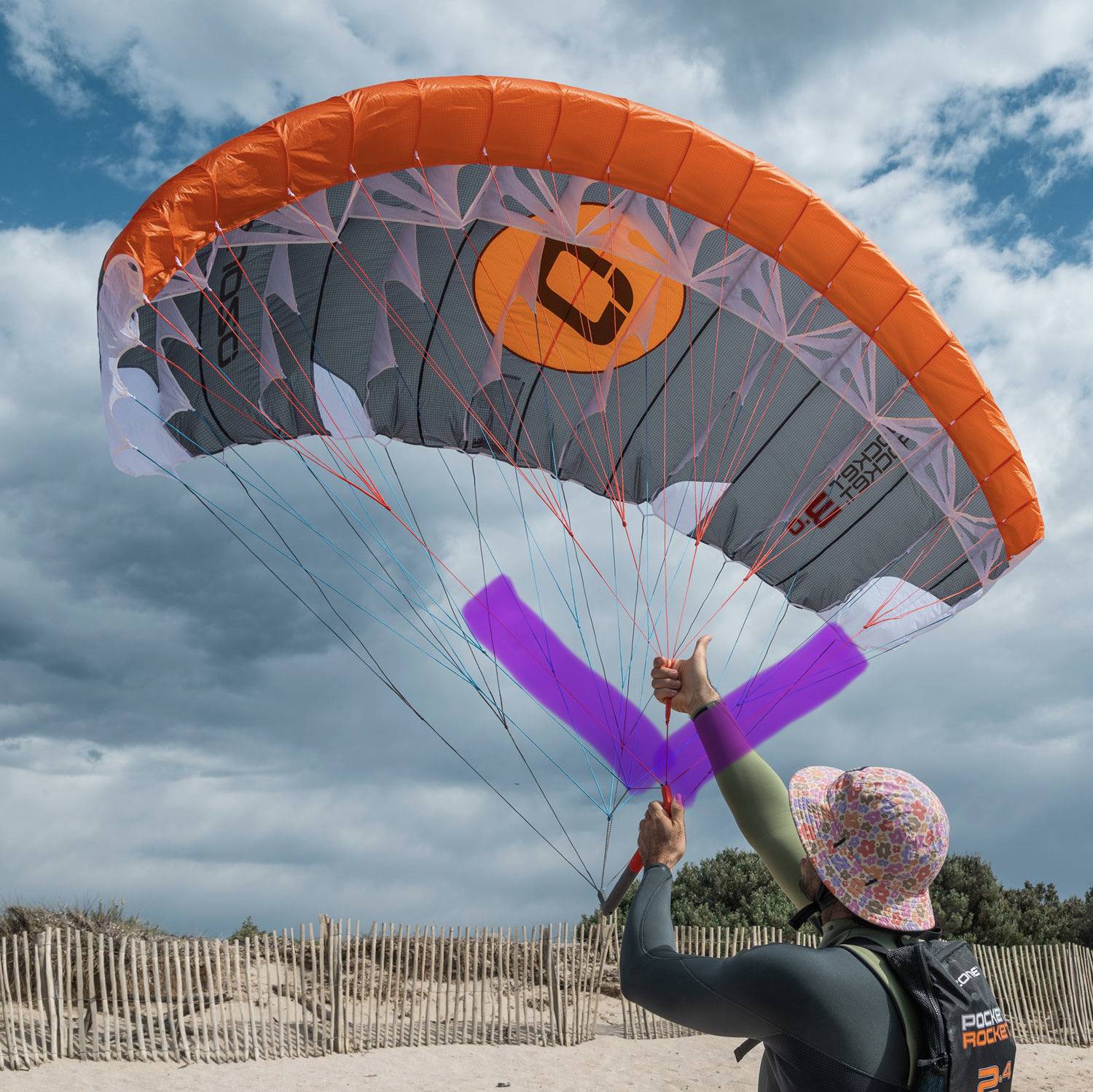
You can also just gybe and pull the A-line in the direction of travel - thats my approach with the pocket rockets, if there is enough wind to hold pressure they will pivot on axis and you're away. A benefit of this method is if its really sketchy you don't even need the wing to stay in the air, pull the A-line and gybe if there is not enough wind to keep pressure in the wing you end up in the same position as if you were doing a relaunch with the wing on your downwind side and the leading edge facing the wind and you can pump out in direction of travel to get air in the wing. If its lulled out I can get away with this in glass off conditions. Tacking works, but for me if I kook it in the transition I may drop off foil without speed which might not be recoverable, or not be able to generate apparent wind.
emmafoils
emmafoils
326 posts
326 posts
6 Oct 2026 10:45pm
CH3MTR4IL5 said..

AnyBoard said..
It depends on what people call light wind but on the very bottom end in 9 to 12 knots the only consistently successful method i have found is to gybe under the wing while its still flying to the edge of the window powered. Once you start flying inside the wing then you can pull on the top brake line while pushing the handle up and because you flew under and inside the wing the wing is now deep in the window when you spin it with the brake line. The method can be really graceful in the lightest of wind.

I sometimes still do the Heineken but so much can go wrong in super light wind and especially going from heels to toes. It feels cool when the wind is 12 to 15 but below that timing can be death and 5 minutes stuck in the water for me.


You can also just gybe and pull the A-line in the direction of travel - thats my approach with the pocket rockets, if there is enough wind to hold pressure they will pivot on axis and you're away. A benefit of this method is if its really sketchy you don't even need the wing to stay in the air, pull the A-line and gybe if there is not enough wind to keep pressure in the wing you end up in the same position as if you were doing a relaunch with the wing on your downwind side and the leading edge facing the wind and you can pump out in direction of travel to get air in the wing. If its lulled out I can get away with this in glass off conditions. Tacking works, but for me if I kook it in the transition I may drop off foil without speed which might not be recoverable, or not be able to generate apparent wind.


Can you clarify which line you pull?
BLINKY2481
BLINKY2481
NSW
415 posts
NSW, 415 posts
7 Oct 2026 6:37am
Ingenuity said..
Been struggling with light wing jibe wearing the Parawing. What is your go to light wind jibe? In strong wind, the basic jibe is fairly easy. In light wind it is anything but easy.

What should be the order of light wind progression?
Heineken
Handle Pass
Pulling on D-Line
Tack


Definitely handle pass behind the back is the easiest and most efficient in light winds,way easier than it looks,when learning let the wing hit the water so
it doesn’t hit yr back when u handle pass and make sure to be coming out of the turn before u whip it off the water,it’s the whip that gives you good power to complete the gybe

Urgull
Urgull
33 posts
33 posts
7 Oct 2026 7:31pm
kook123 said..


Holy cow... Never tried this method. Not the most aesthetically appealing but winter is arriving here -Japan-, and the local spots are getting super sharky recently so I'm gonna give it a try. Looks more achievable than Heineken or tacks.
CH3MTR4IL5
CH3MTR4IL5
WA
1010 posts
WA, 1010 posts
7 Oct 2026 7:32pm
emmafoils said..

Can you clarify which line you pull?


emmafoils
emmafoils
326 posts
326 posts
7 Oct 2026 9:32pm
CH3MTR4IL5 said..

emmafoils said..

Can you clarify which line you pull?


OK thanks. So are you pulling just enough to spin the wing and then releasing? This seems like a more natural movement than reaching around for a D line.
CH3MTR4IL5
CH3MTR4IL5
WA
1010 posts
WA, 1010 posts
7 Oct 2026 10:42pm
yep basically to get the leading edge to face the right way so the wing isnt pulling the opposite direction. you can do it quite lightly and it will pirouette on the tip, or quite aggressively and the side of the wing will collapse and then refilll, so it is quite robust in any conditions. dont know how well it works with other parawings but extremely effective on a PR2 with how the bridle setup is split and it wont stall the para like the C/D line. have a play with it, just start the gybe how you normally would and give it a pull.
FoilWays
FoilWays
195 posts
195 posts
8 Oct 2026 1:41am
I almost always ride light wind, so big wings (5m). I do a regular jibe when jibing toeside to heelside because I can reach the lines or leading edge if I need to pull it through. But on the PRV2 I found that whipping it around drawing a pronounce move forward, to guide the leading edge in the direction I want to go so it never depowers works perfectly well... and I can do it all with just one hand. Now, when going heelside to toeside, I can't reach the leading edge or lines to try and save a jibe so I almost always do a powered up heineken or behind the back pass. I like the powered up heineken, because just like on the other tack, I much prefer not letting the wing depower and flop.
Please Register, or first...
Topics Subscribe Reply