SUP Downwinding: Catch Your First Bump
Quick summary
Downwinding is point-to-point paddling with the wind behind you, catching open-ocean bumps (wind swell) to cover distance fast with less effort.
You need a dedicated downwind board (12 to 14ft, 26 to 30 inches wide), a surfboard leg rope, and at least 20 knots of sustained wind.
The how-to
After reading this, you can plan a two-car downwind shuttle, identify and sprint onto a bump, and link runs safely on an Australian downwind corridor.
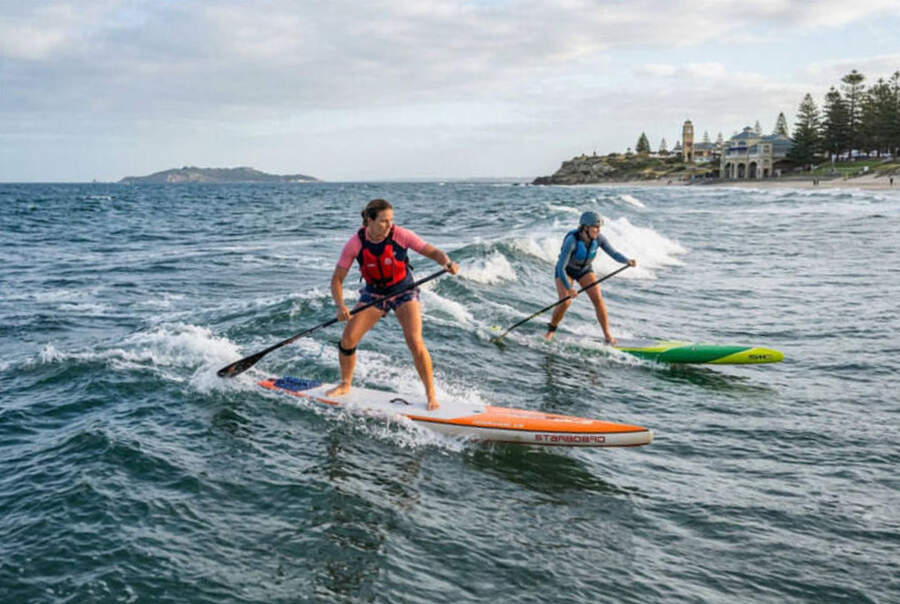
The first time you catch a bump and feel your board accelerate without paddling, you understand why experienced paddlers chase wind days instead of running from them.
Downwinding is stand up paddle at its most dynamic - reading moving water, reading momentum, and connecting energy from one piece of ocean to the next.
"Downwinders: 20 knot days aren't just for windsurfers," say the coaches at Balmoral Paddlesurf, a Sydney-based SUP operator with over a decade running downwind sessions on the NSW coast.
The Academy of Surfing Instructors (ASI) certifies downwind SUP instructors specifically for ocean locations and distances up to 10 kilometres - which tells you how different this discipline is from flatwater SUP or surf SUP.
What you need before you start
Your current board probably won't work.
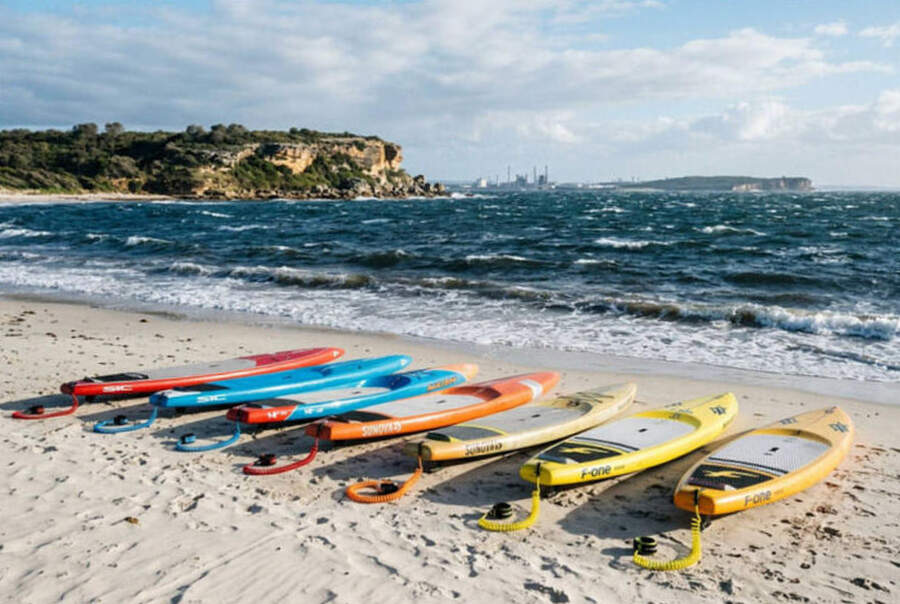
All-round and surf SUP boards are too short and wide to glide efficiently on open-ocean bumps - they feel sluggish in chop and tip in confused swell.
A downwind-specific board runs 12 to 14 feet long with a narrower profile: 28 to 30 inches wide is stable enough for most first-timers, and 26 to 28 inches suits paddlers who have some experience with moving water.
The board needs to be light and stiff - low swing weight means the tail responds when you step back, and stiffness gives you direct feedback through the feet when a bump lifts under you.
Keep the nose pronounced and slightly lifted; a flat entry digs on the downhill face of a bump and pitches you forward.
On the paddle, a shorter shaft than you would use on flatwater lets you plant quicker during sprint bursts - drop 5 to 10 centimetres from your flatwater length as a starting point.
Safety before you launch
A surfboard leg rope is non-negotiable.
In open-ocean downwinding, falling off in a gust means your board can cartwheel downwind faster than you can swim for it - the leg rope is the only thing keeping you connected.
Use a standard 4 to 6mm surfboard leash attached to the tail leash plug, not a coiled SUP leash, which adds drag in bumpy conditions.
A PFD (personal flotation device) is required under AMSA regulations when paddling in offshore or exposed waters in Australia - carry it even if conditions look settled at launch.
Tell someone your planned route and expected return time before you leave the ramp.
Never downwind alone, especially when starting out - run with at least one other paddler who can assist if you are separated from your board or become fatigued.
"Downwinding is 90% preparation and 10% glory."
Reading the water
Bumps do not look like waves.
At 20 to 25 knots, open-ocean chop creates rolling energy lines that move in the same direction as the wind but are less organised than surf swell - they appear as long, low ridges across the water's surface.
Stand upwind at your launch point before you get on the water and watch for 5 minutes - you will start to see the patterns: where bumps group, where they flatten, and roughly how fast they are travelling.
Bumps typically move at 10 to 14 knots in 20-knot winds - faster than you might expect, and this is the key insight beginners miss.
If you wait until a bump is under your feet to start paddling, you are already too late - the bump has passed you.
The sprint window begins when you can see a bump approaching from behind, roughly 10 to 15 metres back - start accelerating then, so you are already moving near bump speed when the energy reaches you.
Catching your first bump
Sprint hard for 5 to 8 paddle strokes as the bump comes under your feet - switch to short, fast cadence strokes rather than long, powerful strokes.
When you feel the board lift and accelerate, step back 30 to 40 centimetres from your normal stance to keep the nose from diving into the back of the bump ahead.
You do not need to switch to a full surf stance - a subtle step back is enough to shift weight and let the tail engage in the bump's face.
Once the board is running, ease off and glide - overpaddling at this point kills your momentum because your paddle creates drag in the water rather than drive.
Linking bumps is the real skill.
As the board slows at the end of a glide, look ahead for the next bump and start your sprint before you lose speed - carry-over momentum means you need fewer strokes to catch the next one.
What goes wrong and how to fix it
Nose diving: You are not stepping back far enough, or you are already moving too slowly when the bump arrives and the relative speed difference is too great for the board to ride.
Missing bumps completely: You are starting your sprint too late - move your trigger point further upwind so you are accelerating earlier.
Exhausted within the first kilometre: You are trying to sprint onto every bump rather than waiting for the larger, more organised sets - read the water and be selective, catching every third or fourth bump rather than every chop ripple.
Falling off repeatedly in confused chop: Your board is too short or narrow - for your first sessions, prioritise a longer, more stable platform over maximum performance.
Australian runs worth starting on
In Sydney, Kurnell to Gunnamatta Bay is a reliable 10-kilometre run in a south or south-east wind above 15 knots - exposed to long fetch with no cliffs to create rebound chop.
The Freshwater to Palm Beach corridor runs well in a north-east over 20 knots, with plenty of exit points along Pittwater's protected inside if conditions build beyond your comfort level.
In Perth, the North Mole to Swanbourne SLSC run along the Cottesloe coast is the standard introduction - roughly 6 kilometres, clearly defined endpoints, and the Fremantle Doctor delivers consistent sea-breeze bumps from mid-morning through early afternoon from November to April.
For winter in Perth, the Swan River between Point Walter and Applecross Jetty is a short, sheltered 4-kilometre run may kick up solid bumps in a 25-knot westerly storm - useful for practising technique without full ocean exposure.
Check the wind forecast before you commit to any shuttle - you need sustained wind rather than gusty squalls, and a backing or dying wind mid-run leaves you paddling upwind to a put-in with no shuttle car.
Check Seabreeze wind forecasts to time your run before you organise the shuttle.
What to work on next session
Which board width should I start on? Start at 29 to 30 inches if you are not confident in rough water - the speed difference between 30 and 26 inches is small, but the stability difference is significant.
Can I downwind on an inflatable board? Most inflatable SUPs are too short and heavy for open-ocean downwinding - an 11-foot inflatable in 25 knots of chop will exhaust you before you catch your first bump.
How strong does the wind need to be? Twenty knots is the entry point for meaningful bumps on a standard board - a dedicated sub-22-foot downwind board can work in 15 to 18 knots, but this is advanced territory and not the place to learn.
When is the best time of year in NSW? Late autumn through winter delivers the most reliable southerlies and south-easterlies.
The same systems that close the bars create the bumps - watch for the 24-hour window after offshore conditions ease.


The Pivot Turn: Spin Your SUP in One Move
Step back, sink the tail, spin on the spot