Reading the Lineup: Where to Sit, When to Go

Quick summary
The surfer closest to the peak of a breaking wave has priority - positioning relative to the peak, not the crowd, is the single biggest factor in how many waves you catch per session.
Reading sets on the horizon before paddling out tells you where the peak is breaking, how consistent it is, and where to position your first paddle.
The how-to
After reading this, you can find the peak at any break, understand who has right of way, and cut out the mistakes that cost intermediate surfers half their waves.
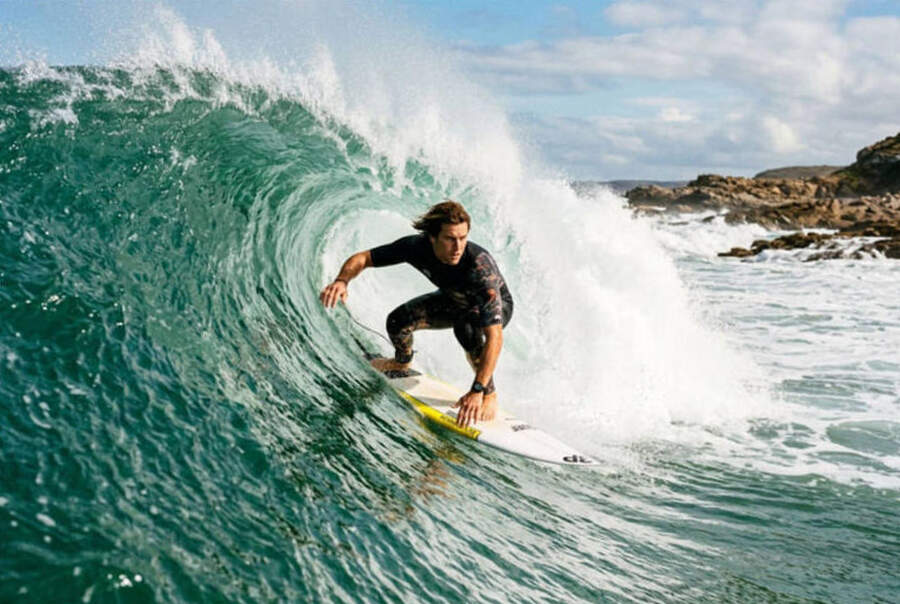
Most surfers who are not catching waves are in the wrong place - not paddling the wrong technique, not choosing the wrong board, just sitting in the wrong spot.
The lineup is where every session is decided before a wave arrives, and reading it correctly is a skill that develops faster than any physical technique.
Surfing Australia's Progression Surf Coach program identifies peak positioning as one of the first technical gaps to close in intermediate surfers - not because it is complicated, but because it is consistently skipped over.
"The surfers who catch the most waves are not the ones who paddle the hardest - they are the ones who read the sets and are already in position when the wave arrives."
That framing from the Barefoot Surf Travel coaching tutorials - a resource used by accredited Australian surf instructors - reflects the shift that separates intermediate surfers from those who plateau.
What a lineup actually is
The lineup is the zone where surfers wait for waves, positioned out beyond the breaking zone in water deep enough that sets are not yet breaking.
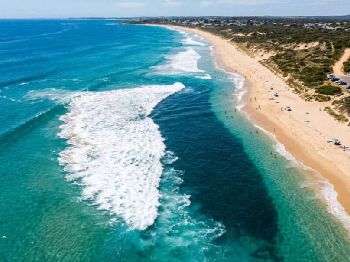
At a beach break, the lineup shifts constantly as sandbars move - the peak can be north of where it was on your last session at the same beach.
At a point break, the peak is predictable - it breaks at the same section of rock or headland every time, which is why point breaks reward local knowledge so consistently.
A reef break has a fixed peak too, but depth changes dramatically over short distances - sitting two metres too far inside on a big day puts you directly in the impact zone.
How to find the peak
Spend five minutes watching before paddling out. Sit on the beach and observe at least two full sets - this shows you where the wave first stands up, where it peaks, and which direction it favours.
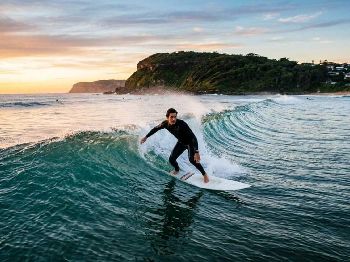
The peak is the highest point of the wave just before it breaks - the first place the lip pitches over.
Waves generally break left or right from the peak, sometimes both - a closeout breaks along its full length simultaneously and is not worth paddling for regardless of how deep you are positioned.
Look for a reference point on shore - a tree, a car park, a lifeguard tower - and use it to mark where the peak is breaking relative to fixed points on land.
Once you are in the water, experienced surfers in the lineup are your next indicator - not to crowd their space, but to note where they are positioned and use it as a reference for your own placement.
Surfing Australia's Foundation Surf Coach guidelines identify using experienced surfers as positioning anchors as one of the most reliable shortcuts for intermediates learning to read a new break.
Priority: who gets the wave
The surfer closest to the peak has priority. That is the core rule, and it governs every interaction in the lineup from the mellowest beach break to the heaviest point.
Closest to the peak means positioned deepest at the take-off point - not closest to shore, not furthest from shore, but the person who will meet the breaking wave first.
If two surfers are paddling for the same wave and one is clearly deeper - further into the unbroken section - that surfer has priority and the other must pull back.
Getting to your feet first does not override depth priority - if someone is deeper and paddling, you are dropping in on them even if you stand up first.
Snaking and why it kills sessions
Snaking is back-paddling around a surfer to steal their priority position. It is the fastest way to generate conflict in a lineup, and in crowded Australian surf - Snapper Rocks on a weekend, Manly on a summer swell - it draws immediate and justified reaction.
The correct alternative is accepting that you did not position early enough and waiting for the next wave instead.
This sounds like a loss, but it is a gain - surfers who accept priority gracefully and reset for the next set catch more waves per session than those who contest every one.
The exception is a wave that offers both a left and a right from the peak - two surfers can take off in opposite directions simultaneously, which is a legitimate split-peak takeoff, not a drop-in.
Beach break positioning: the shifting peak
Australian east coast beach breaks are notorious for moving peaks. Kirra's sand shifts after every major swell, Manly's banks change week to week, and even relatively stable breaks like Maroubra can change character after a run of sustained south swells.
At a beach break, check the peak position from shore on every session - never assume last week's peak is today's peak.
Watch for sets standing up slightly further left or right than the main crowd - a secondary peak away from the pack often offers consistently better waves and virtually no wait time.
Position yourself two to three metres inside the average takeoff point initially, then adjust based on where the first wave of the first set actually breaks.
Point break positioning: depth and the paddle back
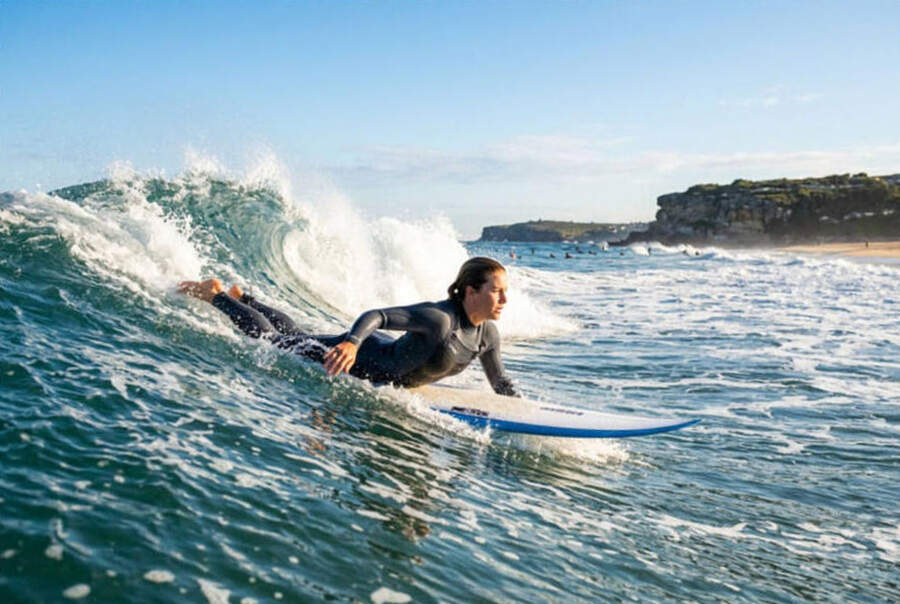
Point breaks reward patience and energy management. After each ride you paddle back to the peak against the current - at a right-hand point like Noosa Main Beach or Angourie, this is a long paddle against a northward drift that runs along the headland.
Position yourself at the peak rather than the shoulder - at Noosa Point, sitting at the shoulder means watching better-positioned surfers take off in front of you for most of the session.
Use the rip or channel to paddle out efficiently - the current that peels the wave away from the point also creates a channel of deeper, calmer water alongside the break.
At Angourie, the channel runs along the northern edge of the reef - paddling out through this channel rather than through the break itself saves meaningful energy over a two-hour session.
Common positioning mistakes
Too far outside: sitting beyond the normal take-off zone means the waves are not breaking near you - you will watch sets pass underneath and spend the session paddling ineffectively.
Too far on the shoulder: the most common mistake for intermediates - the shoulder is where the wave is already breaking and easier to stand up on, but you are taking a much shorter ride from a disadvantaged position.
Chasing the crowd: sitting in the densest part of the lineup gives you the lowest priority-to-wave ratio, even if the most waves are breaking there.
Not watching sets before paddling: paddling out without beach observation means you are guessing the peak location, which adds 10 to 15 minutes of adjustment to every session.
Paddling for closeouts: committing to a wave before reading its full shape wastes energy - wait for waves that show a clean peak and a defined direction before paddling.
Reading the rip to get out
Rips are not just hazards - they are escalators. A rip current running along or away from the break pulls water through the lineup and creates a channel of reduced swell energy that is the easiest path to the peak.
At most beach breaks, rips form alongside the banks where the water from broken waves drains back out through deeper channels.
Paddle diagonally across the face of the break and into the channel rather than straight out through the whitewater - in a 1.5 metre swell this difference in energy expenditure is significant across a full session.
Surf Life Saving Australia identifies rips as one of the most common hazards at Australian beaches - as a surfer, understanding where the rip runs converts it from a hazard into a tool.
Questions to take into your next session
What changes about your positioning on a bigger swell? The peak moves further out as swell size increases - sit deeper than you think you need to on big days, and let the wave show you where it is actually breaking before committing.
How do you handle a point break with strong longshore drift? At breaks like Angourie or Crescent Head, angle your paddle-back slightly into the current to avoid being carried down the point and having to complete a longer route back to the peak.
What is the right call when you have been at the peak for 10 minutes without catching a wave? Move - either you are in the wrong spot, the peak has shifted, or the set interval is longer than it looks from shore.
What makes a good warm-up wave before committing to the main peak? A smaller, cleaner wave on the shoulder of the break - it gets your body moving, confirms the swell direction, and gives you a first read on what the better sets are doing.
Check the current swell direction, period, and height for your local break on the Seabreeze wind and swell forecast before your next session.