The Edge Change: Carve Without Catching

Quick summary
An edge change is a weight transfer through a flat board, not a flick of the hips.
Your board only bites when the downhill edge is loaded, which makes the flat moment the part that actually catches people out.
Stay tall through the flat, keep your eyes up the lake, and load the new edge only once you are already pointed where you want to go.
The how-to
Set your speed and rope, soften the edge you are on, pass through flat with square hips, load the new edge progressively, then ride the new line out.
Most riders blame the board when they catch an edge.
They talk about fin size, base bevel or a worn rail, and they go shopping instead of going riding.
Catching an edge is almost always a timing problem, and the timing problem lives in one specific second of the turn.
Your board grips when the downhill edge is loaded with your weight and the water can push back against it.
Roll that edge out of the water and the board goes quiet, drifts and gives you nothing to push against.
Reload it before your body has finished turning and the rail bites sideways, which is the sudden grab and slam you already know.
The dangerous moment is not the edge, it is the flat. Stay tall through the flat, and only load the new edge after you have already pointed where you want to go.
Phase one: prep
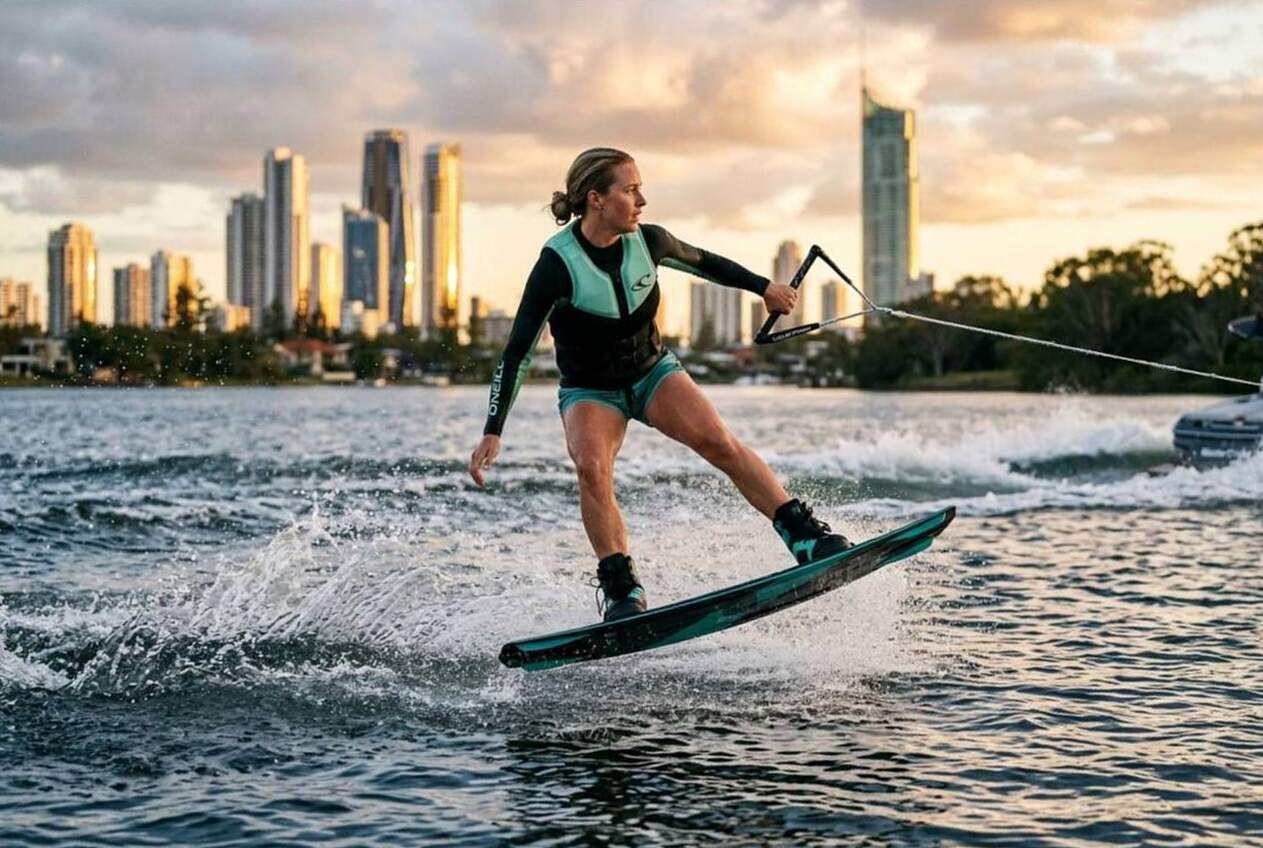
Pick water with room, not the middle of a busy Sunday session on the Gold Coast Broadwater.
Ask your driver for a steady speed inside the common recreational range for progressing riders, roughly 30 to 36 km/h or 16 to 19 knots.
Treat that as a range, not a rule, because your weight, board size and rope length all shift the sweet spot.
Too slow is the sneakiest cause of caught edges, since a slow board sinks its tail and the rail grabs at the first hint of load.
Shorten the rope a little if you are working close to the wake, and lengthen it if you want more room to arc between the wakes.
Look up the lake at where you want the board to finish, not down at your bindings.
Phase two: initiation
Start by softening the edge you are already on rather than adding anything new.
On heelside, let your toes drift down slightly and let your knees flex a touch more, so the rail eases out of the water.
Keep the handle low and in tight at your front hip, because a handle that drifts out pulls your shoulders open and rushes everything.
You should feel the pull in the rope reduce as the board stops fighting the water.
That reduction is the signal, and it is the whole reason edge changes feel calm when they are done properly.
Phase three: commitment
Now square your hips to the board and stand tall over your feet.
Your hips lead the change and your shoulders follow, never the other way around.
The board should run flat and quiet for a genuine beat, gliding rather than turning.
Most riders try to skip this beat because the flat feels unstable, so they flick their feet and instantly bury the new rail.
Sit back here and you load the tail, the board hooks, and you get pulled onto your back shoulder.
Ride the flat with your chest up and your weight centred, and there is nothing available to catch.
Phase four: execution
Point the board where you want to go, then start rolling weight onto the new edge.
Going to toeside, that means pressing gradually through your toes while your front shoulder stays tall and slightly open to the boat.
Add pressure in stages, so the edge loads from soft to firm across a second or two rather than all at once.
Done right, it feels like a quiet float followed by the new edge hooking up smoothly underneath you.
Done wrong, it feels like a grab, and the board stops before your body does.
Phase five: recovery
Hold the new edge and let it carve you out to the line you chose during prep.
Keep looking where you are going, keep the handle at your hip, and let the tension in the rope build naturally.
Only when you are settled on the new line should you think about changing back.
The drill: ride slow figure eights between the wakes, never touching either wake, with three seconds spent on each edge.
The progression: once the flat feels boring, shorten the time on each edge and add a bit more load.
The test: if you can change edges with your eyes fixed on the horizon, your hips are doing the work.
Common mistakes
Leaning back loads your tail, which is the fastest way to make a rail bite sideways.
Looking down drops your chest and rounds your shoulders, so the board turns before your body is ready.
Rushing the flick skips the flat entirely and slams the new edge in at full pressure.
Too much fin makes the board stubborn, so a rider who fights it tends to overcorrect and catch.
Changing at the wake stacks a moving hump under the least stable part of the turn.
Change edges in the flat water between the wakes until the movement is automatic.
Safety and the boat
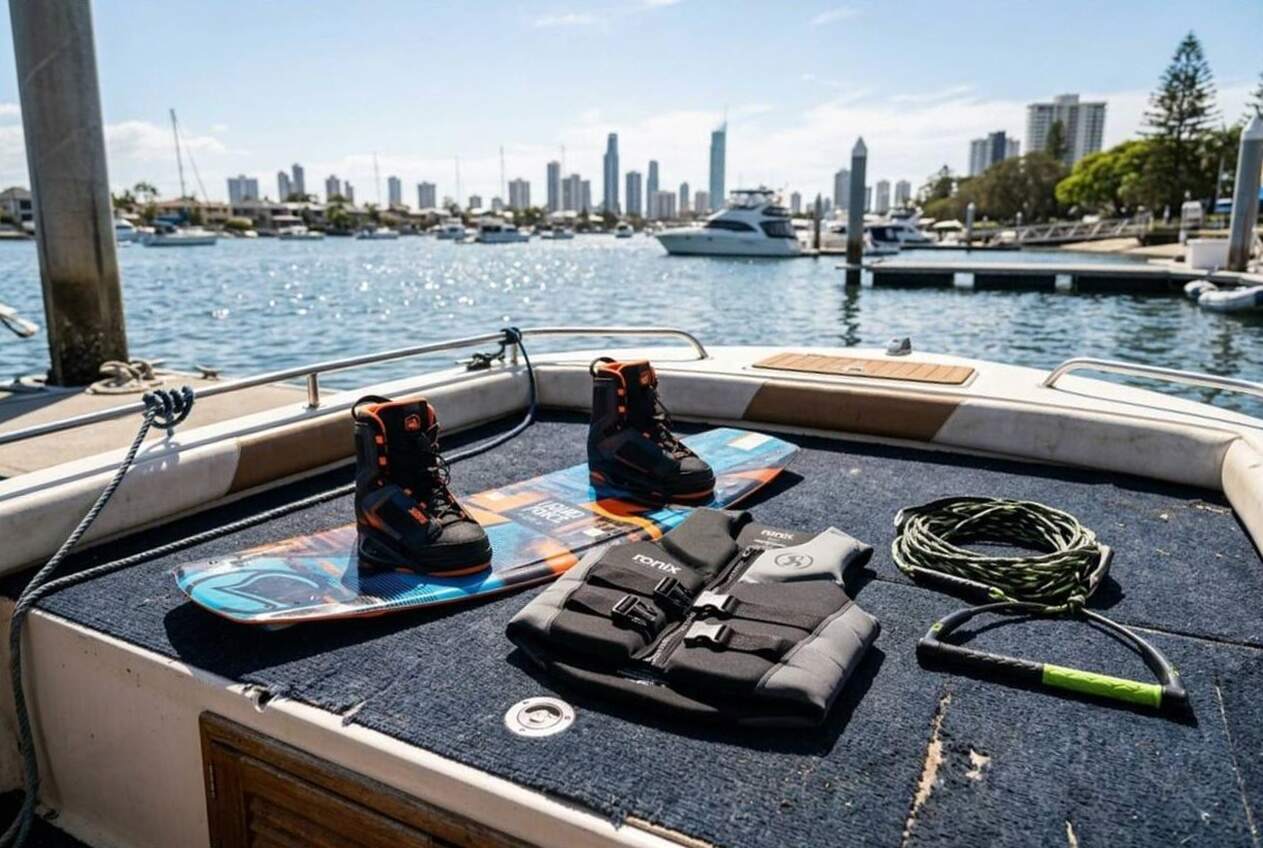
Wear a lifejacket that fits, and make sure the driver has the kill switch lanyard attached before the rope goes tight.
Run a proper observer so the driver can watch the water while someone else watches you.
Everyone in the boat should be seated facing the direction of travel while you are being towed.
The skipper carries responsibility for the safety of the vessel and everyone aboard, so brief your crew before you launch.
Keep clear of other craft, swimmers, moorings and channel markers on the Tweed and the Brisbane River, and stay out of the way of anything bigger than you.
The Australian Waterski and Wakeboard Federation is the national body if you want structured coaching or club events.
Pick your window
Glassy water forgives a clumsy edge change, and chop punishes it, so check conditions before you commit to a session.
Early mornings on the lakes and rivers around Brisbane usually offer the flattest water of the day.
Have a look at the Brisbane wind forecast the night before and plan around the lightest few hours.
Freeze any clip of his transitions and you will see the same thing every time, which is a tall, patient body passing through flat before anything loads.
Share your own footage and get feedback from riders on your local water in the Seabreeze forums , and check Seabreeze for conditions before every session.
Why do I only catch going to toeside?
Your toeside stance is usually more closed, so your shoulders arrive after the board and load the rail sideways.
Should I change my fins?
Try smaller fins only after your timing is clean, because less fin exposes bad timing rather than fixing it.
Is more speed safer?
Within the usual 30 to 36 km/h range, a slightly faster boat keeps the board planing and reduces grabbing.
How long until it feels natural?
Most riders need a few sessions of dedicated figure eights before the flat moment stops feeling scary.