|
6:05 PM Fri 16 Jan 2009 GMT
Mark Chisnell Comments on Leg 4 of the Volvo Ocen Race, Singapore to Qingdao. For the technical stuff take a look at the Volvo websitebut to get his overall picture of what they are in for, read on . . .
It was my first taxi from the hotel to the Race Village, not long after arriving in Singapore. Noticing the logo on my uniform shirt, the driver was very anxious to tell me that this was a bad time of year to sail to China . . . very windy, he said, shaking his head, solemnly.
And that pretty much sums it up - in terms of the climate there isn't a great deal more to say about Leg 4. Like Leg 3, this is another west to east leg, sailing in just one of the earth's climate zones. These lie in distinct bands, horizontally and looping the globe, running out from the Equator to the Poles in a mirror image.
And again, as with Leg 3, this leg will be contested in the band of the north-east monsoon. This is the north-easterly breeze created by the clockwise flow around the huge high pressure that builds up over central Asia during the winter.
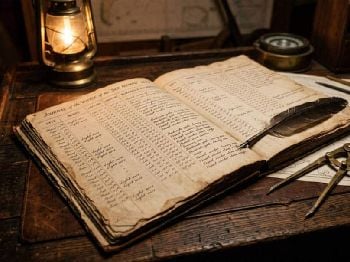
A quick look at Matthew Fontaine Maury's progeny, the Pilot Chart for the Indian Ocean in January, shows us that the north-east monsoon blows pretty much directly from Qingdao down the South China Sea, and across to Malaysia and Singapore - so the fleet will be going upwind the whole way. And with the mean daily maximum temperature in Qingdao around five degrees centigrade.
Tortoise and hare . . . slowly might just do it
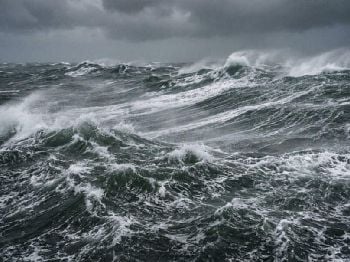
Clearly, going upwind for a couple of weeks in anything up to 40 knots is going to be a serious test of endurance. But it gets worse, once they get north of Taiwan and up into the East China and then the Yellow Sea, the water temperature is going to drop quickly - less than 5 degrees centigrade by the time they reach Qingdao.
And with night-time air temperatures regularly dropping below zero, and the apparent wind much higher because they are going upwind, it could be much colder than the Southern Ocean. There's a real risk of ice forming on the deck and rigging, freezing winches and blocks solid.
Then there's the darkness - this leg will be racing into winter, unlike the old Southern Ocean Legs which had the benefit of long summer daylight hours. By the end of Leg 4 there will be 14 hours of darkness in every 24 - when you can't see the waves, the wind on the water, and sometimes even your hand in front of your face. Cold, dark, wet, windy and upwind - my feeling is that anyone who maintains the capacity to race at 100% efficiency all the way to the finish line will be on the podium.
If that turns out to be the case, the key skill for this leg might well be good old fashioned seamanship - choking back the competitive instincts and nursing the boat through the rough stuff. At least, that's what my taxi driver seemed to be saying - have you ever tried disagreeing with a taxi driver . . ?
Read the full-on Mark Chisnell during the leg at, www.volvooceanrace.org
by Mark Chisnell
|
|