Shore power systems

> 10 years ago
Reply
Register to post, see what you've read, and subscribe to topics.
Pekeri
Pekeri
VIC
81 posts
VIC, 81 posts
17 Jul 2015 11:28pm
The excellent responses I have received are way beyond what I expected.

Brilliant, really made my day to get so many positive contributions to my little project.

Will post completed project.

Guitz, I look forward to catching up.


andy59
andy59
QLD
1156 posts
QLD, 1156 posts
18 Jul 2015 6:46am
Pekeri said...
The excellent responses I have received are way beyond what I expected.

Brilliant, really made my day to get so many positive contributions to my little project.

Will post completed project.

Guitz, I look forward to catching up.


Totally agree thanks everyone for your input
Crusoe
Crusoe
QLD
1197 posts
QLD, 1197 posts
18 Jul 2015 9:33am
Hello Pekeri, I have 240Vac on my boat but it is 100% independent of Shore Power. I only use shore power (which goes through an ELCB device) to charge my batteries and then use an onboard 2kw inverter. In my situation, if I needed to run a heater, then I would just run a lead from the shore power. Connecting your onboard 240Vac system to shore power has to be done properly by a qualified person for the safety of you (friends and family) as well as your boat.

A proper set up would have a built in reverse polarity indication/safety device. When ever I plug in to a Marina, I check the shore power to make sure it had the correct polarity even though I was only connecting in double Insulated devices (Battery Chargers). I do not ever want the shore earthing system to be connected to my boat earthing system.

Yeah, I'm also a 240Vac electrician and have a healthy fear of the electricity and treat it with the utmost respect. There are things you could probably get away with in a domestic installation that could kill you on a boat. Sorry to sound so down about your intended project. Take care.
Ramona
Ramona
NSW
7756 posts
NSW, 7756 posts
18 Jul 2015 9:46am
SandS said..

I have heard people say that being close to Aluminum boats in Marina.s can be a bit dodgy. Any one have knowledge on that situation ?

I have seen some Alu boats hanging anodes of some description over the side ,dangling in the water . Not sure on the reasoning ,is it just to get the anode well away from the alu hull ?


It's dodgy for the aluminium boat. Stray 12 volts will effect aluminium vessels and the fastenings on timber vessels. In a marina you have all those vessels with solar panels making power in the daylight, lets hope they are carefully wired.
cisco
cisco
QLD
12365 posts
QLD, 12365 posts
18 Jul 2015 12:53pm
There are just soooo many reasons to stay away from marinas.
Trek
Trek
NSW
1213 posts
NSW, 1213 posts
19 Jul 2015 7:31pm
My 2 cents worth ...... I worry about safety of 240VAC mains on boats, near saltwater ....

If the marina 240V power outlets are up to standard they should have a 240V:240V isolation transformer on each, and an earth leakage cutout on each which improves safety but unless you actually see it and know its tested there's an unknown risk there. ie. Electricians in industry working on a power system personally switch the main switch off and tag it rather than believe someone who said it was off!

My understanding of the galvanic problem is it happens when a current flows through dissimilar metals or ionic conductors touching each other. Salt water/ wet timer / anything that conducts. Shore power is carried into the load (boat) through the active wire and back out via the neutral. Its the passing through that allows work to be done (Charging batteries etc). That power in the active wire also wants to go to ground but we don't want to let it. It should only go back out by the neutral wire. If you touch active and are touching the ground it will go through you and be very unpleasant. If some tiny or otherwise amount of it goes to ground via a boat and its fittings or hull to the sea then all the dissimilar touching parts of the path will have some kind of destructive reaction happen. AC is less prone to do that because its "polarity" reverses at 50 times per second (50Hz) than DC so it "fixes" a bit of its electrolysis 50 times a second too.

Finally to end my waffle!! I suggest take care of safety first.

In lots of places you can buy a 240VAC to 240VAC isolation transformer. Consider getting one and plug you boat circuits into it and then it into the shore power. Then the 240V essentially comes out of your transformer and back into it with nothing to do with the mains any more. The sea and other grounds are irrelevant. Your boat is then "galvanically isolated" from the marina. I think there cant be problems caused by leakage and electrolysis, and safety is much better.
Pekeri
Pekeri
VIC
81 posts
VIC, 81 posts
19 Jul 2015 9:13pm
Summary of information and advice:

Pekeri Need Shore power system on my boat.

andy59
ELCB power board ,
CTEK 300 charger
cisco
MAINS VOLTAGE TESTER - POLARITY CHECK
Toph
Plug/unplug as required, as opposed to it being hard wired.
FreeRadical
Ctek M300 charger
Main switching panel has a 240v polarity tester.
4wd and caravan forums for more info.
Common set up for caravans etc
Heavy duty shore power cable with IP56 plugs.
Ramona
Exterior plug that caravans use
Inside a multi plug board to plug your items into.
Earth leakage switch or 3 pin sockets with individual earth leakage.
Galvanic isolator not needed.
Extension cords that meets Australian standards
Charriot
Heavy duty extension cord. 20 A rating
LMY
"smart" charger aquavolt.com.au for boat electrical bits.
crustysailor
240V illuminating circuit tester
fishmonkey
Power Point and Leakage Tester QP2000
Crusoe
Take care.
Trek
240 - 240 VAC Isolation transformer.

All Take care, safety first.

I have heard and will listen. The above now gives me a good starting point and more important the ability to ask intelligent questions of professionals who will assist/do the work.

Hope I have not missed anyone or anything.

Thank you all

Charriot
Charriot
QLD
880 posts
QLD, 880 posts
19 Jul 2015 10:56pm
admire you approach I wish to be like that.....just one thing missing there
....She'll be right mate....

Please let us known what professionals saying...thanks..
Pekeri
Pekeri
VIC
81 posts
VIC, 81 posts
28 Jul 2015 9:33pm
Solution for my shore power needs after further discussion with electrician.

Recap: My need is for 2 x power points to run; Small heater. Battery Charger Coffee machine.

Solution: No cuts or holes on the boat. All plug and remove.

Purchases:
1 x 15M x 15A caravan lead. (Jaycar) - Tagged.1
x Intelligent Battery Charger. (Jaycar),
1 x surge protected, multi power board. 2 x GPO’s, 2 x USB outlets (Masters) – to be tagged

When not in use the power board is stored in its own small zipper bag supplied with the unit. The battery charger permanently located next to the house batteries with the display visible. Lead stored in same compartment out of the way.

I also purchase a power point and earth leakage tester for my tool kit.
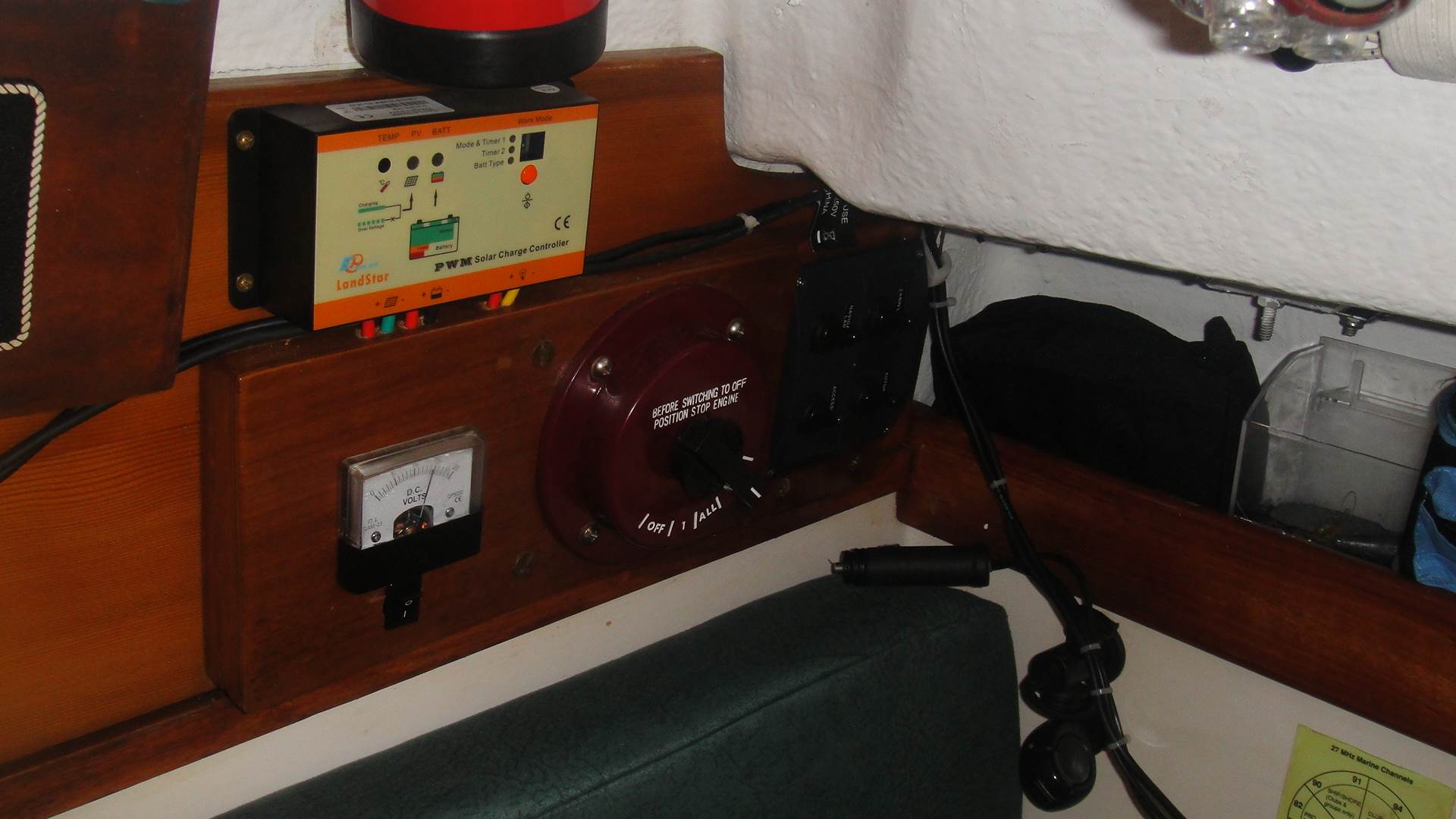


Power board in little black bag on the right.
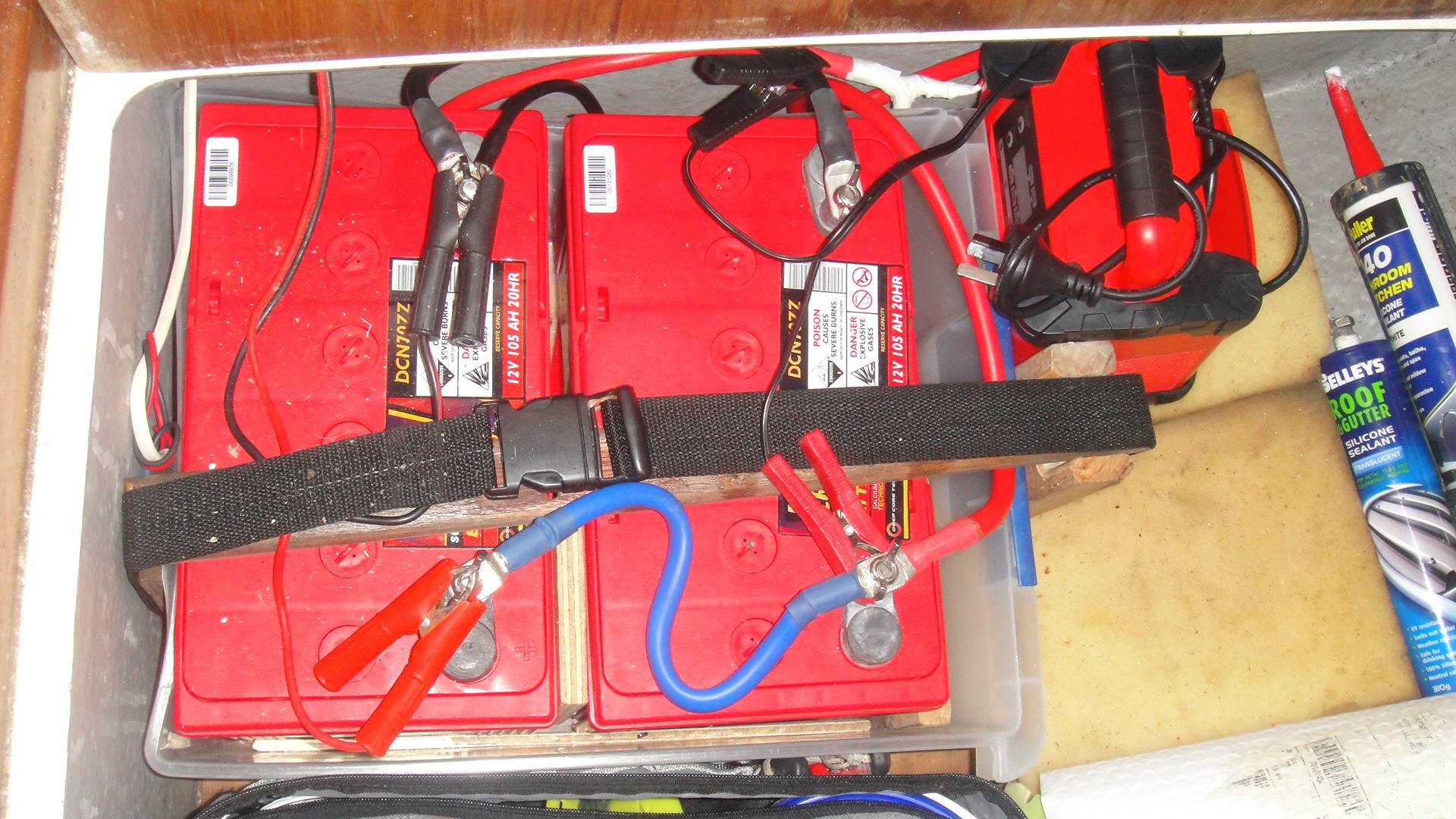
Charger next to batteries
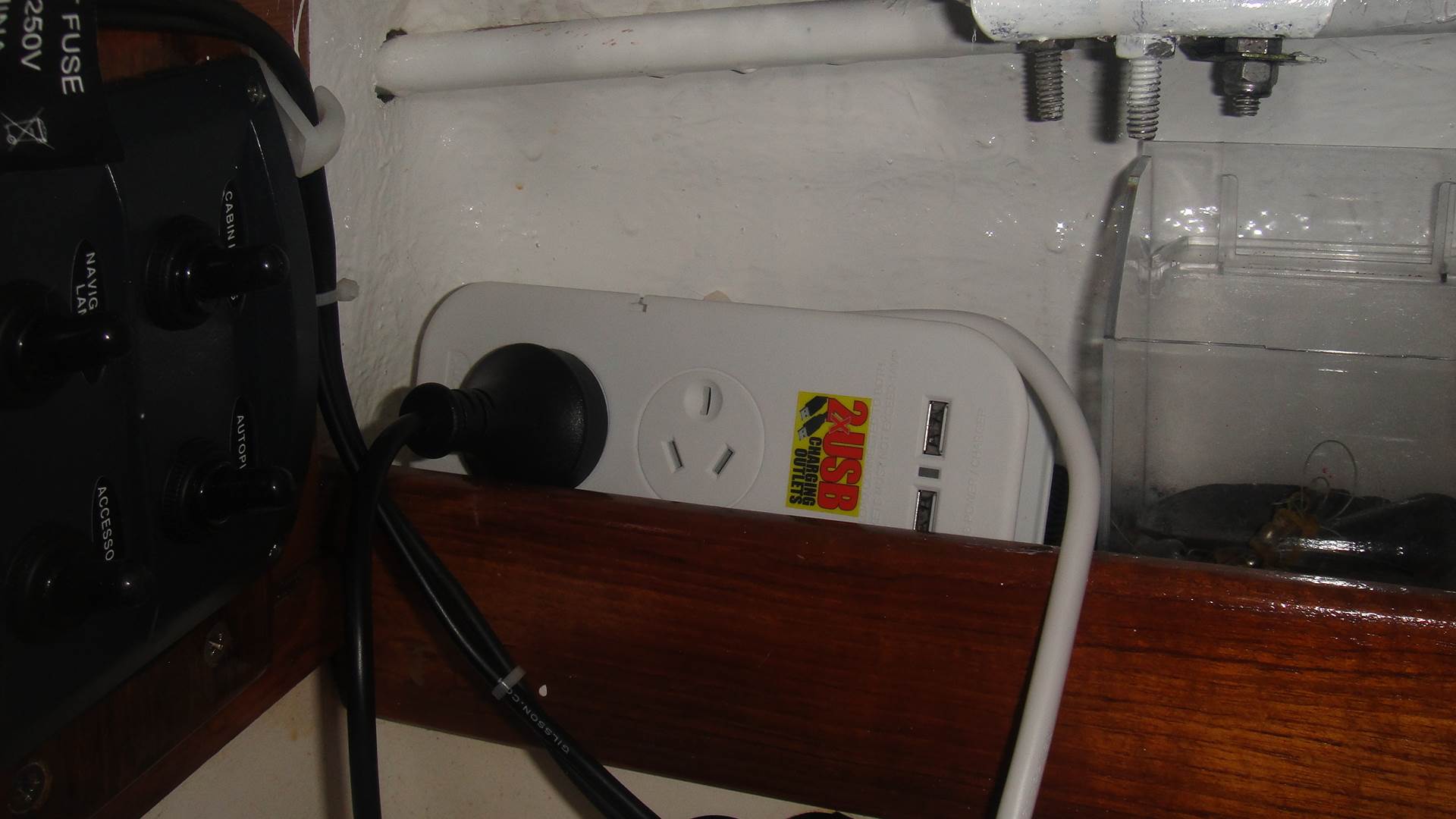
Small Power board sits out of the way on the shelf.
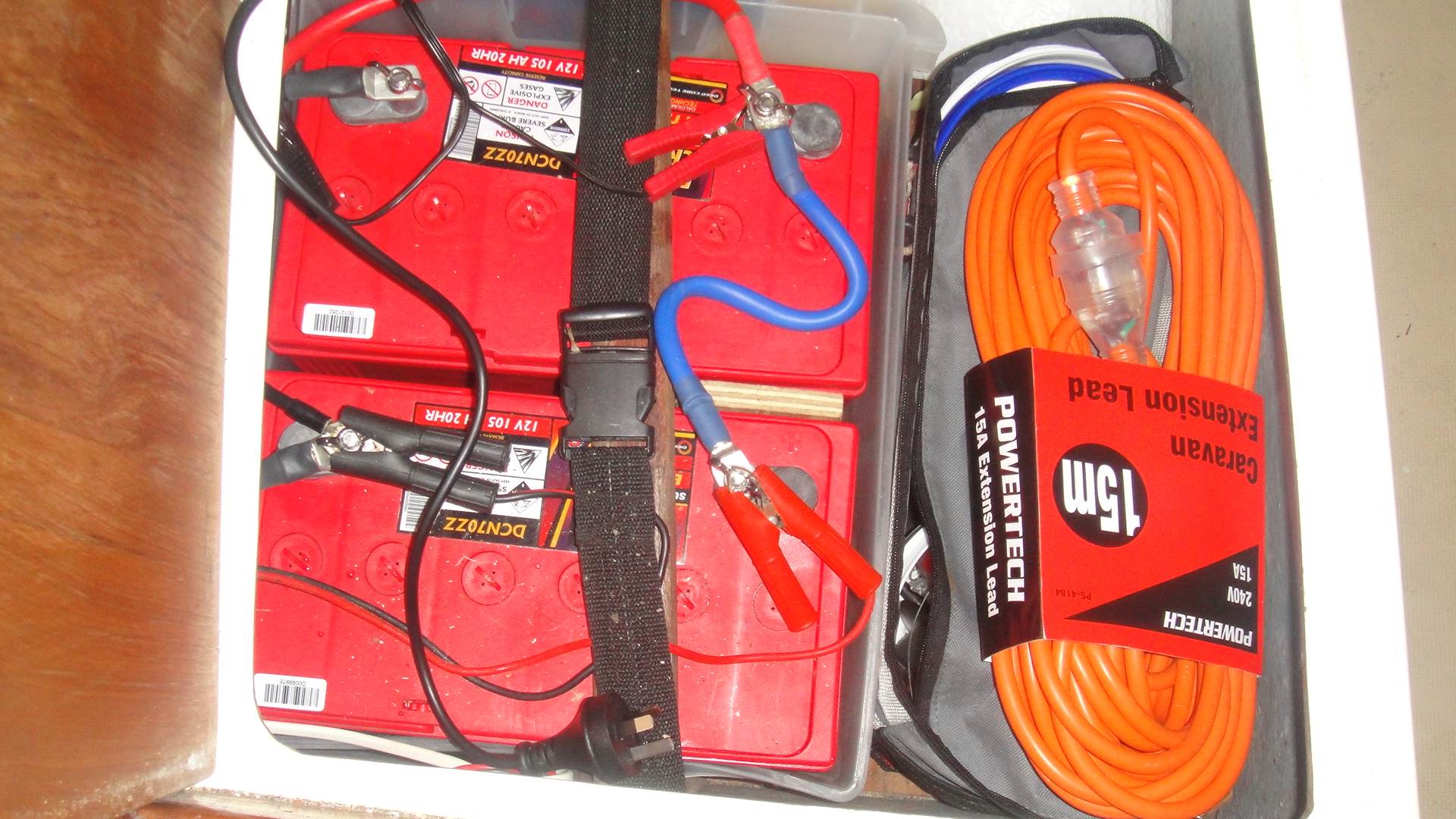
Lead in same compartment as batteries and charger.

All items out of the way and only used on the rare occasions at marinas.

Again thanks to all who contributed.

LMY
LMY
NSW
203 posts
LMY LMY
NSW, 203 posts
28 Jul 2015 11:13pm
thanks for sharing.

It is always interesting to see people sort through the many available options and come up with a solution that meets their particular needs. For me, this is one of the great joys of owning and maintaining a boat.
cisco
cisco
QLD
12365 posts
QLD, 12365 posts
29 Jul 2015 1:12am

Yes and Pekeri has stuck to the good old KISS principle really well there.
Charriot
Charriot
QLD
880 posts
QLD, 880 posts
29 Jul 2015 7:20am
Before this topic is buried
Please explain your current leakage?
Typically we talking implement RCD
but you didn't apply safety switch did you.
One more ..why you killing your batteries
have them permanently connected parallel!
Electrican didn't tell you they discharging each other.
Please Register, or first...
Topics Subscribe Reply