Sunrise and Sunset: Time Your Sessions

Quick summary
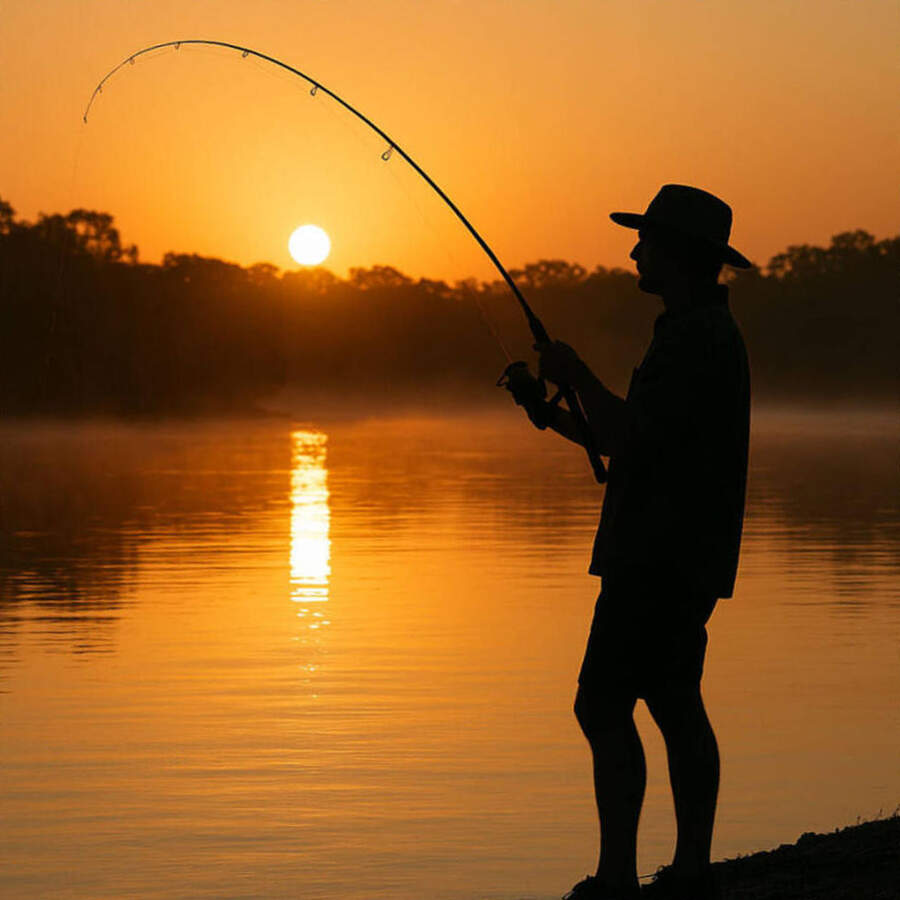
Sunrise and sunset trigger feeding activity in most Australian inshore species due to light level changes, cooler temperatures and baitfish movement.
The window of peak activity typically runs 30 minutes before sunrise to 45 minutes after, and 45 minutes before sunset to 30 minutes after.
The key variable
When a tide change coincides with sunrise or sunset, fishing quality amplifies significantly — two biological drivers hitting simultaneously.
The shift from night to day and back again is the single most reliable trigger for feeding activity across Australian inshore and offshore fisheries.
It works because light level changes cause baitfish to school and reposition, which in turn triggers predator feeding behaviour.
Why low light improves fishing
Most Australian inshore predators — bream, flathead, whiting, tailor, mulloway and bass — are ambush feeders that use low light to their advantage.
At full daylight, prey fish orientate visually and can detect approaching predators at greater distances.
In the transition light of dawn and dusk, that detection window shrinks dramatically, and predators push into shallower water to intercept baitfish moving along the edges.
"A bream that won't touch anything at 9am in 80cm of water will eat almost anything you throw at it at 6am in the same spot — the light level is doing more work than your lure choice."
When sunrise and tide align
The best sessions most experienced anglers recall share a common feature: a tide change within 90 minutes of sunrise or sunset.
A rising tide at dawn pushes warmer water and baitfish onto flats and into drains that were too shallow overnight.
A falling tide at dusk concentrates fish in channels and gutters as the flat drains, compressing baitfish and triggering competitive feeding.
Check both the Seabreeze tide calendar and local sunrise time when planning sessions — overlap windows are your priority.
Species-specific light preferences
Flathead are classic ambush predators that push onto shallow sand flats in the half hour before full dark and remain active through dawn.
Bream and luderick feed most actively in the first light of dawn and the last 45 minutes of daylight, with feeding intensity dropping sharply in full sun.
Tailor and salmon work bait schools on the surface at dawn and dusk, often visible as surface eruptions in gutters and along rock walls.
Pelagics offshore — mahi-mahi, wahoo and tuna — move to the thermocline at full sun but push to the surface to feed at dawn and dusk when baitfish rise.
Snapper become significantly more catchable in the hour before dark, with deep-water specimens more tolerant of mid-day sessions than their shallow-reef counterparts.
Seasonal variation in sunrise and sunset times
Australia spans 35 degrees of latitude and three time zones, so sunrise and sunset times vary enormously by location and season.
In Darwin, the sun rises between 6:00am and 7:20am year round with minimal variation.
In Hobart, winter sunrise can push past 7:45am while summer sunrise arrives before 5:30am — a two-hour difference that dramatically shifts the practical fishing window.
Check exact times for your location before planning any dawn or dusk session, particularly in higher-latitude states where the difference between summer and winter is most pronounced.
Practical session planning
Set your alarm to arrive at the water 40 minutes before sunrise — this gives you time to rig up, position yourself and begin fishing before the feeding peak starts.
For dusk sessions, begin fishing 60 minutes before sunset while light levels are still comfortable, and fish through into darkness if the target species is nocturnal.
Carry a quality torch rated for marine use if fishing after sunset — conditions can deteriorate quickly and navigation lights or a safe return path become essential.
Common questions
Does overcast weather reduce the golden hour effect? Partly — heavy cloud reduces light levels across the whole day, which can extend feeding activity but removes the sharp transition that concentrates fish at specific times.
Does current speed affect timing more than light? For some species yes — mulloway and snapper in fast-current systems often feed primarily on tidal flow, and a strong run at midday will outfish calm water at dawn.
What about fishing at night? Mulloway, luderick in certain systems, and squid are predominantly nocturnal feeders; for these species the full-dark period is more productive than dawn or dusk alone.