Squid on Jigs: Winter Shore and Reef Tactics

Quick summary
Southern calamari are at their most catchable in winter, not their least - cold, clear water concentrates them around structure and makes every presentation count.
The egi drop technique on light spin gear catches squid from piers, rocky reef edges, and shallow weed beds right through June, July, and August across NSW and Victoria.
The how-to
After reading this, you can set up correctly, read the right structure, and fish the tide timing that consistently produces winter calamari from shore or a small boat.
Most anglers slow down their squid fishing in winter, and they are wrong to do it.
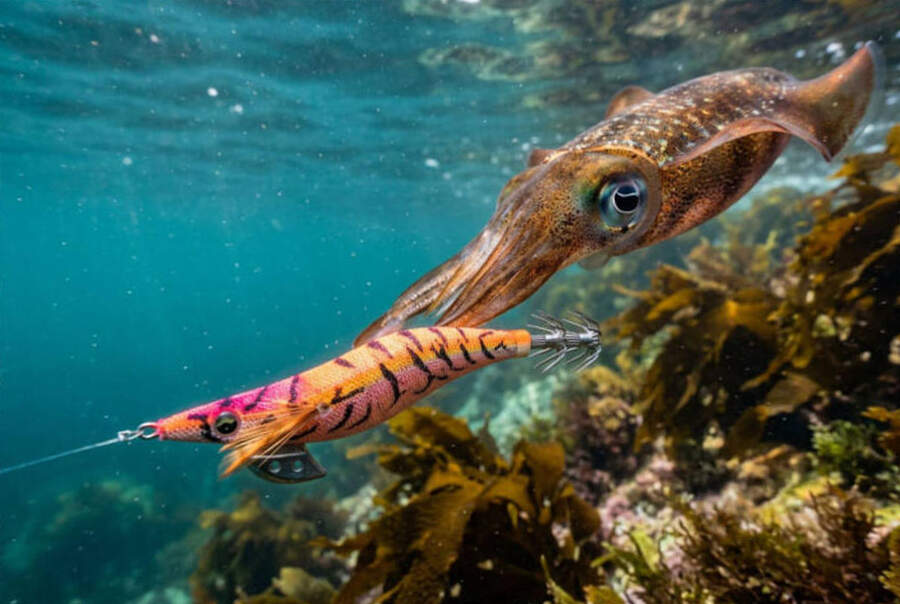
Southern calamari (Sepioteuthis australis) do not disappear when the water cools - they concentrate in the clear, shallow ground where well-presented egi jigs are easiest to fish.
The cooler months of April through August are the most productive period for shore eging across Port Phillip Bay, Western Port, the NSW South Coast, and SA's sheltered bays, with autumn and winter delivering the clearest water of the year and the largest individual squid.
Jesse Rotin, a member of Daiwa Australia's pro fishing team, has fished Port Phillip Bay squid for most of his fishing life.
He has documented that winter brings the best combination of water clarity and calamari size - conditions that suit a deliberate, methodical egi approach far better than summer's murky, busy water.
Why cold water is better, not worse
The assumption that cold water slows everything down catches out a lot of new squid anglers.
Winter water in SE Australia is often the clearest you will fish all year, and that changes everything about how squid interact with a jig.
In summer, murky green water means squid must react quickly to a fast-moving target - aggressive whip-whip-whip retrieves work because visibility is low and the reaction window is short.
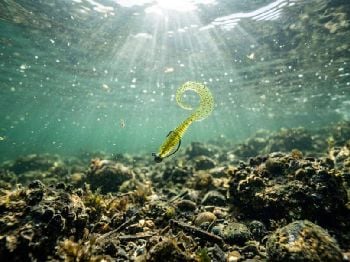
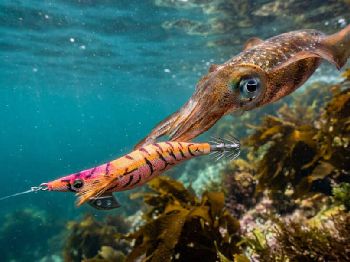
In winter's clear water, calamari track the jig from several metres away, examine it carefully, and commit only when they are satisfied with the presentation.
"Cold water does not mean fewer squid. It means squid that will drop the jig if your technique is wrong."
Slowing the sink rate - letting the egi fall all the way to the bottom on a near-slack line before the next rod tip whip - outperforms fast retrieves in winter conditions across every type of structure.
The practical upshot: winter squid reward patience and penalise rushing in a way summer squid do not.
Reading structure: where winter calamari hold
Southern calamari are ambush hunters that sit in or near structure - they do not cruise open sandy bottom looking for food.
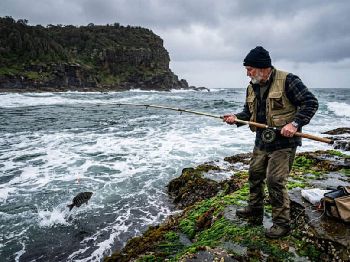
Pier piles, rocky reef edges, shallow kelp and weed beds, and any transition from sand to hard bottom are the four structural types that hold squid consistently through winter.
Port Phillip Bay piers are the most accessible winter squid grounds in Australia: Rye Pier on the Mornington Peninsula is regarded as the bay's most consistent squid location, with shallow reef structure alongside the piles holding calamari through the season.
St Kilda and Altona Piers produce solid catches for anglers based in Melbourne, while Sorrento Pier gives access to deeper water and consistently produces the largest individual fish.
On the NSW South Coast, the rocky reef edges at Jervis Bay, around Ulladulla's headlands, and the pier and pontoon structure at Narooma and Eden all hold winter squid - the cleaner water that follows cold fronts typically brings the best sessions.
Greg Finney, a Fishing World Australia contributor who has chased southern calamari around Jervis Bay for years, puts it simply: the NSW South Coast bays and headlands combine clear winter water with excellent kelp-edge structure.
That combination produces squid consistently from late May through September.
Gear: setting up right from the start
The egi rod is the single most important piece of gear and the one most often skimped on.
A purpose-built egi rod has a soft, parabolic tip action that cushions the fight - stiff rods pull the prongs out of a squid's tentacles because there is no give during the head-shake runs that are a calamari's primary escape tactic.
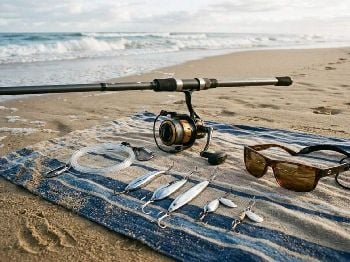
An 8-foot 3-inch egi rod in the 3-10 gram range is the standard land-based setup: it aids line control during the cast, keeps the jig moving freely on the drop, and gives the leverage to feel subtle takes on a near-slack line.
Line: PE0.8 or PE1.0 braid on a 2500-3000 size reel, with a 1.5 to 2-metre fluorocarbon leader of 8 to 12-pound breaking strain.
Fluorocarbon is less visible in clear winter water than monofilament, and its near-zero stretch makes it easier to feel the tap-tap that signals a squid has grabbed the jig before committing.
Use braid to the leader connection, not straight mono - mono stretches during the rod-tip whip and kills the sharp action that triggers a take on the drop.
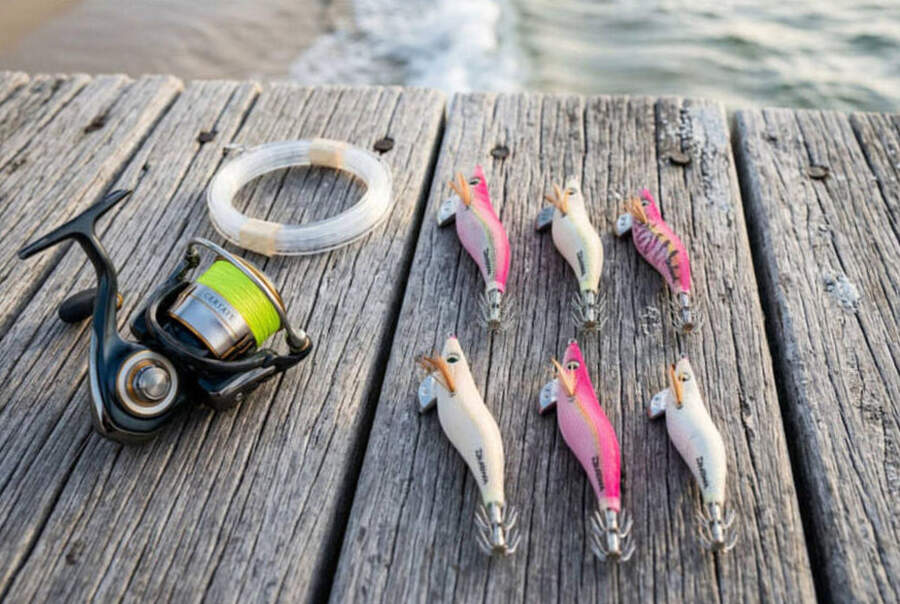
Jig selection: size and colour in cold water
The three core egi sizes for SE Australian winter fishing are 2.5, 3.0, and 3.5, each suited to specific conditions.
Size 2.5 is the cold-water specialist: lighter weight means a slower sink rate that gives clear-water winter squid time to track and commit.
Size 3.0 is the all-round choice for most pier and reef-edge sessions - it covers 2 to 8 metres of water comfortably and works in a range of wind conditions without losing the sensitivity needed to feel takes on the drop.
Size 3.5 is for deeper water (8 to 15 metres), stronger current or wind drift, and targeting larger squid on outer reef edges and channel margins off a boat.
Colour in winter: natural prawn and translucent foil patterns outperform bright solids in clear, cold water.
In summer, bright pinks and oranges cut through murk and get reactions - in winter, the same colours can make a cautious squid drop the jig before the prongs engage.
Start with a natural or foil pattern (white/pearl, light blue, natural shrimp) and switch to pink or orange only after 15 to 20 minutes without a response - then switch back after the next contact to re-establish what the squid are preferring that session.
Brand consistency matters less than action consistency: Yamashita, Daiwa Emeraldas, Shimano Sephia, and IKA all have track records in SE Australian waters - what matters is keeping the sink rate right for the conditions.
Technique: the egi drop sequence
The complete drop sequence, done well, is what separates anglers who fill a bucket from those who watch them do it.
Cast slightly uptide or upcurrent to maximise the natural drift angle as the jig sinks.
Allow the egi to sink on a near-slack line all the way to the bottom or to structure - count the seconds as it falls and establish a rough depth reference for each spot.
Give the rod tip two or three sharp upward whips (not full-arm sweeps), then immediately return the rod tip to the water surface and feed slack as the jig drops again.
The take nearly always comes on the drop, not during the whip - a squid that has been tracking the jig will grab it the moment it starts to fall, sometimes before it travels 30 centimetres.
In winter, extend the sink pause by two to three seconds compared to what you would do in summer - the colder the water, the slower the approach and the longer the jig needs to sit in the take window.
When a squid takes, do not strike - hold light pressure and lift the rod smoothly and steadily to set the prongs, then keep the drag at 1.5 to 2 kilograms and let the squid run without pumping the rod.
Tide and light timing
Southern calamari are visual hunters that feed most aggressively during low-light transitions.
Dawn and the first 90 minutes after sunrise is the single most productive window for winter squid fishing - water clarity is at its overnight peak and squid that have been actively hunting through the night are still on the shallows.
Dusk and the last 30 minutes of light is the second-best window for the same reason - the light drop triggers feeding behaviour before the overnight dark phase.
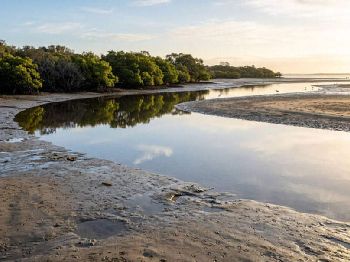
Tide timing matters as much as light level. Slack water and the first hour of the incoming tide consistently produce the most squid, particularly around piers and rocky structure where tidal flow is reduced compared to open ground.
Running tide through structure moves baitfish and shrimp, which attracts squid - but strong current also makes egi presentation difficult and causes the jig to swing wide of structure rather than sinking straight into the holding zone.
The switch from running tide to slack is when to have the jig in the water - not five minutes later.
Regulations: what you need to know
In Victoria, the combined bag limit for squid, octopus, calamari, and cuttlefish is 10 per person per day, with no minimum legal size, according to the Victorian Fisheries Authority.
A Victorian Recreational Fishing Licence is required for anyone aged 18 to 70 fishing in Victorian waters, including all piers and inshore reef grounds.
In NSW, squid fall under the general bag limit of 20 per person per day, with no minimum size, according to DPI NSW.
In Tasmania, Fisheries Tasmania runs annual squid spawning closures for 2024, 2025, and 2026.
Waters north of Cape Grim and Cape Naturaliste are closed from September 1 to October 31.
The south-east closure from Lemon Rock to Whale Head, including Coles Bay and Great Oyster Bay, runs from October 15 to November 14.
Outside those TAS closures, squid fishing is open year-round across most SE Australian waters.
Check the Seabreeze tides page for your local tide times and plan your session around the incoming tide window at first light.
Common mistakes and how to fix them
Fishing too fast in cold water. Slow the drop, add two to three seconds to the sink pause, and let the squid commit rather than rushing the next whip.
Using bright colours in clear water. Switch to natural/pearl/foil patterns in winter clarity and keep the bright pink for overcast or stained-water days when contrast is needed.
Striking on the take. A sharp strike pulls the prongs straight through a squid's soft arms - hold pressure, lift smoothly, let the prongs set under steady tension.
Fishing open sand. Calamari hold structure. If you are not near piles, reef edge, kelp, or weed, you are fishing the wrong water regardless of how good the technique is.
Pumping the rod during the fight. Each pump compresses the drag and then releases it, creating the jerk-pause that lets a squid use its jet propulsion to work the prongs free - maintain steady, slow, even tension throughout the fight.
What to try next
Can you fish two rigs at once for squid? Land-based fishing with one rod is standard, but a small boat with two anglers casting in opposite directions along a pier or reef edge can double the coverage effectively.
Do jig colours need to change with water depth? Deeper water absorbs red and orange wavelengths first - below 5 metres, UV-reactive and blue/purple patterns often outperform natural whites, because that is the light spectrum the squid is actually seeing.
How do you handle squid without getting inked? Keep the squid low over the water or a bucket during unhooking, hold it facing toward the water (the ink siphon points forward), and don't squeeze the body.
What do you do when you can see squid following the jig but not taking? Stop the retrieve completely and let the jig drop dead.
Squid that are trailing but not committing will often strike when the jig suddenly stops and falls, triggering a reaction take.
Check wind and swell conditions before your session at Seabreeze Melbourne or your nearest forecast point - settled, light-wind mornings are when the egi drop works exactly as it should.