Surf Salmon: Spotting Schools and Working Metal

Quick summary
Australian salmon school in massive numbers on surf beaches from June through August - this is the peak of their winter migration along the east and south coasts.
A 40 to 60 gram metal slice fished fast through white water is the most effective method, but spotting the school before you cast doubles your success rate.
The how-to
After reading this, you can locate a school from the headland, identify the gutter it's working, and present a lure that a salmon won't swim past.
June is when the action peaks for beach salmon along NSW, Victoria, South Australia and Western Australia - schools tighten up in cold water and push into the gutters, making them predictable if you know what to look for.
Australian salmon (Arripis trutta on the east coast) are not related to Atlantic salmon - they're a separate species that grows to around 4 kg on the east coast, fights hard on light gear, and is most reliably caught from open surf beaches during winter.
Gear before you leave the car
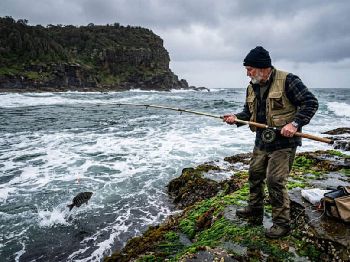
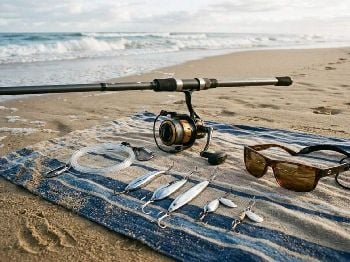
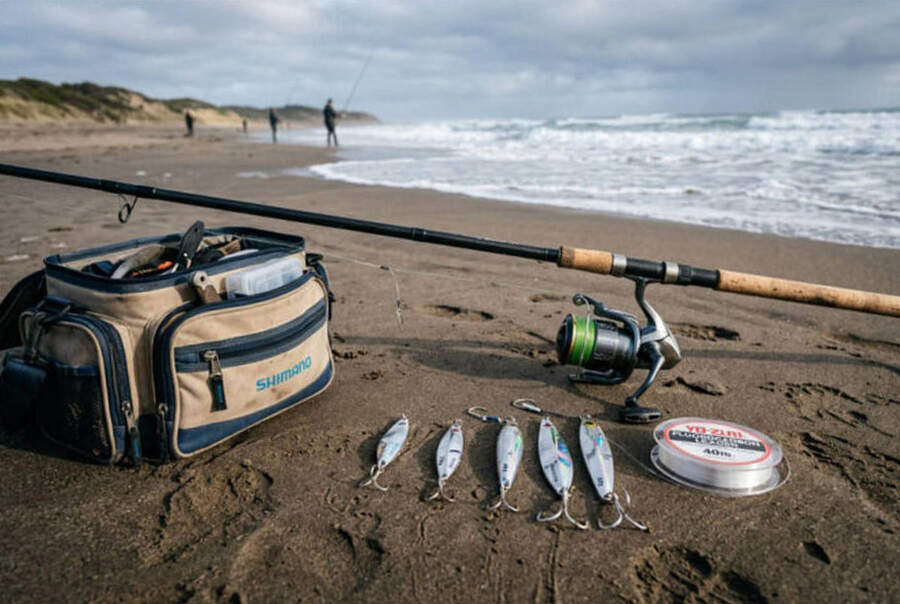
A 12 to 14 foot two-piece graphite surf rod rated to cast 8 to 12 ounces is the classic setup, giving you the height to clear the first wave and the leverage to work a metal slice fast through heavy water.
Match it to a 6000 to 8000-size spinning reel loaded with 20 to 30 lb braid, with a 40 lb fluorocarbon leader of around 1 metre between the braid and the lure.
If you're fishing a more open beach with smaller surf, a 9 to 10 foot spin outfit with a 3000 to 4000-size reel and 15 lb braid works well and keeps the session less tiring over a few hours.
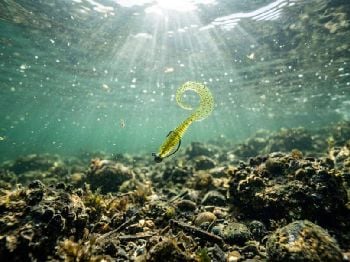
Metal slices are the lure for surf salmon - 40 to 60 grams covers most surf beach conditions, dropping to 20 to 30 grams on smaller swell where casting distance matters more than punching through wind.
Chrome and chrome-blue are the proven colours, but pilchard-pattern and pink-tipped slices work on overcast days when the chrome finish is less visible.
How to spot a school from the headland
Never go straight to the waterline. Walk to the nearest headland or high ground first, put on polarised sunglasses, and scan the beach systematically from north to south.
A school of salmon appears as a dark, shifting mass moving along the coast at a speed of roughly walking pace - sometimes just below the surface of the white water, sometimes in the clear green water outside the break.
Watch which direction the school is moving and drive to an access point ahead of it, giving yourself 10 to 15 minutes to rig up and get into position before the fish arrive.
If you can't see fish from above, look for diving terns and gannets - they consistently mark active baitfish and salmon below the surface when the schools are in feeding mode.
"Look from height first. Once you're at the waterline, you're committed to one spot. From a headland you can see a school 500 metres away and intercept it."
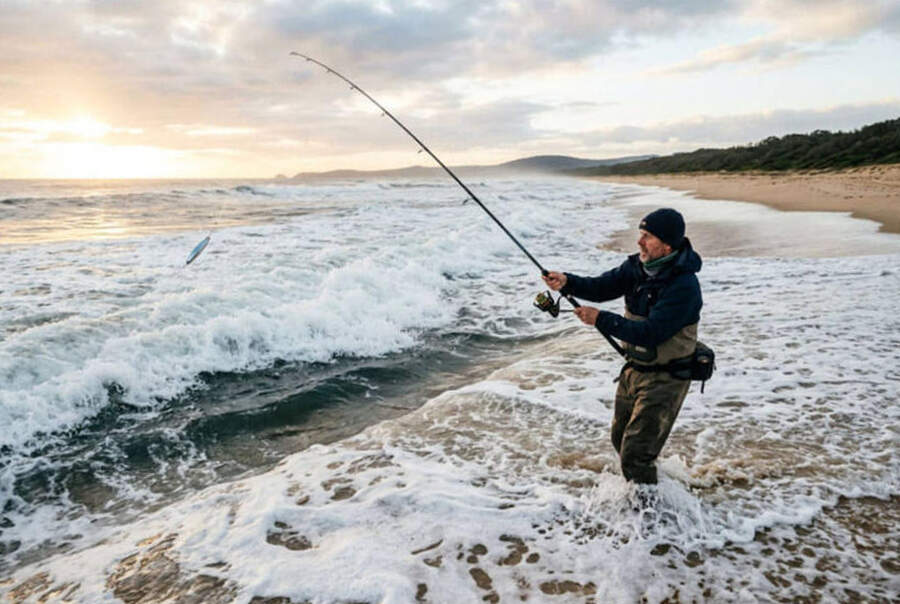
Reading the beach for gutters
Salmon work gutters - the darker, deeper channels of water between sandbars that run parallel to or across the beach face.
From height, gutters show as bands of deeper green or blue against the lighter-coloured sand bar peaks each side of them.
Where water flows back out through the bar (a rip) is the single best casting position - salmon sit at the seaward edge of the rip and ambush baitfish being washed out by the current.
The gutter changes with the tide. On a rising tide, gutters flood and become less defined; on the drop, they deepen, the rip accelerates, and salmon move in tight to the face of the sandbar - your window is typically from two hours before high tide to one hour after, or the equivalent window on the falling tide at dawn or dusk.
Working the lure
Cast the metal slice as far as possible directly into the white water or the edge of the rip, let it sink for one or two seconds, then wind as fast as your reel allows.
Salmon hit a fast-moving slice hard - if you're winding slowly, you're letting the fish look at it too long and often the strike doesn't convert.
Shore jigging is the variation to try when fish are inactive on a straight retrieve - cast the metal out past the gutter, let it sink near the bottom, then hop it back with the rod tip while maintaining a fast wind between hops.
Count down the sink time on your first few casts to get a picture of the gutter depth - if you're snagging on the hop, you're too deep; if the fish are boiling short, lift the rod angle and fish the lure higher in the water column.
When the bite shuts down
Salmon switch off under bright, flat conditions in the middle of the day - the school is still there but the fish won't commit.
Change to a smaller lure (20 to 30 grams) and slow the retrieve slightly to match a different bait size, or try switching to a soft plastic on a lightly weighted jig head worked across the face of the gutter.
Moving along the beach is often more effective than waiting - if a school has pushed through, the fish are ahead of you, not behind.
A swell change also changes the game. As swell increases through a tide, the rip strengthens and the salmon push deeper into the gutter; as it eases, the fish spread across a wider section of beach and become harder to locate from one position.
Common mistakes and how to fix them
Casting parallel to the beach. The lure needs to cross the gutter from the sandbar side to the deep water side - angle your cast to cut directly across the gutter, not along it.
Stopping the retrieve when a fish strikes. Keep winding - salmon often hit a fast lure short and the momentum of the retrieve sets the hook for you.
Using too light a leader. Salmon are toothy and abrasive - a leader below 30 lb gives a fish the chance to cut you off on the run, which happens more often than most anglers expect in winter surf.
Standing at the waterline when the school is still approaching. Give yourself room to walk backwards up the beach when you hook up - a salmon running toward the break in heavy surf will dump your spool if you can't keep pace with it.
Regulations and keeping fish
In New South Wales, the minimum size for Australian salmon is 20 cm with a bag limit of 5 fish per person per day, according to NSW Department of Primary Industries.
In Victoria, the minimum size is 21 cm and the default bag limit of 5 applies, as listed by the Victorian Fisheries Authority.
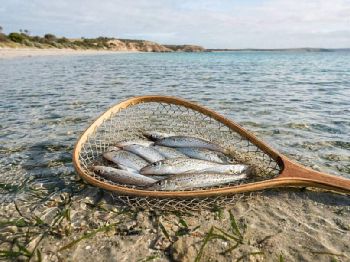
Australian salmon are a good eating fish when handled correctly - bleed them immediately by cutting the gill arch, ice them straight away, and fillet and skin within a few hours for the best result.
Many anglers target salmon purely for sport and release them - pinch your hook barbs before the session if you plan to release the majority of fish.
Questions for your next session
What happens when you fish the same gutter on a dropping tide versus a rising tide, and does the school position change noticeably between the two?
If the school is visible offshore but won't come into the gutter, is there a way to work a lure in deeper water before the wave breaks, and what rig would you use?
How does your reading of the beach change in onshore versus offshore winds, and which wind direction actually pushes baitfish into the gutters more consistently?
You can check the tide forecast for your local beach before you go - it makes a bigger difference to your session timing than almost any other factor.
Plan your beach session with the Seabreeze tide calculator - getting the tide right puts you on fish before anyone else arrives.