Garfish on Float Tackle: Berley and Bait

Quick summary
Garfish feed in a tight band near the surface - a properly tuned float rig drifting through active berley is the most consistent way to hold a school under your rod.
Small hooks, light line, and a steady berley trail matter more than bait choice.
The how-to
After reading this you can set up a float rig, start a berley trail, and adjust depth on the fly to keep your bait in the feeding zone throughout a session.
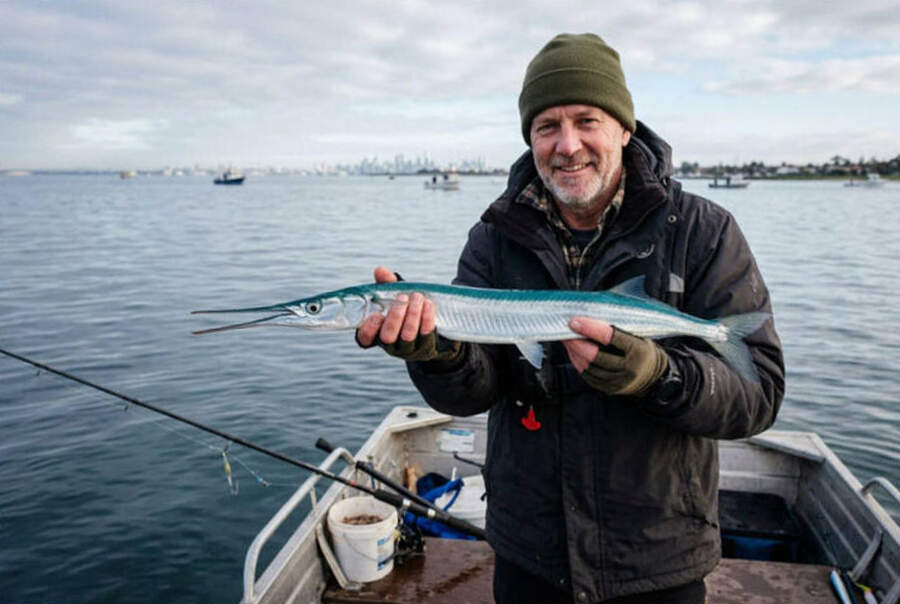
Garfish are a winter fixture across southern Australian bays and estuaries, peaking in Port Phillip Bay, Gulf St Vincent, and Cockburn Sound from late June through August when schools move into shallower, protected water.
They are wary, fast-moving, and quick to drop a bait - but once you understand how to build and hold a berley trail, the bites come in runs.
What you need to know before you start
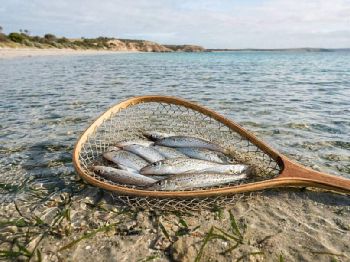
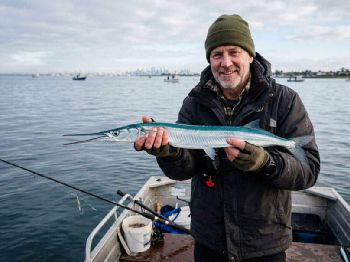
Southern sea garfish (Hyporhamphus melanochir) are the main target in Victoria and South Australia.
They feed near the surface - typically in the top 30-60 centimetres - and respond strongly to dispersed food particles carried by tidal current.
The correct entry point for this technique is knowing how to read a tidal run: you are fishing a drifting berley trail, so you need current - at least a gentle flow - to carry the berley and spread the school.
Flat, windless high-pressure days with a light tidal run are the most productive garfish conditions in winter.
State bag limits vary - check your current state rules before heading out, as limits in Victoria and South Australia differ.
Gear: keep it minimal
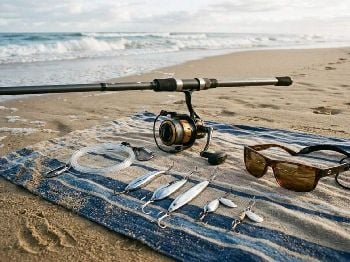
A 2-3 kg (4-7 lb) monofilament main line on a light spin or baitcaster rod is the standard setup, with a leader of 1.5-2 kg if the water is clear and the fish are shy.
Hook choice is critical: a size 12 or 14 long-shank hook is the right range.
Garfish have a small, bony mouth - anything larger than a size 10 costs you hook-ups; anything smaller becomes difficult to bait with bread dough.
For the float, a pencil quill set to cock at 30-45 centimetres is the clearest strike indicator for still or slow-moving water.
In a stronger tidal run, a small swivel float copes better with line drag.
Add a single split shot 15 centimetres above the hook to keep the bait from riding up in current - garfish strike at a horizontally presented bait, not a rising one.
"Most anglers fish too deep. Garfish rarely go below 40cm, even when the school looks spooked."
That observation from long-time Port Phillip Bay guide Rob Gerrand matches the general experience: depth is the most common adjustment needed during a session, and the direction of that adjustment is almost always shallower.
The berley: this is what actually catches fish
Garfish are attracted to berley more reliably than to any specific bait.
A working berley trail concentrates fish, holds them under the rod, and keeps them competing - competition feeding is when the bites become aggressive and fast.
The simplest effective mix: soak four or five slices of white bread in seawater until they disintegrate, then squeeze the water out slightly to form a loose, crumbly mass.
Add a tablespoon of tuna oil to the mix and pinch off pea-sized pieces into the current every 20-30 seconds.
The key is consistency, not volume. A steady trickle of small particles works far better than periodic large handfuls, which push fish down and scatter the school.
Let the current work for you: stand or anchor so the berley trail runs away from you at a comfortable casting distance, and drift your float down the same lane.
If no current is running, a light onshore breeze can substitute - position yourself upwind and let the float drift with the surface push.
Bait selection
Bread dough is the easiest starting point: take a small piece of white bread, remove the crust, and knead it until it forms a sticky ball that stays on the hook under light pressure.
Thread a pea-sized piece onto the hook shank, leaving a short tail beyond the bend.
For tougher conditions or shy fish, try thin strips of squid tentacle 15-20 millimetres long - these are more durable and stay on through multiple cast-and-retrieve cycles.
Green weed (sea lettuce) is the most natural bait and often outperforms bread in clear, calm water where garfish are sight-feeding rather than following the berley by smell.
Collect fresh weed from nearby jetty pylons or rocks before the session, wrap a short strand around the hook shank, and leave both ends trailing.
Match your bait to what you see in the berley trail: if fish are rising to take bread particles, stick with bread dough; if they are ignoring the bread but mouthing weed in the area, switch.
Reading the school and adjusting depth
Watch the surface of your berley trail carefully for the first 10-15 minutes of a session.
Garfish often show themselves as a flicker of silver near the surface before they commit to feeding - if you see this, your berley is working and fish are close.
If the float is dragging or the bait is moving unnaturally, slide it shallower by 10 centimetres at a time until the presentation sits correctly in the current.
A bite that results in a missed hook-up is almost always one of two things: bait too far below the feeding zone, or a hook that is too large.
If you are getting consistent taps without hook-ups, drop to a size 14 hook and tighten the float depth by five centimetres.
When the school is actively competing you will see multiple fish chasing the float at the surface - at that point, reduce the frequency of your berley throws to slow the feeding pace and improve the hook-up rate.
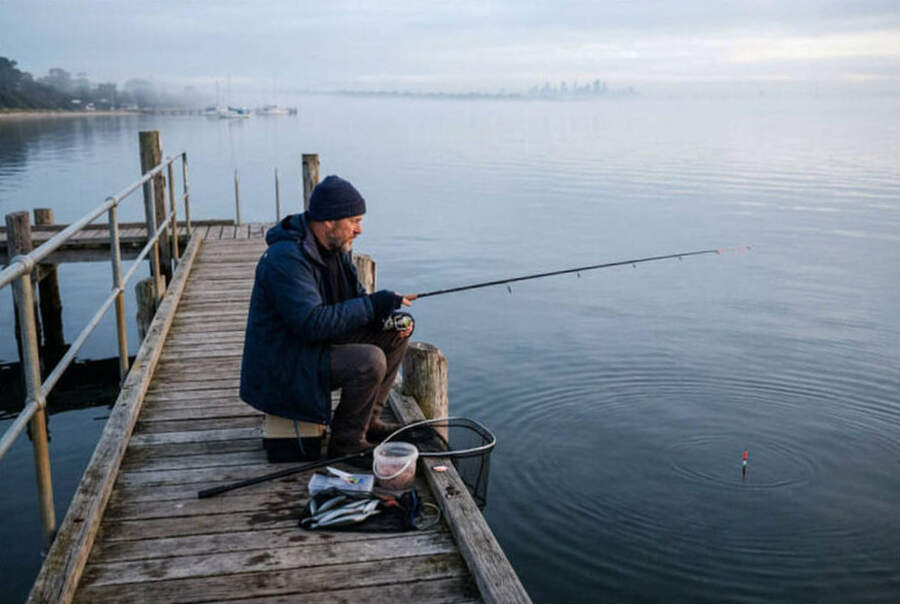
Jetties and wharves
Garfish school heavily under and around structures in winter - jetty pylons provide shelter from current, and the shade and structure concentrate baitfish that garfish follow.
Fish the down-current side of the jetty where the berley runs clear of structure.
Positions like the Queenscliff Pier, Port Noarlunga Jetty, and Jurien Bay Jetty hold good numbers of southern sea garfish from July through to September.
Tide timing matters at jetties: fish the two hours either side of a high tide when fish are pushed inshore and the current run is slowing to allow better berley control.
Handling and keeping your catch
Garfish are soft-fleshed and deteriorate quickly.
Bleed them immediately by cutting behind the pectoral fin and lay them on ice or in an ice-slurry as soon as they are landed.
A properly iced garfish filleted within an hour of the session produces one of the best-tasting table fish in Australia.
Track the tides at your chosen jetty with the Seabreeze Victoria tide search to time your sessions around the optimal two-hour window.
What to try next
Float fly-fishing for garfish - using a three-weight fly rod with a small emerger fly above a bubble float produces fast-action surface strikes in calm conditions.
Night sessions under lights - jetty lights attract baitfish and draw garfish up to feed; a head torch on red mode preserves your night vision and avoids spooking the school.
Moving to luderick - many of the same float skills and berley tactics transfer directly to luderick fishing on weed; the rigs are similar and the species often school together.
Scaling up to mullet - once you can hold a school of garfish on berley, the same approach applied with larger bread baits and a heavier float will produce yellow-eye mullet from the same jetties.