Mulloway After Dark: Tides, Rigs, Night Windows

Quick summary
Cold water concentrates mulloway in the deepest holes and tightest estuary structure in SE Australia from June through August.
The most productive window is the last hour of the outgoing tide running into the first 90 minutes of the incoming, fished after dark.
The how-to
After reading this, you can plan a targeted winter mulloway session built around tide timing, structure, and a presentation calibrated for cold-water fish.
Mulloway in summer can be anywhere in an estuary, spread across sand flats, holding on mid-depth structure, or pushing baitfish on the surface at dusk.
Winter changes that completely, with mulloway consolidating into predictable zones once water temperatures drop below 18 degrees Celsius: the deepest holes, the strongest current edges, and the tightest structure the system holds.
That predictability is what makes June through August the most productive months of the year for anglers willing to fish after dark and work the right tide window.
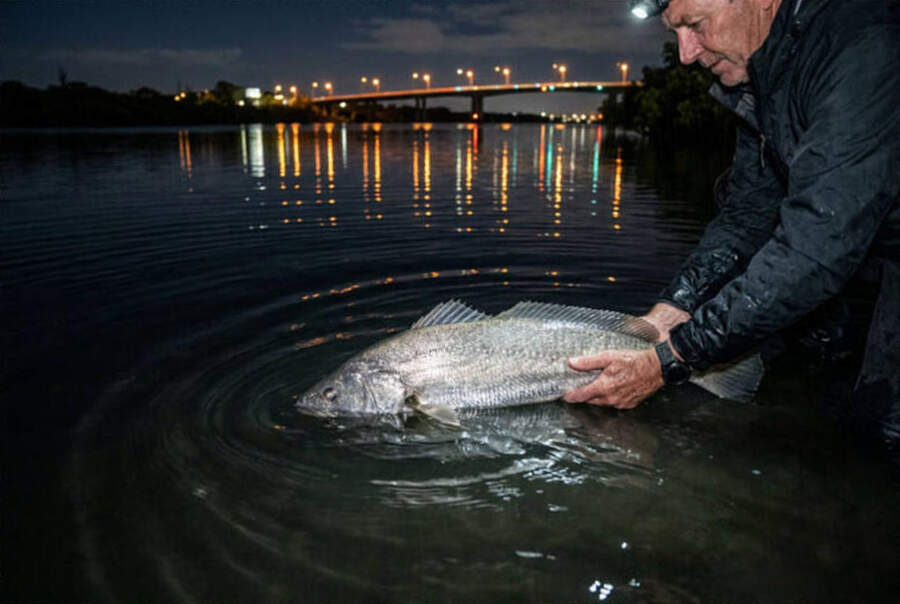
Where mulloway go when it is cold
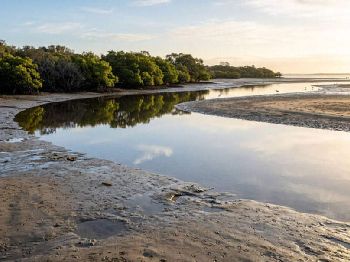
Cold water creates a thermal stratification effect in estuaries, with slightly warmer water sitting in the deeper holes and cooler surface layers covering the flats.
Mulloway are physiologically tuned to ambient temperature, and in cold surface layers their metabolic rate drops and their willingness to chase prey over distance reduces sharply.
The practical implication is that you need to put your presentation inside the strike zone, not near it, because cold-water mulloway will not burn energy chasing a fast lure from a metre away.
Structures that hold mulloway in winter include deep rock bars, bridge pylons with scour holes directly below them, ferry wharves, jetty pilings, and any section of estuary channel where depth exceeds five metres against a hard bottom edge.
In the Hawkesbury River, Sydney Harbour, Port Stephens, Jervis Bay, and the Gippsland Lakes, the best winter holes typically run 8 to 15 metres deep with a rock or reef edge on the downstream side of the current.
The tide window that matters
The most productive period for winter mulloway is the last hour of the outgoing tide running into the first 90 minutes of the incoming, ideally timed to coincide with low light or full darkness.
During the outgoing, current flushes baitfish and prawns out of the upper estuary and concentrates them against structure, and mulloway sit in ambush position on the downstream face of a hole or rock bar and wait.
At the tide turn, baitfish lose their hydrodynamic advantage in slack water and become easy prey, triggering the mulloway feeding window that most estuary anglers fish straight through without realising.
At the tide turn itself, when flow drops to near-slack, baitfish lose their ability to hold position in the current and become vulnerable, and this is the trigger point where mulloway switch from passive holding to active feeding.
Sean Thompson, a mulloway specialist recognised by Fishing Monthly as one of Australia's most dedicated big-jewie hunters, advocates fishing the tide change rather than peak flow as the consistent window for larger fish in SE Australian estuaries.
As the tide begins to run in, oxygenated water pushes into the lower estuary and re-energises feeding through the first hour or so of the run, and this second feeding window is often better than the turn itself on systems with strong tidal flushing.
Moon phase adds another layer to the timing calculation, with the week leading into the full moon consistently producing the largest tidal range and the biggest baitfish movements that draw mulloway out of their holes.
Setting up for the session
A running sinker rig is the most reliable setup for estuary mulloway: thread a 30 to 60 gram ball sinker above a swivel with 50 to 80cm of 30kg fluorocarbon leader running down to a 5/0 to 8/0 circle hook.
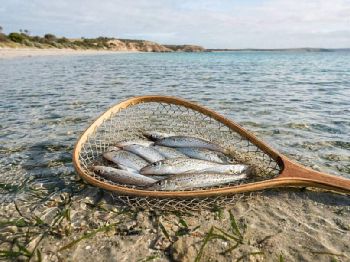
Live baits produce the largest fish, with yellowtail scad, slimy mackerel, mullet, and small tailor being the most effective choices in winter when mulloway are targeting slow-moving, easy-to-catch prey rather than giving chase.
Hook live baits through the nose for natural swimming presentation, through the back behind the dorsal for holding position in current, or at the tail root for a head-down struggling action that works particularly well on a slow run-in tide.
Keep baits on the bottom or within a metre of the substrate, because winter mulloway feed low in the water column and are less likely to rise for a bait suspended mid-depth away from structure.
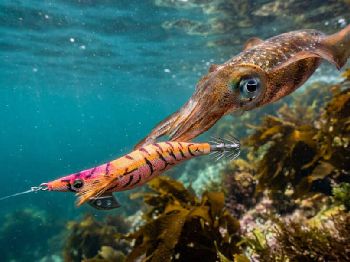
Dead baits work too when live options are not available: a fresh whole squid, a butterflied pilchard on a ganged hook rig, or a large prawn presented on the bottom with a small amount of burley will produce fish on the right tide.
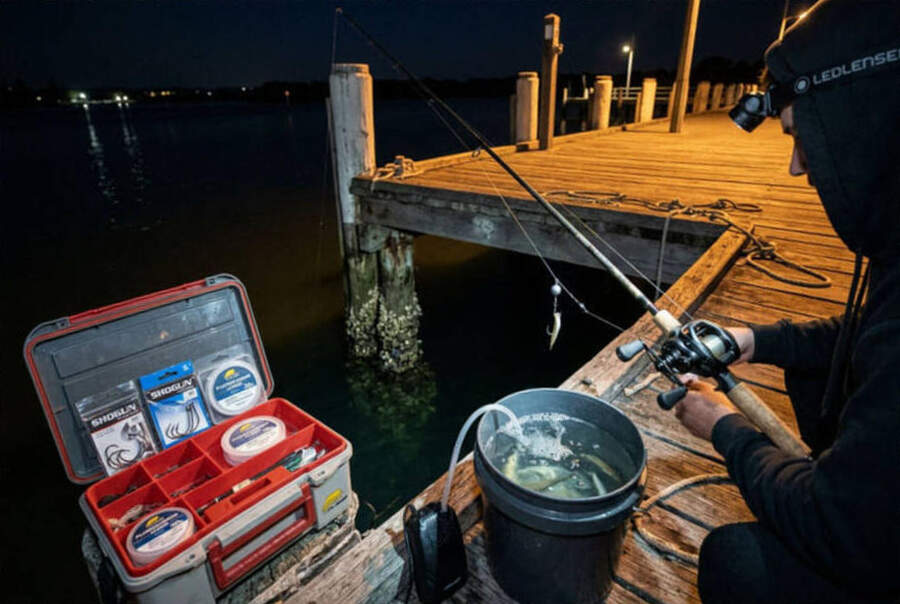
Soft plastics and lures in cold water
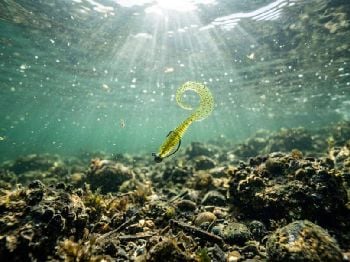
Paddle-tail soft plastics on jig heads from 1/2 oz to 1 oz are the most consistent lure option in winter, sinking slowly and staying close to the bottom at a range of retrieve speeds.
Colour choice in low light or dark water: silver, white, and translucent chartreuse outperform bright or natural colours because they produce contrast without appearing unnatural in deep, dark estuary water.
The key adjustment for cold water is slowing right down, with small vertical hops of 10 to 15cm followed by a two-second pause on the bottom working mulloway that would completely ignore the same lure fished at a summer retrieve speed.
Hard-body lures in suspending or slow-sinking configurations produce fish near the surface on warm early-winter evenings when mulloway are active and pushing baitfish, but in the depth of June and July, bait or soft plastics near the bottom are far more reliable.
Common mistakes
Moving spots too quickly is the most common error: in cold water, mulloway may take 20 to 30 minutes to resume feeding after a disturbance, and three to five casts before relocating rarely gives the session enough time to find its feet.
Fishing at mid-tide peak flow produces results in warmer months but kills bites in winter, because the combination of cold water and strong current means mulloway spend most of peak flow simply holding position in the lee of structure rather than actively feeding.
Overlooking the structure edge is another consistent mistake: most anglers anchor directly over a hole and fish vertically, while the productive zone is the trailing edge of the hole where fast water drops into calm and creates the ambush pocket mulloway prefer.
Noise discipline at anchor matters more at night in winter because mulloway in cold, clear estuary water are more easily spooked, and a poorly placed anchor, a dropped rod, or a running motor can kill a session completely.
Regulations: know before you go
In NSW, the minimum legal size for mulloway is 70cm total length with a daily bag limit of 1 fish per angler and a boat limit of 2 fish over a 24-hour period, according to NSW DPI.
In Victoria, the Victorian Fisheries Authority sets the minimum size at 60cm with a bag limit of 2 fish per angler per day.
Mulloway are a slow-growing species, with fish at the NSW legal minimum typically being eight to ten years old, making catch-and-release a genuinely worthwhile practice unless you plan to eat your fish that day.
Regulations have tightened in recent years across several states in response to declining stock data, so check current rules for your specific location before each trip.
Plan your session around the outgoing-to-incoming tide change at your target estuary using Seabreeze tide predictions to find the right window for your next winter mulloway trip.
Three questions to refine your approach
What if the best structure is too deep for light jig heads? Switch to a 3/4 oz to 1 oz jig head to get your plastic down to 10-plus metres without the unnatural speed of a fast retrieve required on lighter gear in deep water.
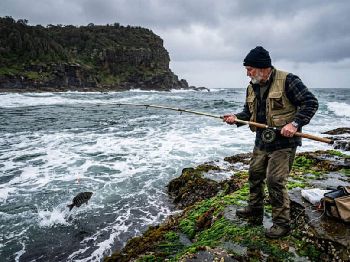
Can you target mulloway from rock ledges? Yes, the same tide-turn principle applies from ledges above deep holes, with whole pilchards, squid, or live mullet on a ganged hook rig being the standard winter rock fishing setup for jewfish in SE Australia.
What does water temperature tell you? Below 15 degrees Celsius, slow-sinking presentations almost always outperform fast-retrieve options because mulloway are conserving energy and looking for an easy meal rather than a chase, so match your speed to the temperature.
How important is moon phase for a short session? For a one or two night trip, prioritise tide timing over moon phase, but if you have flexibility in your calendar, the three nights either side of the full moon on a big outgoing tide at dusk is the best confluence of factors for a big fish.