Tailor at the Beach: Gutters, Timing and Gear

Quick summary
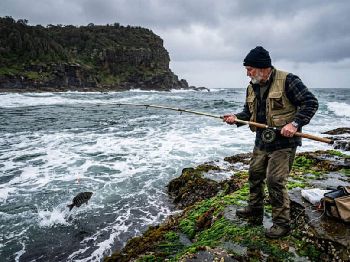
The gutter is everything - tailor sit at its mouth where turbulent white water meets calmer water, waiting to ambush baitfish pushed in by the wave surge.
Bag limits vary by state: 10 fish in NSW (30cm minimum), 20 in Queensland (35cm minimum), and 2 fish over 50cm in WA's West Coast Bioregion (30cm minimum for all fish).
The how-to
After reading this, you can identify a productive gutter from the sand, time your session to the tide, and present a lure or bait in the strike zone from first cast.
Tailor don't reward patience - they reward reading water correctly and covering ground fast until you find where the fish are holding.
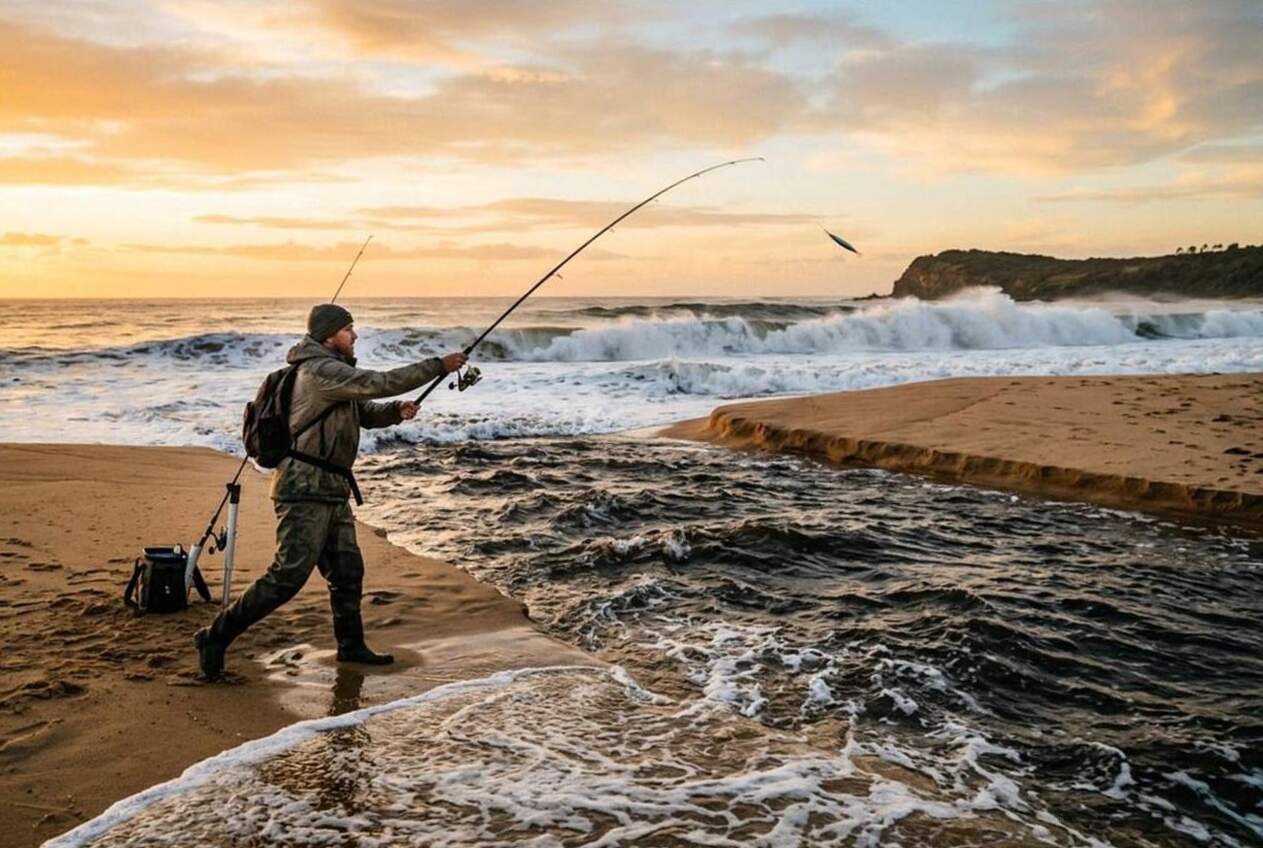
They're a schooling species that moves along the beach following bait, so your first job is locating the structure that concentrates both the baitfish and the tailor chasing them.
Reading gutters from the dry sand
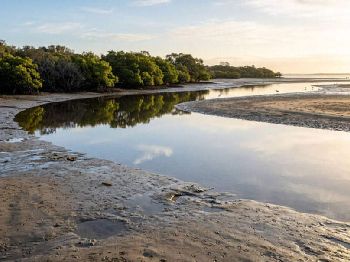
A gutter is a channel that runs roughly parallel to the beach, carved by wave action between two sandbanks or a sandbank and a headland.
Darker water in the wave zone indicates depth - that's the gutter floor.
Waves breaking on the outer sandbank, then running across a flat zone, then breaking again closer to shore tell you there's a gutter between the two break points.
The foam line and white water in the gutter itself is oxygenated and full of disoriented baitfish - this is where tailor position themselves to feed with minimal effort.
Walk the beach at low tide when the structure is most visible.
The best gutters have a defined entrance - a gap in the outer bank where swell pushes in - and an exit point where the gutter meets a headland, rock shelf, or a pinch point between two bars.
Tailor stack at those exit pinch points because bait gets funnelled and has nowhere to go.
"Tailor don't live in gutters - they hunt through them. The fish you want are at the gutter's entrance or exit, not in the middle of it."
Tide timing and what it changes
An incoming tide building toward high is the most consistent producer.
As the tide rises, the gutters deepen, baitfish move in from the outer banks, and tailor follow them into water that might be 4 to 6 metres deep right off the beach face.
The two hours either side of high tide on an ocean beach is the window where most experienced tailor anglers focus their effort.
A run-out tide from high isn't wasted - tailor push bait toward the outer banks as the water drains, and the same pinch points that concentrate fish on the run-in do the same job in reverse.
Low tide on a surf beach usually kills the bite in gutters because the water shallows to the point that tailor feel exposed and move out beyond casting range.
The exception is a deep permanent gutter - one that never fully drains even on a low spring tide - where tailor may hold regardless of tide state.
Night sessions and dawn runs
Dusk to two hours after dark and the first light of dawn are the two windows where tailor move into very shallow water, including sand gutters that are barely knee-deep.
At night, switch from chrome or white lures to darker profiles - black or dark blue soft plastics and poppers produce better results as the low ambient light changes how fish see colour contrast.
A whole garfish or fresh pilchard rigged on ganged 3/0 hooks and lobbed into knee-deep white water at dusk will often outperform lures when the fish are in the shallows at night.
Gear for lure fishing
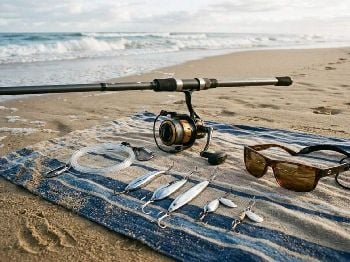
A 9 to 11-foot surf rod in the 4-8kg range paired with a 4000-6000 size reel at a 6:1 retrieve ratio or faster covers most beach scenarios.
Spool 20-30lb braid and add a 60-80cm fluorocarbon leader of 30-40lb - tailor have sharp teeth and will cut lighter leader on the strike, particularly on the first run when head-shaking is most aggressive.
Wire traces reduce cut-offs to near zero but affect lure action noticeably, particularly on smaller presentations.
Perth-based lure specialist Daniel Funston recommends using a short 20lb monofilament leader as a compromise: resistant enough to absorb most tailor bites without the stiffness of heavy fluoro, while still allowing natural lure movement through the retrieve.
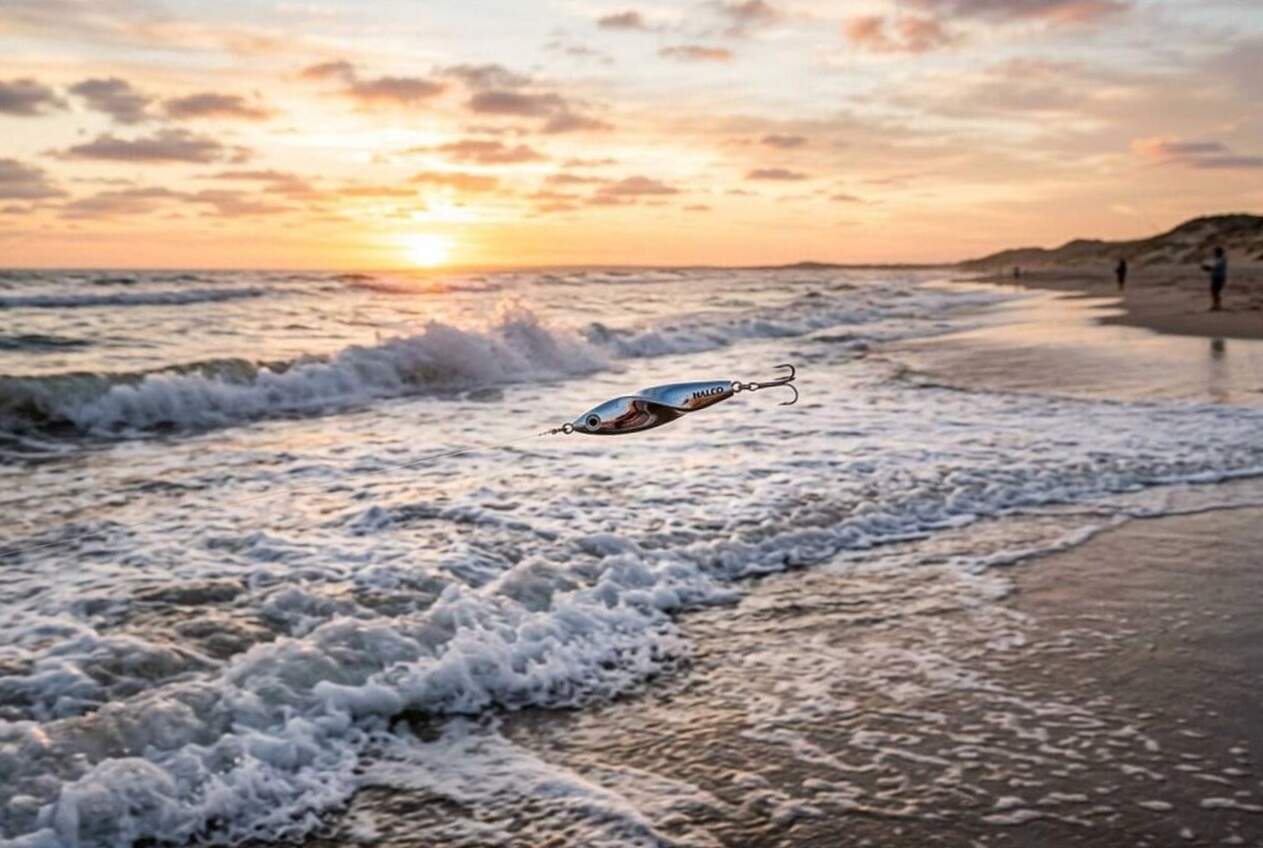
Metal slices (Halco Twisties, Spanyid Raiders) from 25g to 55g are the standard beach lure because they cast far into a headwind, sink fast, and flash hard on a fast retrieve - exactly what tailor respond to.
Surface poppers and stick baits work in calmer conditions when tailor are blitzing visible bait on the surface.
Let the lure sink two to three seconds after it hits the water before starting your retrieve.
Work it fast - a 6:1 reel winding as quickly as you can comfortably sustain for 30 metres is not too fast for a hungry tailor in a feeding school.
Bait rigs that hold in the gutter
Fresh individually quick-frozen pilchards outperform block-thawed pillies every time - the firmer flesh stays on the hook through a hard cast and holds longer in moving water.
A half pilchard on a single 4/0 hook works in calm gutters.
For stronger surf and larger fish, rig a whole pilchard on three ganged 2/0 to 4/0 hooks - the treble attachment means the bait stays intact even after partial strike.
A paternoster rig with a 60-80g bomb sinker gives you the casting weight to reach the gutter when there's a headwind and holds the bait in position in the trough without drifting out of the strike zone.
Keep the leader between hook and swivel short - 30 to 40cm - so the bait stays low in the water column rather than lifting in the wash.
The five most common mistakes
Casting short of the gutter.
The bait or lure lands on the inner bar and never reaches the fish holding in the channel - cast beyond the gutter and retrieve through it.
Retrieve too slow on lures.
A slow rolling retrieve produces little flash and no erratic action - tailor ignore it. Speed up until you feel the lure vibrating against the rod tip on each wind.
Staying in a dead gutter.
If you've had no touch in 20 minutes, move 200 metres up or down the beach - tailor are mobile and you need to intercept them, not wait for them to come to you.
Fishing the wrong phase of the tide.
Low tide on a flat beach means shallow gutters and fish pushed offshore - move your session start time to two hours before high.
Using old bait.
Block pilchards that have been through multiple freeze-thaw cycles are soft, pale and odourless - fresh IQF is non-negotiable if bait is your method of choice.
Seasonal windows and autumn conditions
May to September is the recognised peak season for tailor on Australian ocean beaches as water cools and schools move inshore to feed heavily before winter.
April - right now - is the transition period on the east and west coasts, with the first solid autumn runs beginning on the more exposed south-facing beaches.
Water temperatures dropping below 20 degrees Celsius trigger consistent tailor movement along the east coast surf beaches from Queensland's Sunshine Coast south through NSW and into Victoria's Ninety Mile Beach.
On the West Coast, tailor school heavily along the Perth metro beaches, Rottnest channel and Geraldton coast from April onward, with the run peaking in June and July.
Know your state limits before you keep anything
NSW carries a 10-fish daily bag limit at a 30cm minimum legal length - a limit reduced from 20 in recent years to ease pressure on east coast stocks.
Queensland sets the minimum at 35cm, with a 20-fish possession limit - the larger size limit reflects the population dynamics of QLD fish that generally grow faster in warmer water.
Western Australia's West Coast Bioregion applies a specific rule: only two fish over 50cm total length may be retained per day (within the 30cm minimum size and standard possession limits) - protecting the large breeding females that drive stock recovery.
Questions for your next session
What's the best tide window for the beach you're fishing - does it face northeast (exposed to different swell direction) or run north-south along the prevailing fetch?
If lures aren't working in the gutter, is the water too dirty from recent swell to see the flash - and would bait in the same location outperform?
Once you're consistently finding tailor in gutters, what does moving to rocks or headlands change about how you present to the same school of fish?
Track the Seabreeze wind forecast the night before - a 15 to 20-knot onshore overnight builds the gutter structure that holds fish in the morning session.