Flathead in Any Estuary: Work the Drop-Off

Quick summary
Flathead feeding on a drop-off are not lying in the deepest part of the channel, they are sitting on clean sand a metre or two back from the lip.
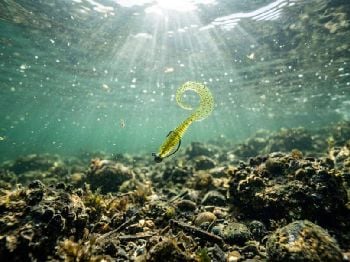
Fish a run-out tide, hop a soft plastic off the shallow sand and over the edge, and most of your bites will come on the fall.
The how-to
Check the tide, pick a flat that meets a channel, cast up-current onto the sand, and let the lure drop over the lip with the line tight.
Preparation
Start with the tide rather than the wind, because a drop-off only works when water is moving across it and pulling bait off the flat.
Look up your local times on the tide pages and plan to be standing on the flat about an hour after the top of the tide.
Run-out beats run-in, because falling water squeezes prawns, whitebait and small mullet off the sand and over the edge into the channel.
Light wind helps, not because the fish care, but because you need to feel a 10 gram jighead land and then stop on the sand.
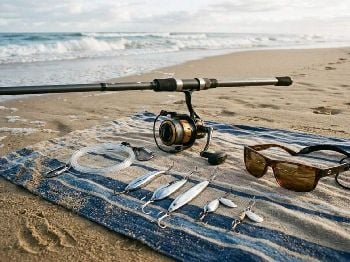
A 7 to 10 cm paddle-tail or grub on a 7 to 14 gram jighead covers most east coast estuary edges you are likely to walk.
Pick the lightest head that still lets you feel bottom in the current, since a heavy one ploughs and buries the lure in soft sand.
If you would rather fish bait, a fresh strip or a whole pilchard on a running sinker hopped along the same edge works for exactly the same reason.
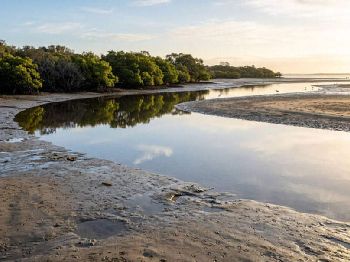
Walk the flat once at low water and note where the sand rolls away, where the weed stops and where small gutters cut back in.
Mark the lip, not the hole, because that edge is the feature you will be casting to for the rest of the season.
Initiation
Set up so you are casting up-current and across, with the lure finishing its drift along the edge instead of straight out into deep water.
Stand several metres back from the lip, because a fish lying on clean sand in a metre of water will pick up your silhouette quickly.
Cast onto the shallow sand above the edge and let the lure sink until the line goes slack, then take up that slack slowly.
Lift the rod tip enough to make one short hop, let the lure fall again, and repeat until it arrives at the edge.
Then do nothing, because the next fall, the one that drops over the lip into deeper water, is where most of your bites happen.
Flathead on a drop-off lie on the sand just off the edge, facing up-current, waiting for bait to tumble over. The deepest part of the hole is usually the emptiest water you will fish all day.
Commitment
Keep contact the whole way down, because these fish eat a falling lure and you will never know about it unless the line is talking.
Watch the line where it enters the water and feel for the lure stopping, since a stop that comes early is very often a fish.
They sit facing up-current, which means a lure arriving from upstream looks right while a lure dragged back against the flow looks wrong.
Work the edge in sections, fanning five or six casts across one 10 metre stretch before stepping along and repeating the same pattern.
Give the last two hours of the run-out your best effort, because that is when the flat drains and bait has nowhere left to hide.
Cover ground, then slow down, because where you find one fish on an edge, several more are usually lying within a short cast of it.
Execution
When the lure reaches the lip, pause for two or three seconds and let the current swing it slightly, then begin a slow hop down the face.
Each hop is a single short lift and a long fall, with the rod tip low and the line sitting just off slack.
The bite is rarely a tap, it feels like the lure has suddenly got heavier, or the line stops moving while it should still be falling.
Strike on weight, winding fast as you sweep the rod sideways rather than snapping it upwards into thin air.
Keep pressure steady through the fight, because flathead shake their heads hard on a short line and hooks pull free of soft mouths.
Have a net ready instead of lifting fish by the leader, which tears hook holds and drops good fish at your feet in the shallows.
If you are releasing, keep the fish in the water while you unhook it and support it until it swims off under its own power.
State fisheries set the current size and bag rules, so check them before you keep anything, since they differ between states and can change through the year.
Failure diagnosis
If you blank, the most likely reason is that you fished the deep middle of the channel instead of the first metre of sand off the edge.
The second most likely reason is speed, since a lure jumping a metre at a time looks like nothing a flathead has ever eaten.
Too heavy is worse than too light, because a jighead that ploughs kicks up sand, blunts the hook point and ruins the fall.
If the bites dried up as the tide turned, you are now fishing a flood that spreads bait across the whole flat instead of concentrating it.
If fish swirl and bolt as you arrive, you are standing on the lip and lining them, so back off and lengthen your casts.
If your leader keeps coming back scuffed with no hook-ups, your hops are landing in the oyster or rubble section rather than clean sand.
If one edge stays quiet, change edges rather than lures, because an empty drop-off stays empty no matter what colour you tie on next.
Compare notes with other estuary anglers in the forums and you will find the same style of lip fishing differently from system to system.