The Shade Line: Bream on Any Foreshore

Quick summary
Yellowfin and black bream sit in the first metre of shadow thrown by pontoons, rock walls and boat ramps, not out on the bright sand.
You cast past the shade, retrieve along its edge, and pause the lure in the dark where the fish are already looking up.
The how-to
After reading this you can walk any urban foreshore at high water, pick the shaded wall, and work it pylon by pylon.
Most anglers walk straight past the best bream water in the estuary because it sits in a strip of shadow about a metre wide.
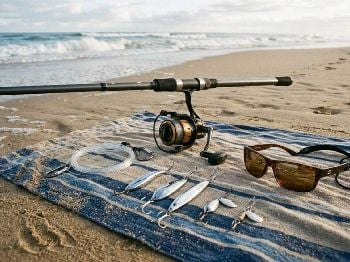
You already have the gear for it: a light spin outfit in the 2-4 kg class, 3-7 g jigheads, a small hardbody, and the ability to land a cast on a pylon from 10-15 m.
What changes is where you aim and how slowly you are prepared to work the lure once it gets there.
Read the sun before you read the water
Pick the shaded side first. Stand back and look at which wall, pontoon or ramp is throwing shadow onto the water, because that is your whole session mapped out in one glance.
Then check the tide. A making tide pushes bait and prawns up against the structure, and the shade line fills as the water rises over it.
Water temperature matters less than you think. Anywhere between 18.0° and 24.0° will produce, though the warmer end usually means a faster, more aggressive grab.
Plan the session around the two or three hours of run-in water and use the tide times to decide when to be standing on the right wall.
Start at the up-tide end
Walk to the up-tide corner of the structure. Your first casts should land there so the current carries the lure naturally along the shade rather than dragging it out into the light.
Cast two metres past the shadow. Dropping a lure straight onto a fish in clear shallow water spooks it, which is why the cast-past-and-swim-through approach outfishes vertical presentations on foreshores.
Keep your shadow off the water. Stand back from the edge, or to one side, so you are not looming over the exact metre you are trying to fish.
Gary Brown, a long-running New South Wales estuary writer, has made the same point for years in different words: the fish are in the shadow, not the sparkle.
Hop the shade, not the sand
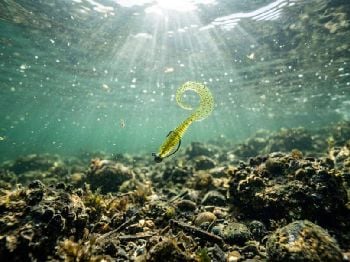
Go as light as you can get away with. A 3 g head on a 3-7 g rod lets the plastic hang in the strike zone instead of diving under the pontoon and out the far side.
Work it in short hops. Two small lifts, then let the lure settle, then two more, following the edge of the shadow the whole way back to your feet.
Treat the dark edge as the target line. You are trying to swim the lure along the boundary between light and shade, not bang it off the rocks or crash it into a pylon.
The pause is the strike
Most bites happen on the drop. You will feel either a sharp tick through the braid or a sudden weight, as though the lure has snagged a plastic bag.
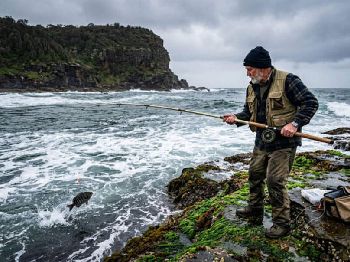
Do not rip it out. Lift into the weight with a firm sweep rather than a strike, then hold the fish away from the barnacles with steady side pressure.
When in doubt, twitch and wait. A dead-sticked plastic sitting in a metre of shade will often get eaten by a fish that followed it the whole way in.
Move one pylon along and repeat
Three or four casts per pylon is plenty. If the shade holds a fish you will usually know inside a minute, so cover ground rather than flogging one spot.
Leapfrog the whole wall. A single rock wall or marina can hold twenty separate shade pockets, and each one is a fresh chance at an untouched fish.
Five mistakes that cost you fish
Fishing the sunlit side. The cause is convenience, since the sunny bank is often the easier cast, and the fix is to walk the extra hundred metres to the shaded structure.
Too heavy a jighead. Heavy heads sink through the strike zone and wedge in the rocks, so drop to the lightest head that still lets you feel the lure.
Retrieving too fast. Nerves make people wind, which drags the plastic out of the shadow in two seconds, so count to three on every pause.
Standing over the fish. Shallow foreshore bream see movement and shadow from above, so step back and lengthen your cast instead of leaning out.
Staying put on the falling tide. As the water drops the shade empties and the fish slide out to deeper edges, so follow them or finish the session.
Staying safe on urban foreshores
Boat ramps are working infrastructure, so keep clear of trailers, never cast across a launching lane, and give other anglers a wide berth.
On rock walls, watch the wash from passing hulls and keep both feet on dry rock rather than the weed line.
NSW DPI manages recreational fishing in New South Wales, and other states run their own systems, so know the rules that apply where you stand and keep only the fish you genuinely intend to eat.
Your next session
Once finding the shade line feels automatic in daylight, fish the same walls after dark, when the lit side of a pontoon does exactly what the sunny side did in reverse.
Does this work on black bream too?
Yes, black bream in southern estuaries sit tight to shaded structure in the same way, though they often sit deeper under the pontoon.
What if there is no shade at all?
Fish the structure edge anyway, but expect a slower bite and drop your retrieve speed further to compensate.
Hardbody or plastic?
A small shallow hardbody suits parallel casts along a rock wall, while a light plastic is better for pausing under pontoons.
Does wind ruin it?
Light wind is fine and even helps by breaking up the surface, but a hard onshore blow fills the shade with chop and scatters the bait.
Share your shade-line results and swap foreshore notes with other estuary anglers in the Seabreeze fishing forums .