Boating in Whale Season: Rules and Practice

Quick summary
Boats must stay at least 100 metres from humpbacks in NSW, or 300 metres if a calf is present. Jet skis must hold 300 metres at all times.
Queensland adds a 300-metre caution zone where you cannot exceed 6 knots, and a three-boat rule limits how many vessels can occupy the caution zone at once.
The how-to
After reading this, you can identify a no-approach zone from your helm position, respond correctly when a whale surfaces near your boat, and avoid the fines that cost recreational boaters up to $1,320 on the spot.
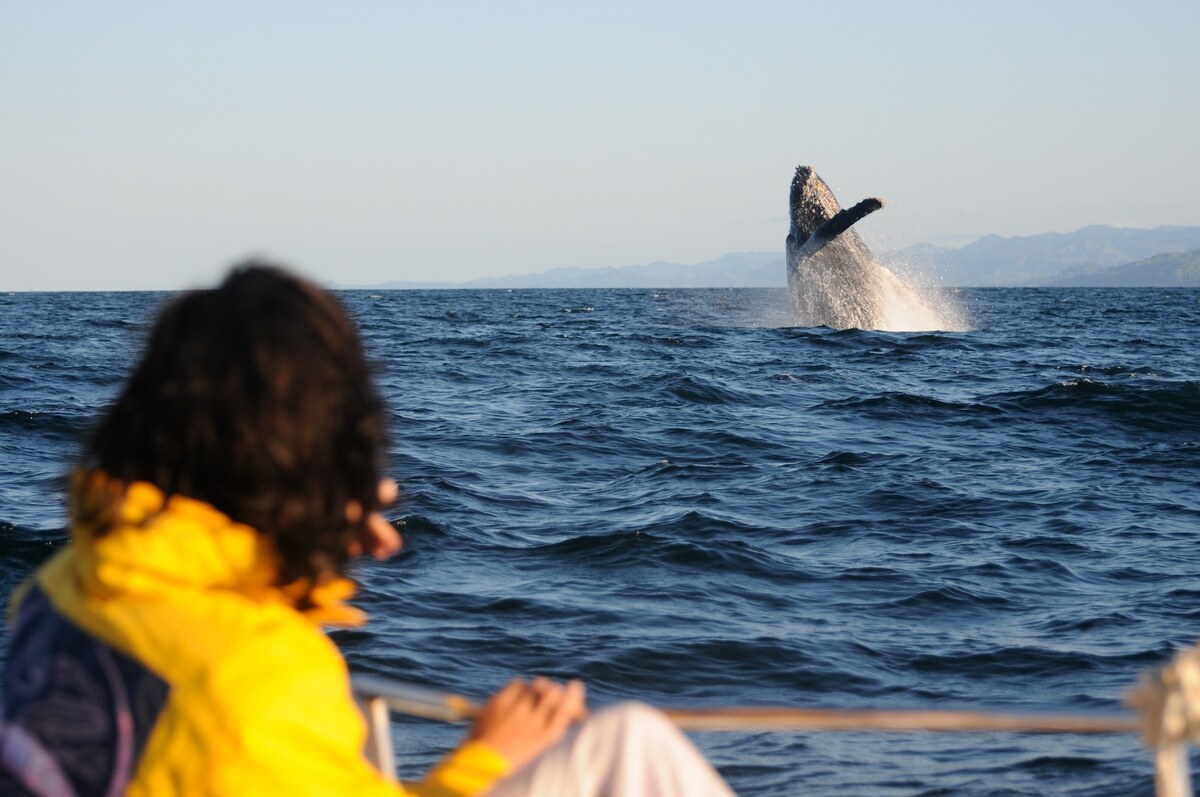
More than 50,000 eastern Australian humpback whales are now moving north along the NSW coast, according to marine scientists tracking the 2026 migration.
That figure is 20,000 above the estimated pre-whaling population, making this one of the densest annual concentrations of large marine mammals in the southern hemisphere.
Every vessel operating between Tasmania and Queensland right now - trailer boats, sailing yachts, kayaks, jet skis, and SUPs - will encounter them.
Most encounters are straightforward if you know the rules and read the whale.
The legal distances: NSW
Under the NSW Biodiversity Conservation Regulation 2017, every powered or unpowered watercraft must stay a minimum of 100 metres from any whale.
If a calf is present, that distance extends to 300 metres - and the definition of calf includes any young animal clearly accompanying an adult.
Personal watercraft, including jet skis, must maintain 300 metres from whales, dolphins, and dugongs at all times, regardless of calves.
You cannot approach a whale from directly behind or position your vessel directly in front of one.
Within 300 metres of any whale, you must travel at a constant slow speed and leave minimal wash.
Britt Anderson, NPWS Project Officer for Operation Ketos, notes that the regulations exist because close approaches force whales to divert, burning energy reserves that are critical during a 10,000-kilometre migration.
The on-the-spot penalty for recreational boaters who breach minimum distances in NSW is $1,320. Commercial operators face fines of $3,300 per offence.
The legal distances: Queensland
Queensland operates a two-zone system.
No approach zone: a 100-metre bubble surrounding the whale, plus a 300-metre exclusion zone directly in front of and directly behind the animal.
The no-approach zone is not a circle around the whale - it is a 700-metre corridor the whale is moving through, plus the 100-metre bubble around its body.
Caution zone: an area extending 300 metres from the whale in all remaining directions, where you cannot travel faster than 6 knots and must not create a wake.
Queensland also enforces a three-boat rule: if three vessels are already within the caution zone of a single whale, you cannot enter.
When a whale comes to you
This is the situation that catches most skippers unprepared.
Humpbacks are genuinely curious and often approach anchored or drifting vessels from below.
In NSW waters, if a whale surfaces within 100 metres of your vessel, put the engine in neutral and let it pass.
Do not attempt to motor away at speed - the sudden engine note can startle the animal and cause an unpredictable reaction.
In Queensland, if a whale approaches so that you are inside the caution zone, you must reduce to under 6 knots immediately.
If the animal comes inside the no-approach zone, you must disengage the gearbox or withdraw at under 6 knots, no wake.
An adult humpback can reach 18 metres in length and weigh up to 36,000 kilograms.
"Vessel collisions and near misses occur every year and risk injury to whales, but also damage to vessels and potentially the safety of vessel crew and occupants."
That observation from the NSW Environment Department's 2026 season guidance captures the practical risk - whale strikes are not just a wildlife welfare issue.
Reading whale behaviour before it becomes a problem
Knowing what a whale is about to do gives you time to respond.
Fluking: a clean tail lift followed by a dive means the animal is going deep - clear the area it was heading in case it surfaces at distance.
A slow roll or pectoral slap on the surface usually means a resting whale. Give it extra width and do not idle nearby - the wash from even a slow vessel can disturb a resting animal.
Rapid surface movement, repeated blow, or spy-hopping (the whale lifts its head vertically out of the water) indicates an active, alert animal.
Calves are not always visible at distance. A large adult moving slowly with short dive intervals is often a cow and calf pair where the calf is surfacing close under the mother. Approach the 300-metre threshold from 100 to 300 metres out and reassess before proceeding.
Engine and throttle protocols
Running at idle speed within the caution or approach zones is not enough on its own.
Prop wash and cavitation from a vessel moving at 3-4 knots can still disturb a whale feeding or resting at shallow depth.
Neutral at the helm, engine still running, is better than slow throttle when a whale is within 100 metres of your beam.
If you have a diesel engine and are on a passage, factor in that low-RPM diesel vibration carries significantly further underwater than you might expect.
Kayakers and SUPs should avoid prolonged proximity even though they fall under the same 100-metre rule. Paddlecraft movement on the surface above a resting animal can push it into deeper water before it has had sufficient time to rest.
Drone restrictions
Drones must stay a minimum of 100 metres from whales in all directions.
The 100-metre horizontal distance applies at the surface, but it also means you cannot fly directly over a whale at any altitude below 100 metres.
Commercial drone operations near whale migration corridors require permits in some marine park zones.
Reporting distressed or entangled whales
If you find an entangled whale anywhere on the NSW coast, do not attempt to cut lines yourself - the force involved is significant and the risk of injury to crew is high.
Call NPWS on 1300 072 757, or ORRCA (Organisation for the Rescue and Research of Cetaceans in Australia) on (02) 9415 3333.
In Queensland, contact SeaWorld's rescue line on (07) 5591 0837, or AMSA's national response on 1800 641 792.
Mark your GPS position and stay nearby at a distance, so you can relay the whale's location to responders.
State-by-state quick reference
Victoria, Tasmania, and South Australia follow the same minimum 100-metre approach distance that applies in NSW, with 300 metres if a calf is present.
Western Australia enforces the same national minimum standards, with additional restrictions inside specific marine parks and sanctuaries along the Humpback Highway near the Kimberley coast.
The Northern Territory's coastal waters are calmer for humpback activity - the population moving through northern waters during winter is smaller and the encounter rate lower than on the east coast, though the same national minimum distances apply.
Common questions
Can I snorkel or dive with whales? People in the water are covered by the same 100-metre rule (300m with a calf) in NSW. Do not enter the water within that distance for the purpose of approaching a whale, even on breath hold.
What if I am fishing and a whale surfaces near my anchor? Put the engine in neutral, secure loose gear, and wait for it to move clear. You are not required to pull anchor if the whale is still outside the 100-metre zone, but monitor its direction carefully.
Do the rules apply offshore? Yes. The approach distance rules apply throughout Australian state and territory waters. Federal waters beyond the 3-nautical-mile line fall under Commonwealth law, which mirrors the same minimum distances under the Environment Protection and Biodiversity Conservation Act.
Peak season timing: northbound migration peaks late June through July, with the highest density of animals closest to the headlands. By September, most animals are heading south and encounter frequency drops from August. The peak period right now - mid-June - is when the most animals are concentrated along the NSW coast.
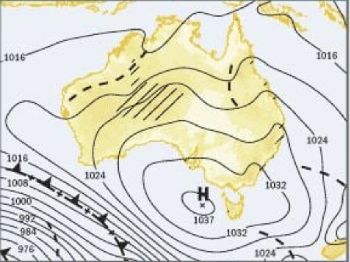
Check Seabreeze wind forecasts before heading out - calm morning windows are the clearest for whale spotting and for safe, controlled encounters when they surface near your hull.