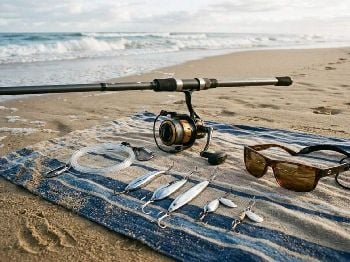
Read the Beach: Find the Gutters, Find Fish

In short
A gutter is a deeper channel scoured into the sand, and it is where beach fish gather to feed and shelter.
Learn to read the water colour, the waves and the tide, and you can find the fish before you make a single cast.
The how-to
Stand back, look for the darker, calmer strip between the breakers, fish its edges, and match your session to the tide.
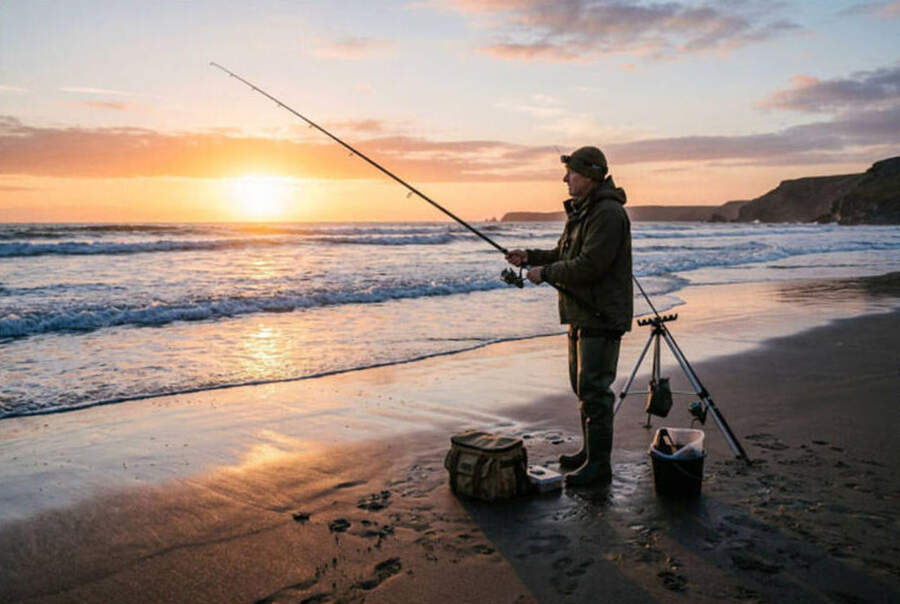
Beach fishing rewards the angler who reads the water first and casts second, because the sand in front of you is never featureless.
Waves and currents carve the beach into banks and channels, and the fish use those features exactly the way you would use a road.
Find the channel, the gutter, and you have found the highway that fish travel and feed along as the tide moves.
The good news is that you can learn to spot a gutter from the beach with nothing more than your eyes and a little patience.
What a gutter actually is
A gutter is a stretch of deeper water that waves and backwash have scoured out of the sand, usually running roughly parallel to the beach.
Waves push water up the sand, and that water has to escape somewhere, so over time it carves out channels and holes.
Those deeper channels trap food stirred up by the surf, which is exactly why fish gather there rather than over the shallow banks.
Think of a gutter as a pantry and a hallway at once, holding food and giving fish a safe path to move along.
How to spot one
The single biggest tell is water colour, because deeper water is darker, showing as a green, blue or dirty band against the pale sand.
Shallow banks show up as lighter, sandy coloured water, often capped with white foam where the waves break over them.
Waves give the second clue, as they break heavily over shallow banks but roll through unbroken over the deeper water of a gutter.
A patch of calmer, less foamy water flanked by breaking waves on either side is very often a gutter worth fishing.
Get up high
You will read a beach far better from an elevated spot such as a dune, a headland or a low cliff.
Height flattens the glare and lets you see the whole pattern of banks and channels rather than a confusing wall of waves.
Take a minute or two up there before you rig up, and sketch the layout in your head before you commit to a spot.
Polarised sunglasses help enormously, cutting the surface glare so the darker gutters and lighter banks stand out clearly.
"Ten minutes spent reading the beach from the dunes will out fish an hour of blind casting into the nearest wave."
Reading the water once you are on it
Once you pick your gutter, look for the seam where the white foam ends and the cleaner, darker water begins.
That edge is prime, because fish sit in the deeper water and dart into the foam to grab food the surf stirs up.
Species like whiting and tailor often feed right in the turbulence, so do not ignore the white water close to the sand.
Cast to work the whole gutter, from the back edge near the bank to the mouth where it spills out to sea.
 The tide changes everything
A gutter is not a fixed thing, and the tide can turn a cracking spot into a dead one within hours.
A channel that fishes beautifully with a metre of water over it may be a shallow drain at the bottom of the tide.
The turn of the tide often triggers the best feeding, so aim to fish the couple of hours either side of a change.
Check the tide times before you leave, and picture how much water your chosen gutter will hold across your whole session.
Where to put the bait
Once you know the shape of the gutter, place your bait where the fish are travelling and feeding, not just as far as you can throw.
Often the best water is close in, a short lob into the near gutter rather than a heroic cast over the back bank.
Work the edges and the ends of the gutter, where deeper water meets shallow and fish funnel through on the move.
If nothing happens after a good soak, move along the beach and read the next gutter rather than waiting it out.
Common mistakes
Casting as far as possible. Distance feels productive, but you often fly your bait clean over the fish holding in the near gutter.
Ignoring the tide. A great gutter at high water can be useless two hours later, so always fish the water, not the memory.
Standing too low to read the beach. From sand level the surf is a blur, so climb the dune and get the overview first.
Staying put too long. If a gutter is dead, the fish have told you something, so move and read the next one.
Common questions
What does a gutter look like from the beach?
Look for a darker, calmer band of water running along the beach, flanked by lighter, foamier water breaking over the shallow banks.
When is the best time to fish a gutter?
Around the turn of the tide, and in low light near dawn and dusk, when fish move into the shallows to feed.
Do I need to cast a long way?
Usually not, as the near gutter close to the sand often holds the fish, so accuracy beats raw distance most days.
Does this work on every beach?
The principles hold anywhere there is surf and sand, though the size and shape of gutters vary from beach to beach.
Plan your session with the Seabreeze New South Wales tide times , and check the Sydney wind forecast before you head down.