Slow Jigging for Snapper: Depth and Jig Weight

Quick summary
Slow-pitch jigging works because the jig mimics a dying baitfish on the fall - and snapper eat on the drop 90% of the time.
The weight rule is simple: 1g of jig per 1m of water as a starting point, then adjust for current and wind.
The how-to
Read this and you'll know how to select jig weight for any reef depth, set the rod action for winter snapper, and identify the structures that produce the most bites.
Slow-pitch jigging has quietly become one of the most reliable ways to find winter snapper on Australian reefs, particularly when fish are tight to the bottom and ignoring the plastics that worked well through autumn.
The technique differs from speed jigging in one important way: you are not trying to imitate a fleeing baitfish.
You are imitating a wounded one - and that distinction changes everything about how you rig, drop, and retrieve.
What you already need to be comfortable with
This guide assumes you can already read a sounder well enough to identify reef structure and hold a boat over a mark in a moderate current.
If you're finding and fishing reef marks for the first time, the slow-pitch technique will still work - but understanding what's under the boat will multiply your result.
The jig weight rule - and why it's a starting point
Start with 1g of jig per 1m of water depth as your baseline, experienced angler Dave Rae of Daiwa Australia advises.
In 40m of water, that's a 40g jig; in 60m, a 60g jig.
In practice, Rae uses 35-40g jigs on shallow reef (under 30m) and steps up to 60-100g for water out to 55m.
The 1g rule breaks down in two situations: strong current, or persistent wind pushing the boat across the mark faster than the jig can settle.
When the jig trails behind the boat at a steep angle rather than dropping vertically, add 20-30% to the weight until the line goes straight down.
A jig fishing on a diagonal is not just less effective - it's covering different water to what the sounder is showing you, which means you'll miss the structure altogether.
"I do seem to catch more snapper on the lighter models" - Dave Rae, Daiwa Australia, on the tendency to fish too heavy in shallow water.
The lesson: resist the instinct to go heavier when fish aren't responding.
A 40g jig in 30m falls more slowly than a 60g jig in the same depth, which gives snapper more time to eat it on the way down.
Why the fall matters more than the lift
Ninety percent of slow-pitch snapper bites happen as the jig falls, not as you lift it.
The lift is just the reset - it repositions the jig above the snapper so the fall can trigger the take.
A slow-pitch retrieve runs like this: let the jig sink until you feel it touch bottom, then lift the rod tip slowly to about the 1 o'clock position and let the jig fall freely on a semi-slack line.
The instant the jig touches down, lift it again - do not let it sit on the reef.
Snapper inspect jigs on the bottom and lose interest fast; keeping the jig in motion through the water column above the reef is the difference between a bite and a dismissal.
The semi-slack line on the fall is deliberate: a tight line kills the jig's flutter action, which is what snapper are responding to.
Feel for the take by watching the line, not by holding tension on it - a bite on the fall shows as a twitch or a sudden change in the rate of descent.
Reading the sounder for snapper structure
Flat reef produces snapper, but reef with transitions - a ledge dropping 5m, a wall lifting sharply, a pinnacle rising from a sandy bottom - produces more snapper, and bigger ones.
These transitions concentrate bait, and bait concentrations are what hold snapper in a specific location from tide to tide.
Target the up-current edge of any reef structure rather than the top, particularly when tidal flow is running.
Snapper will sit on the bottom just inside the shadow of the current, waiting for food to wash over the edge and fall into their zone.
Drop your jig on the up-current side of a ledge, let it fall to the bottom, and retrieve it through the water column above the ledge edge on the drift.
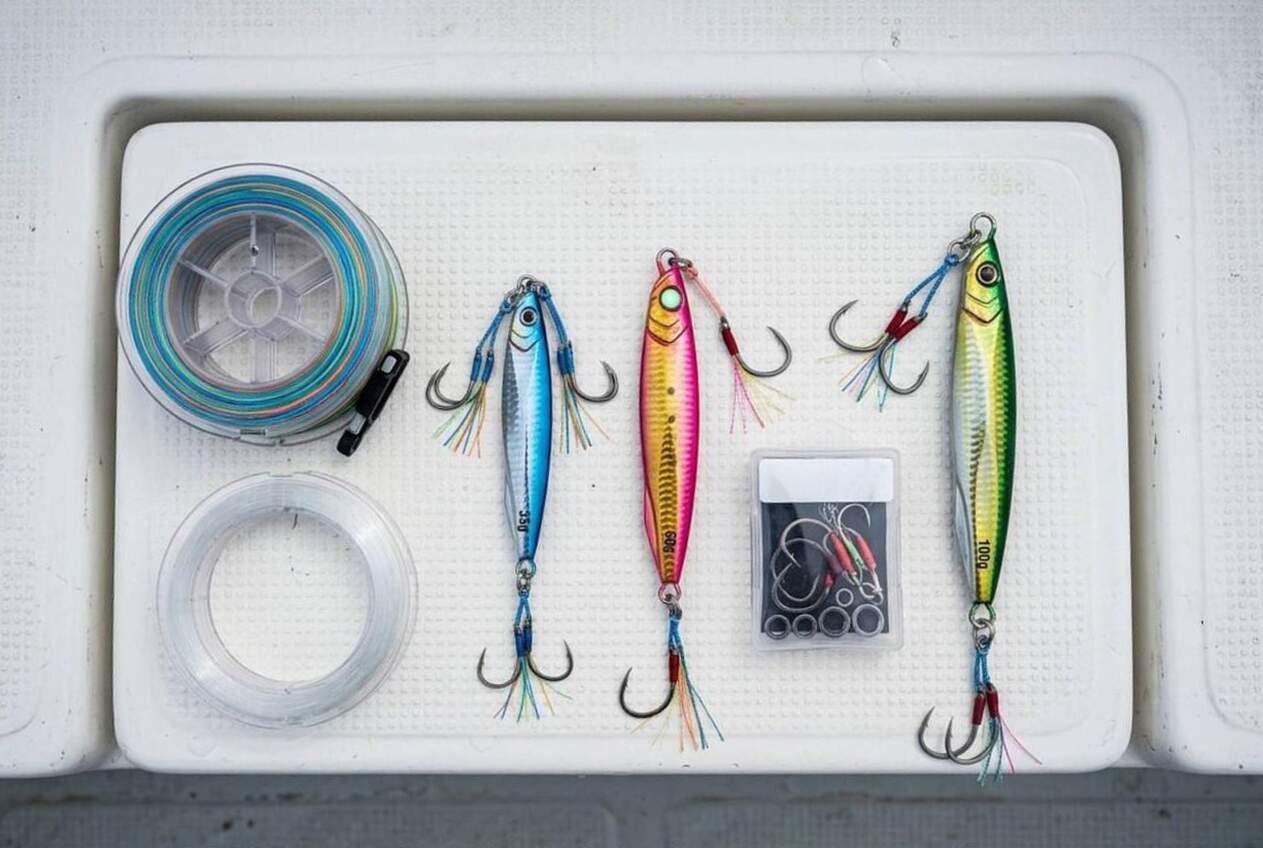
Line grade: matching braid to the job
Slow-pitch jigging for snapper runs best on light braid, which gives the jig more action and keeps you in contact with the fall.
In most situations, 20lb J-Braid (0.23mm diameter) covers snapper under 5kg on clean reef.
Step to 30lb (0.28mm) when fishing over kelp, when bigger fish are likely, or when you need more control over a fish running back into reef structure.
Use 40lb when the reef you're fishing is also a known samsonfish or kingfish mark - you may hook something much bigger than the snapper you came for.
Multi-coloured braid with metre markings is particularly useful for slow-pitch jigging: by reading the colour sections, you can see exactly how far the jig has fallen and replicate the depth where the last bite occurred.
Hooks and rigging
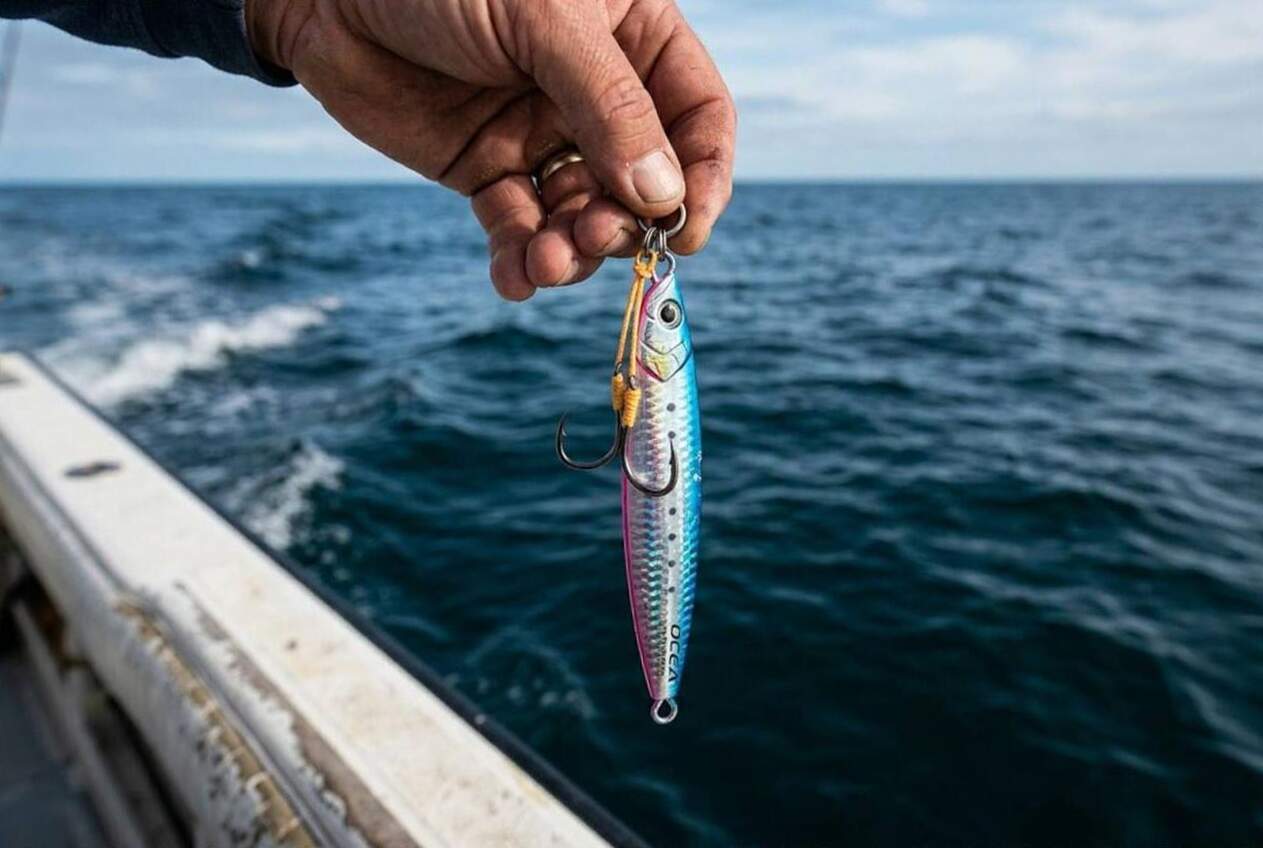
Rig hooks on the top (tail) of the jig only, not the bottom (head).
When a slow-pitch jig falls, the hooks ride above the body - a bottom hook would trail below the jig and snag into the reef before you can feel it touch down.
A single assist hook on the tail is standard for snapper in clean reef; add a second assist if you are fishing around boulders where snapper can drive hard into cover on the take.
Winter 2026: why depth may be shallower than you expect
Snapper on SE Australian reefs typically move deeper as water temperature drops, settling into 40-60m by mid-winter.
Bureau of Meteorology seasonal outlooks released in April 2026 project this winter among the three warmest on record - following record-breaking winters in 2023 and 2024.
Warmer coastal water has already been tracked along the NSW and Victorian coast through autumn, running 1-2 degrees above historical averages for the time of year.
Fish that would normally be sitting at 50-60m by late May may still be holding at 30-40m or even shallower on inshore structure.
If you've been fishing your usual deep winter marks without result, try working 10-15m shallower on the same reef system - and dial jig weight back accordingly.
Regulations before you go: state-by-state
NSW sets a bag limit of 10 snapper per person per day with a minimum size of 30cm, confirmed by NSW DPI.
Victoria sets a bag limit of 3 snapper per person per day, all measuring 40cm or over; smaller juvenile snapper (pinky) require a 28cm minimum size, according to Victorian Fisheries Authority rules.
South Australia: the South-East fishing zone is open for snapper until 30 June 2026, but the West Coast, Spencer Gulf, and Gulf St Vincent/Kangaroo Island zones remain closed until that date - check PIRSA before you head out.
Always check current regulations for your state before you launch - size and bag limits can change within a season.
Common mistakes that kill the bite
Lifting too fast converts a slow-pitch jig into a speed jig, eliminating the flutter on the fall that snapper respond to.
Fishing on a tight line through the fall stops the jig from moving naturally - bites feel vague and are often missed.
Letting the jig sit on the bottom for more than a second or two kills the session; snapper investigate and move on, and you'll spend the rest of the drift following uninterested fish.
Using too heavy a jig in shallow water shortens the fall time and reduces bites - if you're fishing 25-30m and getting ignored, try dropping to a 30g jig and slowing the lift cadence.
Questions for your next session
What if the current is too strong for even a 100g jig? At that point, switch to bait or a dropper rig and wait for the tidal window - slow-pitch jigging requires a near-vertical drop to work correctly.
Can I use a standard overhead reel? Yes - a sturdy baitcast overhead is a common choice for slow-pitch; the key is a smooth, reliable drag rather than high retrieve speed.
Should I use a fluorocarbon leader? A 40-60cm section of 20-30lb fluorocarbon between the braid and the assist hook gives abrasion resistance on rough reef with minimal impact on jig action.
What do I try when the bite goes quiet after a few fish? Change jig colour first, then weight - snapper that have seen the same jig on a slow tide can switch off quickly.
When conditions line up - find your mark on the sounder, check the Seabreeze wind forecast and the tide chart for your launch time, and bring a selection of jig weights.