Southern Calamari: The Egi Technique That Works

Quick summary
Southern calamari hit hard on the drop, not the lift - most anglers are working their jig wrong and catching far less squid than they should.
The Japanese egi setup (long rod, fast lifts, heavy jig, bottom contact) consistently outfishes the traditional Australian slow-retrieve approach by covering more water and triggering the strike at the right moment.
The how-to
After reading this, you will be able to rig a correct egi setup, find squid-holding structure, and execute the lift-and-drop technique that puts fish in the bag every session.
If you are still slowly working a 2.5 squid jig mid-water on a standard 7-foot spin rod, you are leaving most of the school untouched.
Southern calamari - Sepioteuthis australis - are available around Australia's southern coastline from Exmouth to Sydney and down through Victoria, SA, and Tasmania, and May through August is when they school hard over shallow reefs and weed beds.
The Japanese egi method has completely transformed what is possible on a morning session - more water covered, heavier jigs reaching productive depths, and a technique that triggers the strike during the sink phase rather than the retrieve.
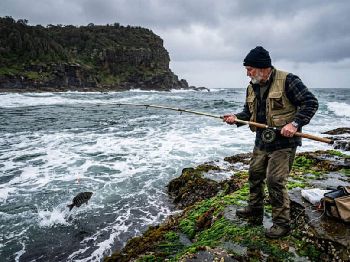
"The technique involves casting as far as you can over weed or kelp beds in 4 to 10 metres of water and letting the jig sink deep until just above the bottom." - Greg Finney, Fishing World Australia
The egi rod - why length and stiffness matter
An egi rod runs 8 to 9 feet, longer and fractionally stiffer than a standard lure rod, for two specific reasons that directly affect your catch rate.
First, the extra length adds 5 to 10 metres of cast distance, which in squid fishing translates directly to more territory covered per session.
Second, a longer and stiffer tip generates more movement on the aggressive upward rod-tip lift that is the core of the egi technique.
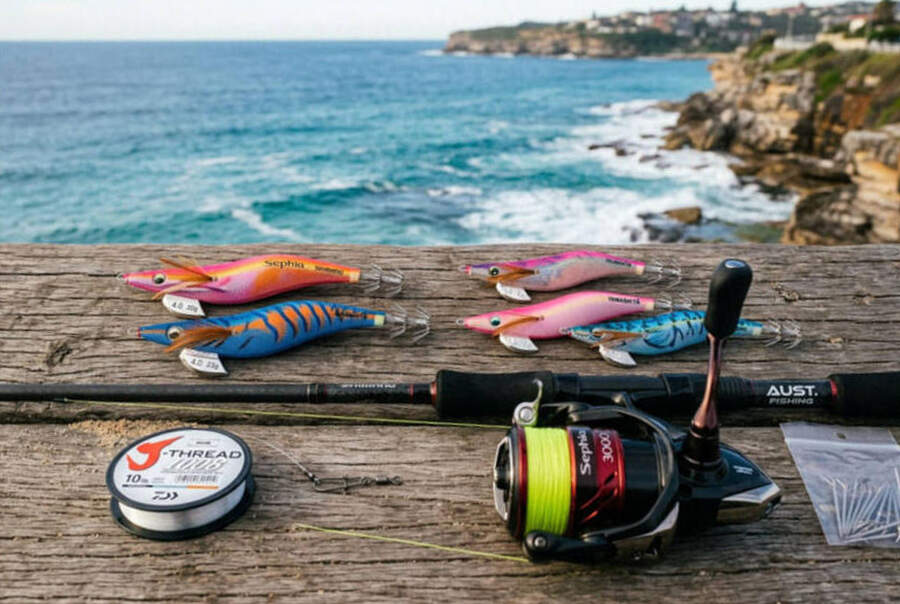
Shimano's Salty Advance Eging S83ML (8'3") and Daiwa's egi range are proven performers starting around $250, with higher-end Japanese imports available for those who want to go further down the rabbit hole.
Reel, braid, and leader
A 2500 or 3000-size threadline reel is the standard - you do not need anything fancy, because line selection is far more important than the reel itself.
Load it with a full spool of light braid: PE0.6 over ribbon weed in 3-5 metres, stepping up to PE0.8 or PE1.0 over thicker kelp where the risk of a lost jig increases.
The lighter your braid, the further you can cast - and with squid, extra casting distance is one of the clearest variables you can control to improve catch rate.
Add 2 metres of fluorocarbon leader: 8lb over shallow weed, 12lb over kelp where the bottom is rougher and fouled jigs are more likely.
Use a welded quick-snap swivel on the leader for fast jig changes - you will be changing colour and size more often than when lure fishing, and stopping to re-rig repeatedly kills session momentum.
Jig size and the 490nm colour insight
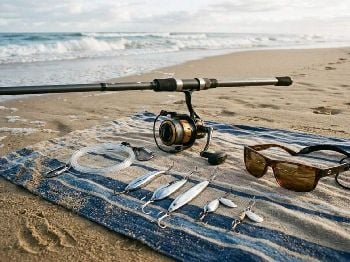
Step up from the traditional 2.5 jig to sizes 3.0 through 4.0 when targeting adult southern calamari - these larger jigs sink faster and reach productive depths in 6-10m water before the squid lose interest.
Jig size choice follows a simple rule: 1.5-2.2 for juvenile calamari in shallow, calm water; 2.5-3.5 for general work; 3.5-4.0 when fishing deeper structure or when squid are targeting larger prey.
Colour choice has a scientific edge. Research has identified that squid perceive the 490 nanometre wavelength - an electric cobalt blue - more clearly than any other colour, with Yamashita producing a dedicated 490 Glow range based on this finding.
White and pink remain highly effective as fallbacks, but that cobalt-blue option is worth carrying if you fish dawn, dusk, or overcast conditions when squid are actively feeding.
Daiwa's Emeraldas Nude, Shimano's Sephia Clinch Flashboost, and Yamashita's Egi-O Q Live all have strong track records across southern Australian estuaries and reef edges.
The lift-and-drop technique
Cast as far as you can over the target zone and let the jig count down - most 3.0 jigs in standard sink rate take 7-10 seconds per metre of depth, so learn your jig's rate in your local water.
The jig should reach the bottom of your chosen depth without touching - weed fouling the hooks kills the session, so count it down to just above bottom.
From there, lift the rod tip fast and hard - not the gentle lift most Australian anglers use - covering roughly 1 to 2 metres of vertical water column in a single sharp stroke.
Then let the jig fall again on a semi-slack line, watching the braid closely.
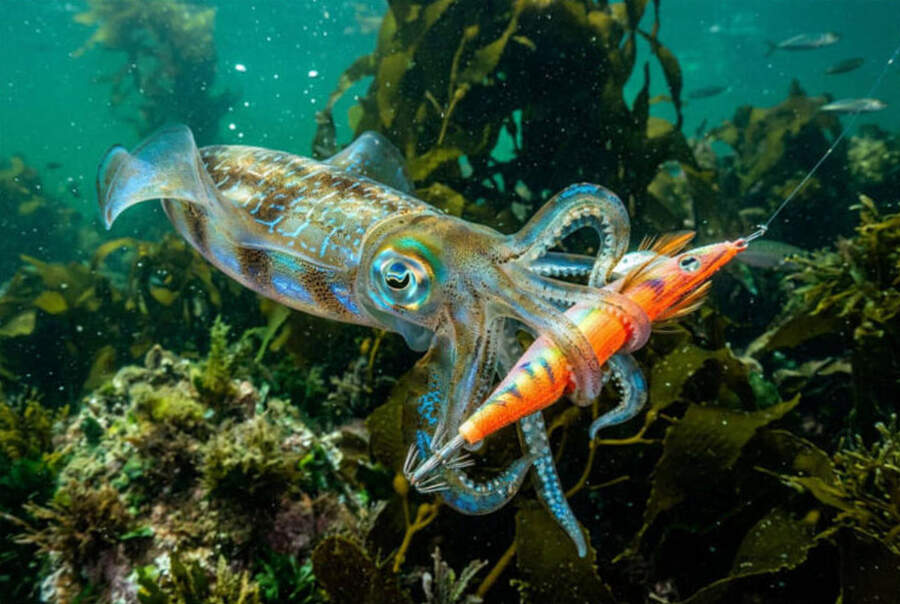
The strike almost always comes during the sink phase, not the lift - the calamari watches the jig rise, positions itself, and grabs it on the way back down.
If you feel any tick or pause on the line during the sink, or if the line stops falling at an unusual rate, lift firmly.
Stay tight without jerking too hard - a rough hookset pulls the prongs clean from the tentacles and the squid is gone.
Finding squid-holding structure
Squid sit tight to structure: ribbon weed, kelp beds, rocky rubble, coral patches, and pier pylons all concentrate the small fish and crustaceans they feed on.
Fish the clearest water you can find - inshore areas are cleanest on the high tide, which makes high-tide windows the most productive regardless of time of day.
From the shore, walk 3-4 paces between each cast sequence to cover ground methodically rather than working the same patch repeatedly.
From a boat, use the wind to drift across likely weed beds at 3-8 metres depth rather than anchoring - drifting covers far more of the productive zone in a single session.
Landing without getting inked
Net the squid from the head end - scooping tentacle-first causes them to jet away when they see the net approaching, and you will lose the fish.
Once netted, hold them over the water for 5-10 seconds while they clear the last of their ink before bringing them into the boat or onto the rocks.
If you must handle them bare-handed, a firm grip just behind the mantle while pointing the head away from you and the rest of the crew is the standard method for quick dispatch.
Regulations and bag limits
Southern calamari carry no minimum size limit across all Australian states, but bag limits apply: 20 calamari per day in Queensland, NSW, Victoria, and WA under each state's general invertebrate possession limit.
SA updated its bag limits from November 2025 - check the PIRSA recreational fishing guide for current figures before fishing Spencer Gulf or Gulf St Vincent.
Tasmania has seasonal spawning closures that shift annually - check Fishing Tasmania's current regulations before targeting calamari on Tasmanian reefs or jetties.
Common mistakes and how to fix them
Slow lifts catch less squid. Tentative, gentle tip lifts are the most common technical error - the aggressive, fast stroke is what triggers the chase-and-grab response from the calamari.
Jig too light for the depth. A 2.5 standard sink rate jig in 8 metres of water takes too long to reach the bottom, and squid lose interest before the fall is complete - go up to 3.5 or 4.0.
Too much tension on the drop. Holding the braid too tight during the sink prevents the natural pendulum action of the jig - fish on a semi-slack line and watch rather than feel for the take.
Wrong tide stage. Dirty water on the low or outgoing tide reduces jig visibility significantly - time your sessions to the top half of the tidal cycle for cleaner water and more active squid.
Check tide times for your local launch site before your next session to hit that high-tide window.