Riding Upwind: Ditch the Walk of Shame

Quick summary
Riding upwind is not about power, it is about edging the board and keeping the kite still so its pull turns into forward travel instead of drift.
Park the kite around 45 degrees, load your heels to set a hard edge, and look where you want to go rather than up at the kite.
The how-to
Get this and you will ride back to where you launched instead of trudging up the beach with your gear.
Every new kiter knows the walk of shame, that long trudge back up the sand after drifting steadily downwind all session.
Riding upwind is the skill that ends it, and it is less about strength than about angle, edge and a still kite.
The good news is that the fix is mostly about doing less, not muscling the kite harder.
The concept first
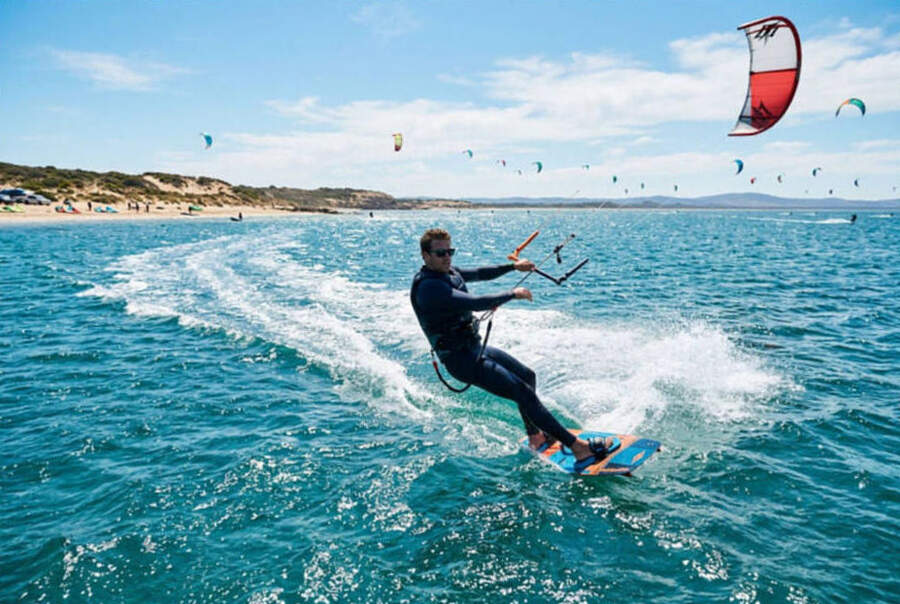
Edging is everything. When you tilt the board onto its upwind rail and press against the kite, the water resists and pushes you sideways across the wind.
That resistance is what converts the kite's downwind pull into progress upwind, so a flat, skiddy board can only ever slide down the wind window.
Think of the edge as a knife carving a line into the water, and your job as leaning back to keep that knife biting.
Set the kite and forget it
Park it at 45 degrees. Fly the kite steady at roughly the ten-thirty or one-thirty position and resist the urge to keep steering it.
A kite parked too high lifts your weight and pulls you up off your edge, while a kite dragged too low just hauls you downwind.
Every extra sweep through the window sends you sideways downwind, so the stiller you keep the kite, the better it locks in.
Build the stance
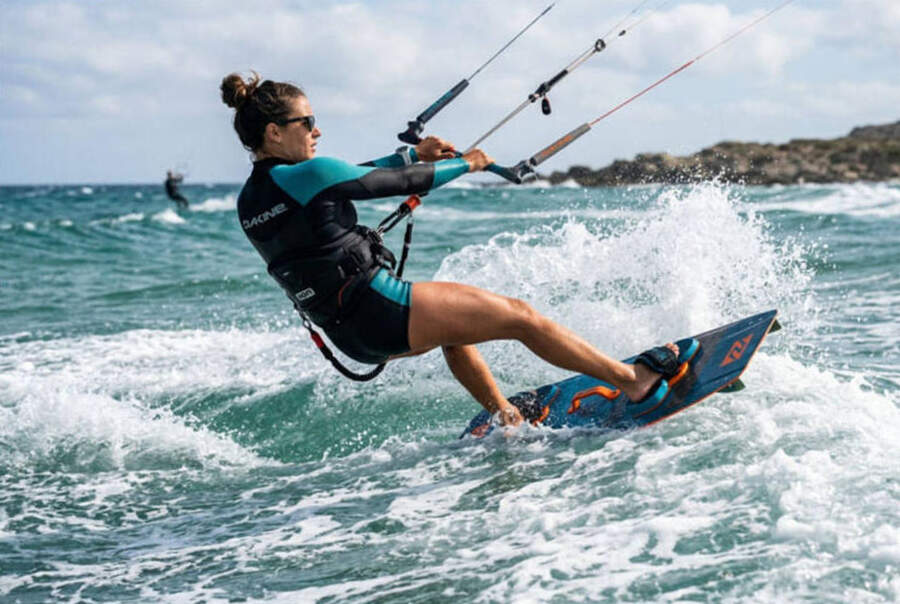
Weight goes back and down. Shift more load onto your back foot, press both heels into the rail, and sink your weight to hold the edge.
Bring your hips forward and drop your shoulders back, keeping your front leg long and your back leg bent to absorb the chop.
Aim for a straight line running from your leading shoulder through to your leading heel, the shape that lets you lean against the kite.
Look where you want to go, because your board follows your eyes, and staring at the kite steers you straight downwind.
Turn your head and point your chest upwind, and your hips and board will quietly follow that line.
What it feels like
You will feel it lock in. When the edge bites, the board hums with steady pressure underfoot and the spray hisses off a clean, committed rail.
If the board feels loose and skittery and the nose keeps sliding away downwind, that is the tell you have gone flat and lost the edge.
Chase that locked-in, humming feeling every run, and let it tell you when your weight and edge are right.
Slow down to go up
Ease off the throttle. Charging flat-out feels fast but sends you across and down the wind, not up it.
Back off your speed, set a harder edge, and you trade raw pace for angle, which is what actually claws back ground upwind.
Here is the counterintuitive bit: the less you move the kite and the slower you ride, the further upwind you will hold.
Where it goes wrong
The flat board is the classic fault, sitting weight-neutral with no edge so you simply drift downwind all session.
Working the kite constantly is the next trap, since every pump and dive walks you sideways down the window.
Riding with the kite too high robs your heels of the weight they need to bite, so drop it back toward 45 degrees.
And fixing your eyes on the kite quietly points the board downwind, so trust the kite in your peripheral vision and look up the beach.
Stay safe as you push out
Know your wind first, because riding upwind takes you further offshore, and a strong offshore breeze can carry a tired rider out to sea.
Check the strength and direction on the Seabreeze wind forecast before you rig, and pick a spot with a safe, swimmable downwind exit.
Kiteboarding schools certified by the International Kiteboarding Organization teach the same order every time: master body-dragging upwind before you expect the board to hold a line.
Swap local knowledge on where a spot lets you self-rescue in the Seabreeze forums before you head somewhere new.
Common questions
Why do I still drift down even when I edge? Your kite is probably too high or moving too much, so lower it toward 45 degrees and hold it dead still.
Should I go faster to hold upwind? No, slow down and edge harder, because angle beats speed every time when clawing back ground.
My back leg burns after a minute, is that normal? Early on yes, but ease your stance lower and let your skeleton hang against the kite rather than muscling the edge.
What should I learn next? Once you hold a line both ways, work on riding toeside so you can carve back without stopping to change feet.
Next session, pick one reference point up the beach, park the kite, set a hard heel edge, and ride toward it slower than feels natural until the walk of shame is history.