The Plane: Lift the Hull Without the Porpoise

Quick summary
Getting on the plane is a weight and trim sequence rather than a throttle stunt, and most Australian 4.5 to 6 m outboard trailer boats answer to the same order of operations.
Weight aft to start, feed the throttle smoothly, let the bow rise and then fall, and only then trim out until the wheel lightens and the wake behind you cleans up.
The how-to
What follows is preparation, initiation, commitment, execution and a failure diagnosis list, so you can read what the hull is telling you instead of stabbing at the trim switch and hoping.
Preparation
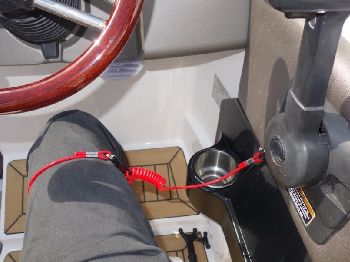
Clip the kill cord to you before anything else, and have lifejackets worn or carried as your state requires, because none of the trim work matters if you go over the side.
Keep a proper lookout the whole time, since the moment you look down at the trim gauge is the moment a kayak appears off the bow.
Spread your load so the heavy gear sits near or slightly behind the middle of the boat, not stacked in the bow where it will fight you all the way up.
Weight aft to begin, so put a passenger or the esky back towards the stern for the first few seconds of acceleration.
If you have trim tabs, set them slightly down before you start, because a touch of tab helps the stern lift the transom wave off your back quarter.
Trim the leg all the way in or very close to it, which points the thrust slightly up and helps push the stern down and the bow over the hump.
Check the wind first, and a quick look at the Adelaide wind forecast or your local equivalent will tell you whether the chop is going to be on the nose.
Do all of this outside the ramp fairway, because practising acceleration in the one lane everyone else needs is how you end up in a very public conversation.
Initiation
Point the boat in a straight line with open water ahead, then ease the throttle forward over two or three seconds rather than slamming it to the stop.
The bow will rise, sit high for a moment, then drop as the hull climbs over its own bow wave and starts to run on the aft sections.
Do not mash it, because a violent throttle just builds a bigger bow wave for the hull to climb and stands the boat on its transom.
Keep the wheel still through that rise, since any steering input while the bow is up loads one chine and makes the boat lean where you did not ask it to.
Listen as much as you watch, because the engine note flattens out and then picks up again as the wetted surface shrinks and the load comes off the propeller.
Commitment
Once the stern squats and the hull starts to level, begin easing the trim out in short taps rather than holding the button down.
You are looking for three signs together: the wheel lightens, the revs climb for the same throttle setting, and the speed keeps rising without more fuel.
Tap, wait, assess, because trim takes a second or two to show up in the boat's attitude and most people out-trim themselves by being impatient.
On a lightly loaded 5 m runabout you are typically up and running somewhere around 25 to 35 km/h, though load, hull shape and propeller move that range around.
Treat that as a guide and not a rule, since four adults, full fuel and a day's worth of gear will push the number up noticeably.
Execution
Settle on cruise trim, which is the point where the wake behind you is clean and flat and the bow is neither stuffing into the water nor pointing at the sky.
A clean wake with a crisp rooster tail and little white churn means the hull is riding on its planing surfaces and not dragging a heap of transom.
Move your weight back towards the middle of the boat now that you are up, because the aft bias that helped you launch will slow you down at cruise.
Bring any trim tabs back up a touch once the boat is level, since tabs left down at speed drag the stern and dull the ride.
In chop, trim in, because a slightly lower bow gives the sharper forward sections the job of cutting the water instead of the flat aft panels slapping it.
In smooth water you can carry more trim out for economy, but stay inside the point where the hull starts to feel loose and skittish in the turns.
Failure diagnosis
If the boat never quite gets over the hump and just ploughs with the bow high and the stern dug in, your weight is too far forward or your leg is trimmed out too early.
If the bow wanders and hunts from side to side on the way up, check your tabs, because a hull with no tab and a soft stern will chase its own bow wave.
Here is the one most people get wrong.
Porpoising is not too much speed, it is the hull hunting because the trim is too far up and the centre of lift keeps walking fore and aft.
Drop the trim first, because a short tap of trim in will usually stop the rocking inside a second or two without you losing the plane at all.
Chopping the throttle does stop a porpoise, but it also dumps you off the plane, upsets your passengers and teaches you nothing about where your trim limit sits.
If you are porpoising at every speed regardless of trim, look at load distribution, propeller pitch and whether the engine is mounted higher on the transom than the hull likes.
Trying to plane into a short steep chop on the nose will fail no matter how neat your technique is, so pick a smoother heading and work back once you are up.
Turning before you are fully planing is the other classic, because the hull is still half displacement and will heel hard and wash speed straight off.
Give yourself a few dedicated practice runs in open water with light load, since the muscle memory for trim timing comes from repetition rather than reading.
If you want to compare notes on what your particular hull and propeller combination wants, the forums are full of owners running the same boats.